Raising Financial Stewards: A Comprehensive Guide to Teaching Children the Value of Money

In an era defined by seamless digital transactions and the constant, algorithmic bombardment of consumer marketing, the traditional "piggy bank" approach to financial literacy is increasingly insufficient. For many parents, the challenge lies in demystifying the complex world of capital, value, and labor for children who view "money" as something that magically emerges from a card or a phone screen.
A growing movement of parents—typified by the approach of the Frugalwoods household—is pivoting toward a more pragmatic, hands-on methodology. By integrating financial education into the mundane rhythms of daily life, parents are attempting to transform abstract economic concepts into tangible life lessons.
The Foundation: A Defined Family Money Philosophy
The core of this modern educational approach rests on a simple, yet rigid, distinction between "needs" and "wants." For children aged 5 and 7, the environment of a county fair or a museum gift shop serves as the perfect laboratory for testing this philosophy.

The "Family Money Philosophy" operates on a binary structure:
- The Parental Provision: Parents cover the non-negotiables—housing, nutrition, clothing, education, healthcare, and basic admission to enriching activities.
- The Discretionary Zone: Any item falling outside of these categories—such as extra treats, souvenirs, or non-essential books—is the financial responsibility of the child.
By isolating discretionary spending, parents force children to grapple with the scarcity of resources. When a child realizes that their access to a toy or a dessert is tethered strictly to their own purchasing power, the value proposition of money shifts from an infinite resource to a finite tool.
Chronology of a Financial Lesson: From Chores to Debt
Financial literacy, in this context, is not a lecture-based curriculum but a series of real-world engagements. The process typically unfolds in four distinct stages:

1. The Earning Phase
The process begins with the "fair market value" model. Children are offered opportunities to perform labor—tasks that fall outside of their standard daily contributions to household maintenance. This includes tasks such as organizing deep storage areas or tackling seasonal projects. The compensation is negotiated, mirroring a professional employment contract, which teaches children that income is the direct result of labor and value creation.
2. The Responsibility Phase
Once money is earned, the physical management of that capital becomes the child’s sole responsibility. This includes the storage of cash and, crucially, the logistical management of their finances. If a child forgets their wallet during a trip to a fair, the parents do not intervene. This enforces a harsh but necessary lesson: preparation and ownership are components of financial agency.
3. The Debt Experiment
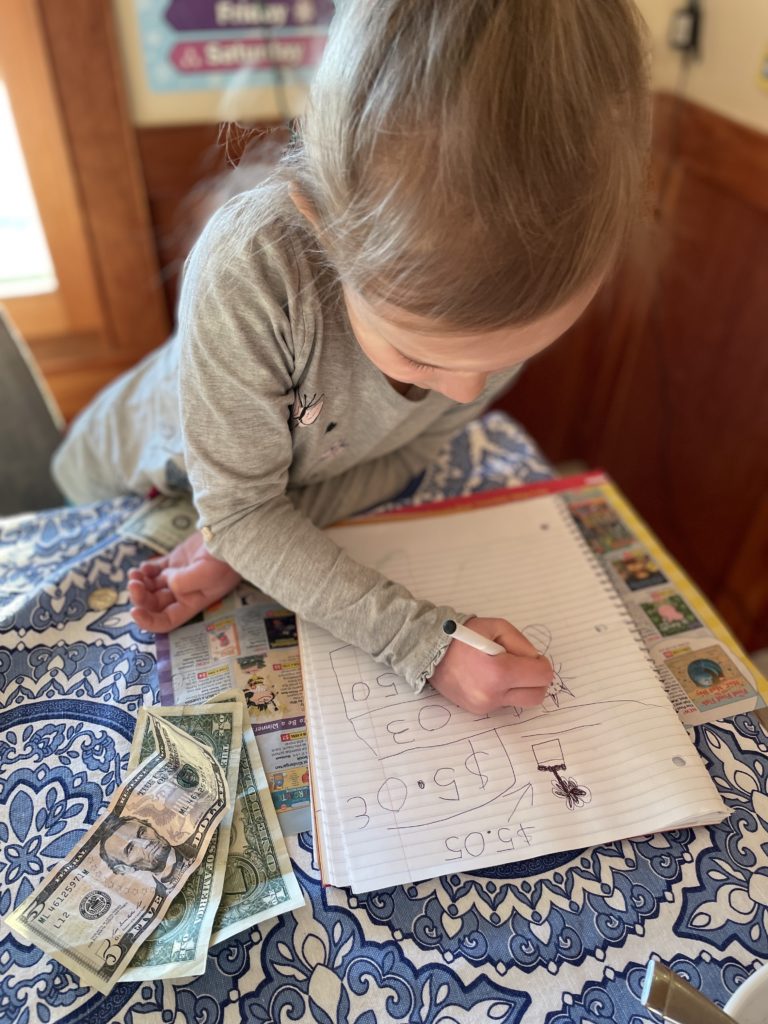
Perhaps the most controversial aspect of this pedagogical approach is the controlled exposure to debt. By allowing a child to "borrow" money from a parent to cover a shortfall for an item they covet, parents can demonstrate the psychological and logistical burden of interest and repayment. When a child is forced to perform chores to pay off a "debt" for a toy they have already consumed, they internalize the principle that spending future income today limits their freedom tomorrow.
4. The Execution Phase
The final stage is the independent transaction. Whether it is ordering a dessert at a farm or selecting a ring at a museum, the child is required to navigate the social and mathematical complexities of the sale without parental intervention.
Supporting Data: The Cognitive Benefits of Early Literacy
Child development experts argue that these interactions are not merely about money; they are about executive function. According to behavioral economists, the ability to delay gratification is one of the strongest predictors of long-term professional success.
When a 7-year-old performs "comparison shopping" using a Scholastic book flier, they are developing critical analytical skills. They are learning to:

- Evaluate Value: Assessing whether a product is worth the hours of labor required to acquire it.
- Manage Risk: Understanding that lost wallets mean lost assets.
- Understand Denominations: Gaining a foundational grasp of mathematics through practical application.
These lessons demystify the adult world. When children understand that a grocery cart full of food represents a specific number of hours of parental work, they begin to view the family budget as a logical, rather than mysterious, entity.
Professional Perspectives on Financial Education
Financial advisors often praise this "scaffolding" method. By starting with simple counting and work-for-pay tasks, parents avoid the anxiety-inducing complexities of investment portfolios and tax structures, which can overwhelm young minds.
"The goal," notes one financial planning consultant, "is to remove the emotional weight of money. If you frame money as a tool—like a hammer or a shovel—you take the shame and the mystery out of it."

However, experts caution that this must be balanced with age-appropriate transparency. Parents are encouraged to explain why they work, as seen in the anecdotal example of a child writing a book about their parent’s "boring but important" meetings. This helps the child see the connection between adult labor and the comforts of their daily life, grounding them in the reality of the household economy.
Implications for the Future: From Spending to Saving
As children move beyond the initial phase of "earn and spend," the next logical progression is the introduction of interest-bearing savings. This is the transition from a consumer mindset to an investor mindset.
The "Bank of Parental Units" Concept
Many parents are now experimenting with internal banking systems where parents pay a small "interest rate" on the money children choose to save rather than spend. The implications of this are twofold:

- The Time Value of Money: Children learn that patience is rewarded.
- Long-term Planning: The child begins to view their wallet as a repository for future goals rather than a pass-through account for immediate gratification.
Conclusion: Money as a Tool, Not an Identity
Ultimately, the objective of these methodologies is to decouple money from self-worth. By teaching children that money is a resource to be managed, not an indicator of status or happiness, parents are equipping the next generation with a resilient financial mindset.
As children continue to navigate these lessons, the goal remains consistent: to raise adults who view their finances with clarity and agency. By starting with the basics—earning, counting, and the occasional, well-managed debt—parents are building a scaffold that will support the child long after they leave the family home.
In a world where fiscal anxiety is at an all-time high, the most precious gift a parent can provide is the confidence that comes from understanding exactly how the economic world works, and how to command it. Whether through chores, the management of a sparkly wallet, or the sting of a debt-repayment chore, these lessons are the building blocks of a secure financial future.