A River Under Siege: The Long-Tail Environmental Legacy of Hurricane Helene in Western North Carolina
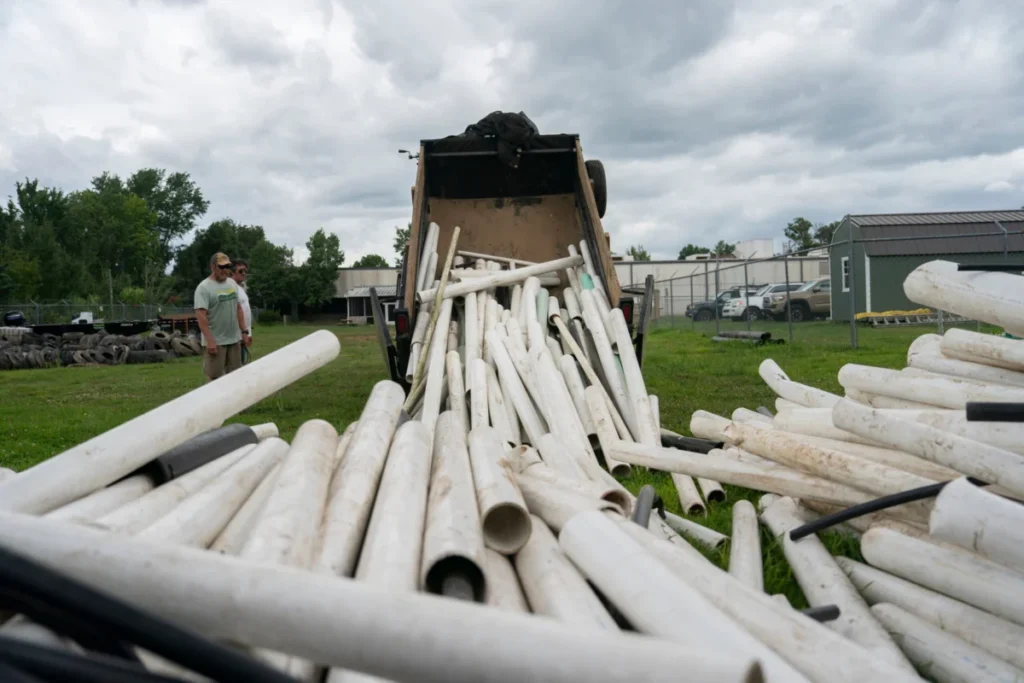
Two years after the catastrophic arrival of Hurricane Helene in Western North Carolina, the region remains trapped in a state of suspended recovery. While the initial headlines regarding the storm’s devastation—the flattened forests, the decimated infrastructure, and the thousands of lives uprooted—have faded from the national consciousness, the physical scars on the landscape are nowhere more visible than along the banks of the French Broad River.
The iconic waterway, long celebrated for its challenging whitewater rapids and vital role in the region’s recreation economy, is currently choked by an unnatural blight: millions of pounds of PVC piping. The pipes, which originated from an IPEX manufacturing facility in Woodfin, were swept into the river during the record-shattering flooding of September 2024. Today, these conduits, intended to transport water and gas, serve as a grim monument to the limitations of disaster planning in an era of climate volatility. As the Atlantic hurricane season intensifies once again, the ongoing struggle to clear this debris serves as a stark reminder that the damage wrought by a single storm can disrupt ecosystems and livelihoods for years, if not decades, after the skies have cleared.
The Scale of the Crisis: A River Entangled
The sheer volume of the pollution is staggering. The pipes—ranging from long, rigid segments to vast, unraveled coils—are not merely floating downstream; they have become structural elements of the river’s new, artificial anatomy. They are piled high on riverbanks, lodged deep within uprooted trees, embedded in sediment, and jammed beneath logs. In many sections of the French Broad, the debris has formed mounds up to two stories high, creating "jungle gyms" of plastic and timber that defy traditional cleanup methods.
MountainTrue, the environmental nonprofit leading the recovery efforts, estimates that its crews have already extracted hundreds of thousands of individual pipes from the river. Yet, despite 50,000 cumulative work-hours and an expenditure exceeding $1.5 million on removal efforts, the task remains largely unfinished. There are still 70 miles (113 kilometers) of the river, stretching toward the Tennessee border, that remain littered with submerged plastic.
"Just the amount of time and energy that we put into removing all this pipe is exhausting," said Jon Stamper, operations director at MountainTrue. "We still have stretches of river that haven’t been touched. It is a constant, grinding process of recovery."
Chronology of a Catastrophe
The crisis began in late September 2024, when Hurricane Helene stalled over the Appalachian mountains, dumping more than 30 inches (76 centimeters) of rain in some areas. The resulting deluge triggered landslides, toppled ancient forests, and pushed entire buildings off their foundations.
At the IPEX manufacturing site in Woodfin, the company had taken what they believed were prudent precautions. Situated between active railroad tracks and the French Broad River, the facility maintained an earthen berm designed to protect inventory from a 100-year flood—a meteorological event with a 1% probability of occurring in any given year.
"We secured the site as best we could, and we sent people home a day before the flooding was expected," said Johnny Drummond, vice president of manufacturing at IPEX.
However, the reality of the 2024 flood surpassed all historical models. Meteorologists and hydrologists later characterized the event as a 1,000-year flood, a catastrophe of such magnitude that existing infrastructure was essentially rendered obsolete. The water overtopped the berms, and roughly 60% of the PVC pipes stored outdoors were swept into the current.
While the company managed to recover a portion of the inventory in the immediate aftermath, the remaining debris migrated downstream, settling into the riverbed and floodplains. By early 2025, the state of North Carolina awarded a $10 million grant to MountainTrue to facilitate the massive cleanup operation. As of late 2026, that grant, originally slated to expire in December, has been extended through February, reflecting the grim realization that the recovery timeline is far longer than anticipated.
Supporting Data: The Logistics of Removal
The removal of PVC pipe is a process of extreme technical difficulty. Because the pipes have become embedded in the river bottom and intertwined with other storm debris, the cleanup requires a specialized workforce.
MountainTrue currently oversees 10 crews totaling approximately 100 people. Many of these workers are former river and fishing guides—individuals who lost their primary livelihoods when the storm destroyed the local tourism economy. For them, the cleanup is not just a job; it is an act of communal healing.
"I truly don’t think anybody else could do this work except for our debris team members," said Anna Alsobrook, MountainTrue’s French Broad Riverkeeper. "It’s a tedious, technical process. They have to be able to navigate whitewater rapids with a boat full of heavy, awkward, and often jagged pipes."
The process is as follows:
- Extraction: Teams use saws to cut long, inaccessible pipe segments into manageable, smaller chunks.
- Transportation: The debris is loaded onto flat-bottomed boats and navigated through rapids to designated landing spots.
- Logistics: The pipes are transferred to trucks for transport to regional landfills, as there are currently no viable recycling options for the contaminated or degraded plastic.
The environmental cost is exacerbated by the degradation of the material. Over the last two years, constant exposure to UV radiation from the sun has made the plastic brittle. When workers attempt to grab a pipe, it often shatters, leaving behind microplastics that contaminate the water and soil.
Official Responses and Accountability
The relationship between IPEX and the local community has been a point of significant friction. Initially, the company faced criticism for its lack of transparency regarding the volume of materials lost. IPEX declined to provide specific figures on how many pipes were stored at the Woodfin site, citing "commercial sensitivity," and has not shared the results of its internal study regarding the remaining debris.
However, as the scale of the crisis became undeniable, the company began to pivot toward a more collaborative posture. IPEX recently committed $500,000 toward MountainTrue’s continued cleanup efforts.
"We understand the ongoing challenge," said IPEX CEO Colleen Pritchett. "We recognize that recovery efforts are complex, they’re resource-intensive, and it’s constantly shaped by the river conditions."
Pritchett noted that the company sustained losses "well over $100 million" following the closure of its factory for two months in 2024. Since then, the firm has invested an additional $100 million in reinforcing its facilities and is currently exploring new, robust methods for pipe containment to prevent a repeat of the disaster.
Implications: The Future of the French Broad
The long-term implications for the French Broad River are profound. PVC pipe currently accounts for 80% of the debris in some sections of the river, according to MountainTrue. This presence alters the river’s natural flow, creates safety hazards for rafters and kayakers, and disrupts local ecosystems.
Perhaps most concerning is the biological impact. Biologists have noted that fish and other aquatic creatures are increasingly taking up residence inside the discarded pipes, potentially exposing them to chemicals as the plastic degrades.
For the people of Western North Carolina, the pipes are a constant, visual reminder of the "1,000-year" event that reshaped their home. As MountainTrue prepares to apply for additional funding to continue its work, the reality is setting in that perfection is not an option.
"We’re going to do our best as long as the funding allows," Stamper concluded. "But there’s going to be pipe out there that we can’t get ever."
The cleanup effort has evolved from a post-storm response into a permanent stewardship challenge. As the region continues to rebuild its homes and businesses, the French Broad remains a testament to the fact that climate-driven disasters leave behind a residue that persists long after the cameras leave, forcing communities to balance the urgent need for restoration with the harsh reality of permanent environmental change.