The Roundup Reckoning: High-Stakes Trial Challenges Bayer’s Safety Claims in St. Louis
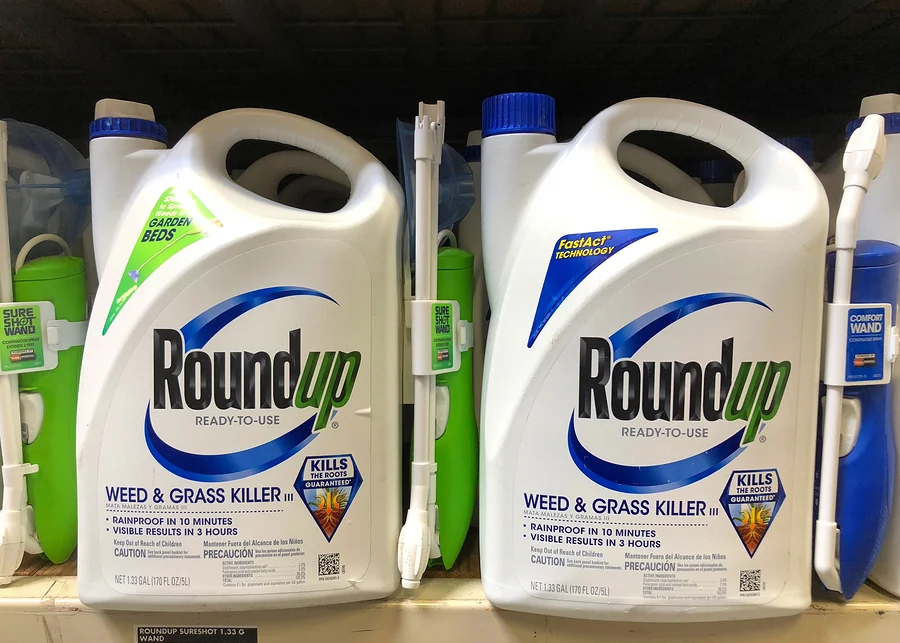
The legal saga surrounding Bayer AG’s Monsanto unit reached a new, critical juncture on September 29, as attorneys for three cancer patients opened a high-stakes trial in a Missouri state court. The proceedings mark a pivotal moment for the chemical giant, potentially establishing a new legal roadmap for the approximately 65,000 outstanding lawsuits Bayer faces across the United States. As the company seeks to put the shadow of its 2018 acquisition of Monsanto behind it, this trial tests the limits of "design-defect" litigation in the wake of a recent, favorable U.S. Supreme Court ruling.
The Core Allegations: Failure to Test
In the St. Louis courtroom, the focus remains on the foundational question of corporate responsibility. The plaintiffs—Theresa Aretino, Cynthia Fernandez, and Betty Larkin—allege that they developed non-Hodgkin lymphoma due to regular, long-term exposure to Roundup, the world’s most widely used herbicide. Tragically, Ms. Fernandez passed away before the trial commenced, a somber reminder of the human cost that lies at the heart of this complex corporate litigation.
During opening statements, plaintiffs’ attorney Greg Dovel delivered a stinging indictment of Monsanto’s historical testing protocols. "Monsanto did not adequately test Roundup," Dovel asserted before the jury. "To this day, they’ve never done all the testing they’ve needed to do." The argument posits that the company prioritized profit and market share over rigorous, independent scientific scrutiny, effectively turning the public into test subjects for a chemical product that plaintiffs argue is inherently unsafe by design.
Chronology: From Acquisition to Escalating Litigation
The timeline of this litigation is inseparable from Bayer’s $63 billion acquisition of Monsanto in 2018. The merger, intended to cement Bayer’s dominance in the global agricultural and pharmaceutical sectors, instead invited a deluge of litigation that has eroded shareholder confidence and billions in market value.
- 2018: Bayer completes its acquisition of Monsanto. Almost immediately, the first wave of trials begins, with juries frequently finding in favor of plaintiffs.
- 2020-2021: Bayer attempts to resolve the bulk of the litigation through a multi-billion-dollar settlement offer, seeking to stem the tide of individual verdicts.
- June 2024 (Supreme Court Ruling): The U.S. Supreme Court provides a significant victory for Bayer. The court ruled that federal law—specifically the Federal Insecticide, Fungicide, and Rodenticide Act (FIFRA)—preempts state-law claims that allege failure-to-warn. Because the Environmental Protection Agency (EPA) approved the herbicide’s label without a cancer warning, the Court reasoned, companies cannot be held liable for following federal regulatory mandates.
- September 2024: The current trial begins in Missouri, focusing on the narrower legal theory of "design defect," which sidesteps the label-warning preemption issue addressed by the Supreme Court.
Supporting Data: Science at the Center of the Storm
The scientific debate is the "engine room" of this legal conflict. For the plaintiffs, the focus is on the specific chemical formulation of Roundup—which relies on the active ingredient glyphosate—and its alleged carcinogenic properties.
Conversely, Bayer’s defense team, led by Paul Boehm, maintains a steadfast position: the product is safe. Boehm argued that the plaintiffs’ case is fundamentally flawed because it ignores decades of international regulatory consensus. "The plaintiffs cannot prove that glyphosate-based herbicides are too dangerous to sell," Boehm told the jury, citing safety reviews from the EPA and other international health bodies.
However, the plaintiffs are attempting to decouple "regulatory approval" from "scientific safety." Attorney Greg Dovel argued that the EPA’s current assessment is based on outdated data and incomplete science. This argument is bolstered by the fact that the EPA is currently in the midst of a new, comprehensive re-evaluation of glyphosate, which is not expected to conclude until 2026. By challenging the EPA’s reliance on industry-sponsored studies, the plaintiffs aim to persuade the jury that an agency seal of approval does not constitute a "clean bill of health."
Official Responses and Corporate Strategy
Bayer’s strategy is twofold: aggressive litigation in the courtroom and a massive, $7.25 billion settlement push outside of it. The company is currently seeking to finalize a class-action settlement in a St. Louis court to resolve current and future claims. However, the women in the current trial have opted out of this settlement, preferring to have their day in court.
Bayer’s public statements remain consistent:
- Safety First: They maintain that glyphosate is not a carcinogen and that Roundup is safe when used as directed.
- Regulatory Compliance: They argue that they have operated within the bounds of federal law, and that juries should not be allowed to second-guess the EPA’s expert scientific determinations.
- Legal Preemption: They emphasize the Supreme Court’s recent ruling as a definitive signal that state-level claims are being overextended.
For their part, the plaintiffs’ legal team is working to frame the company’s actions not as a simple case of "failure to warn," but as a deliberate choice to sell a dangerous product that could have been designed differently.
Implications: A New Legal Frontier
The outcome of this trial is being watched closely by Wall Street, environmental advocacy groups, and the chemical industry. Its implications are far-reaching:
1. The Viability of "Design-Defect" Claims
With "failure-to-warn" claims now largely blocked by the Supreme Court’s preemption ruling, plaintiffs’ attorneys are pivoting. If the Missouri jury finds that Roundup is "defectively designed," it could open a floodgate of new lawsuits that use this specific legal theory. If, however, Bayer wins, it could effectively neutralize the last major avenue of attack for the remaining 65,000 plaintiffs.
2. The Influence of the EPA
The trial highlights a growing tension between judicial findings and administrative agency findings. If a jury returns a verdict against Bayer despite the EPA’s current stance, it will create a chaotic legal environment where a product is "legal to sell" under federal law but "dangerous to use" under civil law. This would put immense pressure on the EPA to accelerate its ongoing re-evaluation of glyphosate.
3. Financial Stability of Bayer
Bayer’s share price has been volatile for years due to this litigation. A string of losses in courtrooms could force the company to increase its $7.25 billion settlement fund, potentially triggering internal restructurings or the divestiture of agricultural assets. Investors are looking for a clear end-date to the "Roundup overhang," and this trial is a critical test of whether that end is in sight or merely the beginning of a new phase of the war.
Conclusion: A Jury’s Burden
As the trial progresses, the courtroom will serve as a battleground between corporate scientific defense and the lived experiences of patients. The jury is tasked with balancing the weight of international regulatory bodies against the testimony of individuals who claim their lives were irrevocably altered by a ubiquitous product.
Regardless of the verdict, the case underscores the difficulty of regulating complex chemical products in an era of polarized science. As the EPA moves toward its 2026 conclusion on glyphosate, the legal system continues to operate in the gray space between current regulation and future discovery. For now, all eyes are on St. Louis, where three women—and one of the world’s largest chemical companies—await a decision that will ripple through the agricultural industry for years to come.