Substance Traded for Spectacle: An Inside Look at the Trump-Xi Summit and the Stagnation of US-China Relations
By Stephen S. Roach
Published: September 30, 2026
Dateline: NEW HAVEN
Main Facts
The eagerly anticipated summit between United States President Donald Trump and Chinese President Xi Jinping concluded late last month, leaving diplomats, economists, and geopolitical analysts grappling with a familiar reality: high-profile pageantry masking a profound lack of policy substance.
While low expectations preceded the encounter—with many international relations experts arguing that direct dialogue is inherently superior to diplomatic silence—the meeting failed to yield measurable progress on the foundational friction points defining the world’s most critical bilateral relationship. Key areas of divergence, including escalating trade tariffs, advanced artificial intelligence (AI) governance, the precarious geopolitical status of Taiwan, and China’s complex diplomatic and economic footprint in active theaters of war, remained largely unaddressed or mired in rhetoric.
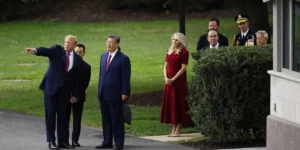
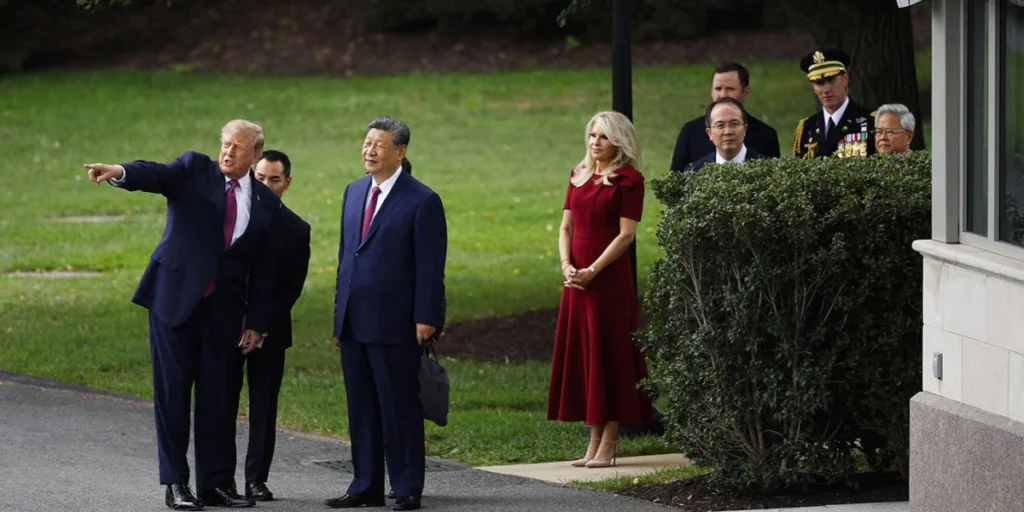
Rather than serving as a vehicle for strategic breakthrough, the summit devolved into a display of personal flattery and ceremonial flourishes. President Trump’s public declarations of heartfelt admiration for President Xi underscored a recurring diplomatic pattern: a conflation of the trappings of power with power itself. For global markets and international allies, the meeting served less as a bridge between superpowers and more as an exercise in domestic political theater.
Chronology: Path to the Summit and the Meeting Unfolds
To understand the superficial nature of the recent presidential encounter, one must examine the diplomatic trajectory that led the two leaders to the negotiating table.
Phase One: The Pre-Summit Escalation (Q1–Q2 2026)
In the months leading up to the summit, US-China relations experienced a steady deterioration. Following the implementation of a new wave of targeted US technology restrictions—particularly concerning semiconductor exports and quantum computing access—Beijing responded with retaliatory supply chain controls on critical rare earth minerals essential for Western manufacturing and defense industries. Tensions across the Taiwan Strait also hit a multi-year high following large-scale People’s Liberation Army (PLA) naval drills.
Phase Two: The Backchannel Negotiations (July–August 2026)
Recognizing the risks of unmanaged economic decoupling and potential military miscalculation, backchannel communications intensified over the summer. Ministerial-level delegations from both nations held secretive talks in neutral European capitals, laying the groundwork for a leader-level summit. The primary objective was ostensibly to establish a "floor" under the deteriorating bilateral relationship and prevent further economic shocks.
Phase Three: The Summit and Pageantry (September 2026)
Upon arrival, the diplomatic agenda was quickly overshadowed by carefully orchestrated state receptions and media events. Rather than retreating to closed-door, granular working sessions to hammer out trade frameworks or security guardrails, the itinerary prioritized grand photo opportunities and public statements.
- Day One: Ceremonial arrival, mutual praise, and superficial agreements to "continue dialogue on technological cooperation."
- Day Two: Plenary sessions heavily dominated by prepared monologues rather than rigorous debate. The scheduled working lunch on trade imbalances was truncated to accommodate a joint press conference, during which both leaders sidestepped pointed questions regarding Taiwan and secondary sanctions.
- Post-Summit: Immediate divergence in narrative spin. While Washington emphasized the "cordial tone" of the talks, Beijing highlighted its insistence on national sovereignty and the removal of unilateral economic restrictions.
Supporting Data: The Economic and Geopolitical Landscape
The hollow nature of the summit becomes starkly apparent when juxtaposed against the hard economic and geopolitical data governing US-China interactions.
+-------------------------------------------------------------------------+
|                    KEY METRICS OF US-CHINA FRICTION                     |
+---------------------------+------------------+--------------------------+
| Metric Area               | Current Status   | Trend (YoY)              |
+---------------------------+------------------+--------------------------+
| Bilateral Trade Volume    | $575 Billion     | Down 4.2%                |
| Effective Tariff Rate     | 19.8% (Average)  | Up 3.5%                  |
| Tech Restrictions (AI)    | 42 Entities Added| Upward Expansion         |
| Taiwan Strait Incidents   | 180+ (Monthly)   | Significant Increase     |
+---------------------------+------------------+--------------------------+
1. Trade and Economic De-risking
Despite rhetorical nods toward economic stability, the underlying trade architecture continues to fracture. Bilateral trade volumes have experienced a steady downward slide, driven by selective decoupling policies in Washington and domestic consumption shifts in Beijing. Effective tariff rates on manufactured goods remain near historical highs, imposing hidden costs on consumers in both nations. The summit produced zero adjustments to existing Section 301 tariffs or structural enforcement mechanisms.
2. The Artificial Intelligence Divide
AI governance remains a regulatory minefield. While American policy focuses on restricting China’s access to frontier foundational models and extreme-ultraviolet (EUV) lithography, China has accelerated indigenous innovation pipelines, pouring billions into domestic semiconductor manufacturing. The summit failed to establish a bilateral code of conduct for military applications of AI or autonomous weapons systems—a glaring oversight given the accelerating pace of technological deployment.
3. Geopolitical Alignment and Theaters of War
Beijing’s diplomatic and economic cushioning of nations engaged in major conflicts—particularly in Eastern Europe and the Middle East—has remained a primary point of contention for Western capitals. Washington entered the summit seeking concrete commitments from Beijing to curtail dual-use exports and financial lifelines to sanctioned actors. The resulting joint communiqués contained no enforceable pledges, reflecting a fundamental misalignment on global security architectures.
Official Responses and Stakeholder Reactions
The reaction from global leaders, policy institutions, and domestic constituencies highlights the growing divergence between diplomatic optics and strategic reality.
- The White House: Administration officials defended the summit as a necessary stabilization mechanism. Press briefings emphasized that "maintaining open lines of communication at the highest level prevents catastrophic miscalculations," pointing to the mere fact that the two leaders met as a diplomatic victory.
- Beijing (Ministry of Foreign Affairs): Chinese state media framed the summit through the lens of mutual respect and sovereign equality. Official readouts stressed that China is open to cooperation, provided the United States respects its core interests—principally regarding Taiwan and technological autonomy.
- Congressional Response (US): Lawmakers from both sides of the aisle expressed frustration. Bipartisan critics argued that the administration was out-negotiated by accepting pleasantries in lieu of enforceable concessions on intellectual property theft, market access, and security issues.
- Global Business Community: Multinational corporations operating in both markets reacted with cautious pessimism. Supply chain strategists noted that the absence of tangible tariff relief or regulatory clarity means corporate de-risking and supply chain diversification away from mainland China will continue unabated.
Implications for the Future of Global Order
The Trump-Xi summit is more than a missed opportunity; it is a symptom of a broader structural malaise in 21st-century diplomacy. By allowing personal vanity and performative politics to eclipse hard-nosed policy formulation, world leaders are steering the global economy into uncharted and hazardous waters.
1. The Institutionalization of Cold Peace
Without structural agreements on trade, technology, and regional security, the US-China relationship is settling into a protracted "cold peace." This dynamic is characterized by continuous economic friction, technological bifurcation (the splitting of the global tech ecosystem into US-led and China-led spheres), and chronic military signaling across flashpoints like the South China Sea and the Taiwan Strait.
2. The Marginalization of Multilateralism
When bilateral relations between the world’s two largest economies are reduced to personality politics, multilateral institutions—such as the World Trade Organization (WTO) and various United Nations bodies—are further marginalized. Global challenges requiring cooperative superpowers, ranging from climate change mitigation to pandemic preparedness and international financial stability, are sidelined in favor of zero-sum nationalist posturing.
3. Market Volatility and Strategic Uncertainty
For global investors, the summit provided no relief from strategic uncertainty. Businesses can no longer plan on the premise of a predictable rules-based international order. Instead, they must navigate a fragmented global landscape where regulatory shifts, sudden export controls, and geopolitical posturing can upend supply chains overnight.
Conclusion
History will likely record the Trump-Xi summit not as a turning point toward reconciliation, but as a masterclass in diplomatic illusion. In a world crying out for substantive leadership, institutional wisdom, and strategic clarity, the spectacle in New Haven offered little more than hollow applause—proving once again that when style entirely consumes substance, the entire global community pays the price.