The Unfinished Architecture of Freedom: Redefining Democracy Through Multiracial Feminism
As the United States quietly concluded its 250th anniversary, the celebratory rhetoric surrounding the Declaration of Independence faded into the background, replaced by a more urgent, visceral inquiry among movement leaders: What kind of democracy are we actually building?
This question, posed recently in Memphis by a coalition of organizers from the South and Midwest, strikes at the heart of a national crisis. While the American experiment is often narrated as a linear progression toward liberty, the lived reality for millions suggests a fractured system. At the core of this tension lies a foundational truth long championed by multiracial feminist movements: democracy and bodily autonomy are inextricably linked. When the power to control one’s own body, family, and future is stripped away, the structural integrity of the entire democratic project begins to crumble.
The Intersection of Autonomy and Governance
For decades, the public discourse has largely siloed "democracy" into the realms of voting rights, legislative procedure, and constitutional law. However, multiracial feminist organizers argue that this narrow definition is a luxury—and a blind spot—that authoritarian forces are currently exploiting.
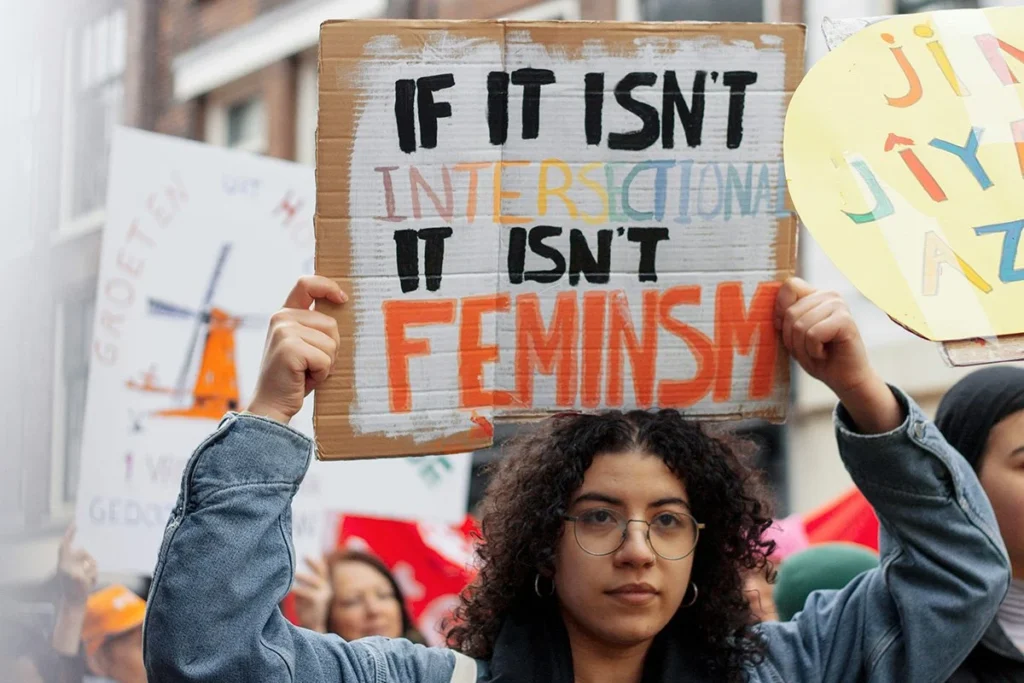
To these activists, "feminist" is not merely a descriptive label; it is a diagnostic tool. By analyzing how gender is used as a lever of power, these movements have identified that authoritarianism rarely attacks democracy through the ballot box alone; it begins by targeting the autonomy of the individual.
In Memphis, this theory of change is being put into practice. Organizations like My Sistah’s House and CHOICES: Center for Reproductive Health represent a new vanguard of democratic infrastructure. While they are often categorized as social service providers, their work is inherently political. By providing permanent housing for Black trans individuals or ensuring access to reproductive and gender-affirming healthcare, these institutions are creating the essential conditions for political participation. One cannot effectively participate in a democracy if they are preoccupied with the fundamental struggle for shelter, safety, or the right to self-determination over their own biology.
A Chronology of Exclusion and Resistance
The history of U.S. democracy is frequently taught as a steady march toward inclusion. A more honest assessment, however, reveals a jagged, uneven expansion of rights. The promises of self-government articulated in 1776 were explicitly withheld from large swaths of the population, and often violently suppressed when claimed by those outside the circle of power.
The Myth of Universal Access
The 19th and early 20th centuries were marked by "rights" that remained theoretical for many. Even after the 19th Amendment ostensibly granted women the right to vote in 1920, the victory was largely hollow for Black women in the South, who faced the gauntlet of Jim Crow: poll taxes, literacy tests, and the constant threat of state-sanctioned violence. Similarly, Indigenous women continued to face barriers tied to the complex and shifting legal frameworks of tribal sovereignty and federal citizenship.
The Combahee River Collective and Beyond
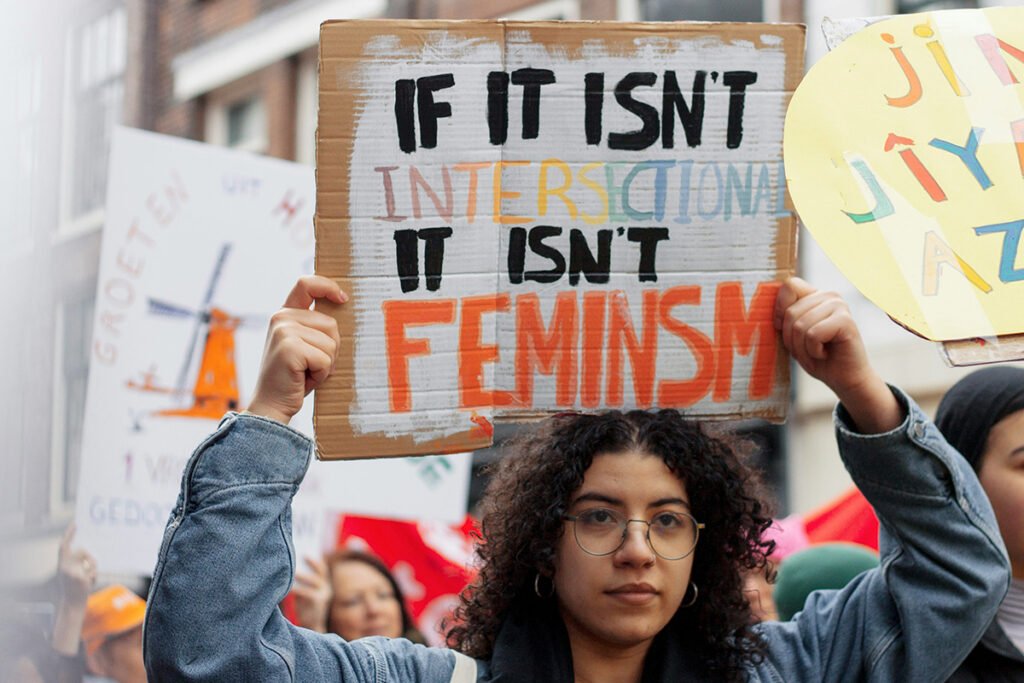
By the 1970s, the failure of mainstream political movements to address the intersection of race, class, and gender led to the formation of the Combahee River Collective. Their 1977 statement remains one of the most significant documents in American political history. It articulated a reality that mainstream academia is only now beginning to catch up with: that racism, sexism, and capitalism are not disparate problems, but mutually reinforcing systems of oppression.
This framework evolved in the 1990s into "Reproductive Justice," a movement led by Black women that expanded the definition of freedom. It moved the conversation away from the "choice" framework—which often assumes a level of privilege—toward the concept of "conditions." Reproductive justice asks: Does a person have the housing, income, and safety required to make a meaningful decision about their life?
Supporting Data: The Cost of Disenfranchisement
The implications of this "intersectional democracy" are supported by current social metrics. When we look at states with the most restrictive abortion and gender-affirming care laws, there is a direct correlation with systemic barriers to broader civic participation.
- Economic Impact: A study by the Institute for Women’s Policy Research indicates that restricted access to reproductive care results in significant long-term economic instability for women of color, which in turn correlates with lower rates of voter registration and political advocacy.
- Safety and Stability: The work of My Sistah’s House highlights a critical data point: for marginalized communities, particularly Black trans women, physical safety is the primary prerequisite for civic engagement. Without a secure, permanent residence, the ability to maintain voter registration or participate in local governance is significantly diminished.
- Civic Engagement: Longitudinal data from grassroots movements suggests that communities that receive support for their bodily autonomy are 30% more likely to engage in local mutual aid and community organizing, effectively building "shadow" democratic institutions that function where the state fails.
Perspectives from the Frontlines
The current landscape is marked by a disconnect between legislative trends and grassroots sentiment. While national political parties often treat voting rights, education, and healthcare as separate "portfolios," the organizers on the ground in Memphis argue that this compartmentalization is a tactical failure.
"When you separate the right to exist from the right to vote, you are essentially asking people to participate in a system that doesn’t view them as fully human," says one organizer involved in the Memphis initiative. "We don’t organize for ‘women’s issues’ or ‘race issues’ on alternating days. We organize for survival, and survival is the bedrock of democracy."
The sentiment is clear: the current legislative climate, which seeks to categorize gender-affirming care or abortion as tangential to "real" democracy, is fundamentally misunderstanding the nature of power. Power is not just a ballot; it is the ability to navigate the world without the threat of state interference in one’s personal identity and health.
Implications for the Next 250 Years
As the United States looks toward its future, the "democratic imagination" of these marginalized communities offers a potential roadmap. The history of this country shows that the most significant democratic innovations did not originate in the halls of Congress. They were birthed in the mutual aid societies of formerly enslaved people, in the preservation of Indigenous governance structures, and in the immigrant networks that sustained families through decades of exclusion.
Reimagining Citizenship
The lesson of multiracial feminism is that democracy is not a static set of rules, but a constant practice of building power. To build a more perfect union, the country must move past the idea that freedom is a paper guarantee. Instead, democracy must be measured by:
- Meaningful Agency: Do citizens have the capacity to exercise their rights without fear of economic or physical reprisal?
- Collective Accountability: Are institutions designed to serve the community, or are they designed to reinforce hierarchy?
- Indivisibility: Does the state recognize that the denial of rights to one segment of the population inevitably leads to the erosion of rights for all?
The Path Forward
The 250th anniversary serves as a pivot point. The era of assuming that democracy is a self-sustaining engine is over. The work ahead requires a shift from passive celebration to active, often messy, community building.
If the goal is to build a democracy that is truly inclusive, the architects of that future must be those who have spent generations navigating the gaps in the system. The evidence from Memphis and beyond is clear: when people are empowered to control their own bodies and lives, they become the most resilient defenders of the democratic project. The fireworks of the anniversary may have dimmed, but the labor of constructing a truly free society—one that is both multiracial and feminist—is only just beginning.