Beyond the Mask: How PNOĒ is Democratizing Clinical-Grade Metabolic Testing
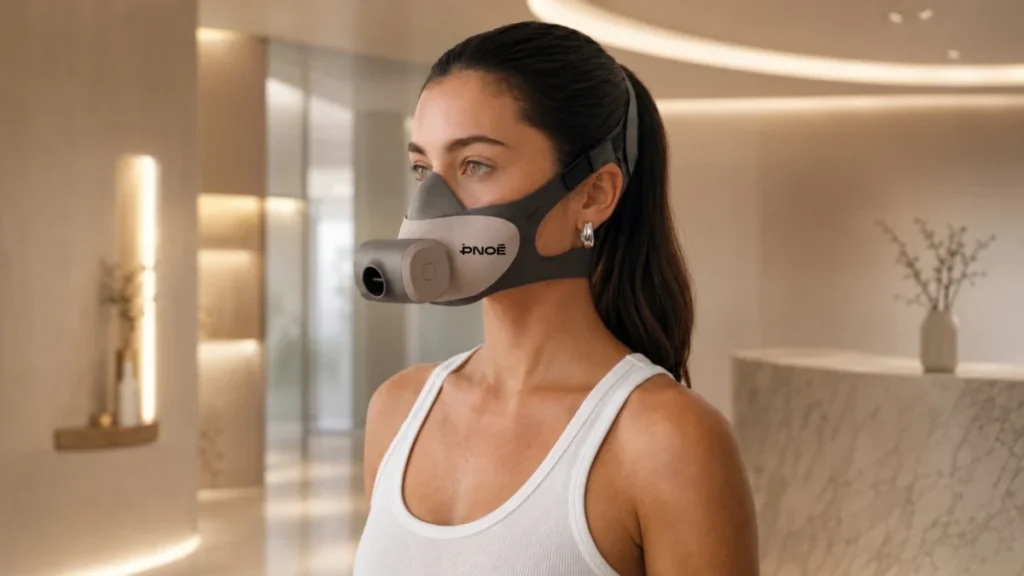
At first glance, the newest device from the Massachusetts-based health-tech startup PNOĒ looks like a relic from a high-budget sci-fi film. The sleek, clinical-grade mask, which straps securely around the head to cover the nose and mouth, bears a striking resemblance to the mask worn by the iconic comic-book villain Bane. However, beneath the intimidating exterior lies a mission that is remarkably benign and deeply rooted in the burgeoning field of longevity science.
On October 1, PNOĒ is set to launch its 2.0 iteration, a device designed to perform one of the most critical functions in human health diagnostics: measuring oxygen consumption and carbon dioxide exhalation. By translating this data into actionable insights, the company aims to help individuals optimize their nutrition, refine their exercise routines, and—if the data holds true—increase their overall lifespan.
The Evolution of Metabolic Insight: Main Facts
For over a century, metabolic testing has been the "gold standard" for understanding how the human body produces energy. Traditionally, this process required bulky, stationary equipment—often referred to as metabolic carts—found only in elite sports laboratories, universities, and high-end hospitals. These tests are the primary method for calculating VO2 max, a metric representing the maximum amount of oxygen the body can utilize during intense physical exertion. While VO2 max is widely recognized as one of the most accurate predictors of cardiorespiratory fitness and long-term mortality, its reliance on expensive, immobile hardware has restricted it to elite athletes and the ultra-wealthy.
PNOĒ’s core value proposition is the miniaturization of this gold-standard technology. The PNOĒ 2.0 represents a significant leap forward in accessibility. Unlike its predecessor, which required the presence of a trained technician, the new version is designed for self-administration.
"Someone can walk into a gym, just wear the mask, push the button, sit down, and breathe for eight minutes," says Apostolos Atsalakis, co-founder and CEO of PNOĒ. "That’s it. It’s that easy."
This shift to a self-serve model is intended to remove the logistical barriers that have kept metabolic testing out of local fitness centers and neighborhood health hubs. By detaching the high-tech electronics from the disposable silicone mask, the company has solved the post-pandemic hygiene dilemma, allowing facilities to maintain a stock of shared hardware while each user utilizes their own personal interface.
From Cambridge Labs to Global Scale: A Chronology
The trajectory of PNOĒ is a study in the intersection of academic rigor and venture-backed scalability. The company’s origins can be traced back to the University of Cambridge, where Atsalakis was completing his PhD in sensing technologies. During a time when the first generation of fitness wearables was beginning to saturate the market, Atsalakis became fascinated by the untapped potential of breath analysis. He believed that while smartwatches could track heart rate, they were missing the "engine" of the body: the metabolism.
Atsalakis co-founded PNOĒ with childhood friend Panos Papadiamantis, who currently serves as the company’s Chief Product Officer. In 2019, the startup gained momentum after joining the prestigious Y Combinator accelerator program. At that time, the "longevity" industry was still in its infancy, yet the pair secured significant backing.
Since its inception, PNOĒ has raised approximately $22 million in funding, including a recent $11 million round. Notable investors include 50 Years and Google Maps co-founder Lars Rasmussen, who currently resides in Athens, Greece, where PNOĒ maintains a significant portion of its operations.
The company has spent the last decade iterating. The development of the 2.0 version involved a rigorous design process in collaboration with the Milan-based Design Group Italia. According to Atsalakis, the team underwent "a lot, a lot, a lot of iterations" to ensure that a device meant for non-professionals could still maintain the high level of accuracy required for clinical-level data collection.
The Science of the Breath: Supporting Data
PNOĒ’s device captures 23 distinct biomarkers, providing a comprehensive "scorecard" for human physiology. Beyond the standard VO2 max, the device measures:
- Resting Metabolic Rate (RMR): The exact number of calories the body burns at rest.
- Metabolic Flexibility: The body’s efficiency in switching between burning fat and carbohydrates for fuel.
- Respiratory Quotient (RQ): An indicator of fuel utilization during activity.
Atsalakis argues that these metrics address fundamental gaps in human health data that standard blood tests cannot fill. While a blood test might show cholesterol or glucose levels, it does not reveal the metabolic efficiency of the muscle tissue or the body’s capacity to utilize oxygen—the very processes that govern weight management and energy levels.
As of now, PNOĒ employs 110 people and has achieved profitability, boasting year-over-year growth of more than 100%. The company’s business model is strictly B2B; they provide a "business in a box" subscription for fitness centers, med-spas, and high-end health facilities. Clients include prestigious names such as Equinox, the Four Seasons, the NBA, and the Mount Sinai Health System.
With 85% of its revenue generated in the United States, PNOĒ views the American market as the global epicenter for longevity research and consumer demand. The company is now actively expanding into European, Latin American, and Asian markets through strategic partnerships.
Regulatory Boundaries and Official Responses
Despite its clinical-grade performance, PNOĒ is careful to navigate the regulatory landscape. Currently, the device is not cleared by the U.S. Food and Drug Administration (FDA) for diagnostic use. Consequently, the company does not provide medical diagnoses or prescriptions.
"We do not provide medical recommendations," Atsalakis clarifies. "It’s like a body composition device, like a scale. A doctor cannot prescribe medication based on our results."
This positioning is a strategic choice. By operating as a wellness device rather than a medical diagnostic tool, PNOĒ avoids the stringent regulatory hurdles that would slow down its rapid adoption in the fitness industry. However, the company is not ignoring the future. Atsalakis acknowledges that the long-term goal is to leverage the vast data collected from thousands of breath tests to potentially identify biomarkers for diseases such as cancer.
"We’re not there yet," he says, noting that full clinical diagnostic status is likely several years—and several regulatory cycles—away.
Implications for the Future of Wellness
The rise of PNOĒ places it in a unique middle ground within the fitness technology sector. On one side are the ubiquitous wearables like Apple Watch, Garmin, and Whoop, which provide estimates of fitness levels based on heart-rate variability and accelerometers. On the other side are traditional metabolic labs, which are inaccessible to the average person.
PNOĒ attempts to occupy the space in between, offering lab-level precision with the convenience of a modern subscription service. As the "longevity" trend continues to move from the fringes of Silicon Valley to the mainstream, the demand for actionable data is surging. Consumers are no longer satisfied with general advice; they want a personalized map of their own physiology.
For gyms and health centers, the PNOĒ 2.0 offers a way to differentiate themselves in a crowded market. By integrating the test into the onboarding process, fitness centers can provide members with a personalized, data-driven roadmap, effectively moving the relationship from generic gym membership to "performance optimization."
As PNOĒ prepares to launch its Series B funding round in the coming months, the company’s vision is clear: they want to move metabolic health out of the hospital and into the daily lives of anyone interested in optimizing their biology. Whether or not the "Bane-like" aesthetic will be embraced by the general public remains to be seen, but the data—and the rapid growth of the company—suggest that the appetite for deep biological insight is only just beginning to be satisfied.
In an era where technology has successfully quantified everything from our steps to our sleep, PNOĒ is making a compelling case that the most important data we can track is the very thing we do 20,000 times a day: our breath.