The Rising Tide: AfD Electoral Successes in Eastern Germany Spark National Constitutional Crisis
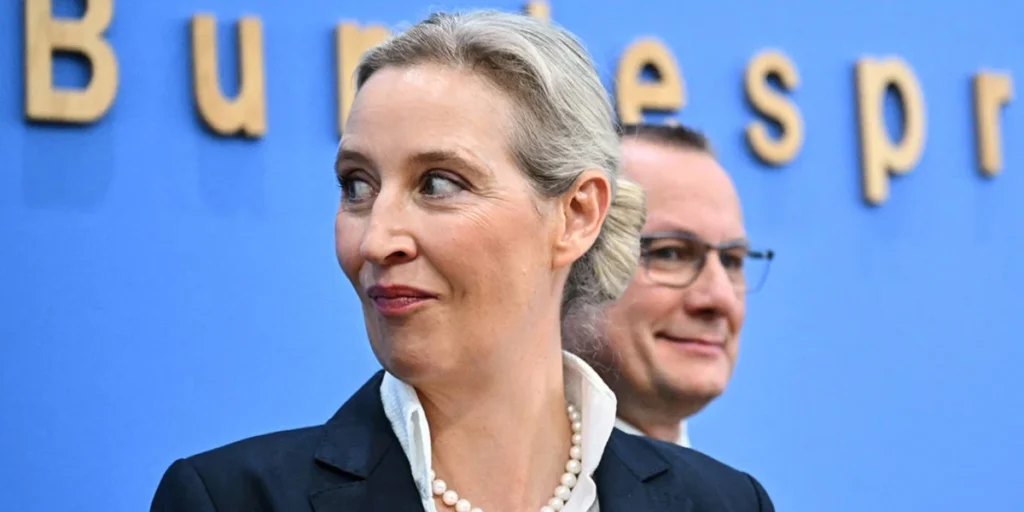
PRINCETON — Germany’s political landscape is undergoing a profound and potentially irreversible seismic shift. Following a historic victory earlier this month in the state of Saxony-Anhalt, the radical right-wing Alternative für Deutschland (AfD) has secured another stunning triumph, finishing first in the northeastern state of Mecklenburg-Vorpommern.
These back-to-back electoral victories have reignited a fierce, high-stakes debate across Germany’s political and intellectual establishments. Critics of the country’s prevailing political consensus argue that the traditional parties’ ironclad strategy of forming a cordon sanitaire—a united front designed to exclude the AfD from governing coalitions at all costs—is fundamentally undemocratic and ultimately self-defeating.
As the mainstream parties grapple with the erosion of their traditional voter bases, political analysts, constitutional scholars, and international observers are asking a terrifying question: Is Germany’s democratic firewall holding firm against the populist surge, or is it merely accelerating the very political radicalization it was designed to prevent?
Main Facts
The core of the unfolding political crisis lies in the distinct electoral dynamics of eastern Germany, where the AfD has successfully transformed localized economic anxieties and cultural grievances into formidable ballot-box power.
- Electoral Breakthroughs: The AfD secured a first-place finish in Mecklenburg-Vorpommern, capitalizing on enduring regional disparities between western and eastern Germany, lingering deindustrialization scars, and widespread dissatisfaction with the federal coalition in Berlin. This victory comes hot on the heels of a historic win in Saxony-Anhalt.
- The Governing Arithmetic: While an outright AfD-led government in Mecklenburg-Vorpommern remains unlikely due to a lack of willing coalition partners, the situation in Saxony-Anhalt presents a razor-thin margin. In Magdeburg, the state capital, the AfD requires the legislative support of only three additional members of parliament to secure a functional majority.
- The Extremist Factor: The Bündnis Sahra Wagenknecht (BSW)—a populist, far-left party that fuses traditional socialist economic policies with socially conservative, nationalist rhetoric—has signaled a troubling, calculated willingness to contemplate cooperation with the AfD. This potential bridge between the populist fringes threatens to break the long-standing taboo against mainstream or semi-mainstream coalition-building with the radical right.
- The Cordon Sanitaire Dilemma: Mainstream democratic parties (the Christian Democrats, the Social Democrats, the Greens, and the Free Democrats) remain bound by a collective agreement never to enter into coalitions or governing pacts with the AfD, labeling the party a threat to Germany’s liberal democratic order. However, critics argue that locking out a party that commands nearly a third of the electorate disenfranchises millions of voters and pushes democratic discourse to dangerous extremes.
Chronology: The Road to Eastern Dominance
To understand the gravity of the current moment, one must trace the rapid, methodical ascent of the AfD from a Euroskeptic intellectual circle to a mass populist movement capable of dominating eastern German state politics.
2013–2015: Inception and the Refugee Crisis
Founded initially in 2013 as a conservative, Euroskeptic party opposed to European Union bailouts for debt-ridden southern eurozone states, the AfD underwent a radical ideological mutation during the 2015 European migrant crisis. As more than one million refugees—primarily from war-torn Syria—entered Germany, the AfD pivoted sharply toward anti-immigration, Islamophobic, and nationalist platforms. This pivot found particularly fertile ground in the former East Germany (the Neue Bundesländer), where civil society was historically weaker and populations felt culturally detached from the multicultural transformation underway in western metropolitan centers.
2018–2021: Radicalization and Domestic Intelligence Surveillance
As moderate figures within the AfD, such as founder Bernd Lucke and later co-leader Frauke Petry, were systematically marginalized and pushed out by hardline nationalists, the party’s rhetoric grew increasingly xenophobic and nativist. By the early 2020s, regional branches of the AfD in states like Thuringia, Saxony, and Saxony-Anhalt were officially classified as "proven right-wing extremist" organizations by Germany’s domestic intelligence agency, the Bundesamt für Verfassungsschutz (BfV). Despite—or perhaps because of—this official designation, the party’s poll numbers continued an upward trajectory.
Late 2023–2025: The Rise of the BSW and the Normalization of Protest
The political ecosystem shifted dramatically with the founding of the Sahra Wagenknecht Alliance (BSW) in late 2023. Breaking away from Die Linke (The Left), Wagenknecht combined populist economic critique with skepticism toward NATO, opposition to military aid for Ukraine, and hardline anti-immigration stances. The BSW effectively siphoned off protest votes from both the far-left and the far-right, creating a volatile political wedge in eastern state parliaments.
September 2026: The Historic Double Victory
In rapid succession, the AfD secured groundbreaking electoral victories in Saxony-Anhalt and Mecklenburg-Vorpommern. These results shattered previous psychological ceilings, proving that the party’s electoral appeal is not a temporary flash in the pan driven by single-issue crises, but a structural fixture of the German political landscape.
Supporting Data and Demographics
A granular analysis of the voting patterns in Mecklenburg-Vorpommern and Saxony-Anhalt reveals deep sociological divides that defy simple explanations.
+-----------------------------------------------------------------------------+
|               KEY DEMOGRAPHIC TRENDS IN EAST GERMAN ELECTIONS               |
+-----------------------------------------------------------------------------+
| Metric                      | AfD Core Support Base                         |
+-----------------------------------------------------------------------------+
| Primary Age Demographic     | Voters aged 30–59 (peak earning/family years) |
| Gender Disparity            | Significantly higher male demographic support |
| Geographic Concentration    | Rural districts and mid-sized post-industrial |
|                             | towns with out-migration and aging populations|
| Primary Motivations         | Immigration, inflation, distrust of federal   |
|                             | media, and perceived eastern "second-class"   |
|                             | citizenship status                            |
+-----------------------------------------------------------------------------+
Data compiled by regional polling institutes (Infratest dimap) indicates that over 60% of AfD voters in these recent elections cast their ballots out of "disappointment with established parties" rather than uncritical enthusiasm for the AfD’s specific policy manifestos. This protest dynamic complicates the traditional counter-strategy: voters who feel ignored by Berlin are rallying around the most disruptive political vehicle available.
Furthermore, economic indicators underscore the structural grievances of the region. While unemployment rates in eastern Germany have fallen significantly since reunification in 1990, the wealth gap remains cavernous. Top corporate headquarters, high-paying executive positions, and generational wealth remain overwhelmingly concentrated in western urban centers like Frankfurt, Munich, and Düsseldorf.
Official Responses and Political Repercussions
The twin victories have sent shockwaves through the federal government in Berlin, prompting intense soul-searching and sharply divergent prescriptions for how to stem the populist tide.
The Federal Government: Holding the Line
Spokespersons for Chancellor Olaf Scholz’s governing coalition reiterated their unwavering commitment to isolating the AfD. Speaking from Berlin, government officials emphasized that democracy requires compromise, rule of law, and respect for human dignity—values they argue are fundamentally incompatible with the AfD’s ethno-nationalist ideology.
"We will not normalize political forces that seek to undermine the foundational pillars of our constitutional republic," a high-ranking Social Democratic Party (SPD) strategist stated anonymously. "Cooperation, direct or indirect, with extremists is a red line that will not be crossed."
The Christian Democratic Union (CDU): The Burden of Opposition
As the primary center-right opposition party at the federal level and a major player in eastern state politics, the CDU faces the most acute strategic dilemma. Party leader Friedrich Merz has firmly maintained the Brandmauer (firewall) against the AfD. However, local CDU politicians on the ground in eastern municipalities frequently face severe pressures when trying to pass local ordinances or manage municipal infrastructure without legislative majorities, leading to tense internal debates over whether strict non-cooperation paralysis is harming local governance.
The BSW Factor: Opportunism on the Margins
Sahra Wagenknecht, leader of the BSW, has walked a careful rhetorical tightrope. While formally distancing her party from the AfD’s most radical racial theories, Wagenknecht has repeatedly criticized the mainstream parties for their "undemocratic arrogance" in shutting out nearly a third of the electorate. By keeping the door mathematically ajar for legislative horse-trading, the BSW has positioned itself as the ultimate kingmaker in eastern state politics—a development that terrifies mainstream democratic purists.
Implications for German Democracy and the European Union
The normalization of the AfD in eastern Germany carries profound, systemic implications that extend far beyond domestic state politics.
1. The Crisis of Representative Democracy
The core philosophical debate—brilliantly encapsulated by constitutional and political theorists—revolves around the paradox of a militant democracy (streitbare Demokratie). Designed in the wake of the Weimar Republic’s collapse to prevent anti-democratic forces from using democratic mechanisms to destroy democracy from within, the German Basic Law permits the banning of extremist parties and the restriction of certain political rights.
However, critics argue that treating millions of disaffected citizens as politically toxic creates a self-fulfilling prophecy of alienation. When voters are told that their electoral choices are illegitimate, trust in the foundational institutions of the state—the judiciary, the public broadcaster, the electoral commission—erodes rapidly.
2. Economic and Social Polarization
The persistent political divide between the former East and West threatens to calcify into a permanent cultural schism. While western Germany remains relatively cosmopolitan and politically pluralistic, the east is crystallizing into a bastion of right-wing populism. This polarization complicates national labor mobility, discourages international investors from setting up operations in structurally vulnerable regions, and triggers an out-migration of young, highly educated professionals seeking more inclusive environments.
3. European Stability and Foreign Policy
The rise of the AfD—alongside the nationalist BSW—has severe implications for Germany’s foreign policy posture within the European Union and NATO. Both parties advocate for a radical overhaul of EU integration, harbor deep skepticism toward Brussels bureaucracy, and campaign actively for the cessation of military assistance to Ukraine, favoring immediate peace negotiations on terms favorable to Moscow. As Europe’s economic and political engine, a Germany preoccupied with domestic polarization and pulled toward nationalist-leaning populism will inevitably struggle to provide decisive leadership during continental and global crises.
Conclusion
The stunning electoral successes of the Alternative für Deutschland in Saxony-Anhalt and Mecklenburg-Vorpommern mark a decisive turning point in contemporary German history. They are not isolated anomalies, but symptoms of a deep-seated structural malaise within the nation’s political fabric.
As Germany looks toward upcoming federal election cycles, the central challenge for its political class remains monumental: Can mainstream democracy reform itself, address the legitimate socioeconomic grievances of its citizenry, and defeat populism through better governance—or will the defensive walls erected to protect the republic ultimately fracture under the weight of an alienated electorate? The answer to that question will shape not only the future of Germany, but the stability of the entire European project.