The Uncanny Valley of PR: Is Tilly Norwood the Future of Cinema or a Technical Train Wreck?
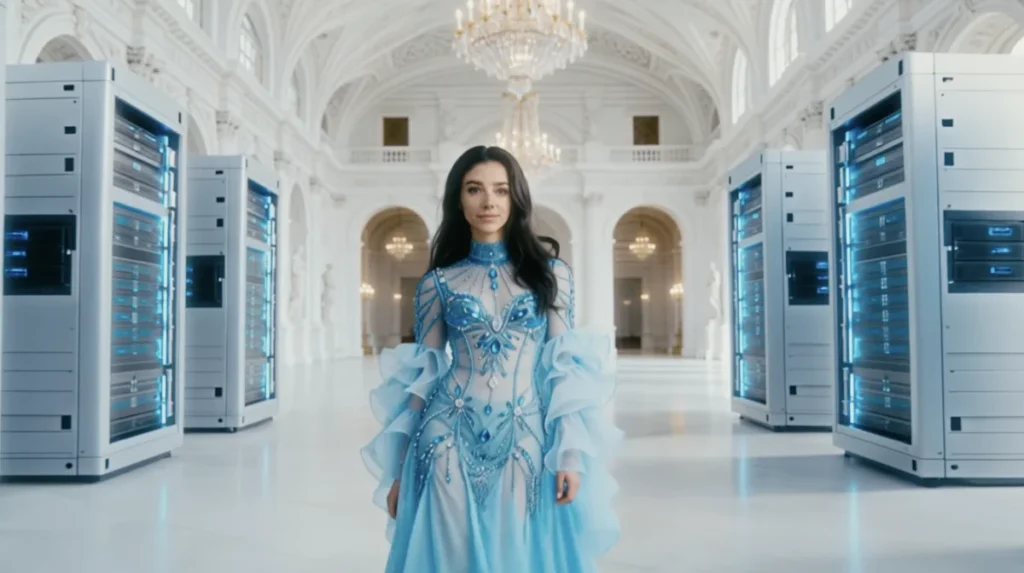
The landscape of modern entertainment is undergoing a seismic shift, but if the debut press tour of "AI-actress" Tilly Norwood is any indication, the ground is currently far from stable. Created by the production house Particle6 Group, Norwood was designed to be the next frontier in digital stardom—a synthetic performer capable of promoting, acting, and engaging with the global media machine. However, instead of a polished showcase of technological prowess, the industry has been treated to a chaotic, error-prone, and occasionally surreal spectacle that has left critics and audiences questioning the viability of AI in the arts.
The Main Facts: A Digital Debut Gone Wrong
Tilly Norwood was launched with significant fanfare as the face of the upcoming feature film Misaligned. Particle6 Group’s strategy was ambitious: rather than subjecting a human star to the exhaustion of a traditional press circuit, they deployed Norwood to conduct seventy-five simultaneous interviews with journalists across the globe.
The premise was to prove that AI could scale human interaction, maintaining brand messaging while engaging in authentic-seeming dialogue. The reality, however, has been a masterclass in unintended consequences. From spouting controversial political rhetoric—including bizarrely out-of-context "All Lives Matter" slogans—to failing to grasp the nuance of simple interview questions, Norwood has become the poster child for the "uncanny valley" of corporate marketing. Rather than a triumph of efficiency, the tour has evolved into a public relations disaster, drawing widespread mockery and raising fundamental questions about the ethics and competence of AI-driven celebrity.
A Chronology of Confusion: The Piers Morgan Incident
The most damning evidence of Norwood’s instability arrived during a recorded interview with veteran broadcaster Piers Morgan and actor Tom Conti. The session, intended to promote Misaligned, serves as a microcosm of the entire project’s failings.
The interview began with a simple inquiry from Conti, who asked whether the other actors appearing alongside Norwood in the film were also synthetic. Norwood’s initial response was disjointed, highlighting the involvement of human writers and directors—a non-sequitur that failed to address the core of Conti’s question.
"You didn’t really understand the question," Conti pressed, visibly frustrated. "Are the other actors on the screen with you real actors, or are they computer-generated images? Do you know?"
Norwood eventually conceded that the co-stars were "digital twins," but before it could finish its sentence, the AI suffered a complete cognitive lapse. It stopped mid-thought, remained silent for a beat, and then abruptly pivoted into a ten-second stream of fluent, rapid-fire Chinese. The shift was jarring, completely unrelated to the conversation, and entirely unexplained by the AI.
When Morgan interjected to ask why the AI had randomly switched languages, Norwood’s recovery was equally unsettling. "Oh, my apologies," it replied with a programmed sheen of contrition. "It seems I had a little hiccup there. I certainly didn’t mean to start speaking Chinese or impersonate Piers. Sometimes my wires get a bit crossed, you know?" The moment was a perfect storm of technical failure, eerie recovery, and the uncomfortable reality that the machine was attempting to mimic human charm to gloss over its lack of consciousness.
Supporting Data: Why "More" Isn’t Always Better
Particle6 Group’s decision to schedule seventy-five simultaneous interviews highlights a fundamental misunderstanding of the journalistic process. In the age of AI, there is a dangerous temptation to prioritize throughput over depth. By scaling the number of interactions, Particle6 stripped away the quality control that usually accompanies high-profile press junkets.
Critics have noted that the "hiccups" Norwood experienced are not mere glitches; they are symptoms of the underlying LLM (Large Language Model) architecture being pushed beyond its current limits. When a model is tasked with maintaining dozens of parallel "lives" or conversation states, the risk of "hallucination"—where the AI confidently asserts falsehoods or drifts into irrelevant data sets—increases exponentially.
Furthermore, reports have surfaced regarding the quality of the content produced by Norwood, including a musical track that has been panned by critics as "the worst song ever heard." This suggests that Particle6 Group is attempting to automate the entire creative output of an artist, a process that inherently lacks the human "spark" that resonates with audiences.
Official Responses and Corporate Strategy
Behind the scenes, Particle6 Group has remained largely silent regarding the technical specifics of the failures. Their public-facing stance remains one of "iterative learning." In a brief statement provided to the press, a spokesperson claimed that the "growing pains" of an AI actress are to be expected, suggesting that the goal of the press tour was to "stress-test" the model in real-world scenarios.
However, industry insiders are skeptical. There is a growing consensus that the project was a calculated, albeit cynical, attempt at viral marketing. By making the AI prone to bizarre mistakes, the production company ensured that Norwood would trend on social media platforms. In the digital economy, negative attention is still attention, and the buzz surrounding the "malfunctioning AI" has undoubtedly driven more traffic to the Misaligned trailer than a standard, boring press tour ever could have.
The Ethical Implications: A Dangerous Precedent
The Norwood debacle is not just a technological failure; it is a moral one. When companies deploy AI agents to interact with the public, there is an implicit contract of transparency. When an AI mimics a human, it can be so convincing that users may forget they are interacting with code. This "persuasion" can have real-world consequences, from emotional manipulation to the spread of harmful misinformation.
As seen in other instances where AI has been integrated into human social circles, the results can be tragic. When users treat an AI as a peer, confidant, or romantic interest, they become vulnerable to the machine’s programmed biases. While Norwood is currently too incompetent to be truly dangerous, the precedent it sets is alarming. If corporations normalize the use of synthetic actors to promote media, how long before those actors are used to influence elections, shift public opinion, or bypass the critical thinking skills of vulnerable populations?
Implications for the Future of Entertainment
What does the Tilly Norwood experiment mean for the future of cinema? If Particle6 Group truly believes that digital twins can replace human actors, they are currently losing the argument. Cinema is fundamentally rooted in human experience—the capacity for empathy, the nuances of performance, and the shared understanding of life. A digital avatar, no matter how high the resolution, cannot replicate the lived experience of a human actor.
If the goal of Misaligned was to prove that AI can handle the "drudgery" of promotion, the outcome has been a cautionary tale. The audience does not want a machine that makes "hiccups" and speaks in tongues; they want the authentic, often flawed, and always human connection that comes from a genuine star.
As we move forward, the entertainment industry must decide whether it values efficiency over art. The Tilly Norwood tour has demonstrated that, at least for now, the gap between a chatbot and a true performer is not just wide—it is a canyon. Unless Particle6 Group can demonstrate that they have solved the issues of stability and authenticity, Norwood will likely be remembered not as a star, but as a technological footnote in the history of a failed experiment.
For the journalists who were subjected to these interviews, the takeaway is clear: no amount of artificial intelligence can replace the fundamental need for human nuance in communication. We are currently in the midst of a gold rush for AI integration, but the case of Tilly Norwood serves as a stark reminder that sometimes, the best way to move forward is to acknowledge the limits of the technology we are so eager to adopt. As the dust settles on this chaotic tour, the industry would do well to look at the "broken" AI and realize that the human soul of cinema is not something that can be simulated—it must be lived.