Beyond the Frontier: Why Africa Holds the True Economic Prize of the Global AI Revolution
By Yemi Osinbajo and Alexander Tsado
Published: September 18, 2026
Section: Innovation & Technology
Main Facts
The global conversation surrounding artificial intelligence is dominated by a persistent narrative: a high-stakes, bipolar race between the United States and China to engineer the most advanced "frontier" models. Billions of dollars are poured into parameter scaling, massive data centers, and general-purpose intelligence designed to mimic or surpass human cognition across every conceivable domain.
However, this dominant perspective overlooks the true economic prize of the AI revolution. According to technology strategists and economic analysts, the ultimate value of artificial intelligence will not be captured solely by the architects of the largest foundational models, but rather by those who successfully deploy practical, context-aware intelligence into dynamic, high-growth markets.
Chief among these frontiers is Africa. Characterized by a youthful demographic, rapid urbanization, and an entrepreneurial spirit, the continent stands as a prime candidate for transformative digital leapfrogging. Unlike mature economies weighed down by legacy infrastructure, African nations possess the agility to embed AI directly into the bedrock of emerging financial, agricultural, healthcare, and educational systems.
Historically, the global innovation chain has relegated developing regions to the role of end-consumers. Breakthroughs were conceptualized, financed, and commercialized in Silicon Valley, Shenzhen, or European capitals, before being exported to Africa on terms dictated entirely by foreign entities. The structural vulnerabilities of this model were laid bare during the COVID-19 pandemic, when African populations found themselves at the back of the global queue for life-saving vaccines—a stark reminder of the perils of technological and industrial dependency.
In the era of artificial intelligence, African leaders, technologists, and policymakers are determined to rewrite this script. Rather than remaining passive consumers of imported algorithms, the continent is mobilizing to build, adapt, and govern AI solutions tailored to its own socio-economic realities.
Chronology: From Digital Exclusion to Sovereign AI
To understand Africa’s current positioning in the AI landscape, it is essential to trace the evolution of the continent’s relationship with modern technology over the past quarter-century.
Phase 1: The Telecom Leap (2000–2010)
At the turn of the millennium, Africa largely missed the desktop computing revolution due to prohibitive hardware costs and a near-total absence of fixed-line telecommunications infrastructure. However, the subsequent mobile telephony boom fundamentally altered the continent’s trajectory. By bypassing landlines entirely, countries like Kenya, Nigeria, and South Africa adopted mobile cellular networks at unprecedented speeds. This era laid the groundwork for homegrown financial innovation, most notably exemplified by the launch of M-Pesa in Kenya in 2007, proving that African consumers and entrepreneurs could pioneer mass-market digital utilities.
Phase 2: The Fintech and Startup Wave (2011–2020)
Buoyed by mobile penetration, the 2010s saw the rise of an indigenous tech ecosystem. Venture capital began trickling—and eventually flooding—into African tech hubs in Lagos, Nairobi, Cape Town, and Cairo. Fintech companies emerged to bank the unbanked, providing micro-loans, digital wallets, and cross-border payment solutions. During this period, local developers recognized that imported software often failed to account for fragmented identification systems, informal economies, and cash-reliant supply chains, necessitating localized engineering.
Phase 3: The Pandemic Wake-Up Call (2020–2022)
The outbreak of COVID-19 exposed the deep fragility of global supply chains for developing nations. Vaccine nationalism in the Global North left African countries isolated, forcing a profound re-evaluation of self-reliance. Governments and regional bodies realized that reliance on foreign intellectual property in critical sectors—health, food security, and now advanced technology—was an existential risk.
Phase 4: The AI Awakening and Strategic Localization (2023–2026)
Following the global generative AI explosion, African innovators swiftly pivoted from general fascination to pragmatic deployment. Rather than attempting to out-compute tech giants in training trillion-parameter foundational models from scratch, African researchers focused on localized fine-tuning, agricultural diagnostics, vernacular natural language processing (NLP), and resource-efficient edge computing. By 2026, regional initiatives, pan-African policy frameworks, and sovereign AI strategies began taking root in economic powerhouses like Nigeria, Rwanda, and South Africa.
Supporting Data and Economic Realities
The economic rationale for prioritizing practical AI deployment in Africa is anchored in compelling demographic and macroeconomic data:
- Demographic Dividend: Africa is the youngest continent on Earth, with a median age of under 20 years. By 2050, the continent is projected to house a quarter of the global population and nearly a third of the global workforce. Integrating AI literacy and digital tools into this massive workforce represents an unparalleled productivity multiplier.
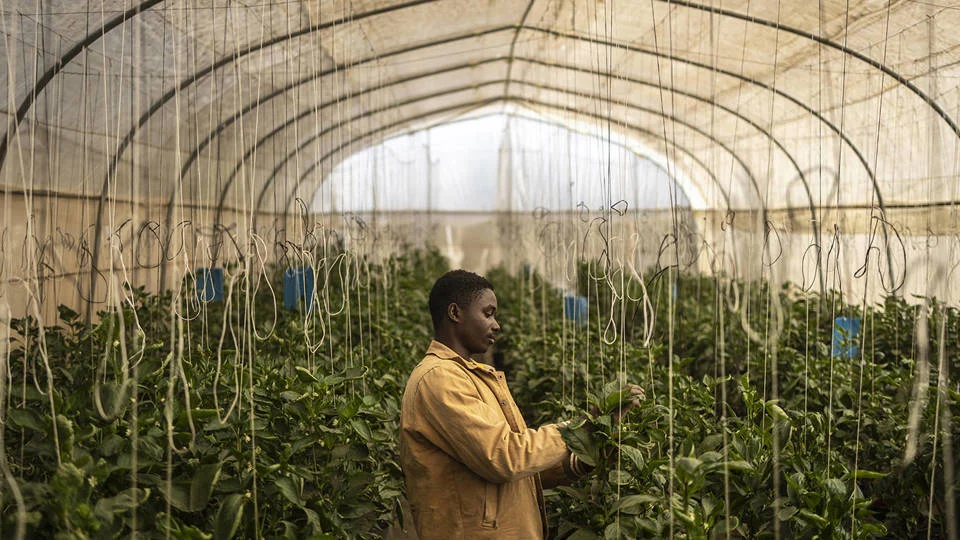
- Leapfrogging Potential: According to recent economic studies, the integration of artificial intelligence into traditional sectors across Sub-Saharan Africa could unlock billions in economic value over the next decade. Agriculture—which employs over 60% of the continent’s population—stands to gain immensely through precision farming, predictive weather modeling, and optimized supply chain logistics.
- Venture Capital Resilience: Despite global contractions in venture funding, investments in African artificial intelligence and deep-tech startups have demonstrated structural resilience. Investors are increasingly recognizing that solutions solving foundational friction points (such as credit scoring for informal merchants or diagnostic triage in understaffed rural clinics) offer higher marginal utility and retention than saturated consumer apps in the West.
- The Cost of Inaction: Failing to domesticate AI risks widening the global inequality chasm. Without localized models trained on indigenous datasets, African languages, cultural nuances, and economic behaviors will remain marginalized within global digital ecosystems, entrenching a new form of digital colonialism.
Official Responses and Strategic Policy Frameworks
Recognizing both the immense opportunities and the severe risks of unregulated technological dependency, African governments, multilateral institutions, and regional bodies have initiated a coordinated policy push.
National Artificial Intelligence Strategies
Governments in Abuja, Nairobi, Kigali, and Cairo have rolled out national AI roadmaps. These strategies emphasize:
- Data Sovereignty: Ensuring that data generated by African citizens remains within legal jurisdictions and is utilized for local developmental priorities rather than being vacuumed up exclusively by foreign entities.
- Infrastructure Investment: Public-private partnerships aimed at establishing local data centers powered by sustainable energy sources, reducing latency, and lowering the cost of compute for local developers.
- Educational Overhauls: Curriculum reforms geared toward STEM fields, vocational tech training, and digital literacy to prepare the burgeoning youth population for an automated economy.
Pan-African Governance and Collaboration
The African Union (AU) has intensified efforts to formulate a unified continental approach to artificial intelligence ethics, safety, and regulation. Recognizing that fragmented national laws could impede cross-border digital trade, the AU is working to harmonize policies that protect user privacy while encouraging open-source innovation and data-sharing agreements among member states.
International Partnerships on Equitable Terms
In diplomatic forums, African leaders have pushed back against paternalistic technology transfer models. The prevailing diplomatic consensus in capitals like Abuja and Lagos is clear: foreign investment and technological collaboration are welcome, but only on terms that prioritize local capacity building, intellectual property co-ownership, and the active inclusion of African engineers in global standard-setting bodies.
Implications: The Future of Global Intelligence
The strategic shift toward viewing Africa as the prime theater for practical AI deployment carries profound implications for the global economy, international relations, and the trajectory of technological development itself.
1. Redefining "Advanced" Technology
For too long, technological advancement has been measured by raw computational scale—the sheer size of a model or the volume of parameters it processes. The African experience forces a necessary redefinition of sophistication. In resource-constrained environments, true intelligence is measured by efficiency, adaptability, and contextual relevance. An AI model that can accurately diagnose crop disease in a remote Nigerian farming community using low-bandwidth mobile networks and local dialects is technologically more sophisticated—and economically more valuable—than a generalized chatbot trained in a climate-controlled Silicon Valley server farm.
2. Mitigating Global Bias and Enhancing Model Robustness
By incorporating diverse datasets from Africa’s multi-ethnic, multilingual societies, the global AI ecosystem becomes inherently more robust. Models trained predominantly on Western or East Asian data suffer from systemic blind spots. Integrating African perspectives, languages, and socio-economic realities into the foundational fabric of global AI helps mitigate bias and moves the industry closer to truly universal intelligence.
3. Geopolitical Non-Alignment and Technological Autonomy
As the US-China tech rivalry intensifies, African nations are strategically positioning themselves to avoid falling into a new technological bloc system. By fostering indigenous innovation, cultivating local compute infrastructure, and diversifying international partnerships, African economies are forging a path of technological non-alignment. This assertiveness ensures that the continent dictates its own digital destiny rather than serving as a proxy battlefield for external superpowers.
Conclusion
The global AI revolution is frequently framed as a zero-sum game between dominant superpowers. Yet, the true measure of artificial intelligence’s success will not be found in how many parameters a frontier model can scale, but in how deeply and equitably intelligence improves human lives. By seizing the initiative, investing in sovereign capabilities, and focusing relentlessly on practical, high-impact deployment, Africa is poised to transform from a historical consumer of imported innovations into the vibrant epicenter of the world’s most meaningful technological renaissance.