The Deep Heat Revolution: Mazama Energy Secures $135M to Unlock Supercritical Geothermal Power
In a landmark development for the global energy transition, geothermal startup Mazama Energy announced this Thursday that it has successfully closed an oversubscribed $135 million Series B funding round. As the race to power energy-hungry AI data centers intensifies, Mazama is positioning itself as a formidable "dark horse" in the energy sector, leveraging advanced drilling techniques to tap into the immense, untapped potential of super-hot rock deep beneath the Earth’s crust.
With this substantial capital injection, the company plans to accelerate the deployment of horizontal wells designed to reach extreme depths. These wells, which target temperatures capable of generating 15 megawatts (MW) of electricity per unit, represent a significant leap forward from traditional geothermal capabilities.
Main Facts: A New Frontier in Renewable Energy
Mazama Energy’s core value proposition lies in its ability to access "supercritical" geothermal energy—a state of matter where water, subjected to immense pressure and heat, behaves as both a liquid and a gas. By drilling into rock at depths exceeding 15,000 feet, where temperatures reach a blistering 750° F (400° C), Mazama aims to harness energy densities that dwarf conventional geothermal and traditional renewable sources.
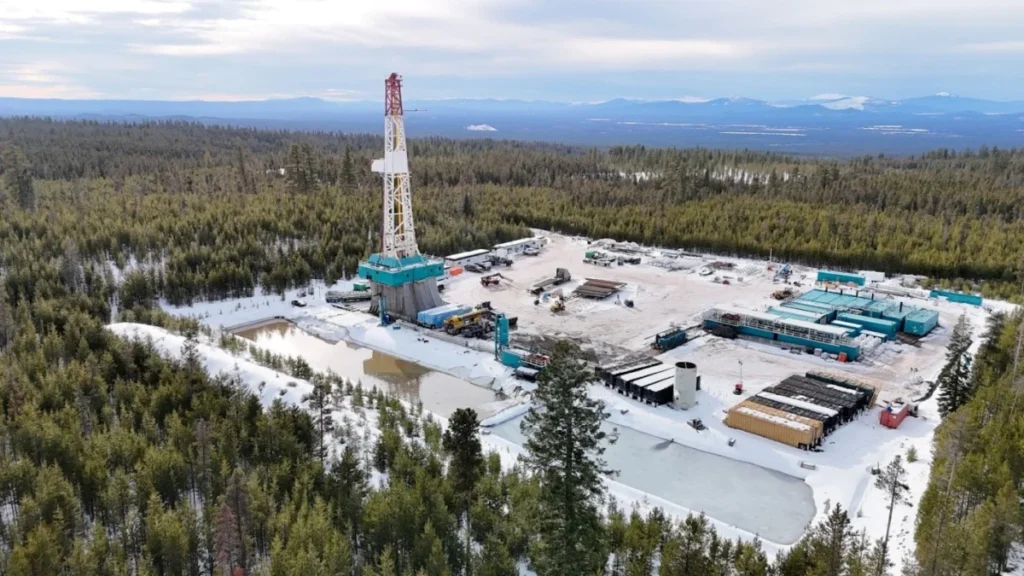
The startup’s primary project in Oregon has undergone a massive re-evaluation of its potential. While investor Vinod Khosla previously estimated the site’s capacity at 5 gigawatts (GW) just last year, new data suggests the site could produce as much as 10 GW. This 100% upward revision underscores the rapid technological maturation occurring within the enhanced geothermal sector.
The $135 million round was led by Centaurus Capital and Doerr Capital, with strategic participation from energy giants ConocoPhillips and Shell Ventures. Existing heavyweights, including Khosla Ventures—which originally incubated the startup—and Gates Frontier, reaffirmed their confidence by reinvesting, while new players such as SiteGround Capital and the Jeffrey and Marieke Rothschild Foundation joined the cap table.
Chronology: From Lab-Bench Innovation to Field Deployment
Mazama Energy’s ascent has been marked by a rapid transition from theoretical research to high-stakes field engineering.
- Incubation Phase: Emerging from the laboratories of Khosla Ventures, the company was founded on the premise that the geothermal industry had been limited by a lack of drilling innovation.
- Early Development: The team focused on adapting drilling technologies—originally perfected in the oil and gas sector—to withstand the abrasive, high-heat environments of the deep subsurface.
- 2024 Milestones: Throughout the past year, Mazama demonstrated the ability to drill past 10,000 feet in just 15 days, a velocity that makes deep-well exploration economically viable for the first time.
- Late 2025/2026 Outlook: With the Series B capital secured, the company is preparing to initiate electricity generation as early as next year.
- The 2030 Horizon: By the end of the decade, Mazama targets the completion of its first major site, with an expected output of 200 MW—a crucial stepping stone toward its long-term vision of gigawatt-scale production.
Supporting Data: Why "Super-Hot" Changes the Math
The physics behind Mazama’s technology provides the strongest argument for its potential impact. Traditional geothermal plants operate by tapping into hydrothermal reservoirs—naturally occurring pockets of hot water or steam. These are geographically rare.
Enhanced Geothermal Systems (EGS), however, do not require these rare geological accidents. Instead, they create their own reservoirs by drilling into dry, hot rock. Mazama’s specific focus on "supercritical" fluids represents the cutting edge of this field. When water reaches a supercritical state, it exhibits high density and low viscosity, allowing it to transport heat from the rock to the surface with extraordinary efficiency.
According to research from the University of Twente and the Clean Air Task Force, tapping into just 1% of the world’s super-hot rock potential could yield over 63 terawatts (TW) of electricity. To put that in perspective, the current total global power consumption is significantly lower than this theoretical capacity. By accessing this "baseload" power—energy that is available 24/7, regardless of weather conditions—Mazama is tackling the intermittency issues that plague wind and solar, making it a natural partner for the massive, continuous electricity requirements of hyperscale data centers.
Official Responses and Strategic Backing
The composition of the investment round speaks volumes about the industry’s changing appetite for geothermal risk. The presence of oil and gas majors like ConocoPhillips and Shell Ventures signals a recognition that the drilling expertise required for deep geothermal is a natural evolution for firms historically focused on hydrocarbons.
"The industry is moving toward a realization that the infrastructure and technical knowledge of the past can be repurposed for the clean energy future," industry analysts noted following the announcement. By leveraging the existing talent pool from the oil patch—engineers accustomed to deep-well construction—Mazama has managed to bypass the slow learning curves typical of energy startups.
Furthermore, the participation of the Jeffrey and Marieke Rothschild Foundation and Gates Frontier suggests a high level of institutional interest in the scalability of "climate-positive" investments. For these investors, Mazama is not just a utility play; it is a critical component of a decarbonized grid that must support the unprecedented energy load of artificial intelligence.
Implications: Powering the AI Boom
The convergence of the AI revolution and the energy transition has created a perfect storm for companies like Mazama Energy. Tech giants are currently scrambling to secure reliable, carbon-free energy to sustain the power-hungry GPUs training large language models. While natural gas remains a popular short-term solution for grid stability, it does not satisfy the net-zero mandates many of these companies have adopted.
The Grid Reliability Factor
Geothermal energy is uniquely suited for the AI era because it provides "firm" power. Unlike solar farms that go dark at night or wind turbines that require favorable weather, geothermal plants operate at capacity factors often exceeding 90%. As AI data centers demand constant uptime, the ability of geothermal to provide consistent, high-density power makes it a preferred alternative to battery-backed intermittent renewables.
Scaling Challenges
Despite the optimism, significant hurdles remain. Drilling to 15,000 feet is an engineering feat fraught with risks, including equipment failure under extreme thermal stress and the high cost of material logistics. Mazama’s success will depend on its ability to drive down the "cost per well" through repeatable processes. The company’s plan to secure a second development site indicates that it is already thinking about economies of scale, moving beyond a single experimental project to a portfolio-based business model.
Competitive Landscape
Mazama is not alone in the race to crack the geothermal code. Other startups are experimenting with closed-loop systems, plasma drilling, and millimetric wave technologies to reach deeper into the crust. However, Mazama’s focus on proven, high-velocity drilling techniques—derived from the oil industry—gives it a distinct advantage in terms of timeline. By using "off-the-shelf" expertise for "frontier" goals, they are de-risking the development process for their investors.
Looking Forward: A Decarbonized Future
As Mazama Energy moves into the next phase of its growth, the industry will be watching its Oregon site closely. If the startup can successfully hit its 200 MW target by 2030, it will provide a blueprint for how geothermal can scale from a niche utility source to a pillar of the global power grid.
The implications for the climate are profound. If the "super-hot" potential is realized, the Earth itself becomes the world’s largest battery, capable of providing clean, consistent power to every corner of the planet. For Mazama, the $135 million in Series B funding is merely the "drill bit" that allows them to start the work. The true test will be the energy they pull from the ground, fueling not just the next generation of computing, but the next generation of civilization’s energy needs.
With a blend of visionary engineering and pragmatic industrial backing, Mazama Energy has signaled that the geothermal age is no longer a distant dream—it is a project currently under construction.