The $300 Billion Storm: Why Florida’s Century of Growth Has Created a Financial Powder Keg
While the Atlantic hurricane season has remained relatively subdued in its early stages, a developing system east of Bermuda is serving as a stark reminder of the volatility inherent in the tropics. As the National Hurricane Center monitors this potential disturbance, a sobering report from the Swiss Re Institute has shifted the conversation from meteorology to macroeconomics, highlighting the catastrophic financial exposure facing the United States should a major hurricane strike a densely populated urban center today.
According to the Zurich-based reinsurer, a repeat of a "Great Miami Hurricane"-style event could trigger insured losses exceeding $300 billion—a figure that would shatter all previous records for a natural catastrophe. This projection underscores a harrowing reality: as Florida’s population continues to surge and coastal property values skyrocket, the nation’s financial infrastructure is increasingly vulnerable to the whims of the Atlantic.
The Chronology of Vulnerability: From 1926 to the Present
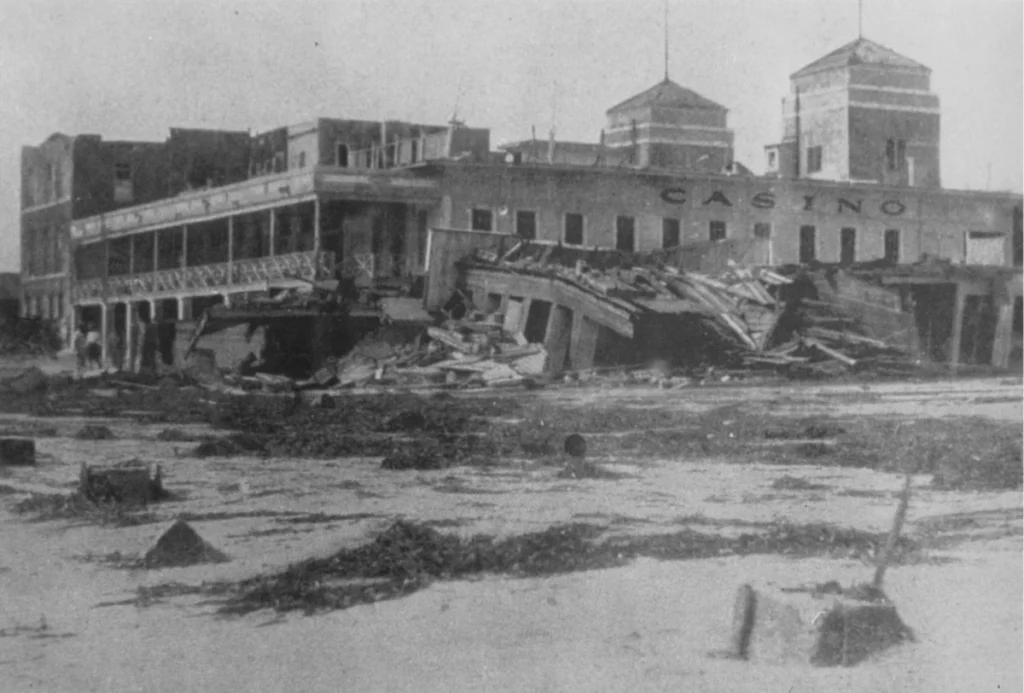
To understand the scale of the current risk, one must look back exactly one century. In 1926, the Great Miami Hurricane tore through South Florida, leaving a trail of destruction that fundamentally reshaped the region. At the time, Miami-Dade County was a burgeoning frontier with roughly 100,000 residents. Today, that same geography is home to approximately 2.8 million people.
Swiss Re’s analysis provides a chilling comparative timeline of how inflation, urban sprawl, and property development have compounded the potential for loss:
- 1926 (The Great Miami Hurricane): A Category 4 storm of this magnitude, if it were to strike the modern, high-density Miami metropolitan area, would result in approximately $200 billion in insured losses.
- 1992 (Hurricane Andrew): Thirty-four years ago, Hurricane Andrew made landfall near Miami. It remains a watershed moment for the insurance industry, having forced a total overhaul of Florida’s building codes. In today’s currency, an event identical to Andrew would cost insurers nearly $100 billion, far exceeding the $25 billion it cost at the time.
- 2022 (Hurricane Ian): Striking western Florida as a high-end Category 4, Ian served as a recent benchmark for modern catastrophe modeling. Industry experts, including Karen Clark & Co., estimated insured losses at approximately $63 billion. While devastating, experts warn that Ian missed the most heavily populated urban corridors; a direct hit on a city like Miami or Tampa Bay would present an entirely different economic calculus.
Supporting Data: The Anatomy of a $300 Billion Event
The staggering $300 billion estimate is not mere speculation; it is the result of rigorous catastrophe modeling that accounts for current "exposure concentration." In the Miami metropolitan area alone, there are more than two million homes with a combined reconstruction cost exceeding $600 billion. These structures are currently classified as being at moderate or greater risk of hurricane wind damage.
The Swiss Re report, authored by Lucia Bevere, Erik Lindgren, and James Finucane, illustrates that the growth in exposure is twofold: it is a product of the sheer volume of new construction and the high-end nature of modern coastal real estate. As wealth flows into Florida’s coastal counties, the "concentration of value" per square mile has reached unprecedented levels.
The Rise of Alternative Capital
Despite these grim projections, the insurance industry is not standing still. The report highlights that property insurance carriers are better equipped today than at any point in history, thanks to a combination of traditional reinsurance and the burgeoning $60 billion catastrophe (cat) bond market.
"Growth in both traditional and alternative reinsurance capital may help keep pace with rising natural catastrophe risks," the authors noted. "U.S. wind is the dominant risk in the cat-bond market, and Florida tail-risk capacity in reinsurance and retrocession markets relies heavily on this additional alternative capacity." By spreading the risk globally through capital markets, the industry has created a buffer that allows for greater resilience against a single, "mega-loss" event.
Official Responses and Strategic Perspectives
Balz Grollimund, head of catastrophe perils at Swiss Re, emphasized that the danger is not exclusively tied to the intensity of the storms themselves, but rather to the "target" they hit.
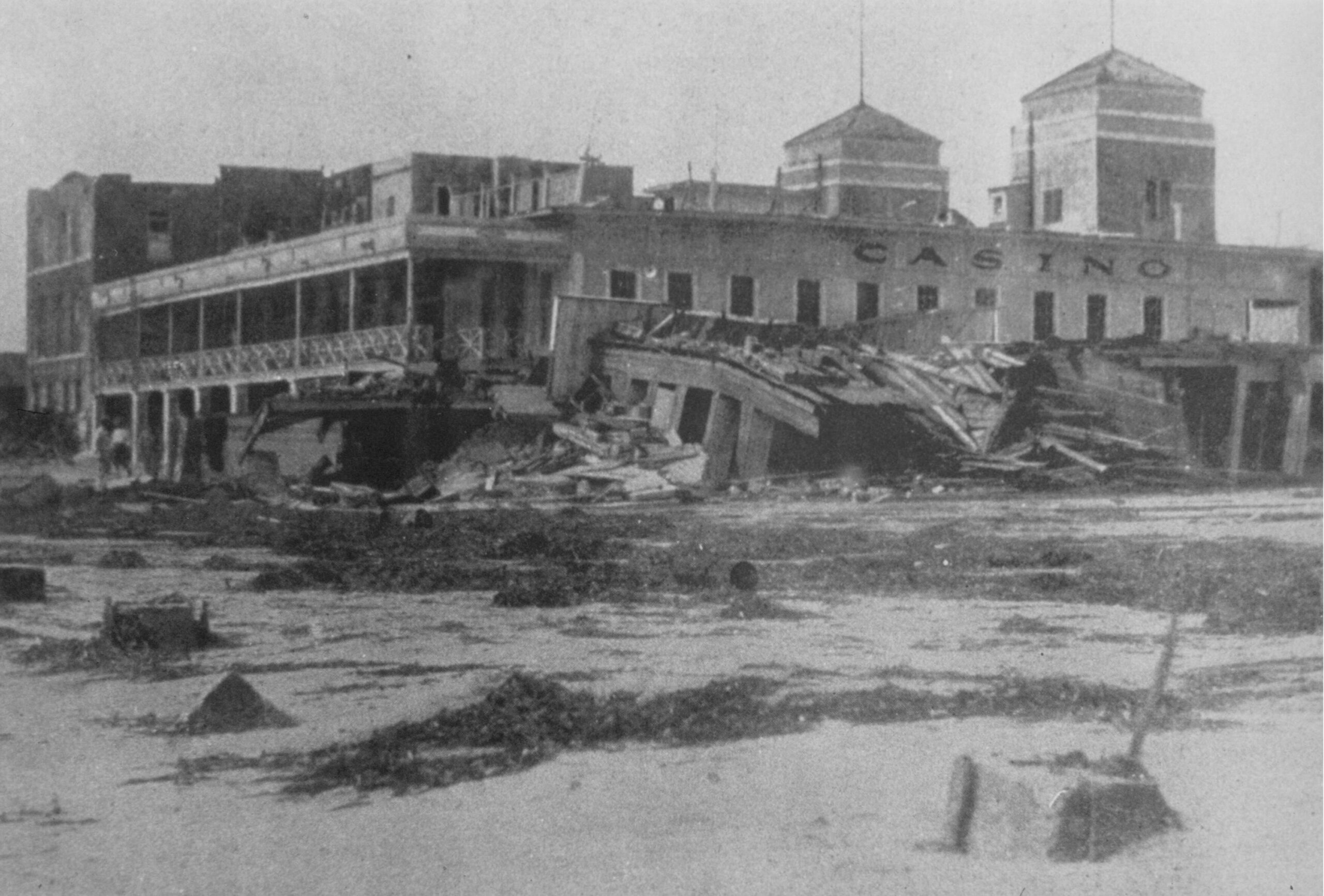
"One hundred years after the Great Miami Hurricane, the question is not simply how powerful the next major hurricane will be, but what it will encounter when it reaches shore," Grollimund said. "That lesson extends well beyond Florida: As populations and asset values increase in areas exposed to natural catastrophes, so does the potential for large insured losses."
This sentiment is echoed by risk management experts who argue that financial preparedness must be coupled with physical mitigation. The industry has increasingly pushed for "disciplined accumulation management," where insurers use high-resolution satellite imagery and advanced modeling to track exactly how much total insured value is concentrated in specific coastal grids.
Implications: The Path Toward Resilience
The implications of the Swiss Re report are clear: the era of "easy" insurance underwriting in coastal regions is over. The path forward for Florida—and indeed, any hurricane-prone coastal state—rests on a three-pillar strategy:
1. Robust Building Codes
The efficacy of Florida’s post-Andrew building codes cannot be overstated. Newer homes that adhered to strict wind-resistance standards fared significantly better during Hurricane Ian than their older counterparts. Retrofitting, particularly the installation of storm-proofed roofs and hurricane-rated windows, has proven to be the single most effective way to reduce the "loss ratio" during high-wind events.
2. Risk Transfer and Capacity
As the potential for a $300 billion event grows, the insurance industry must ensure that its capital reserves are sufficiently liquid. The reliance on the alternative capital market (cat bonds) provides a necessary safety valve, but this market is sensitive to global interest rates and investor sentiment. Maintaining a robust flow of capital into these instruments is essential for the long-term stability of the Florida insurance market.
3. Smart Urban Planning
The Swiss Re data serves as a warning against continued, unchecked development in high-risk zones. Policymakers face the difficult task of balancing economic growth with the reality of climate exposure. "As exposures continue to accumulate, maintaining sufficient risk-transfer capacity must go hand in hand with robust modeling, disciplined accumulation management and effective mitigation," the report concluded.
Conclusion
The potential for a $300 billion hurricane is no longer a theoretical exercise in actuarial science; it is a mathematical certainty if the current trajectory of coastal development remains unchanged. While the industry has made strides in modeling and capital capacity, the sheer physical value of what is being placed in the path of the next "Great Hurricane" has grown at a pace that arguably outstrips historical preparation.
As the current season continues, the eyes of the insurance world remain fixed on the Atlantic. But the real focus, according to experts, should be on the ground—in the millions of homes, businesses, and infrastructure projects that now define the Florida coastline. A century of progress has brought immense prosperity to the region, but it has also constructed a financial landscape that is more exposed, more complex, and more costly than anything the world has ever seen. The "Great Miami Hurricane" was a tragedy of its time; the next one, should it occur, will be a test of the global financial system’s endurance.