The Hidden Cost of the AI Revolution: Why Communities Are Rising Up Against Data Centers
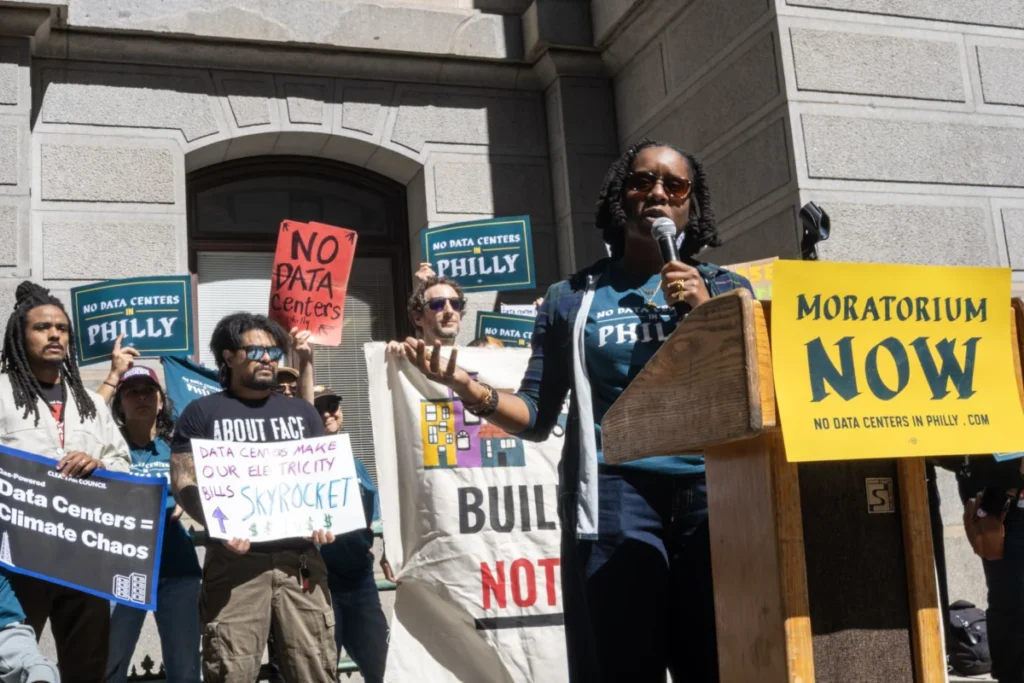
Across the United States, the rapid expansion of artificial intelligence is creating a paradox. While the tech industry touts the transformative power of generative AI as the next industrial revolution, a growing number of Americans are finding themselves in the crosshairs of this massive infrastructure build-out. From Philadelphia to Reno, residents are debating the true cost of progress as they face the prospect of massive, energy-hungry data centers being built in their backyards.
While industry proponents promise a windfall of high-tech jobs and local economic development, the pitch is failing to convince the public. A majority of Americans now oppose the construction of these facilities in their immediate vicinity, citing deep-seated concerns over environmental degradation, energy grid strain, and a lack of transparency. As the physical footprint of the cloud continues to expand, it is increasingly clear that the "virtual" world of AI has very real, and sometimes devastating, impacts on the tangible communities where it is housed.
A Legacy of Industrial Trauma: The Philadelphia Context
For activist Shawmar Pitts, the debate over data centers is not a speculative exercise in land-use planning; it is a battle for survival. A lifelong resident of the Grays Ferry neighborhood in Southwest Philadelphia, Pitts has spent his life in the literal shadow of American industrialization.
Pitts grew up adjacent to the Philadelphia Energy Solutions (PES) oil refinery, once the largest on the East Coast. The site, which processed up to 335,000 barrels of crude oil daily, was a constant presence in the lives of Grays Ferry residents until it was shuttered following a catastrophic explosion in 2019. For years, the community suffered from high rates of chronic health conditions, yet the connection between their physical environment and their ailments remained largely obscured until 2018.

That year, the environmental justice organization Philly Thrive held a community outreach event, detailing the proposed expansion of the refinery and the associated health risks. Pitts recalls the moment he read the literature provided by the group. "I’m looking at all the sicknesses on this paper, and I’m like, ‘My mother has this, my sister has that, my next-door neighbor suffers from this’—every house, someone has something on that list," Pitts told TechCrunch. "From that point, I was all the way in."
Today, as the managing co-director of Philly Thrive, Pitts is leading the "No Data Centers in Philly" campaign. While there are no final construction permits issued yet, city officials have identified two prime locations for potential data center development: one in Northeast Philadelphia and another in the historically overburdened Grays Ferry neighborhood. For residents like Pitts, the prospect of a new industrial occupant—even one as modern as a data center—feels like an assault on a community still healing from the trauma of the refinery.
The Human Toll: Voices from the Frontlines
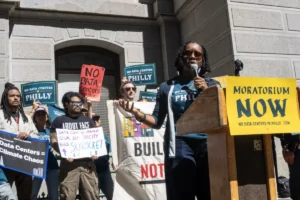
The resistance in Philadelphia is mirrored in cities across the nation, but it is particularly visceral in communities that have already borne the brunt of heavy industry. At a rally held at Philadelphia’s City Hall this past Monday, the rhetoric was sharp and deeply personal.
Philly Thrive board president Sonya Sanders spoke to the crowd, channeling the grief of a neighborhood that has lost too many members to illness. Her husband, also a lifelong Grays Ferry resident, died of a rare bone cancer in 2020. Sanders, who emphasizes that her husband was a non-smoker and non-drinker, believes the refinery’s emissions were the direct cause of his death.

"In my eyes, they killed him," Sanders said at the rally. "The pollution killed him. I believe he would be here today if he wasn’t silently murdered, because it was the pursuit of profit that killed him."
This sentiment resonates with other attendees. Donna Greenberg, a local resident, expressed broader anxieties that go beyond air quality. "I’m worried about pollution," Greenberg noted. "I’m worried about surveillance and the fact that they’re going to have access to information they have no business knowing, and I’m concerned that they’re going to be using water and electricity that takes away from the people and the neighborhoods who need it."
Supporting Data: The Energy-Hungry AI Future
The fundamental friction between AI development and local communities lies in the sheer volume of power these facilities require. The global race to build "AI super-factories" is accelerating at a pace that is fundamentally altering the U.S. energy outlook.
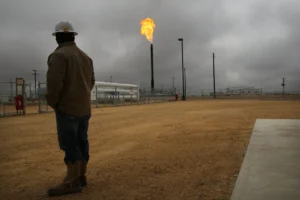
BloombergNEF recently released staggering projections: by 2035, U.S. data centers could consume more natural gas than Germany and Japan combined. To put this in perspective, this is double the projection the firm made just nine months ago. While the industry often frames natural gas as a "cleaner" bridge fuel compared to oil or coal, it is far from harmless.

Burning a single cubic foot of natural gas releases approximately 60 grams of carbon dioxide. The aggregate demand from new data centers is expected to generate an additional 1 million metric tons of greenhouse gas pollution every day—a figure that accounts for roughly 12% of all current U.S. greenhouse gas emissions.
The public health implications are dire. In 2021, Harvard University researchers determined that fossil fuel-related air pollution is responsible for one in five deaths worldwide. As data centers lean on fossil fuels to meet their massive, round-the-clock power needs, this death toll is expected to climb.
Annie Fox, an attorney for the Clean Air Council, highlighted a critical, often overlooked issue during the Philadelphia rally: the reliance on diesel generators. "A typical data center planned in Pennsylvania has hundreds of diesel engines that spew air pollution," Fox explained. "And even if they’re supposedly reserved for emergencies, the government has already suggested that data centers should use those rather than drawing from an overstressed electrical grid during heat waves." As climate change makes heat waves more frequent, the cycle of pollution to power the systems that manage that very heat becomes a self-defeating loop.
Chronology of a Growing Movement
The pushback against data centers has evolved from localized complaints into a national movement.

- 2018–2019: Grassroots groups, particularly in the Philadelphia area, begin organizing around the dangers of fossil fuel refineries.
- 2019: The Philadelphia Energy Solutions refinery closes following a major explosion, leaving a massive, contested plot of land in Grays Ferry.
- 2024–2025: As the AI boom hits a fever pitch, data center developers begin scouting for large, power-adjacent plots of land, including brownfield sites like the old PES refinery.
- July 2026: New York Governor Kathy Hochul signs an executive order halting the construction of new data centers, citing concerns over utility costs and resource strain.
- Late 2026: A wave of cities, including Denver, Indianapolis, Asheville, Charlotte, and Reno, formally adopt moratoriums on data center construction to study the long-term impact on local infrastructure.
- September 2026: The "No Data Centers in Philly" campaign gains momentum, drawing hundreds of participants to City Hall to demand a formal moratorium in Philadelphia.
Official Responses and Implications
The policy response has been fragmented, with some municipalities embracing the tax revenue of data centers while others, feeling the pressure of their constituents, have hit the "pause" button. Governor Kathy Hochul’s move in New York serves as a landmark moment for the movement. "Progress shouldn’t arrive with a higher utility bill, deleted water supply, or noise pollution," Hochul stated. "These data centers can only be built, should only be built in places that want them."
The implications for the AI industry are profound. If major cities continue to follow the path of Denver or New York by implementing moratoriums, developers will be forced to look toward more rural, perhaps less regulated, jurisdictions. However, this creates its own set of challenges, particularly regarding the ability of remote electrical grids to handle such massive load spikes.
For Shawmar Pitts and the residents of Philadelphia, the fight is far from over. The rally at City Hall was merely the kickoff. As the city weighs its economic future, the voices of the people who live in the shadows of industry are growing louder, demanding that the "AI revolution" be held to the same standards of environmental and social accountability as any other major industrial project.
"I just think that our community standing up and fighting back is tremendous," Pitts said. "It takes a lot of effort and a lot of people." In the battle between the high-speed growth of artificial intelligence and the slow, steady health of the local community, the outcome will likely define how the U.S. manages the next era of technological expansion.