The Great Wedge: How the Russia-Ukraine War Rewrites the Geopolitical Calculus for India and China
NEW YORK — When the cannonades began rolling across the Ukrainian steppes in February 2022, foreign policy establishments from Washington to Tokyo immediately began recalculating the global balance of power. Yet, perhaps nowhere outside the immediate theater of conflict has the strategic tectonic plate shifted quite as violently as in the triangular relationship linking Moscow, Beijing, and New Delhi.
On the surface, the prevailing narrative suggests a unified Asian resistance to Western-led sanctions. Both India and China have steadfastly refused to join Western isolation campaigns against the Kremlin, maintaining robust diplomatic channels and serving as critical economic lifelines for Moscow through massive purchases of discounted Russian crude oil and coal. To casual observers in Western capitals, New Delhi and Beijing appear to be reading from the same geopolitical playbook.
However, beneath this veneer of shared defiance lies a fundamental and widening strategic divergence. While India desperately seeks a negotiated settlement to stanch the economic bleeding and stabilize a fracturing global order, China is increasingly comfortable with a protracted conflict. This divergence is not primarily rooted in how either Asian giant views Russia; rather, it is a direct product of how Beijing and New Delhi view each other—and how the war has fundamentally degraded India’s long-standing security architecture.
Main Facts: The Asymmetric Realignment of Eurasia
The central reality of the post-2022 international order is the transformation of Russia from an independent global superpower into the junior partner of an ascendant China. Crippled by sweeping Western sanctions and bogged down in a grinding war of attrition, Moscow has had little choice but to pivot its economic, technological, and diplomatic weight entirely toward Beijing.
For China, this subordinate Russian posture is an unmitigated strategic windfall. Beijing has secured an endless supply of cheap hydrocarbons, a secure northern land border, and a diplomatic shield at the United Nations Security Council, all while tying down Western resources in Eastern Europe.
For India, however, this dynamic represents a profound and hazardous disruption. For over half a century, Moscow served as New Delhi’s most reliable counterweight against Chinese hegemony in Asia. The Soviet Union—and subsequently the Russian Federation—provided the lion’s share of India’s military hardware, nuclear submarine technology, and diplomatic backing during regional crises.
Today, that bedrock partnership is eroding. As Russia grows economically and militarily dependent on Beijing, its capacity and willingness to act as an independent balancer for India evaporate. Moscow can no longer afford to alienate Beijing, leaving New Delhi increasingly isolated in its protracted, high-stakes rivalry with China along their disputed Himalayan frontier.
Chronology: The Evolution of the Sino-Indian-Russian Triangle
To understand how this precarious dynamic materialized, it is necessary to trace the deterioration of the Eurasian strategic landscape over the past decade, accelerated dramatically by the events in Ukraine.
- May–June 2020 (The Galwan Valley Clash): Tensions along the Line of Actual Control (LAC) boil over into violent hand-to-hand combat in the high-altitude Galwan Valley, resulting in the deaths of 20 Indian soldiers and at least four Chinese troops. The incident shatters decades of relative calm, plunging Sino-Indian relations to their lowest point since the 1962 war and prompting India to urgently reassess its defense preparedness.
- February 2022 (The Invasion of Russia and Ukraine): Russia launches its full-scale invasion of Ukraine. Western nations swiftly implement a punishing regime of economic sanctions, prompting Moscow to look eastward for economic survival.
- March–September 2022 (The Energy Pivot): India and China emerge as the primary buyers of discounted Russian Ural crude. Despite intense Western diplomatic pressure, New Delhi defends its purchases as a matter of economic necessity and national interest, paralleling Beijing’s diplomatic cover for Moscow at international forums.
- September 2022 (The Samarkand Summit): At the Shanghai Cooperation Organisation (SCO) summit in Uzbekistan, Indian Prime Minister Narendra Modi delivers a polite yet pointed public reprimand to Russian President Vladimir Putin, declaring that "today’s era is not an era of war." The remark underscores New Delhi’s growing unease with the conflict’s global destabilization.
- 2023–2024 (Institutionalizing the Junior Partnership): Bilateral trade between Russia and China smashes records, clearing $240 billion, with Beijing supplying critical dual-use technologies, microelectronics, and industrial machinery to sustain the Russian war machine. Meanwhile, Russia’s ability to fulfill long-standing Indian defense contracts—such as the delayed delivery of S-400 missile system components—falters due to domestic manufacturing pressures and component shortages.
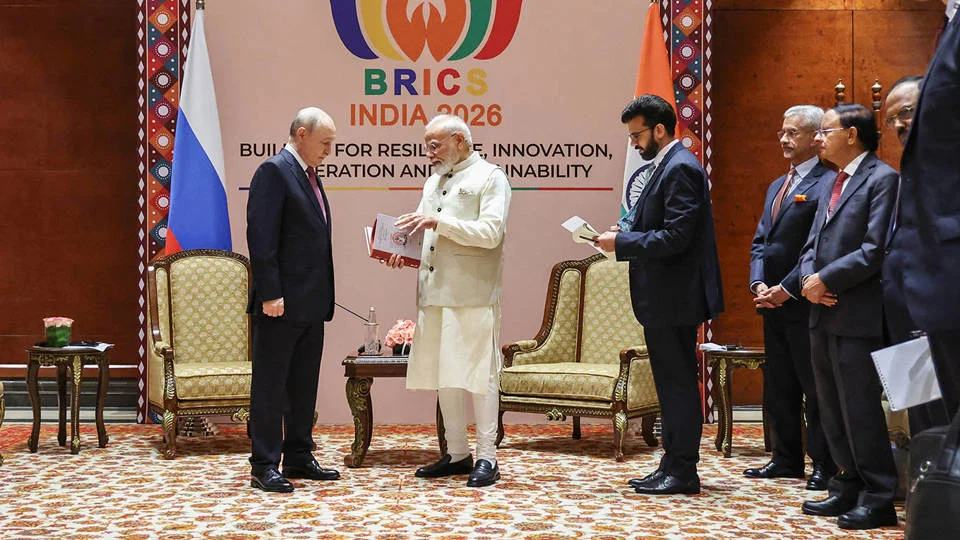
- September 2026 (Current Geopolitical Reality): The conflict drags into its fifth year. India finds itself walking an increasingly narrow diplomatic tightrope, attempting to maintain strategic autonomy while watching its historic defense partner become economically tethered to its primary geopolitical adversary.
Supporting Data: The Economics and Arms of Asymmetry
Cold numbers tell the story of a dramatic power shift within the Russia-China-India matrix. The economic and military metrics illustrate why China holds all the cards while India fights to preserve its strategic breathing room.
Sino-Russian Economic Integration
- Trade Volume: Bilateral trade between China and Russia surged past $240 billion in recent years, insulating Moscow from complete economic collapse.
- Technological Dependence: Over 70% of Russia’s imported machine tools and microelectronics now originate from China, making the Russian industrial base structurally reliant on Beijing.
The Energy Lifeline
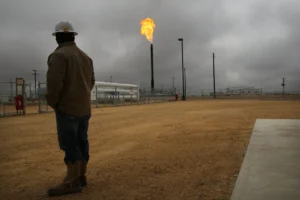
- Oil Imports: Prior to 2022, India imported virtually zero Russian crude. By 2024–2025, Russian oil accounted for roughly 35% to 40% of India’s total crude imports, saving New Delhi billions but binding its energy security closer to a sanctioned actor.
- Chinese Absorption: China continues to import massive quantities of Russian pipeline gas (via Power of Siberia) and seaborne oil at heavily discounted rates, freeing up domestic capital for military modernization aimed at its southern and eastern maritime flanks.
The Defense Supply Chain Erosion
- Historically, India sourced nearly 65% to 70% of its military hardware from the Soviet Union and Russia.
- Due to the Ukraine war, Russian defense factories have been redirected entirely toward domestic replenishment. Consequently, major Indian procurement programs—including joint production of Kamov helicopters and additional S-400 batteries—have faced severe delivery delays stretching into years.
- Furthermore, New Delhi is increasingly wary of the quality and interoperability of Russian military tech, accelerating its "Make in India" defense indigenization and diversifying purchases toward France, the United States, and Israel.
Official Responses: Navigating the Diplomatic Tightrope
Capitals across the region have been forced to articulate nuanced, often contradictory positions to manage the fallout of the war.
New Delhi’s Stance: Strategic Autonomy under Strain
Indian Ministry of External Affairs officials continue to defend their independent foreign policy, emphasizing that India’s relationship with Russia predates the current conflict and remains vital for national security. External Affairs Minister S. Jaishankar has repeatedly pushed back against Western lecturing, noting that Europe’s historical energy dependencies should not dictate India’s modern economic imperatives.
However, behind closed doors, Indian diplomats express deep alarm. New Delhi’s primary objective has shifted from leveraging Russia as a strategic asset to managing Russia’s decline. Indian strategists know that a Moscow entirely beholden to Beijing will offer little diplomatic support if a fresh military crisis erupts along the Himalayan border.
Beijing’s Stance: The "No Limits" Partnership as Leverage
Beijing has officially maintained a posture of strict neutrality regarding the Ukraine conflict, routinely blaming NATO expansion for provoking Moscow. Yet, Chinese state media and official readouts consistently frame the war through the prism of challenging Western hegemony.
For Beijing, the conflict is a useful distraction that keeps Washington and its European allies bogged down in European security, reducing the bandwidth available for a total containment strategy in the Indo-Pacific. By keeping Moscow politically afloat, China secures a reliable, resource-rich vassal state on its northern periphery, effectively neutralizing any threat from that flank and allowing the People’s Liberation Army to concentrate its formidable power against Taiwan and India.
Moscow’s Stance: Embracing the East
Isolated from Western financial systems and technology markets, Moscow has dropped any pretense of maintaining an equidistant foreign policy between Beijing and New Delhi. Russian leadership routinely praises its "comprehensive strategic partnership" with China, viewing Beijing as its indispensable savior. While Moscow continues to court New Delhi—primarily to avoid total geopolitical claustrophobia and to keep Indian defense dollars flowing—Russian policymakers are acutely aware that they hold a weak hand in negotiations with both Asian giants.
Implications: A Dangerous New Era for Asian Security
The transformation of Russia into China’s junior partner carries profound implications for the future of global stability, with Asia standing as the primary theater of consequence.
1. The Hollowing Out of Indian Strategic Autonomy
India’s foreign policy doctrine has long prided itself on "strategic autonomy"—the ability to maintain friendly relations with all major power centers without becoming beholden to any single bloc. The Ukraine war has severely tested this doctrine. As Russia’s technological and economic dependence on China deepens, New Delhi’s ability to use Moscow as a counterweight against Beijing is rapidly diminishing. India is forced to rely more heavily on Western partnerships, such as the Quadrilateral Security Dialogue (Quad) with the US, Japan, and Australia, fundamentally altering its historical non-aligned posture.
2. Heightened Vulnerability on the Himalayan Frontier
Without a credible third-party balancer, India faces a more confident and unconstrained China along the disputed Line of Actual Control. Beijing knows that Moscow will not intervene or express diplomatic outrage on India’s behalf during a localized border skirmish. This emboldens Chinese strategic calculations in regions like Ladakh and Arunachal Pradesh, raising the baseline risk of military escalation.
3. The Consolidation of an Anti-Western Eurasian Axis
The alignment of convenience between Beijing and Moscow—backed tacitly by secondary powers like Iran and North Korea—is hardening into a durable, revisionist bloc. While India refuses to join this bloc, its ongoing economic engagement with Russia (such as purchasing discounted oil) exposes it to secondary sanctions risks and complicates its diplomatic standing within Western-led institutions.
Conclusion
Ultimately, the war in Ukraine is not merely a European tragedy; it is the catalyst for a profound restructuring of Asian geopolitics. While India and China may look like economic fellow-travelers in the current energy markets, their underlying strategic interests are violently at odds. As Russia sinks deeper into China’s economic and political orbit, India finds itself standing increasingly alone, forced to confront the dual pressures of an aggressive northern neighbor and a historic ally that can no longer afford to watch its back.