The 2027 European Electoral Megacycle: Sovereignty, Survival, and the Battle for the Continent’s Future
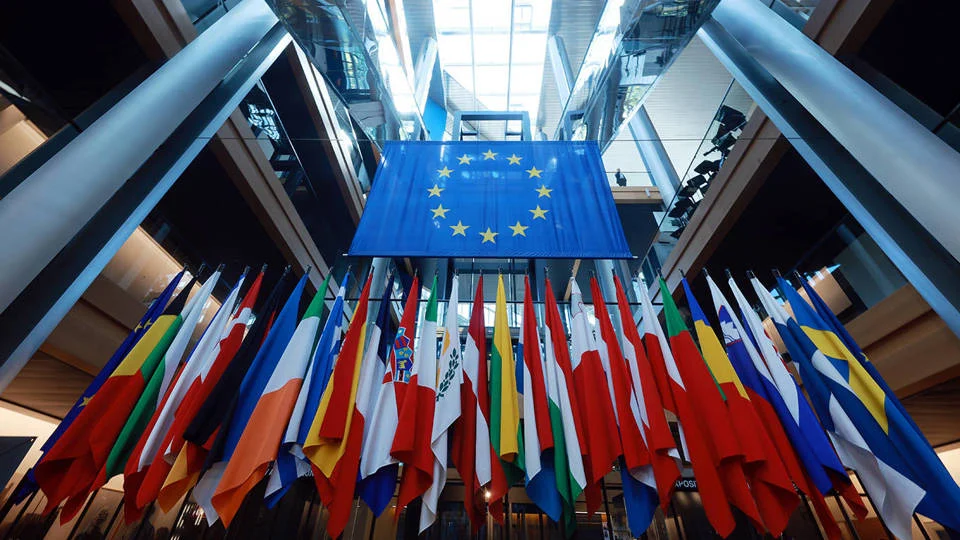
STRASBOURG — For decades, European integration was sold to the public as an inevitable, technocratic march toward ever-closer union, measured primarily in regulatory harmonization, frictionless borders, and the expansion of the single market. But as the European Union edges toward a pivotal juncture, a coalition of prominent political thinkers and analysts—including Guillaume Klossa, Catherine Trautmann, and renowned philosopher Slavoj Žižek—have articulated a starkly different diagnosis of the European project’s current malaise.
European citizens, they argue, do not inherently reject "more Europe" in the abstract, nor do they pine for a return to insular nationalism. Instead, they demand a European Union that actually works: a union capable of protecting its populations, investing in strategic autonomy, anticipating global crises, and making decisive, binding interventions when individual nation-states find themselves powerless against transnational forces. In an increasingly fragmented and hostile geopolitical landscape, reclaiming democratic control over the future requires nothing less than the collective freedom to act together.
This philosophical debate is about to collide with raw political reality. The year 2027 is shaping up to be the most consequential electoral megacycle in the history of the modern European Union. No fewer than nine European nations—representing more than half of the EU’s total population—are scheduled to hold high-stakes national contests.
While campaigns will inevitably be fought over immediate, kitchen-table concerns such as soaring living costs, immigration management, spiraling public debt, national security, and the preservation of social safety nets, a much more foundational existential question will hum beneath the surface of every debate: Will Europeans remain masters of their own destiny, or will they surrender agency, allowing the decisions that dictate their economic and physical security to be made in Washington, Beijing, Moscow, or in the volatile boardrooms of transnational corporations?
Main Facts
The approaching 2027 electoral calendar is an unprecedented political crucible for the European Union. The nine countries heading to the polls for critical national elections—France, Italy, Spain, Poland, Greece, Finland, Estonia, Slovakia, and Slovenia—account for over 50% of the EU’s total population and represent a cross-section of its diverse economic, geographic, and political cultures.
Compounding this domestic turbulence is Germany, which will hold its complex indirect federal presidential election during the same cycle, alongside ongoing federal legislative dynamics.
At the core of the upcoming political battles is a profound shift in voter sentiment. Analysts note that traditional pro-EU and Eurosceptic binaries are giving way to a more pragmatic demand for "effective sovereignty." Citizens across the political spectrum are increasingly aware that traditional nation-states are too small to negotiate on equal terms with tech monopolies, check the predatory market behaviors of global superpowers, secure critical supply chains, or manage mass migration and climate-induced shocks.
Yet, trust in Brussels remains precarious. The friction between centralized EU directives and local economic anxieties has created fertile ground for populist, nationalist, and anti-establishment political forces. These movements promise national restoration, even as economists warn that balkanization will only accelerate Europe’s geopolitical irrelevance.
Consequently, the 2027 elections are not merely routine changes of government. They are de facto referendums on whether the European project can pivot from a bureaucratic regulatory entity into a hard-edged, sovereign geopolitical actor capable of protecting its citizens in a turbulent century.
Chronology of the Lead-Up to 2027
To understand the volcanic pressure building toward the 2027 elections, one must trace the compounding crises that have steadily eroded the traditional post-Cold War political consensus in Europe.
- 2015–2016: The Migration Crisis and Brexit Shock. The arrival of over a million refugees, primarily from war-torn Syria, exposed deep structural faults in the EU’s asylum and border policies, fueling the rise of right-wing nationalist parties. Concurrently, the United Kingdom’s vote to leave the European Union shattered the myth of an irreversible European integration process.
- 2020–2022: The COVID-19 Pandemic and the Return of State Intervention. Faced with a global health emergency, the EU took the historic step of issuing joint debt through the €750 billion NextGenEU recovery fund. While this signaled unprecedented solidarity, it also heightened domestic debates over fiscal sovereignty, public spending, and national debt thresholds.
- February 2022: Russia’s Invasion of Ukraine. Moscow’s war on Ukraine shattered Europe’s post-Cold War security architecture overnight. European governments were forced into rapid, painful decoupling from Russian fossil fuels, massive defense spending reviews, and a wholesale re-evaluation of NATO’s centrality. The war starkly illustrated Europe’s vulnerability to external energy shocks and supply chain weaponization.
- 2023–2024: Inflationary Spirals and the Cost-of-Living Crisis. Post-pandemic supply chain bottlenecks, compounded by the energy crisis resulting from the war in Ukraine, triggered a historic spike in inflation across the eurozone. Real wages stagnated, sparking widespread industrial action and widespread public dissatisfaction with incumbent governments.
- June 2024: The European Parliament Elections. The EU-wide legislative elections registered significant gains for radical right and nationalist parties, signaling that voter discontent was hardening into a structural realignment of the European political spectrum.
- 2025–2026: Mid-Term Political Realignment and Strategic Reviews. European capitals begin agonizing over the Draghi Report on European competitiveness, realizing that the bloc is falling dangerously behind the United States and China in clean tech, artificial intelligence, and defense innovation. Governments attempt to balance fiscal austerity demands with massive required investments in the green and digital transitions.
- September 2026 (Current Period): The Pre-Electoral Mobilization. Political parties across the nine pivotal states begin drafting manifestos, positioning themselves for what is recognized as a make-or-break year for the European integration project. Coalitions fracture and reform as the specter of 2027 looms.
Supporting Data & Economic Realities
The ideological debates playing out across the continent are grounded in hard statistical realities. The nine nations holding elections in 2027 face distinct yet interconnected socioeconomic pressures that will dictate voter behavior at the ballot box.
+--------------------------------------------------------------------------+
|          KEY SOCIOECONOMIC PRESSURES FACING THE 2027 ELECTORAL BLOCK      |
+-------------------+------------------------------------------------------+
| Public Debt Levels| Several key states (notably France, Italy, and Spain)|
|                   | grapple with debt-to-GDP ratios well above the EU's  |
|                   | nominal 60% Maastricht threshold, restricting fiscal |
|                   | maneuverability and triggering domestic austerity    |
|                   | anxiety.                                             |
+-------------------+------------------------------------------------------+
| Demographic Decline| Rapidly aging populations across Southern and        |
|                   | Eastern Europe are placing unprecedented strain on   |
|                   | pension funds, healthcare systems, and long-term     |
|                   | economic productivity.                               |
+-------------------+------------------------------------------------------+
| Productivity Gap  | According to recent EU competitiveness assessments,  |
|                   | Europe’s productivity growth continues to lag behind |
|                   | the United States, driven by lower venture capital   |
|                   | investment, fragmented capital markets, and high     |
|                   | energy costs for heavy industry.                     |
+-------------------+------------------------------------------------------+
| Public Trust      | Eurobarometer data indicates that while support for  |
|                   | EU membership remains relatively high historically,  |
|                   | trust in national governments to handle complex      |
|                   | transnational issues (inflation, security, climate)  |
|                   | hovers at historic lows.                             |
+-------------------+------------------------------------------------------+
Furthermore, the demographic weight of the nine countries cannot be overstated. By commanding more than 50% of the European Union’s population, an electoral shift in these specific states will decisively alter the balance of power within the European Council and the European Parliament. If anti-establishment or radically Eurosceptic coalitions capture power in major founding states like France or key Mediterranean economies like Italy and Spain, the legislative machinery of Brussels could face paralysis or systematic retrenchment.
Official Responses and Political Reactions
As the contours of the 2027 megacycle come into focus, leaders and political factions across Europe are staking out sharply contrasting visions for the continent’s future.
In Brussels, institutional leaders have increasingly embraced the rhetoric of "strategic autonomy." Speaking at a recent policy forum in Strasbourg, senior European Commission officials emphasized that the EU must evolve from a regulatory superpower into an economic and security actor capable of standing on its own feet. "The world of sweet-talking globalization is dead," one senior EU diplomat remarked on condition of anonymity. "If we do not master our own industrial policy, our own supply chains, and our own borders, we will become economic vassals to powers that do not share our democratic values."
Meanwhile, national capitals are treating the approach of 2027 with palpable anxiety. In Paris, the administration of President Emmanuel Macron faces the compounding challenge of managing a fractured national assembly while positioning France as the engine of European defense integration. French policymakers argue that European sovereignty is the only logical extension of national sovereignty in the 21st century.
Conversely, populist and nationalist leaders across the nine target nations view the upcoming elections through a lens of national reclamation. In Italy and Poland, various nationalist factions argue that Brussels has overstepped its mandate, imposing top-down mandates on everything from agricultural practices to green energy targets without democratic accountability. They advocate for a "Europe of nations"—a loose confederation of sovereign states that cooperates strictly on trade while clawing back regulatory powers over migration, law enforcement, and fiscal policy.
Left-leaning and progressive critics, echoing the sentiments of intellectuals like Slavoj Žižek, offer a different critique. They argue that the EU’s current crisis stems from an over-reliance on neoliberal economic orthodoxy, which has gutted the social welfare state and generated deep-seated inequalities. For these thinkers, a protective Europe must be a social Europe—one that uses its collective market power to guarantee workers’ rights, fund public housing, and aggressively tax transnational corporate windfalls.
Implications for the Future of Europe
The convergence of nine major national elections in 2027 carries profound implications that extend far beyond the borders of the European Union.
1. The Geopolitical Stance of the West
A fragmented or inward-looking Europe would drastically alter the global balance of power. At a time when the rules-based international order is under severe strain from great power competition, a weakened EU would struggle to project stability in its immediate neighborhood—from the Western Balkans and Eastern Europe to the Mediterranean and North Africa. Conversely, a consolidated, decisive EU could serve as a stabilizing pillar of multilateralism, balancing the aggressive unilateralism of rival superpowers.
2. The Survival of the Single Market and the Euro
If nationalist or populist governments come to power in key economies and begin systematically defying EU fiscal rules, trade regulations, or human rights standards, the legal integrity of the single market could fracture. Currency stability within the eurozone relies heavily on predictable macroeconomic governance; prolonged political paralysis across France, Italy, and Spain would rattle global bond markets and reignite existential questions about the viability of the single currency.
3. The Democratic Deficit and Citizen Engagement
Ultimately, the 2027 elections will test whether representative democracy can function effectively across multi-level governance structures. If voters conclude that national elections no longer offer meaningful choices because "Brussels decides everything," or conversely, that European institutions are hopelessly unaccountable to the ballot box, civic disengagement could curdle into radical political instability.
The challenge for Europe’s political class is clear: they must demonstrate that acting together does not mean erasing local identity, but rather reclaiming the collective power to shape history rather than merely suffering it. Whether the citizens of France, Italy, Spain, Poland, Greece, Finland, Estonia, Slovakia, and Slovenia believe that promise will be decided at the ballot box in 2027.