A Day That Changed the World: Reflecting on the Legacy of September 11, Two Decades On
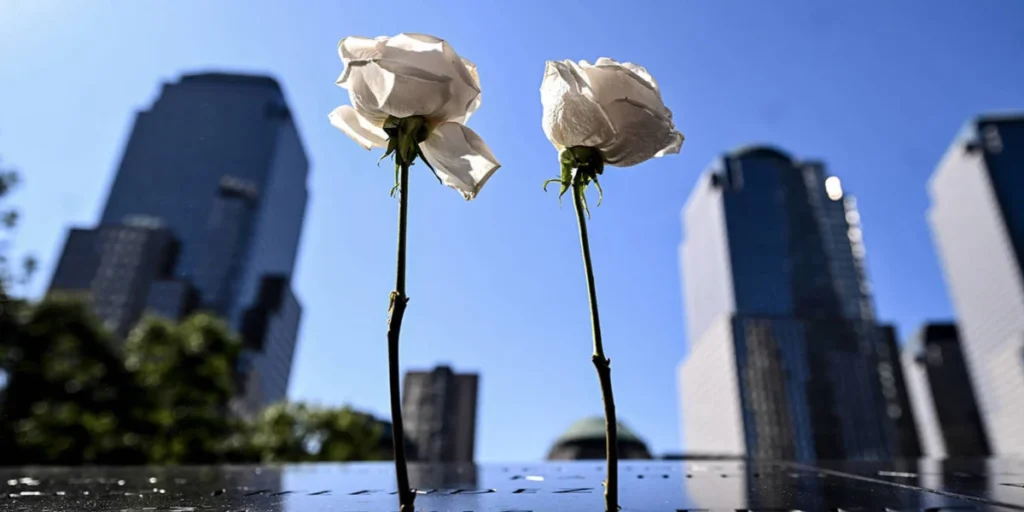
By Anne-Marie Slaughter
Washington, D.C. — September 10, 2026
For Americans old enough to remember them, the terrorist attacks of September 11, 2001, raised fundamental questions that pierced the national consciousness: Who could have done this, and above all, why?
In the immediate aftermath, answers seemed scarce, but the resolve to find them was absolute. We now know that the answers—and, more importantly, the reactions to them—would fundamentally reshape the United States, alter its constitutional fabric, and redefine its place in the world. Tragically, history has shown that these transformations were not always for the better.
September 11, 2001, began as a Tuesday with sparkling clear blue skies. I was at home in Cambridge, Massachusetts, when my husband phoned to tell me that a plane had hit one of the Twin Towers. Initially, like millions of others, we presumed that a small, wayward aircraft had crashed accidentally. Within minutes, however, the grim reality set in: we were witnessing an unprecedented, coordinated attack on the United States.
As we mark the quarter-century milestone of that fateful day, it is critical to look back not only with mourning for the lives lost, but with analytical clarity regarding the trajectory of global politics, governance, and security in the decades since.
Main Facts of the Attacks
The attacks of September 11, 2001, orchestrated by the militant Islamist group al-Qaeda, involved the simultaneous hijacking of four commercial airliners in the northeastern United States.
- The Targets: Two planes (American Airlines Flight 11 and United Airlines Flight 175) were flown into the North and South Towers of the World Trade Center complex in New York City. A third plane (American Airlines Flight 77) struck the Pentagon in Arlington, Virginia. A fourth plane (United Airlines Flight 93), believed to be targeting the U.S. Capitol or the White House, crashed in a field in Shanksville, Pennsylvania, following a revolt by its passengers and crew.
- The Human Cost: The attacks resulted in 2,977 fatalities (excluding the 19 hijackers), making it the deadliest act of terrorism in world history. This death toll included citizens from more than 90 countries.
- The Immediate Aftermath: U.S. airspace was completely shut down for three days. Financial markets were paralyzed, and the global economy suffered immediate, severe shocks. The psychological trauma inflicted upon the American public was profound, tearing away a longstanding sense of geographic invulnerability.
Chronology of That Fateful Tuesday
To understand the scale of the crisis, one must trace the rapid, terrifying unfolding of events on the morning of September 11:
- 8:14 AM EDT: Flight 11 is hijacked over New York state.
- 8:46:40 AM EDT: American Airlines Flight 11 crashes into the North Tower (1 World Trade Center) of the World Trade Center.
- 9:03:02 AM EDT: United Airlines Flight 175 strikes the South Tower (2 World Trade Center). The collision is broadcast live on global television, confirming to a horrified world that the U.S. is under systematic attack.
- 9:37:46 AM EDT: American Airlines Flight 77 hits the western facade of the Pentagon.
- 9:59:00 AM EDT: The South Tower of the World Trade Center collapses, imploding in a massive cloud of dust and debris just 56 minutes after impact.
- 10:03:11 AM EDT: United Airlines Flight 93 crashes in Shanksville, Pennsylvania, thwarting the hijackers’ intent through heroic passenger intervention.
- 10:28:00 AM EDT: The North Tower of the World Trade Center collapses, 102 minutes after being struck.
Supporting Data and Long-Term Toll
Beyond the immediate loss of life on September 11, the subsequent decades revealed a sprawling web of consequences measurable in economic, human, and geopolitical data:
- Economic Impact: The direct economic loss in the first few weeks was estimated at $40 billion, with a total cost exceeding $3 trillion when factoring in subsequent military operations, infrastructure repairs, and airline bailouts.
- The "War on Terror" Casualties: According to the Costs of War Project at Brown University, post-9/11 wars in Iraq, Afghanistan, Pakistan, and elsewhere have cost between 900,000 and 940,000 lives directly from violence, with several million more dying indirectly from war-related disease, displacement, and the destruction of infrastructure.
- First Responder and Veteran Health: Over 400,000 first responders, rescue workers, and downtown Manhattan residents have registered with the World Trade Center Health Program due to long-term illnesses, including various forms of cancer and respiratory diseases caused by toxic particulate matter. Concurrently, tens of thousands of military veterans returned home bearing invisible wounds, reflected in high rates of post-traumatic stress disorder (PTSD) and veteran suicide.
Official Responses and Policy Shifts
The policy response to September 11 was swift, sweeping, and fundamentally transformative. Within weeks, the U.S. government undertook a radical reorganization of its national security apparatus.
- The Patriot Act: Enacted in October 2001 with overwhelming bipartisan support, the USA PATRIOT Act drastically expanded the surveillance powers of law enforcement and intelligence agencies, permitting warrantless wiretaps, the collection of bulk telephone metadata, and heightened monitoring of foreign nationals.
- Creation of the Department of Homeland Security (DHS): In 2002, the federal government consolidated 22 disparate federal agencies—including the Immigration and Naturalization Service, the Coast Guard, and the Secret Service—into a single cabinet-level department aimed at protecting the domestic United States from future attacks.
- The Authorization for Use of Military Force (AUMF): Passed by Congress on September 14, 2001, the AUMF granted the executive branch broad authority to use force against those nations, organizations, or persons associated with the 9/11 attacks. This single piece of legislation served as the legal justification for military interventions for the next quarter-century.
- International Coalitions and the Invasion of Afghanistan: Citing the Taliban regime’s harboring of al-Qaeda leadership, the U.S. and its NATO allies launched Operation Enduring Freedom in October 2001, initiating a 20-year military engagement in Afghanistan. This was followed in 2003 by the invasion of Iraq, launched under the contested premise of eliminating weapons of mass destruction.
Geopolitical Implications and Reflection
As we look back from the vantage point of 2026, the long-term implications of the post-9/11 era are deeply sobering.
The immediate unity that characterized American society in the autumn of 2001 gradually gave way to deep polarization. The expansion of executive power, coupled with the erosion of privacy rights under the banner of security, ignited fierce debates regarding the balance between liberty and safety—debates that continue to reverberate through the American legal and political system.
Externally, the "War on Terror" consumed immense national treasure, eroded international norms regarding sovereignty and human rights, and severely strained America’s moral authority abroad. The prolonged, grinding conflicts in the Middle East and Central Asia fostered widespread disillusionment among the American public, contributing to a broader retreat from internationalism and a rise in isolationist sentiment.
The questions asked on September 11, 2001—Who could have done this, and why?—spawned answers that dictated the opening chapters of the 21st century. Yet, as time distances us from that tragic Tuesday, the most enduring lesson is not simply how fiercely a nation can retaliate, but how carefully it must guard its own values when responding to crisis. The true test of resilience is not merely surviving an attack, but ensuring that the cure does not ultimately prove more destructive than the disease.