The Architecture of Survival: Iran’s Brutal Continuity Amidst the Collapse of the Theocracy
By Pegah Banihashemi
July 23, 2026
The fall of the Islamic Republic was not a singular event, but a protracted, violent unraveling that began in the winter of 2026. As the dust settles over the rubble of Tehran’s administrative district, a grim reality has emerged: the collapse of the regime’s leadership has not yielded a transition to democracy or a cessation of violence. Instead, the apparatus of state terror—the machinery of the gallows and the security services—continues to function with a chilling, autonomous efficiency.
For decades, Western policymakers in Washington and Tel Aviv operated under the assumption that the Iranian regime was a rational actor susceptible to pressure, or, conversely, a house of cards waiting for the Iranian people to blow it down. Both assumptions have proven catastrophically wrong. Embedded in the Islamic Republic’s foundations is a doctrine of "Systemic Preservation at All Costs," a survivalist ideology that prioritizes the continuity of the state over the lives of its citizens.
The Chronology of Collapse: From Airstrikes to Absolute Chaos
The current crisis traces its origins to the morning of February 14, 2026. Following a series of escalatory cyber-attacks on critical infrastructure and the intelligence community’s verification of imminent regional strikes, a joint US-Israeli air campaign was launched. The operation, aimed at neutralizing the regime’s nuclear and ballistic missile capabilities, achieved a decapitation strike that few anticipated: the killing of Supreme Leader Ayatollah Ali Khamenei.
February 2026: The Decapitation
The strikes were surgical and swift. Within hours of the first wave of bombardment, confirmation arrived from the Iranian Revolutionary Guard Corps (IRGC) that the Supreme Leader had been killed in a targeted bunker-buster strike in northern Tehran. The death of the man who had steered the country since 1989 left a power vacuum that triggered immediate, albeit disorganized, factional fighting within the IRGC.
March–April 2026: The Siege Mentality
As the airstrikes continued, targeting military depots and command centers across the south, the regime did not fracture. Instead, it retreated into a bunker mentality. Rather than seeking a diplomatic off-ramp, the acting leadership—a shadow committee of high-ranking clerics and military commanders—invoked the "Emergency Preservation Protocol." This legal framework, long buried in the constitution, effectively dissolved civilian oversight and transferred absolute power to regional military commanders.
May 2026–Present: The Gallows State
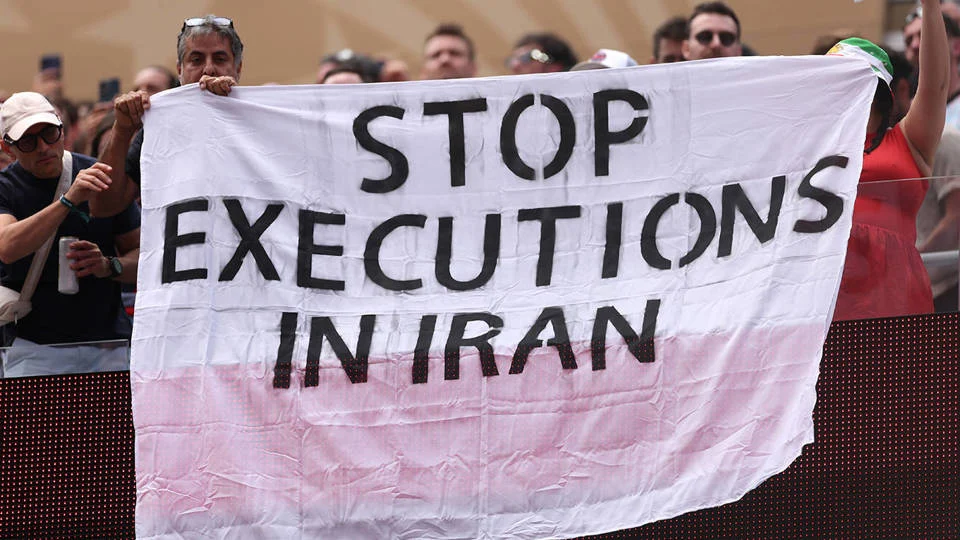
By early summer, the conventional military war had shifted into a war of attrition. While international focus remained on the fluctuating frontlines, the domestic landscape underwent a darker transformation. The regime began a systemic liquidation of "internal threats." As the funeral rites for Khamenei were televised, the sound of bombardment from the south provided a grim percussion to the routine executions of political dissidents, student activists, and journalists in Evin and Gohardasht prisons.
Supporting Data: The Mechanics of Total Repression
The persistence of the Iranian security state can be quantified by the sudden surge in judicial activity. According to data tracked by human rights observers and independent intelligence analysts, there has been a 400% increase in summary executions since the February strikes.
The Numbers Behind the Terror
- Execution Rates: Since mid-February, an estimated 1,200 political prisoners have been executed. The pace of these "judicial killings" increased by 60% following the announcement of the Supreme Leader’s death, as the regime sought to eliminate any potential focal points for popular uprising.
- The Security Apparatus: Despite the destruction of several key ministry buildings, the intelligence apparatus—specifically the Ministry of Intelligence and Security (MOIS) and the IRGC Intelligence Organization—remains fully operational. Their digital surveillance networks, designed to monitor dissent, have been repurposed to track the movement of citizens fleeing the conflict zones.
- Resource Allocation: Despite severe shortages of fuel and medicine, the regime has prioritized the logistical supply chains of the prison system. Electricity, which is rationed for hospitals and schools, remains constant in the facilities housing political detainees.
The "Doctrine of Preservation" dictates that the system is an end in itself. When external pressure is applied, the regime does not negotiate; it constricts. It views its own population not as subjects to be protected, but as an existential threat to be managed.
Official Responses and International Disconnect
The international community’s response has been marked by a profound disconnect between diplomatic rhetoric and the reality on the ground.
Washington and Tel Aviv
The prevailing narrative in Washington suggests that the regime is in its "final death throes." US officials have consistently argued that the destruction of the leadership structure will inevitably lead to a grassroots democratic transition. This optimism, however, fails to account for the fragmented, highly armed, and radicalized nature of the regional IRGC commanders who have stepped into the vacuum.
In Tel Aviv, the focus remains on the neutralization of the regime’s remaining missile batteries. There is little appetite for a ground intervention, as the prevailing strategic view is that the internal collapse of the regime is preferable to a costly occupation. However, this policy of "benign neglect" has left the Iranian citizenry caught between the hammers of foreign intervention and the anvil of domestic tyranny.
The Factions Within
Within Iran, the "official" response is a cacophony of contradictions. While some low-level clerics have called for a ceasefire and dialogue, they are systematically silenced or "disappeared" by the hardline faction of the IRGC. The military commanders have adopted a strategy of total denial, blaming all domestic unrest on "foreign agents" and using the external conflict as a justification for the suspension of all civil liberties.
Implications: A Future Defined by Instability
The current state of affairs suggests that the fall of the Supreme Leader was not the beginning of the end, but the start of a long, dark chapter of internal consolidation through violence.
The Risk of Regional Balkanization
If the central command structure continues to erode, the most likely outcome is not a democratic Iran, but a balkanized one. Regional IRGC commanders are already carving out their own spheres of influence, essentially acting as warlords. This creates a nightmare scenario for the Middle East: a fractured state with access to conventional weaponry, no centralized control, and a deep-seated grievance against the international community.
The Humanitarian Catastrophe
The most immediate implication is the humanitarian toll. With the world distracted by the geopolitical ramifications of the conflict, the systematic execution of political opponents is occurring in a vacuum of international oversight. The "gallows" are not just a tool of political suppression; they are a warning to the Iranian people that any attempt to organize, protest, or even survive will be met with the full force of a regime that has nothing left to lose.
Conclusion: The Myth of the Rational Transition
The Western failure to predict the resilience of the Iranian security state stems from a fundamental misunderstanding of the regime’s core objective. The Islamic Republic was never intended to be a modern, state-building project; it was designed to be a permanent revolution.
As we look toward the autumn of 2026, the question is no longer whether the regime will fall, but what will be left of Iran when it finally does. By underestimating the regime’s capacity for self-preservation and overestimating the potential for a peaceful transition, the international community has inadvertently watched as the pillars of Iranian society were dismantled one by one. The thunder of bombs in the south may eventually stop, but the silence of the gallows will leave a scar on the nation that will take generations to heal. The regime, in its dying days, is ensuring that if it cannot rule Iran, it will ensure that Iran has no future to speak of.