The "Breezy Oven": Tropical Storm Bertha Fuels Record-Breaking Heatwave Across the Gulf Coast
Introduction: A Dual Threat to the Gulf
A volatile meteorological cocktail is currently gripping the American South, as the remnants of Tropical Storm Bertha collide with an oppressive, record-breaking heatwave. Residents across Texas and Louisiana are facing a dual-pronged emergency: the immediate atmospheric instability brought by a weakening tropical system and the long-term, dangerous strain of extreme, sustained temperatures. As the mercury climbs, the regional power grid is being tested to its absolute limit, marking a historic week for energy consumption in the Lone Star State.
While the wind speeds associated with Bertha are manageable, the storm’s true menace lies in its role as a catalyst for extreme humidity. By trapping moisture over the Gulf Coast, the storm has effectively transformed the region into what meteorologists describe as a "breezy oven," pushing heat index values to levels that are hazardous for even the most acclimatized residents.
The Meteorological Reality: Why Heat Remains the Primary Hazard
For the National Weather Service (NWS), the focus has shifted away from the storm’s wind speeds to the lethality of the heat. Mike Efferson, a meteorologist based in Slidell, Louisiana, summarized the severity of the situation with a grim assessment: "It’s the perfect setup for more extreme heat. The much bigger potential impact is from the heat."
The "Breezy Oven" Effect
Tropical systems are typically associated with cooling rains and cloud cover. However, in this specific instance, Bertha is acting as a moisture pump. By pulling warm, saturated air from the Gulf of Mexico and pushing it inland, the storm is preventing the atmosphere from cooling down. As the storm sweeps across the southern coast of Louisiana and charts a course toward the Texas border, it is amplifying the perceived temperature.
In eastern Texas and northwest Louisiana, the National Weather Service has issued extreme heat warnings that remain in effect through 8 p.m. local time. With heat index temperatures—a calculation that factors in both air temperature and humidity—poised to reach a staggering 120°F (49°C), the risk of heatstroke and other heat-related illnesses is at an all-time high.
Chronology of the Crisis
The escalation of this weather event has been rapid, catching both regional authorities and the energy sector off guard.
- Tuesday: The region saw the first signs of the impending crisis as electricity demand shattered previous records. Usage climbed to 87.403 gigawatts, easily eclipsing the former record of 85.508 gigawatts set in August 2023.
- Wednesday Morning: Tropical Storm Bertha tracked toward the Louisiana coast with sustained winds of 45 mph. As it made landfall, meteorologists noted a shift in the storm’s intensity; while the winds were weakening compared to Tuesday’s 60 mph peak, the moisture influx caused local humidity levels to spike.
- Wednesday Afternoon: Electricity demand in Texas continued to climb, projected to hit nearly 90 gigawatts—a level of consumption that would have been unthinkable just a few years ago. Simultaneously, Bertha began its trek across the Louisiana coast, moving steadily westward.
- Thursday/Friday Outlook: The storm is expected to dump up to 6 inches (15 centimeters) of rain across the region, potentially causing localized flooding. By late Friday, meteorologists anticipate that the storm’s cloud cover will finally provide a reprieve from the heat. However, long-range forecasts from the Commodity Weather Group suggest that this relief will be short-lived, with another heat dome projected to build by the end of next week.
Energy Grid Performance: The ERCOT Stress Test
The Electric Reliability Council of Texas (ERCOT), the body responsible for managing the state’s power grid, has been under a microscope this week. As Texans crank up their air conditioning units to combat the 120°F heat index, the demand for electricity has surged to levels that stress the infrastructure.
The Role of Renewable Energy
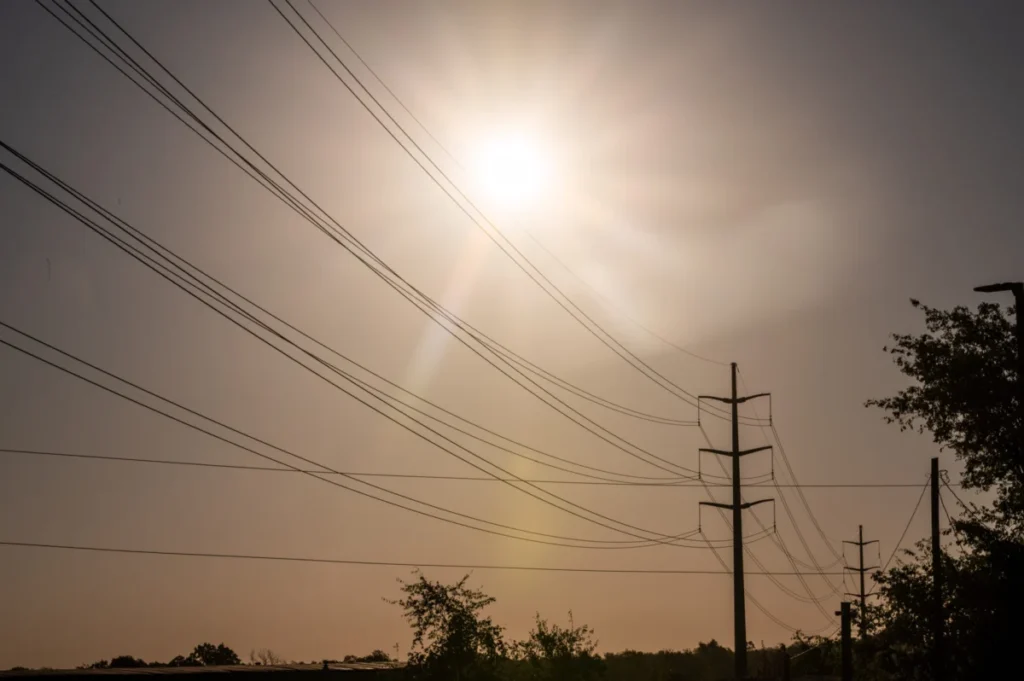
Despite the record-breaking demand, ERCOT officials have remained cautiously optimistic. One of the most significant factors in maintaining grid stability has been the surge in solar power generation. As the extreme heat beats down on the Texas landscape, the intensity of solar radiation has allowed solar farms to operate at high efficiency, providing a critical "cushion" of energy that has helped meet the peak demand during the afternoon hours.
This synergy between high temperatures and solar production is a relatively new phenomenon in the Texas energy market, and it is proving to be a lifeline. While conventional gas and coal plants provide the baseload power, the additional capacity from the solar sector is preventing the rolling blackouts that have haunted the state in previous seasons of extreme weather.
Stability in the MISO Region
To the east, the Midcontinent Independent System Operator (MISO), which manages the power grid for a vast portion of the central United States, including the majority of Louisiana, has reported relatively stable conditions. Despite the proximity of the storm, the infrastructure managed by MISO has thus far avoided the volatility seen in the Texas market, largely due to a different energy mix and load profile.
The Impact of Tropical Storm Bertha
While the heat is the primary medical threat, Bertha itself is a significant weather event that demands attention. As of Wednesday at 2 p.m. local time, the storm was located approximately 40 miles (65 kilometers) east of New Orleans.
Rainfall and Storm Surge
The National Hurricane Center (NHC) has warned that the storm poses a dual threat of water-related hazards. Beyond the 6 inches of expected rainfall, the Gulf Coast from Alabama to Texas remains at risk of a storm surge as high as three feet (0.9 meters). While this is not categorized as a major hurricane, a three-foot surge in low-lying coastal areas can cause significant nuisance flooding and damage to coastal infrastructure.
A Minimal Threat, But a Tangible Nuisance
Efferson noted that compared to the devastating storms that have historically battered the Gulf, Bertha is a "minimal threat" in terms of wind destruction. However, he cautioned that complacency is the biggest danger. "If you’re outside at any point today, the heat is something to be concerned about," he emphasized. The combination of wind-driven moisture and extreme thermal radiation creates a condition where the body’s natural cooling mechanism—sweating—becomes ineffective, leading to rapid dehydration and heat exhaustion.
Implications for Public Policy and Infrastructure
This event serves as a harbinger of the challenges that climate volatility poses to the American energy infrastructure. The fact that the Texas record for energy usage was broken two days in a row, with the second day exceeding the first by a significant margin, underscores the "new normal" of peak demand.
The Need for Grid Resilience
Policymakers in Austin and Baton Rouge are already looking toward the long-term implications. As climate patterns shift, the frequency of extreme heat events is expected to rise. This requires a two-pronged strategy:
- Investment in Grid Modernization: Strengthening transmission lines to handle higher loads and integrating more battery storage to capture the excess solar power generated during the day for use in the evening hours when solar production drops.
- Public Health Preparedness: Expanding the network of "cooling centers" and publicizing heat safety protocols for vulnerable populations, including the elderly and those who work outdoors.
Future Weather Patterns
The forecast provided by the Commodity Weather Group—that a second heatwave is already on the horizon—suggests that the region will have very little time to recover. The recurring nature of these events puts immense pressure on both the physical infrastructure and the human population.
Conclusion: A Test of Endurance
As Texas and Louisiana navigate the remainder of this weather crisis, the focus remains on personal safety and grid stability. Bertha is moving westward, and while its rain will eventually offer a temporary reprieve, the overarching theme of this week remains the heat.
The record-breaking energy consumption and the extreme heat index warnings serve as a stark reminder of the fragile balance between human infrastructure and the environment. As the Gulf Coast looks toward the recovery phase of this storm, the data collected during these 90-gigawatt peaks will undoubtedly inform the next generation of energy policy, ensuring that when the next "breezy oven" arrives, the grid and its citizens are better prepared to withstand the pressure.
Copyright 2026 Bloomberg. All rights reserved.