Airspace Paralysis: Fiber-Optic Failure Triggers Northeast Travel Meltdown
By Investigative Desk
Date: September 2026
The delicate architecture of the United States’ air traffic control system faced a grueling reality check this week, as a cascading failure at a critical facility in Philadelphia paralyzed aviation across the Northeast corridor. The incident, which resulted in hundreds of flight cancellations and stranded thousands of passengers, has ignited a fierce debate regarding the fragility of aging infrastructure and the urgent necessity of the Federal Aviation Administration’s (FAA) modernization agenda.
While the FAA announced late Monday evening that technical operations had been restored, the repercussions of the outage—which saw major metropolitan hubs grind to a halt—continue to ripple through the national network. The incident proved that even in an era of advanced satellite navigation and artificial intelligence, the modern sky remains tethered to vulnerable, physical ground-based telecommunications.
A Perfect Storm: The Chronology of the Outage
The chaos began in the early hours of Monday morning at a regional air traffic facility in Philadelphia, a nerve center responsible for guiding flights into and out of some of the world’s busiest hubs, including Newark Liberty International (EWR) and Philadelphia International (PHL).
According to internal reports, the failure began with the breakdown of a primary circuit at the facility. Under normal operational protocols, a backup fiber-optic line is designed to automatically assume the load in the event of a primary failure. However, as controllers attempted to switch systems, they were met with silence.
The backup fiber-optic cable, it was later discovered, had been severed during routine construction work conducted by an Amtrak crew in the vicinity of the facility. This "double-blind" failure—a primary system collapse coupled with a severed physical backup—left air traffic controllers in the Philadelphia sector essentially blind, forcing them to pause all operations.
By mid-morning, the impact had cascaded far beyond Philadelphia. The Northeast corridor, one of the most congested airspaces on the planet, experienced a domino effect. Airports including LaGuardia (LGA), John F. Kennedy International (JFK), and Teterboro (TEB)—the latter serving as a critical hub for private aviation—were forced to ground flights. By noon, the airspace was effectively locked down.
Ripple Effects and Economic Disruption
The timing of the outage could not have been more damaging. As the region struggled to manage the gridlock, the city of New York was in the midst of preparing for the United Nations General Assembly. The influx of international dignitaries, diplomats, and support staff, combined with the heavy volume of business travel, meant that every minute of downtime translated into thousands of dollars in lost productivity and logistics failures.
"We are looking at a systemic bottleneck that, when pinched, affects the entire economic pulse of the East Coast," noted an aviation consultant following the incident.
Data from tracking services indicated that by Monday afternoon, over 400 flights had been canceled, with thousands more delayed by an average of four to six hours. Because the FAA mandates specific spacing requirements between aircraft, the "ground stop" created a backlog that would take days to clear. Even after the fiber-optic lines were repaired and systems were "rebooted," the physical movement of aircraft remained constrained by the need to re-sequence flights that had been diverted or held at departure gates across the country.
Official Responses: Accountability and Infrastructure
Transportation Secretary Sean Duffy, speaking to the press late Monday, emphasized that while the immediate crisis had been mitigated, the incident exposed a "worrying dependency" on terrestrial infrastructure.
"We have successfully restored connectivity," Secretary Duffy said. "Our teams worked around the clock to re-establish the primary and secondary links. However, the fact that a single construction accident could ground a significant portion of the Northeast’s aviation sector is a signal that our infrastructure requires a fundamental rethink."
FAA Administrator Bryan Bedford joined Secretary Duffy at a Washington event, where the tone was one of sober urgency. Bedford acknowledged that while the FAA has been pushing for aggressive modernization, the pace of technological transition has, at times, been outstripped by the vulnerability of the legacy hardware currently in use.
"We are dealing with a complex hybrid environment," Bedford explained. "We are implementing state-of-the-art AI systems while simultaneously relying on physical conduits that are decades old. This event serves as a stark reminder that modernization is not just about the software in the tower; it is about the resilience of the physical backbone that keeps our controllers connected to the sky."
The "SMART" Initiative: A Case of Bad Timing
Perhaps the most ironic aspect of the day’s events was the scheduled rollout of the FAA’s new artificial intelligence tool, SMART (System Management for Aviation Resilience and Traffic).
SMART is designed to act as a predictive engine. By analyzing weather patterns, congestion data, and historical flight performance, the AI provides controllers with real-time recommendations to preemptively divert traffic or adjust flow rates before a bottleneck becomes a full-scale disruption. The FAA had officially activated the system in a "limited mode" for the Washington airspace on Monday morning—the very same day the Philadelphia facility failed.
While the FAA maintained that SMART functioned exactly as intended, critics argued that the rollout was overshadowed by the sheer scale of the ground stop. "It is difficult to tout the benefits of a new AI traffic manager when the human-controlled legacy systems are failing due to a cut cable," one analyst remarked.
However, proponents of the technology argue that in the future, a tool like SMART might be able to calculate the impact of such an outage more rapidly, allowing for an automated rerouting of air traffic that minimizes the duration of ground stops. The goal is to move toward a "self-healing" network where the system automatically adapts to hardware failures, rather than requiring manual intervention.
Implications: The Long Road to Modernization
The Philadelphia outage has reignited the debate over the "NextGen" air traffic control program—a long-term, multi-billion-dollar effort to transition the U.S. from radar-based navigation to satellite-based surveillance.
Supporters of the program argue that the current incident proves that the FAA must accelerate the decommissioning of vulnerable, land-based systems. Critics, however, point to the enormous costs and the potential for new types of cyber-vulnerabilities as the industry moves toward a fully digital, networked infrastructure.
There is also the matter of inter-agency cooperation. The fact that an Amtrak construction crew was able to inadvertently sever an FAA-critical line highlights a lack of inter-departmental communication regarding sensitive infrastructure locations. In an era where critical national infrastructure is becoming increasingly interconnected, the "siloed" approach to maintenance and construction projects is being viewed as an obsolete and dangerous practice.
As the industry looks toward the remainder of 2026, the lessons from the Philadelphia outage are clear:
- Redundancy is not just a concept, but a physical requirement: Backup systems must be geographically and functionally distinct from primary systems.
- Infrastructure mapping must be centralized: Critical fiber-optic paths must be protected with the same rigor as nuclear or power grid infrastructure.
- The Human-AI Hybrid: The transition to AI-managed air traffic must be handled with extreme caution, ensuring that the technology serves as a buffer rather than a single point of failure.
Conclusion: Clearing the Clouds
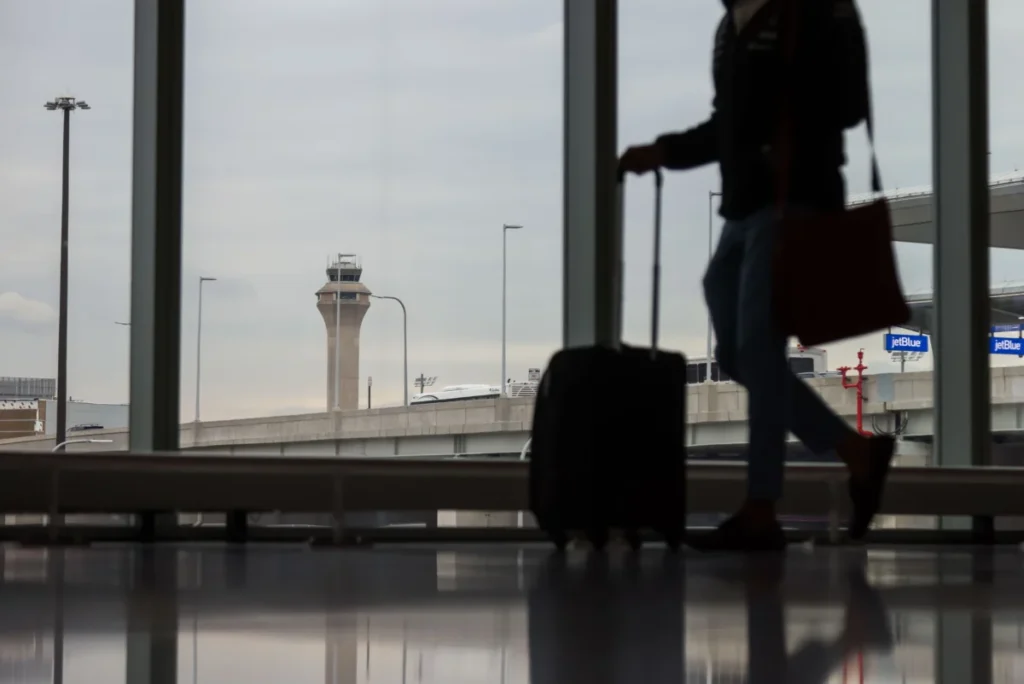
By Tuesday morning, air traffic across the Northeast began to return to a semblance of normalcy. The "conga line" of delayed flights resumed, and the airports, once filled with frustrated passengers and abandoned luggage, returned to their characteristic bustle.
For the FAA, the work now shifts from crisis management to forensic analysis. The agency has launched a full review of its infrastructure mapping and is expected to meet with Department of Transportation officials to discuss stricter protocols for construction near critical telecommunications paths.
"We are going to learn from this," Secretary Duffy concluded. "But the goal remains the same: a more resilient, more intelligent, and more reliable aviation system. We owe that to the traveling public."
As the aviation sector continues to recover, the incident serves as a sobering reminder of how thin the margin is between the seamless global travel we have come to expect and the total paralysis of a vital national system. For now, the skies over Philadelphia are clear, but the shadows cast by Monday’s failure are likely to linger over aviation policy for many months to come.