Red Sea Under Siege: Saudi Tankers Divert as Houthi Blockade Threats Upend Global Energy Logistics
The delicate architecture of global energy security suffered a severe jolt this week as Yemen’s Iran-aligned Houthi militia issued a formal naval blockade against Saudi Arabia. The move has triggered immediate panic in maritime corridors, forcing oil tankers laden with millions of barrels of crude to execute abrupt U-turns in the Red Sea. As geopolitical tensions escalate, the specter of a second major chokepoint closure—following the effective shutdown of the Strait of Hormuz—has sent shockwaves through energy markets, signaling a potential crisis that threatens to disrupt the flow of oil to key Asian economies.
Main Facts: A Chokepoint in Crisis
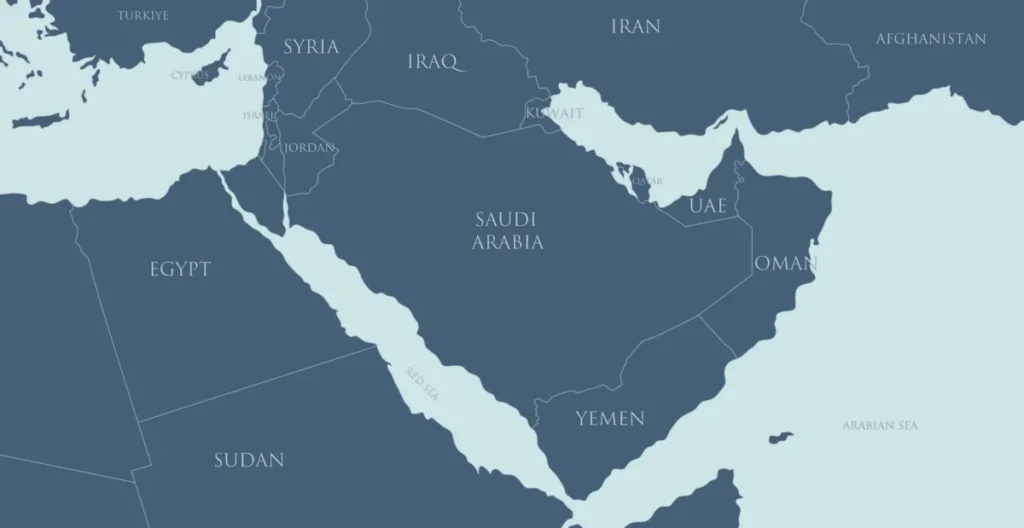
The current crisis centers on the Bab el-Mandeb strait, a narrow and vital maritime artery at the southern mouth of the Red Sea. By declaring a naval blockade against Saudi Arabian ports, the Houthis have effectively weaponized one of the world’s most critical maritime corridors. The threat is not merely rhetorical; it is backed by direct warnings to global shipping conglomerates. In an email communication to maritime operators, the Houthi leadership explicitly warned vessels against loading or discharging cargo at Saudi Arabian ports, threatening that such activity could result in ships being targeted "in any location."
This development represents a significant escalation in the ongoing regional conflict. With the Strait of Hormuz already compromised by the broader U.S.-Israeli war with Iran, the Saudi Red Sea port of Yanbu had emerged as the primary, and indeed essential, escape valve for Middle Eastern crude exports. The Houthi declaration effectively threatens to close this final safety valve, potentially strangling the energy supply chains that fuel the industrial engines of China and India.
Chronology of the Disruption
The tactical maneuvering began in earnest on Monday, following the Houthi announcement. By Tuesday, the impact on shipping patterns was undeniable.
- Monday: The Houthi militia issued its formal declaration of a blockade, sending direct warnings to international shipping firms regarding the status of Saudi-bound or Saudi-origin cargo.
- Tuesday Morning: The Very Large Crude Carrier (VLCC) Xin Long Yang, which had only recently finished loading 2 million barrels of Saudi crude at Yanbu, performed a dramatic U-turn. Instead of proceeding through the Bab el-Mandeb toward Asian markets, it reversed course toward the Suez Canal.
- Tuesday Midday: The tanker Rodos, carrying 700,000 barrels of crude for India, and the Amazon, another Suezmax vessel, followed suit, turning back toward the Suez Canal.
- Tuesday Afternoon: In a bid to evade potential targeting, these vessels began switching off their Automatic Identification System (AIS) transponders—a common maritime practice used to "go dark" when entering hostile waters.
- Wednesday/Ongoing: The VLCC New Prime, which had been en route to Yanbu for a scheduled loading, aborted its approach off the coast of Oman, signaling a wider industry retreat from the Red Sea region.
Supporting Data: The Logistics of Fear
The data provided by maritime tracking services paints a stark picture of a industry in retreat. On average, approximately 10 crude tankers transit the Bab el-Mandeb strait every single day. This volume represents a significant portion of the global daily oil supply.
The immediate financial repercussions have been swift. Insurance industry sources confirmed that war risk insurance premiums have spiked significantly over the last 24 hours. Underwriters are currently in the process of re-evaluating risk assessments for all vessels calling at Saudi ports, a process that invariably leads to higher operational costs for shipping companies.
British maritime security firm Ambrey has issued a heightened advisory, stating: "Vessels calling at Saudi Arabian ports are advised to reconsider transiting the Red Sea and to consider implementing enhanced mitigation measures." The firm categorizes any vessel associated with Saudi Arabian trade as being at "high risk," a classification that essentially functions as a "do not enter" warning for many commercial operators.
Official Responses and Industry Stance
The response from the shipping industry has been one of cautious silence, punctuated by reactive operational changes. When contacted for comment, representatives for Dynacom Tankers Management, the operator of the Rodos and Amazon, as well as Cosco Shipping, the manager of the Xin Long Yang, declined to provide specific details regarding their security protocols or future route planning. Similarly, Associated Maritime Co HK, managing the New Prime, remained silent as their vessel retreated from the region.
Market analysts, however, have been more vocal. Ship broker Clarksons noted in a Tuesday briefing that while an "actual" full-scale blockade—in the sense of a complete physical seal of the strait—remains logistically unlikely given the Houthi group’s limited naval resources, the risk of "targeted hostilities" against Saudi-associated vessels is at an all-time high.
"Should the Houthis continue to influence traffic, we anticipate a massive reshuffling of crude cargoes," the note read. "Volumes currently destined for Asia via the Red Sea will likely be redirected toward European markets, which are geographically more accessible without passing through the Bab el-Mandeb."
Implications: A Global Energy Bottleneck
The implications of this standoff extend far beyond the immediate safety of a few dozen tankers. The primary concern for the global economy is the sheer logistical impossibility of replacing the Red Sea route in the short term.
The Suez Canal Bottleneck
For tankers forced to abandon the Bab el-Mandeb, the only alternative is to head north through the Suez Canal. However, this is not a seamless transition. Fully laden VLCCs are often too heavy to pass through the canal without first offloading a portion of their cargo. This cargo is typically pumped through the SUMED pipeline, which runs parallel to the canal. The increased demand for the SUMED pipeline, coupled with the congestion caused by diverted traffic, will inevitably lead to massive delays and bottlenecks.
The "Around Africa" Alternative
If the Red Sea becomes entirely untenable, the alternative is the long-haul voyage around the Cape of Good Hope. This route adds weeks to transit times, significantly increases fuel consumption, and ties up vessel capacity that is already stretched thin. For Asian nations like India and China, who rely on a "just-in-time" supply of energy, these delays could lead to localized energy shortages and upward pressure on crude prices.
Market Volatility
The energy markets are currently hyper-sensitive to supply chain interruptions. The closure of the Strait of Hormuz already placed a premium on oil prices. The threat to the Red Sea introduces a "risk premium" that could see oil prices fluctuate wildly based on daily news reports from the region. If insurance costs continue to climb, these expenses will eventually be passed down to the consumer, potentially fueling global inflationary pressures.
Geopolitical Repercussions
The blockade declaration signifies a tactical shift. By targeting Saudi Arabia, the Houthis are not merely attacking a regional rival; they are striking at the heart of the global energy supply chain to pressure the international community. This strategy of "asymmetric naval warfare" forces the U.S. and its allies to consider whether a military escort for commercial shipping—similar to the "Tanker War" of the 1980s—is required. Such a move would draw Western powers deeper into a direct confrontation with the Houthi militia and, by extension, their backers in Tehran.
As the situation evolves, the maritime industry remains in a state of high alert. The "going dark" of transponders by tankers in the Red Sea is a testament to the fact that, for now, the primary strategy is survival through evasion. Whether this serves as a temporary disruption or the beginning of a prolonged closure of the Red Sea remains the most pressing question for the global energy sector. For now, the world watches the Bab el-Mandeb, waiting to see if the flow of energy that sustains the modern world will continue or if it will be choked off by the fires of regional conflict.