Bridging the Gap: A Comprehensive Financial Analysis of a Connecticut Couple’s Path to Stability

For many, the transition into true financial adulthood feels like a moving target. For Brian and Michael, a 34-year-old couple based in central Connecticut, the struggle to reconcile a comfortable current lifestyle with long-term aspirations—such as home ownership, marriage, and debt-free living—has reached a critical turning point. As they approach their 10-year anniversary this November, the duo is seeking a roadmap to move past the "feast and famine" cycle of their finances and build a lasting legacy.
Their story serves as a quintessential case study in the modern struggle for financial equilibrium: balancing a respectable combined income with the pressures of consumer debt, unexpected life events, and the desire for future security.

The Human Element: Meet the Subjects
Brian and Michael, both 34, live with their two cats in a charming, industrial-style apartment in central Connecticut. Their professional lives are service-oriented and stable. Michael serves as a project coordinator for a state behavioral health agency and supplements his income as an advocate and disability leadership coordinator—a role deeply tied to his personal history as a brain injury survivor. Brian, meanwhile, leverages his experience as a quality assurance manager for a state-run hospital.
Together since 2013, the couple shares a passion for lifelong learning, outdoor activities, and building a quiet, intellectual life at home. However, beneath the surface of their "luxurious" apartment and steady employment, there is an undercurrent of shame and anxiety. They feel the weight of their peers’ perceived progress and worry that their own financial "adulting" is stalling.

A Chronology of Challenges
The past year has been a crucible for the couple. In August 2022, their financial plan was clear: they were saving for a home and preparing to re-enter the housing market. Then, the realities of life intervened.
The couple was forced to vacate their long-term, affordable studio apartment, necessitating a move into the current rental market. This transition, compounded by significant, unexpected veterinary expenses for their new kittens, derailed their savings timeline. While Brian had previously achieved the feat of paying off $58,000 in student loans, the subsequent accumulation of consumer debt has left both partners feeling as though they have taken two steps back.

Supporting Data: The Financial Landscape
To understand the path forward, one must first look at the hard numbers. The couple earns a combined gross annual income of $167,544, resulting in a net annual take-home pay of $109,455. Despite this, their annual expenditures total $96,414.
The Debt Portfolio
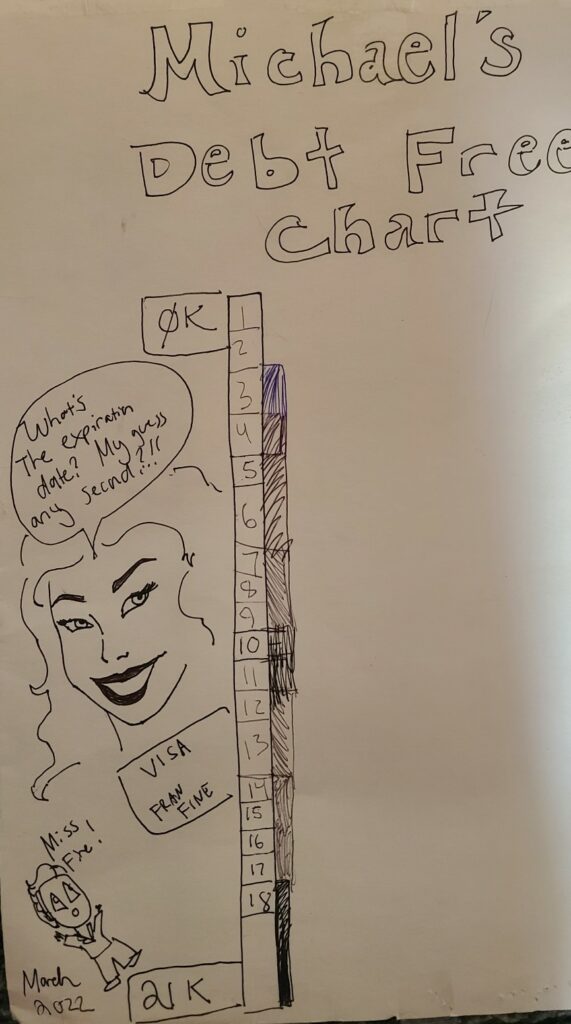
The couple is currently carrying $28,259 in consumer debt, primarily spread across three credit cards.

- Brian’s Visa (SCU): $16,057 (0% interest until Nov 2023, then 17.99%)
- Michael’s Visa Platinum: $9,700 (10.99% interest)
- Brian’s Visa Platinum (Navy Federal): $2,503 (0.99% interest until Nov 2023, then 17.74%)
The Asset Base
Conversely, the couple has been diligent about retirement contributions, with total assets—including 401(k)s, a pension, and HSAs—valued at approximately $91,250. However, they lack a robust liquid emergency fund, leaving them vulnerable to the "predictable unpredictability" of life expenses like car repairs and pet healthcare.
Expert Analysis and Strategic Recommendations
Financial expert Liz Frugalwoods, who reviewed the case, argues that the couple is in a much stronger position than they believe. "Brian and Michael are in good shape," she notes. "Spreadsheet problems, such as debt, are just that: spreadsheet problems."
1. The Power of Expense Tracking
The first step toward stability is the implementation of a rigorous, non-negotiable expense tracking system. By using tools like Empower or simple manual ledgers, the couple can account for the $13,000 "excess" currently disappearing into their budget. Knowing exactly where every dollar goes is the only way to convert that cash into a weapon against debt.
2. The "No-Spend" Detox
The expert recommendation is to initiate a short-term, aggressive "spending detox." By categorizing expenses into Fixed, Reducible, and Discretionary, the couple can immediately cut non-essential spending. For instance, eliminating $200 in monthly eating out, $200 in home goods, and other discretionary items allows them to redirect roughly $4,456 per month toward debt. At this rate, they could be completely debt-free within seven months.

3. Redefining Emergency Funds
The couple’s current $9,000 in savings is insufficient given their monthly overhead. Once debt is cleared, their primary focus must be a fully funded emergency reserve. This is not for "expected" life events (like car maintenance), but for true, unforeseen crises. By lowering their overall cost of living, they simultaneously lower the amount they need to keep in reserve, making this goal more attainable.
4. Retirement and Academic Goals
Regarding Brian’s interest in a master’s degree, the expert advice is cautionary: do not pursue it unless there is a guaranteed, iron-clad, and significant salary increase attached to the credential. Instead, the couple should focus on maximizing their "triple crown" of retirement vehicles: the 403b, 457, and pension.

Implications for the Future
The path to home ownership and lasting security for Brian and Michael does not require a higher income, but rather a higher degree of intentionality. Their desire for a garden and a piece of land is a valid life goal, but it must be deferred until the foundation is laid.
The "feast and famine" cycle they describe is a behavioral issue, not a math problem. By shifting their mindset from the shame of past spending to the empowerment of future planning, they can stop the cycle of debt. The ultimate takeaway is that while money is a vital component of a well-lived life, it is only one tool in the kit. By aligning their daily spending with their long-term values—and by treating their debt as a tactical challenge to be solved rather than a moral failure—Brian and Michael can successfully transition from the anxiety of the present to the stability of a secure, home-owning future.

The couple stands at a precipice, but with a disciplined approach to their current income, the "next level of adulting" they seek is well within their reach.