The AI Mandate: IRS Clarifies Professional Responsibility for Tax Practitioners in the Age of Automation
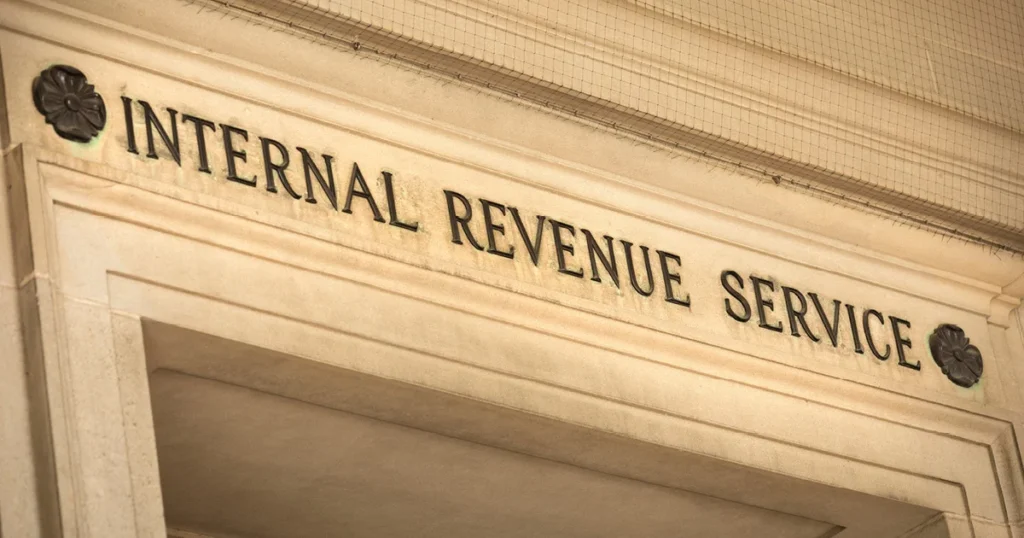
The landscape of tax preparation and advisory services is undergoing a tectonic shift as generative artificial intelligence (AI) integrates into daily workflows. Recognizing this rapid adoption, the Internal Revenue Service’s Office of Professional Responsibility (OPR) has issued a landmark bulletin detailing how long-standing ethical standards under Treasury Circular 230 apply to AI-assisted practices. The message from the agency is unequivocal: while AI offers unprecedented efficiencies, it does not absolve tax professionals of their core duties—due diligence, competence, and client confidentiality.
Main Facts: The Intersection of Circular 230 and AI
The OPR bulletin, released this week, serves as a formal framework for practitioners who utilize AI tools in their practice. At its core, the guidance reiterates that Circular 230—the federal regulation governing practice before the IRS—is technology-neutral. This means that whether a tax return is prepared by a human using a calculator or an algorithm, the professional’s responsibility remains absolute.
The IRS emphasizes that AI should be viewed strictly as an augmentation tool rather than a replacement for human judgment. "Technology serves as a powerful tool, not a substitute for professional judgment," the OPR stated. "Final decisions must always rest with qualified professionals who understand the complexities of tax law and ethical standards."
This guidance arrives at a pivotal time for the agency. In June, the IRS announced plans to merge the OPR with the Return Preparer Office to form the new Tax Professional Management Office. This consolidation suggests a more unified, aggressive approach to overseeing the conduct of tax practitioners as they navigate an increasingly digitized regulatory environment.
Chronology: The Evolution of AI in Tax Practice
The integration of AI into tax services has accelerated significantly over the past 24 months, moving from experimental pilot programs to widespread adoption.
- 2023–Early 2024: Rapid experimentation with Large Language Models (LLMs) leads to widespread reports of "hallucinations," where AI tools fabricate legal citations and case law. Several high-profile legal cases in federal courts result in sanctions against attorneys for relying on AI-generated research without human verification.
- June 2024: The IRS announces a structural reorganization, signaling an intent to modernize its oversight capabilities regarding tax preparers.
- Late 2024: The OPR issues its formal bulletin, explicitly addressing the "hallucination" and data privacy risks inherent in generative AI.
- Present: The IRS moves into a phase of active enforcement, where practitioners are now on notice that "the computer did it" will not serve as a viable defense against allegations of professional malpractice or ethics violations.
Supporting Data and Technical Risks
The OPR bulletin highlights a dichotomy in the current AI climate. On one hand, generative AI provides significant cost savings, rapid data processing, and enhanced capabilities for fraud detection and audit risk assessment. On the other hand, the agency notes that the technology is prone to three primary failures:
- Fabricated Outputs (Hallucinations): AI models often prioritize fluid syntax over factual accuracy, leading to the creation of non-existent tax precedents or erroneous calculations.
- Inherent Bias: Because AI models are trained on vast datasets, they can inadvertently perpetuate systemic biases, leading to discriminatory outcomes or skewed tax advice.
- Transparency Deficits: Many AI models operate as "black boxes," where the logic behind a specific conclusion is difficult for the user to trace, making it nearly impossible for a practitioner to perform the necessary "due diligence" required by Circular 230.
Official Responses and Regulatory Implications
The IRS’s stance is a warning to practitioners who believe that automation reduces their liability. The OPR is clear: if a return is filed with incorrect data or a frivolous position, the signing practitioner is liable, regardless of whether that information originated from an AI prompt.
Due Diligence and the Duty of Competence
The agency defines "competence" in the modern era as requiring a dual mastery: knowledge of tax law and knowledge of the limitations of one’s tools. The OPR warned that a "lack of technological competence" could lead to improper advice, which in turn could result in disciplinary action.
"Practitioners must remain vigilant in reviewing what is produced by AI, validating its factual assertions and citations, and handling sensitive client data safely and securely," the guidance stated. This implies that firms must treat AI-generated content as a "first draft" only, requiring rigorous human scrutiny before it touches any official filing or client communication.
Billing Practices and Unconscionable Fees
One of the more nuanced aspects of the bulletin concerns professional billing. The IRS suggests that charging clients for hours "saved" by AI—without reflecting those efficiencies in the final bill—could be construed as an "unconscionable fee" under Circular 230. The agency encourages firms to adopt transparency regarding their use of AI and to pass along cost reductions to the taxpayer.
Firm-Level Obligations and Data Privacy
Beyond the individual practitioner, the OPR places significant weight on the role of firm leadership. Firms are now effectively required to create "AI Governance Policies." These policies must include:
- Secure Infrastructure: Mandating the use of enterprise-grade, secure AI tools that protect taxpayer data, rather than public, open-source platforms that may ingest sensitive data for training purposes.
- Staff Training: Ensuring that all employees understand the ethical implications of the tools they use.
- Accuracy Monitoring: Developing internal workflows to double-check AI output, particularly in complex areas of tax law.
- Documentation: Keeping a record of how and when AI was used, which may be requested during an OPR investigation.
Lessons from Legal Sanctions: A Warning Shot
The bulletin leans heavily on the cautionary tales emerging from the legal profession. Courts have been increasingly harsh on lawyers who submit filings containing fake citations—often cited as "hallucinations"—that were generated by AI. Penalties have ranged from financial sanctions to public censure and disbarment from specific courts.
The OPR highlights a specific international example: an accounting firm in Australia that prepared a government report using AI, only to have it discovered that the report contained entirely invented quotes and erroneous data. The fallout included not just professional embarrassment but a mandated partial fee refund and significant damage to the firm’s reputation. The IRS is signaling that the tax profession is subject to the same standard: if the output is bad, the practitioner is responsible.
Conclusion: The Path Forward
The IRS’s guidance does not signal an end to AI innovation in the tax sector, but rather the beginning of a "maturity phase." As generative AI becomes a staple of modern tax practice, the standard for "due diligence" is being redefined. Practitioners who ignore these risks do so at their own peril, risking their ability to practice before the IRS.
Moving forward, the successful tax professional will be the one who balances the speed and efficiency of the machine with the skepticism and ethical oversight of the human. As the OPR bulletin concludes, the final word on any tax matter must always belong to the human professional—a gatekeeper whose judgment, not the algorithm, remains the final authority in the eyes of the law.