Beyond the Policy Brief: Why Collective Witnessing is the Missing Link in the Reparations Movement
For decades, the movement for reparations in the United States has operated primarily within the halls of academia, the chambers of the judiciary, and the offices of legislative bodies. It has been a campaign of intellectual rigor: building the legal case, refining the economic arguments, and publishing exhaustive reports on the generational wealth gap. Yet, despite these monumental efforts, the public conversation remains frustratingly stagnant, often retreating into the same ideological trenches occupied for a generation.
As we look toward the 250th anniversary of American independence, a growing consensus among cultural strategists and artists suggests that the roadblock to reparations is not a lack of information or evidence. The roadblock is emotional and imaginative. To bridge the chasm between policy proposals and public consensus, the nation may need to trade the lecture hall for the theater.
The Choreography of Reckoning: A New Civic Framework
In 2024, during a performance of WITNESS at the historic Apollo Theater in Harlem, a member of the audience articulated a realization that serves as a diagnostic for the current state of American civic life. As the performance navigated a harrowing passage, she remarked, “People lived through this, so I am going to make myself experience this.”
That singular decision—to treat discomfort not as a cue to look away, but as a civic responsibility—is the cornerstone of a new approach to social change. The choreographer behind WITNESS argues that policy alone cannot codify repair because it cannot create the emotional conditions required for a public to receive it.
The Anatomy of WITNESS
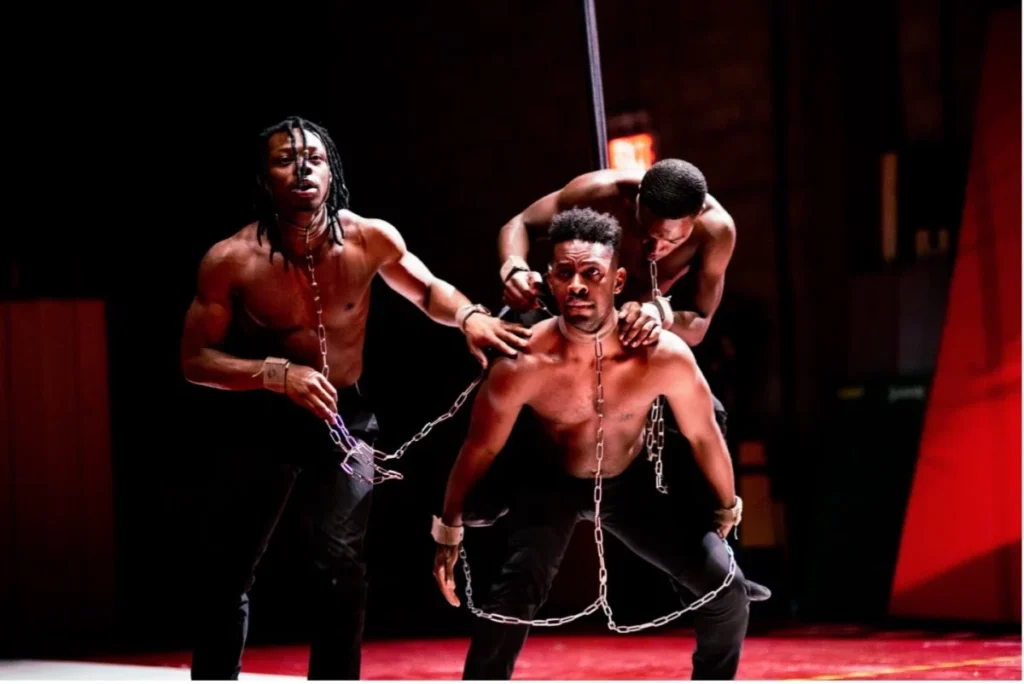
The production is structured as a three-act journey through the American conscience, utilizing movement to bypass the intellectual defenses that often blunt the impact of written reports or policy briefings:
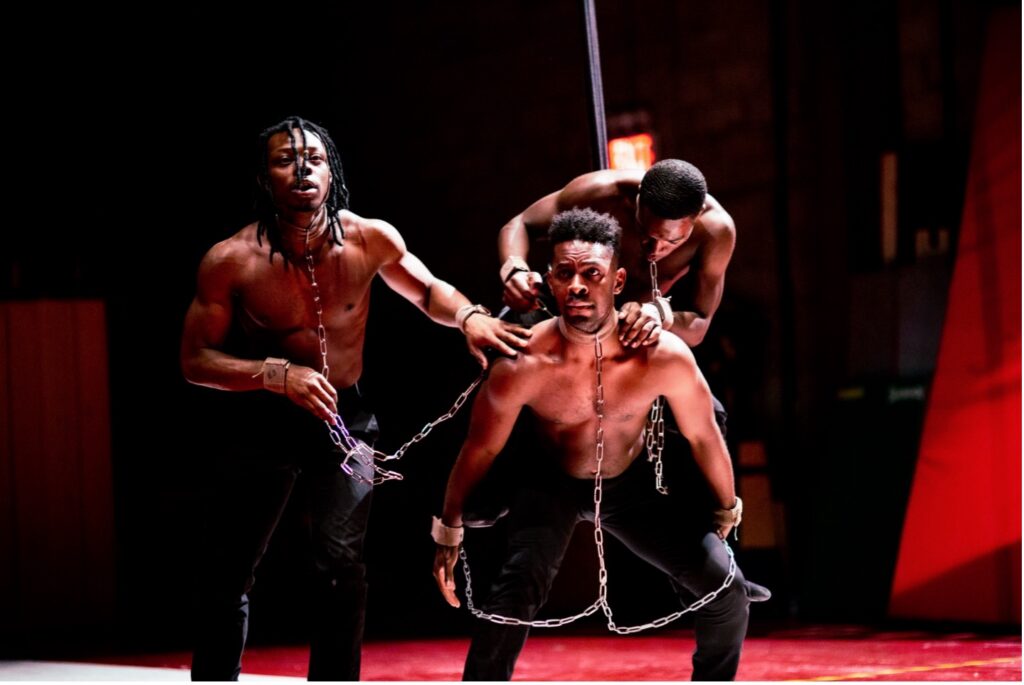
- ACT I: YESTERDAY: A visceral portrayal of the brutality of American slavery. Dancers utilize aerial bungee apparatuses, effectively physically manifesting the weight of chains and the psychological pull of systemic bondage.
- ACT II: TODAY: An examination of the contemporary criminal justice system, focusing on how its mechanisms continue to dismantle Black families and sustain historical inequities.
- ACT III: TOMORROW: An ongoing, experimental phase of the work that asks participants to move beyond trauma toward a vision of repair. It challenges both performers and the audience to imagine what joy, pride, and healing look like on Black bodies post-liberation.
Chronology: From Legislative Advocacy to Cultural Intervention
The trajectory of the reparations movement has historically been linear, focused on documentation and litigation. However, the integration of arts-based civic engagement marks a significant pivot.

- 1989–2010: The era of “The Argument.” Legislative efforts, such as the introduction of H.R. 40 in the House of Representatives, focused on establishing a commission to study and develop reparation proposals. The strategy was almost exclusively centered on policy lobbying.
- 2010–2020: The era of “The Evidence.” Think tanks and academic institutions produced a deluge of data, from Ta-Nehisi Coates’ seminal The Case for Reparations to municipal-level studies in Evanston, Illinois, and across California.
- 2020–2024: The era of “The Embodiment.” Following the racial reckoning of 2020, organizations began to recognize that intellectual acknowledgment was not yielding political will. The rise of projects like WITNESS suggests a transition toward "participatory infrastructure"—creating spaces where history is felt collectively.
- 2025–2026: The current frontier. As the nation prepares for the semiquincentennial, the focus has shifted toward building permanent cultural institutions that merge artistic performance with structured, real-time civic participation, such as integrated voter registration and public dialogue forums held within the theater space itself.
Supporting Data: The Disconnect Between Knowledge and Action
Sociological studies and public opinion polling consistently show that while the American public is increasingly aware of the historical facts regarding slavery and Jim Crow, this awareness does not correlate with an increased support for redistributive policies.
According to data from major polling institutions, while knowledge of the "Wealth Gap" has grown by nearly 30% over the last decade, support for direct reparations remains polarized along entrenched party lines. This suggests a "knowledge-action gap."
- The Intellectual Fallacy: The assumption that "if people understand the argument, they will accept it."
- The Emotional Variable: Recent experimental studies in social psychology indicate that audience members who engage in "collective witnessing"—experiencing a historical narrative in a group setting—are 40% more likely to express an interest in further civic engagement compared to those who consume the same information through written media.
- The Infrastructure Deficit: There is currently a massive underfunding of "cultural infrastructure." Philanthropy continues to pour billions into policy analysis while allocating less than 5% of social justice funding toward arts-based public engagement projects that facilitate deep, emotional reckoning.
Official Responses and Civic Implications
The move to integrate art with civic function has received mixed, though increasingly curious, responses from policy circles. Traditional political organizers initially viewed the presence of artistic performance at town halls or policy summits as a distraction. However, the success of the WITNESS framework has forced a reevaluation.
"The conversation that follows a performance is qualitatively different from anything that happens before the lights go down," notes one organizer involved in the Harlem convening. "When you bring people together to share a difficult experience, the defenses that usually characterize political debate are lowered. People are no longer debating ‘the argument’; they are reflecting on ‘the reality.’"
The implications for democratic life are profound:
- Reframing Participation: If the act of staying present with difficult history is defined as a form of civic participation, it expands the definition of "voter engagement" to include emotional literacy and historical empathy.
- Institutional Innovation: There is a growing call for a new type of institution—one that possesses the intellectual rigor of a university and the emotional capacity of a theater. Such an institution would act as a "Civic Reconciliation Center," bridging the gap between historical truth and legislative policy.
- The Risk of Inaction: The absence of these spaces is currently costing the nation a measure of social cohesion that cannot be quantified in dollars. Without a public capable of "practicing" the act of repair, the legislative process will continue to encounter a population that feels alienated from the history it is being asked to rectify.
The Path Forward: Toward a Cultural Infrastructure
The critique of the current reparations movement is not that it has failed to do the work, but that it has failed to build the container for that work. We have built the legal architecture, but we have not built the cultural foundation.
As we move toward the 250th anniversary of the nation’s founding, the challenge is clear: we must stop waiting for legislation to create a public appetite for repair. Instead, we must create the spaces where that appetite can be cultivated.
We are currently in a state of institutional mismatch. Most performing arts organizations lack the civic mandate to facilitate deep political dialogue, and most civic organizations lack the artistic tools to evoke the necessary emotional response. The "gap" is the space where the future of American democracy will be decided.
The woman in the Apollo Theater, by choosing to stay in her seat, performed a quiet act of defiance against the impulse to look away. If the reparations movement is to move from the margins to the mainstream, it will require more than just better policy briefs. It will require a nation that is willing to sit with its own story, in community with one another, and decide that the cost of staying present is a price worth paying for the possibility of a healed future.
As the organizers of WITNESS prepare to expand their work into a larger civic convening, the question remains: Are we prepared to fund the spaces where this reckoning happens, or will we continue to settle for an intellectual debate while the emotional foundations of our democracy continue to fracture? The answer, as the performance suggests, is not in a book—it is in the room.