The Beautiful Game Behind Bars: Human Rights and the 2026 FIFA World Cup
The 2026 FIFA World Cup, hosted jointly by the United States, Mexico, and Canada, was envisioned as a global celebration of sport, unity, and cultural exchange. However, as the tournament progresses, a dark shadow has been cast over the festivities. Reports of discriminatory immigration policies, the detention of international football officials, and the systematic marginalization of migrant communities have transformed the event into a flashpoint for human rights advocacy.
Amnesty International, in its March 2026 report titled “Humanity Must Win,” issued a stark warning: the aggressive immigration enforcement policies of the United States are fundamentally incompatible with the inclusive spirit of the World Cup. As the global spotlight remains fixed on the pitch, civil society organizations are working frantically to ensure that the tournament does not serve as a catalyst for human rights abuses.
The Case of Omar Abdulkadir Artan: A Symbol of Exclusion
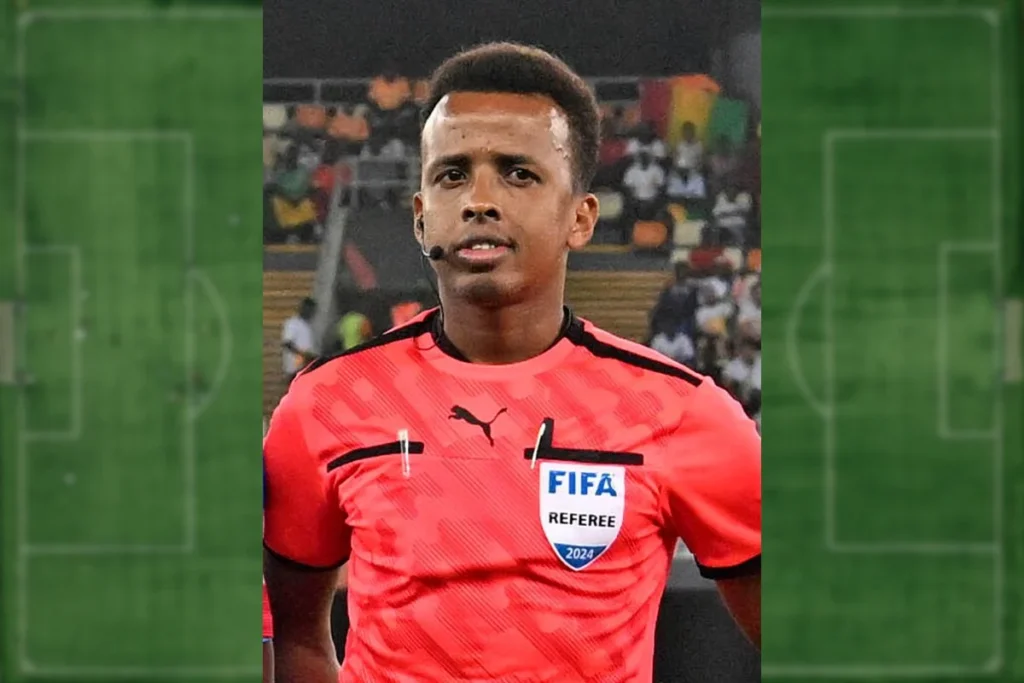
The most poignant illustration of the current climate occurred on the eve of the tournament’s opening matches. Omar Abdulkadir Artan, a Somali referee who had been rightfully selected as one of the elite 50 officials for the 2026 roster, saw his dream shattered by U.S. border authorities.
Despite having documentation that was entirely in order—and possessing the professional prestige of being named the 2025 Men’s Referee of the Year in Africa by the Confederation of African Football (CAF)—Artan was detained upon his arrival in Miami after traveling from Turkey. Instead of being welcomed to the host nation, he was interrogated and held in a detention cell before being summarily deported back to his home country.
“My documentation was in order,” Artan stated in a subsequent interview with The New York Times, emphasizing that his only intent was to fulfill his professional duties. This incident was not merely an administrative error; it was widely denounced by human rights groups as a clear act of racial and national-origin discrimination.
The detention of Artan underscored a broader, systemic issue: the inconsistency with which host nations treat international delegations. While some teams and officials are granted seamless entry, others—particularly those from the Global South—face arbitrary scrutiny that borders on harassment.
Chronology of a Mounting Crisis
The tension surrounding the 2026 World Cup did not emerge overnight; it is the culmination of years of shifting immigration rhetoric and policy in the United States.
- January 2026: The Department of Homeland Security moved to terminate Temporary Protected Status (TPS) for Somalia, a move that threatened the legal status of thousands who have called the U.S. home for decades. Though a court injunction currently holds the termination in limbo, the threat of deportation has created a climate of extreme precarity.
- February 2026: Political rhetoric reached a fever pitch when President Donald Trump publicly disparaged Somalia, labeling it a "terrible place" and questioning its legitimacy as a nation-state. These comments, which included offensive generalizations about Somali intelligence and criminal activity, set a tone of hostility that trickled down into the enforcement culture of border and immigration agencies.
- March 2026: Amnesty International published “Humanity Must Win,” formalizing concerns that the U.S. border apparatus would target participants and fans alike.
- June 2026: The World Cup begins. The Iranian national team, struggling under the weight of U.S. travel restrictions, is forced to base its operations in Mexico. Many delegation members are only granted entry to the U.S. on the days of their scheduled matches, creating immense logistical and psychological strain on the athletes.
Supporting Data: The Pattern of Profiling
The experiences of individuals like Omar Artan and the logistical barriers faced by the Iranian delegation are not isolated anomalies; they are components of a larger pattern identified by organizations like the Council on American-Islamic Relations (CAIR).
According to CAIR’s Civil Rights Report 2026, the current administration’s immigration policies have effectively institutionalized a scheme of racial and religious profiling. This framework disproportionately impacts Muslim-majority nations and communities of color, creating a "chilling effect" on participation.
Furthermore, the threat of Immigration and Customs Enforcement (ICE) has altered the social landscape of the tournament. In cities across the United States, immigrant communities are reporting a heightened state of anxiety. Haddy Gassama, senior policy counsel at the ACLU, notes that the fear of surveillance and detention has discouraged many from participating in the public aspects of the tournament.
“There’s a sense of fear in a lot of communities,” Gassama explained. “Even if you can’t afford a ticket, you might want to go to a local bar or gathering place to watch, but immigrant communities are vigilant about being out where there might be heavy police or ICE presence.”
The FIFA Response: Rhetoric vs. Responsibility
As the governing body of the sport, FIFA holds the primary responsibility for ensuring that its human rights mandates are upheld by host nations. The organization’s 2016 statutes explicitly committed it to protecting human rights throughout the bidding and implementation phases of tournaments.
However, FIFA President Gianni Infantino has consistently downplayed the severity of these incidents. When pressed on the detention of referees and the visa struggles of national delegations, Infantino characterized the situation as a matter of “negotiated flexibility.” He urged critics to “relax and trust FIFA,” arguing that the organization cannot dictate the domestic policies of sovereign nations.
This hands-off approach has drawn sharp criticism from experts like Andrea Florence, executive director of the Sport & Rights Alliance. “It’s very worrying that FIFA did not step up to ensure that the rights they are supposed to respect are actually fulfilled by the host country,” Florence said. She noted that the 2026 World Cup was intended to be the first tournament to embed human rights into its governance from the very beginning. By failing to hold the U.S. government accountable, FIFA is seen as undermining the very landmark commitments it championed in 2016.
Implications for Future Host Cities
The implications of these human rights failures extend beyond the final whistle of the 2026 tournament. As Jennifer Li, director of the Center for Community Health Innovation at Georgetown Law, points out, mega-sporting events leave long-term legacies—some of which are deeply destructive.
Li points to the 1996 Atlanta Olympics as a cautionary tale, where the city utilized the event to justify the mass incarceration of homeless residents, a legacy that haunted the city for decades. Similar concerns exist for the 2026 host cities. When local authorities ramp up surveillance and displace vulnerable populations under the guise of "event security," those policies often remain in place long after the tourists have left.
The response from civil society has been to pivot toward "bottom-up" accountability. Organizations like the Fair Work Center and the Workers Defense Action Fund are working to ensure that labor protections are enforced for the thousands of service workers essential to the World Cup infrastructure.
Lizeth Chacón, executive director of the Workers Defense Action Fund, notes that her organization has shifted its focus to providing "risk-awareness guidance" to workers. This includes providing resources on how to interact with law enforcement, ensuring workers have legal counsel contact information, and creating safety networks for families to ensure the safe return of workers after their shifts.
A Legacy of Accountability
The 2026 World Cup serves as a critical test for the international community. If the standard for hosting a global event is simply the presence of stadiums and broadcast infrastructure, then the tournament may be deemed a success by its organizers. However, if the standard includes the protection of human dignity, the right to non-discrimination, and the safeguarding of labor rights, the current state of affairs represents a failure.
The advocacy of groups like the ACLU, CAIR, and the Sport & Rights Alliance remains essential. By documenting these abuses and providing direct support to the communities most impacted by the tournament’s security apparatus, these organizations are ensuring that the stories of those excluded—like Omar Artan—are not forgotten.
As the tournament concludes, the question remains: will the 2026 World Cup be remembered for the brilliance of its play, or for the silence of those who allowed human rights to be sidelined for the sake of a spectacle? The answer depends on whether the pressure on FIFA and local officials continues, ensuring that the legacy of this event is one of progress rather than systemic repression.