Branch Revolutionizes Workforce Finance: The Shift Toward Embedded Earned Wage Access
By PYMNTS | July 14, 2026
In a significant evolution for the labor economy, workforce financial infrastructure provider Branch has announced a major expansion of its earned wage access (EWA) capabilities. By enabling companies to embed EWA directly into scheduling and shift-management platforms, Branch is fundamentally altering how workers interact with their pay. This move represents a departure from traditional, siloed payroll systems, pushing financial wellness tools into the daily digital ecosystems that employees already utilize.
The Core Transformation: Branch’s New "Flex" Model
For years, the integration of EWA into corporate environments was a complex, engineering-heavy endeavor. Companies often had to navigate fragmented systems, linking time-and-attendance software to third-party payroll providers with significant overhead.
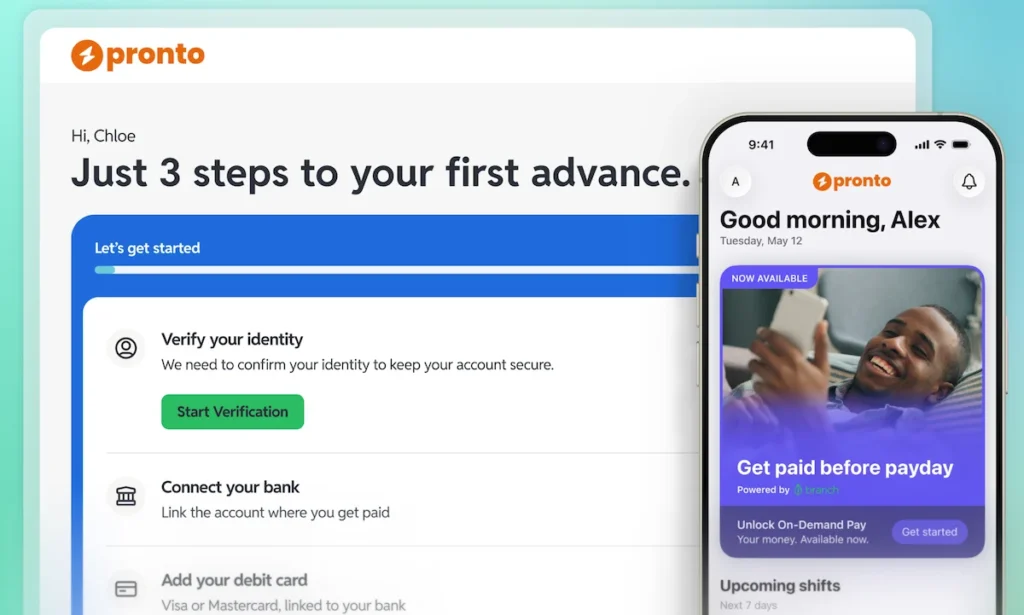
Branch’s newly unveiled "Flex" model seeks to eliminate these technical hurdles. By streamlining the integration process, Branch allows platforms—such as scheduling apps and workforce management tools—to host EWA as a native feature rather than an external bolt-on. This "embedded-first" approach is designed to drastically reduce the time-to-market for employers and provides a seamless, friction-free experience for workers.
The Flex model is not merely a technical update; it is a strategic shift. By placing the ability to access earned wages inside the very tools workers use to pick up shifts or view their schedules, Branch is optimizing for engagement and utility. As Founder and CEO Atif Siddiqi noted, the goal is to transform EWA from a standalone benefit into a core value proposition for platforms, making the financial tool as intuitive as checking one’s schedule.
A Chronology of Innovation: From Payroll Integration to Ecosystem Embedding
Branch’s journey toward this announcement has been marked by a series of strategic technical milestones, each building toward the goal of a frictionless financial infrastructure.
- September 2025: Branch debuted its initial embedded platform, allowing businesses to integrate fast payment options directly into their applications. This laid the groundwork for 1099 payouts and paycard options, setting the stage for more complex integrations.
- March 2026: A critical partnership with Stripe was launched. By leveraging Stripe Issuing, Branch enabled companies to launch digital wallets and branded debit cards, further deepening the integration between worker payouts and financial services.
- March 2026 (Continued): CFO Matt Peterson sat down with PYMNTS CEO Karen Webster to articulate the company’s vision. Peterson emphasized that the wait-time between labor and pay is an outdated artifact of the industrial era, arguing that "workers don’t want to, and they shouldn’t need to, wait two to three weeks to get paid."
- July 2026: The launch of the Flex model signifies the maturity of these efforts. By moving beyond payroll-only integrations and into the realm of scheduling and shift tools, Branch is effectively capturing the "moment of work" to provide instant liquidity.
The Data Driving the Demand: Why EWA is No Longer Optional
The urgency behind Branch’s expansion is backed by robust data. According to the Wage to Wallet™ Index: Never Quite Enough, a study conducted by PYMNTS Intelligence, the financial precariousness of the modern worker is profound.
The report revealed that 54% of labor economy workers required access to funds before their scheduled payday to cover essential expenses within a 90-day window. Perhaps more concerning is the frequency of these liquidity gaps: 16% of respondents reported facing such a situation at least four times in that same period.
This data underscores the reality that for millions of workers, the traditional bi-weekly pay cycle is a source of financial stress rather than a reliable foundation. When workers lack access to their own earned income, they are often forced to turn to high-interest credit cards, payday loans, or overdraft fees to bridge the gap. By providing a low-cost or no-cost alternative, Branch is effectively providing a "financial safety valve" that helps workers avoid predatory debt cycles.
Official Perspectives: Aligning Pay with Work
The philosophy guiding Branch’s leadership is clear: speed is the ultimate utility. In his recent discussions, Atif Siddiqi emphasized that embedding EWA into daily workflows does more than provide money; it builds trust. When a worker can see their wages grow in real-time within their scheduling app, the psychological barrier between work and reward is bridged.
CFO Matt Peterson’s perspective further highlights the systemic shift in the labor market. By positioning the IPO-focused discipline of the company not as a destination, but as a commitment to sustainable infrastructure, Peterson suggests that Branch is building for a long-term future where "on-demand" is the default setting for compensation. The company’s focus on speed, immediate availability, and autonomy allows workers to solve their own financial problems without the embarrassment or complexity of asking for advances or loans.
Implications for the Future of Work
The integration of EWA into shift-management platforms has far-reaching implications for both employers and employees:
1. Increased Worker Retention and Engagement
For employers, the ability to offer on-demand pay is a powerful recruitment and retention tool. In sectors characterized by high turnover—such as retail, hospitality, and gig work—the ability to access pay immediately provides a significant competitive advantage. Employees are more likely to pick up extra shifts if they know the proceeds are accessible shortly after the work is completed.
2. A Shift in Financial Services Architecture
Branch’s move suggests that the future of fintech lies in "invisible" infrastructure. Rather than forcing users to download dozens of separate banking apps, financial services are increasingly being "wrapped" into the operational software that businesses already use. This "B2B2C" (Business-to-Business-to-Consumer) model ensures that financial wellness tools are ubiquitous rather than isolated.
3. Mitigating the High-Interest Debt Trap
The broader social impact of this technology cannot be overstated. By providing a path to liquidity that does not rely on traditional credit scoring or high-interest lending, Branch is acting as a catalyst for financial health. The move toward instant transfers—whether to an existing debit card or a Branch-integrated digital wallet—directly combats the "wait-time" penalty that has historically penalized the working class.
4. The Role of Modern Payment Rails
With the integration of tools like Stripe and the expansion of internal disbursement models, Branch is demonstrating that the underlying plumbing of the financial system is evolving. The ability to move money instantly at scale is no longer a luxury; it is becoming a standard requirement for any platform that manages a workforce.
Conclusion: The New Standard of Compensation
As Branch continues to iterate on its Flex model and deepen its integration capabilities, it is clear that the traditional payroll model is facing its most significant challenge in decades. The convergence of workforce scheduling, real-time data, and embedded finance is creating a new paradigm where the definition of a "payday" is becoming increasingly fluid.
For the 30 million workers who rely on such tools to bridge the gap between their daily needs and their compensation, Branch’s latest innovation offers more than just speed—it offers stability. As these technologies become standard, the "on-demand" economy will likely move from being an innovative niche to the baseline expectation for the modern workforce. By eliminating the friction between effort and earnings, Branch is not just processing payments; it is empowering a generation of workers to take control of their financial destinies.