The Instant Payment Revolution: How FedNow is Reshaping the U.S. Financial Landscape
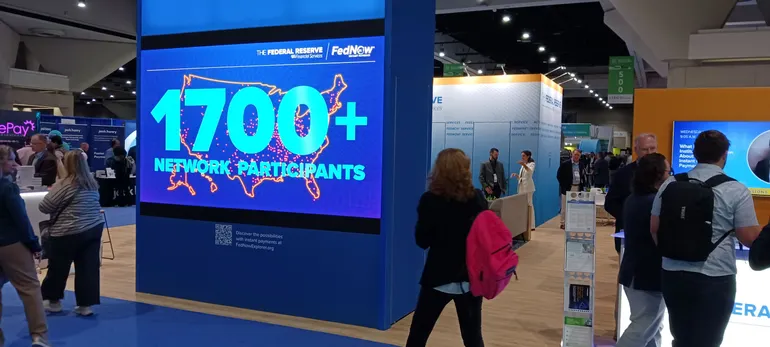
The United States financial infrastructure is undergoing its most significant transformation in decades. For years, the American payments system was criticized for its reliance on legacy frameworks—such as the Automated Clearing House (ACH)—which often left businesses and consumers waiting days for funds to settle. Today, that narrative is shifting rapidly. The Federal Reserve’s "FedNow" instant payment service, launched in mid-2023, is gaining unprecedented momentum, marking a turning point in how money moves across the nation.
Driven by a surge in financial institution adoption and a growing appetite for real-time liquidity, the volume of payments settled through the FedNow network jumped by 85% in the second quarter of this year compared to the first. As the network expands its reach, it is not only connecting more banks but also fundamentally changing the expectations of the modern consumer and the operational capabilities of corporate America.
A Chronology of Progress: From Vision to Velocity
The journey toward a real-time U.S. payment system has been a long-term strategic initiative of the Federal Reserve, spanning over three years of intensive development and outreach.
- Pre-2023: The Federal Reserve spent years courting financial institutions, attempting to build a robust ecosystem that could provide 24/7/365 settlement. This effort was designed to address the competitive pressure of private-sector alternatives and the global trend toward instant payments.
- Mid-2023: The official launch of the FedNow service marked the beginning of a new era. Designed to accommodate smaller community banks and credit unions that felt excluded from private-sector initiatives, the platform sought to democratize access to high-speed financial settlement.
- Late 2023 – Early 2024: The federal government began using its own weight to push the system forward. The U.S. Treasury Department became an early adopter, and the Federal Emergency Management Agency (FEMA) integrated FedNow to expedite disaster relief payments to victims, proving the system’s utility in time-sensitive scenarios.
- Mid-2024: The latest data from the Fed confirms that approximately 1,800 financial institutions have now onboarded with the service. This cohort includes seven of the ten largest U.S. banks, effectively providing access to roughly half of all U.S. checking and savings accounts.
Supporting Data: The Landscape of Instant Payments
The growth of FedNow does not exist in a vacuum; it competes and coordinates within a broader ecosystem that includes private-sector players like The Clearing House’s (TCH) RTP network.
According to recent disclosures, the TCH’s RTP network processed 142 million transactions totaling $576 billion in the second quarter of this year. As of June 2026, the RTP network boasts approximately 1,280 participants, reaching 70% of accounts directly, or up to 90% when accounting for indirect participation through intermediaries.
However, the Federal Reserve’s progress is equally notable. By successfully onboarding nearly 2,000 institutions in just over a year, the Fed is making significant strides toward its long-term goal of bringing 7,000 to 8,000 financial institutions onto the FedNow platform. While this represents only about one-fifth of the total 9,000 U.S. financial institutions, the scale of current participation—covering half of all consumer accounts—indicates that the network has reached a critical mass.
The primary hurdle, however, remains the "asymmetry of participation." Many institutions have signed up only to receive funds, viewing it as a low-risk way to satisfy customer needs. The industry faces a steeper climb in convincing these banks to enable the send feature, which carries higher risk management requirements for non-reversal payments. Currently, only about 12% of participants in the private RTP network are authorized to send, and a similar challenge persists for the FedNow service.
Global Context: Playing Catch-Up No Longer
For years, the U.S. was frequently cited as a laggard in the global payments race. Countries like India (via the UPI system) and Brazil (via the Pix system) had achieved near-total adoption of instant payments, leaving the U.S. to rely on outdated, batch-processed systems.
A 2024 report from ACI Worldwide previously ranked the U.S. 11th in global real-time payments adoption. However, experts argue that this ranking no longer reflects the current reality. Bridget Hall, leader for real-time payments in the Americas at ACI, notes that the narrative has fundamentally changed. "We used to talk about the U.S. being behind on real-time payments, and I think we can solidly say that we’re not behind anymore," she stated. "We have established instant payment schemes in the U.S."
The successful deployment of both FedNow and the maturation of the RTP network have effectively bridged the gap, providing the U.S. with a dual-track, high-speed infrastructure that rivals any in the world.
Official Responses and Industry Perspectives
The sentiment among industry leaders is one of cautious optimism. Reed Luhtanen, head of the Faster Payments Council, suggests that the current adoption rates are merely the beginning. "This underscores the fact that businesses and consumers are demanding instant payments and financial institutions are responding to that demand," Luhtanen noted. "I anticipate the rate of adoption will continue to accelerate."
The Federal Reserve, through Chief FedNow Executive Nick Stanescu, has emphasized the importance of broad-based participation. The strategy has been to ensure that every corner of the financial sector—from the largest money-center banks to the smallest rural credit unions—has a path to real-time capability.
However, challenges remain in the form of "use cases." While the technology is sound, the industry is still finding its footing in the "request-for-pay" space. This feature, which allows a recipient to initiate a payment request, is seen as the catalyst for widespread B2B and C2B adoption, yet its current usage remains low across the board.
Implications: The Future of Money Movement
The implications of this shift are profound. By moving away from batch-processed settlements, the U.S. economy is becoming more efficient, liquid, and responsive.
1. Cross-Border Potential
One of the most exciting frontiers for FedNow is the potential for international settlement. In April, the Federal Reserve proposed amendments to its "Regulation J" to allow financial institutions to utilize intermediaries for fund transfers. This move is widely interpreted as a precursor to enabling cross-border instant payments, a development that could revolutionize global trade and personal remittances.
2. Government-Led Adoption
Industry observers, including Georgetown University professor Jim Angel, suggest that the federal government could play a more aggressive role in accelerating adoption. By leveraging massive programs—such as the Social Security Administration—the government could force the hand of laggard institutions. "If the government made it clear [it was] going to pay Social Security benefits faster to FedNow recipients than to ACH recipients, then the laggard banks would be under strong commercial pressure from their customers to sign up for FedNow," Angel argues.
3. A Competitive Marketplace
The existence of both the Fed’s network and the private-sector RTP network creates a healthy, competitive environment. This redundancy ensures that the U.S. payment system is not reliant on a single point of failure and encourages innovation as both providers strive to offer better features, lower fees, and more seamless integration for their member institutions.
Conclusion: A New Standard
The rapid growth of the FedNow service is more than just a technological upgrade; it is a fundamental shift in the plumbing of the American economy. As financial institutions move beyond simple receipt of payments toward the more complex, high-utility "send" capabilities, the benefits will eventually cascade down to the average consumer. From instantaneous insurance payouts to the digitization of real estate closings and earned wage access, the era of "waiting for your check to clear" is fast approaching its expiration date.
While there is still work to be done in onboarding the remaining 80% of financial institutions and refining the "request-for-pay" experience, the U.S. has successfully reclaimed its position as a global leader in payment innovation. The "instant" future is no longer a promise; it is an active, evolving reality.