Beyond the Roadmap: Why Organizational Culture is the True Engine of FinTech Transformation
By PYMNTS | July 10, 2026
In the high-stakes world of financial services, “transformation” has become the industry’s most pervasive buzzword. Banks and FinTech firms alike spend billions annually on cloud migration, AI integration, and the modernization of legacy payment architectures. Yet, while the technical implementation of these systems often dominates boardroom presentations and media headlines, the reality of corporate success is far more nuanced.
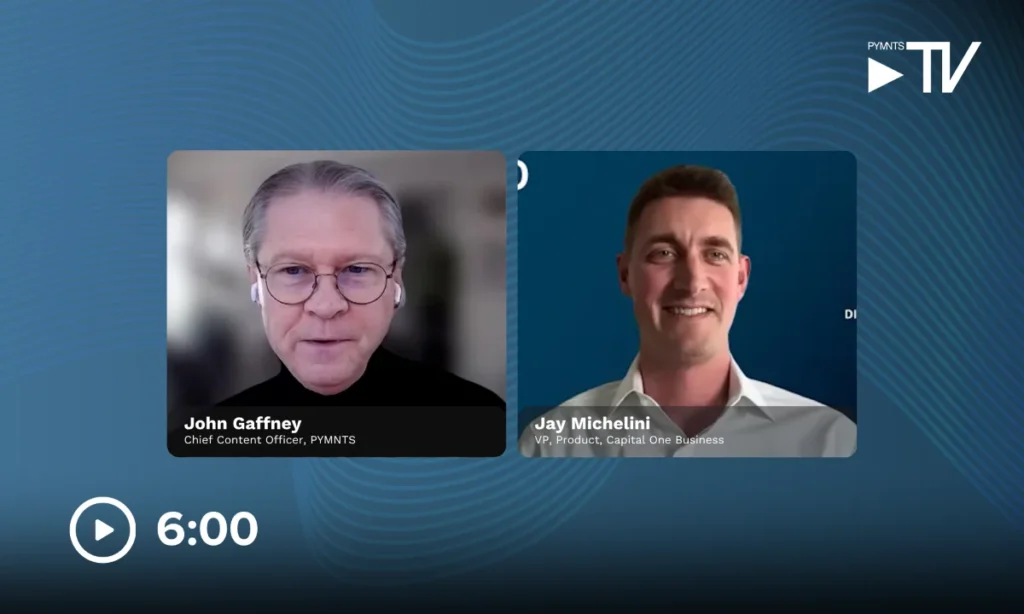
According to Jay Michelini, vice president of product at Capital One Business, the defining factor between a stalled initiative and a market-leading product is not the code itself, but the organizational human element. In an era where customer expectations and regulatory landscapes shift with unprecedented velocity, Michelini argues that change management is no longer a peripheral HR function—it is the core competency of the modern product leader.
The "Why" Imperative: Leading Through Constant Flux
For many financial institutions, change is treated as an isolated, disruptive event—a "project" to be completed before returning to business as usual. Michelini contends that this mindset is fundamentally flawed. In the current FinTech operating environment, constant adjustment is not an exception; it is the status quo.
"You’ve got to lead with the ‘why,’" Michelini emphasized in a recent interview.
When leaders fail to articulate the purpose of a change, they force employees to navigate new workflows without a North Star. This lack of context inevitably leads to resistance, as staff view new software or updated processes as arbitrary burdens rather than strategic advancements. To mitigate this, Michelini suggests that organizations must move beyond top-down executive messaging. While formal announcements are necessary, they are rarely sufficient.
Instead, successful leaders identify "internal champions"—employees at various levels who possess a deep understanding of the initiative’s practical value. These champions act as cultural conduits, translating high-level executive strategy into the language of day-to-day operations. When an initiative is advocated for by peers rather than mandated by a C-suite memo, it gains a level of credibility that is impossible to manufacture from the top down.
Breaking the Silos: The Cross-Functional Mandate
One of the most common failure points in corporate transformation is the "hand-off" culture. In this model, product teams design a solution, then "toss" it to engineering, which then passes it to operations, and eventually to compliance and legal. This sequential, siloed approach ensures that by the time an issue is identified, it is often too late or too expensive to fix.
Michelini advocates for a shift toward radical inclusivity from the project’s inception. "Cross-functional partners should be brought into decisions early, rather than being presented with finished plans," he noted.
This requires a fundamental shift in how organizations define project stakeholders. Instead of viewing legal, risk, and compliance teams as "checkpoints" or gatekeepers to be bypassed, leaders must treat them as co-architects of the product. By integrating these functions at the design phase, companies can proactively identify friction points, regulatory hurdles, and operational bottlenecks.
A simple diagnostic test for leaders: During project reviews, ask whether the operational teams were consulted during the ideation phase, or if the meeting is the first time they are hearing about the scope of the project. If it is the latter, the organization is solving problems in a vacuum, a practice that inevitably leads to technical debt and organizational resentment.
Empathy as a Performance Metric: Measuring the "Human" Pulse
Perhaps the most significant departure from traditional management theory offered by Michelini is the re-evaluation of progress metrics. In most financial firms, success is measured through the lens of Gantt charts, velocity metrics, and delivery dates. While these are critical for project tracking, they are notoriously poor at capturing the "health" of the transformation effort.
"Instead of asking where it’s at, ask, ‘How do you feel about how progress is going?’" Michelini suggested.
This reframing is not mere corporate sentimentality; it is a tactical necessity. Teams may be technically meeting their milestones while simultaneously drowning in "hidden" work—excessive overtime, manual workarounds to compensate for broken APIs, or the stress of constant pivot-heavy direction. When leaders prioritize "how the team feels," they uncover operational realities that never appear on a dashboard.
If a team is meeting a deadline but the morale is collapsing, the project is effectively failing, as it will inevitably result in burnout and attrition. By checking the pulse of the organization, managers can identify where to remove obstacles—whether that means adjusting timelines, reallocating resources, or providing additional training—rather than simply monitoring the inevitable fallout of an overextended team.
The "Missionary, Not Mercenary" Philosophy
Michelini’s leadership philosophy centers on the idea of creating "missionaries, not mercenaries." A mercenary is an employee who executes a task simply because they were told to do so; a missionary is someone who understands the purpose of the work and feels empowered to challenge the direction of the project to achieve a better outcome.
This requires leaders to be vulnerable enough to admit they do not have all the answers. Michelini shares his own experience of visiting sales teams to see how the product actually functions in the real world. "It was so eye-opening to sit with them firsthand," he said. "You see different angles to a problem. You need to have conviction in the direction you’re heading, but be open to different perspectives and feedback that are going to change your mind."
This openness is essential in an industry where competitive developments can render a product strategy obsolete in months. When product leaders empower their teams to "outthink" them, they foster an environment of psychological safety where innovation can thrive.
Implications for the Future of Financial Services
As financial institutions continue to navigate the dual pressures of digital transformation and economic uncertainty, the lessons provided by Michelini offer a roadmap for sustainable growth.
- Cultural Alignment is a Competitive Advantage: Firms that master the art of organizational change will attract and retain the best talent, as employees prefer working in environments where their input is valued and the "why" of their work is clear.
- The End of the "Checkpoint" Era: The future of FinTech development lies in integrated, cross-functional pods where risk, legal, and engineering work in tandem. This reduces time-to-market and ensures compliance is built-in, not bolted-on.
- Human-Centric Data: Future-forward organizations will augment their performance dashboards with qualitative feedback loops. Understanding the "strain" on a team is just as important as understanding the "speed" of the team.
- Leadership as Facilitation: The role of the manager is shifting from "director" to "facilitator." The best leaders are those who provide the vision and the resources, then step back to allow their teams the autonomy to solve the problem in the most efficient way possible.
Conclusion
In the final analysis, transformation is an act of translation. It is the ability to take complex market shifts and technical requirements and turn them into a clear, compelling, and manageable mission for the entire organization. Jay Michelini’s insights from Capital One Business serve as a poignant reminder: You can buy the most sophisticated software on the planet, but if you haven’t built a culture that understands the why, embraces the feedback, and values the people behind the screens, the technology will never reach its full potential.
As we look toward the remainder of 2026 and beyond, the winners in the FinTech space will be those who recognize that the most complex system they will ever manage is the organizational one. By focusing on the human element, leaders can turn the daunting prospect of "constant change" into a sustainable, repeatable engine for success.