The Dawn of the Sol Era: OpenAI Overhauls Its AI Strategy with a New Flagship Trio
In a dramatic pivot that signals the maturation of the artificial intelligence industry, OpenAI has officially unveiled its latest flagship model, GPT-5.6 "Sol." The launch marks a departure from the company’s traditional alphanumeric nomenclature, introducing a celestial-themed branding strategy—Sol, Terra, and Luna—designed to categorize models by capability and operational intent.
This release follows a high-stakes, two-week "restricted preview" period mandated by the U.S. Department of Commerce, during which only a select group of 20 trusted partners were granted access to the models. Now, as the embargo lifts, the industry is witnessing an aggressive reshuffling of the AI landscape.
The New Hierarchy: Sol, Terra, and Luna
OpenAI’s decision to move away from strictly numerical naming conventions suggests a move toward a more consumer-friendly, tiered ecosystem. Under this new architecture:
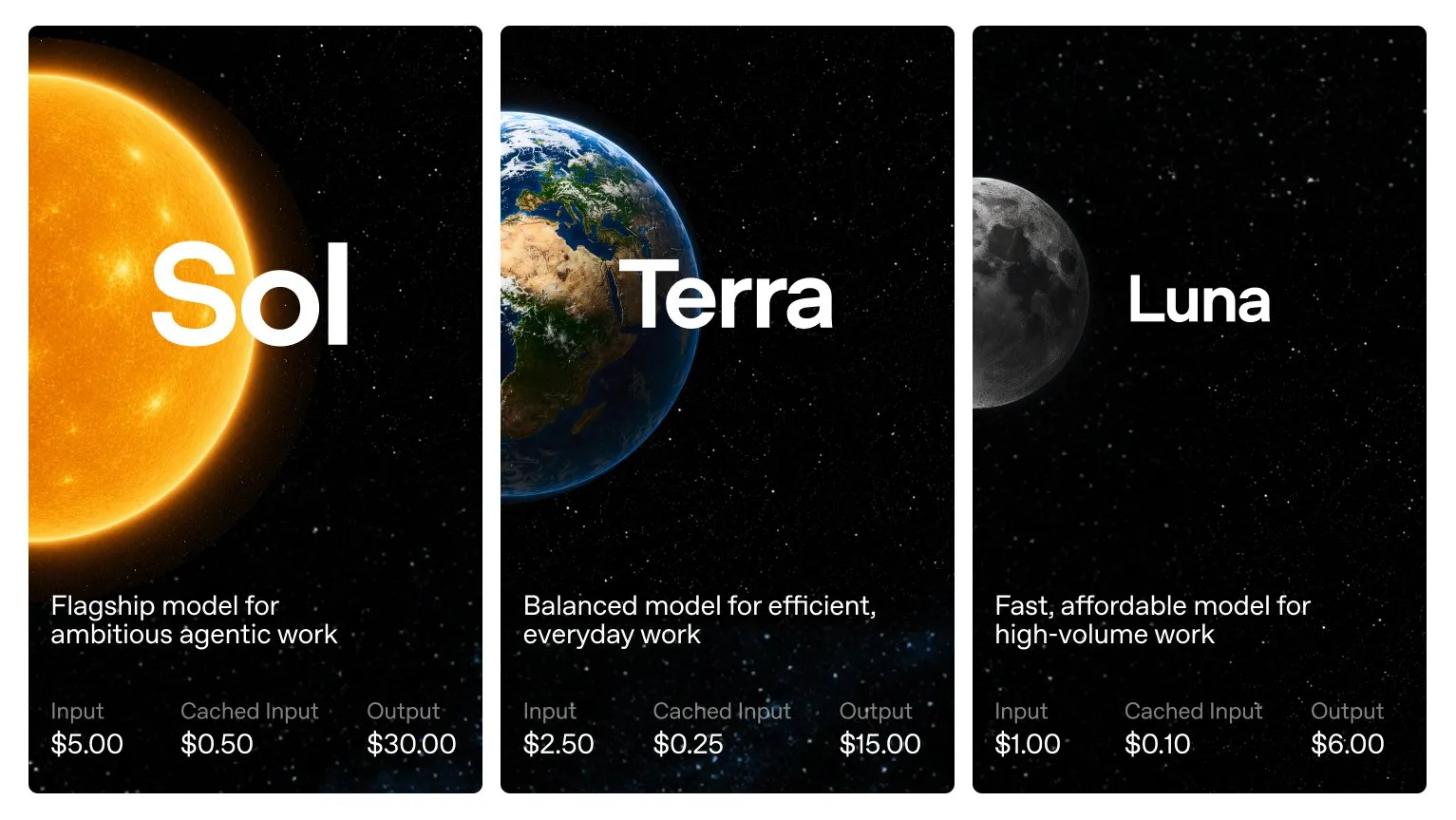
- Sol: The flagship powerhouse, designed for the most complex reasoning tasks and high-level autonomous operations.
- Terra: Positioned as the "everyday" workhorse, OpenAI claims it delivers performance parity with the previous GPT-5.5 at a 50% reduction in cost.
- Luna: The entry-level, budget-friendly tier, optimized for speed and efficiency in high-volume, lower-complexity tasks.
The strategic goal is clear: provide businesses with a granular choice of performance versus expenditure, allowing users to select the "cognitive load" appropriate for their specific workflows.
Chronology of a High-Stakes Release
The path to this launch was anything but linear. The past week has been a whirlwind of activity across the global AI sector.

- July 1, 2026: Anthropic’s "Claude Fable 5" returned to the global market, only to hit a usage wall shortly after, forcing it into a credit-only model that effectively restricted access for power users.
- July 7, 2026: Anthropic’s weekly allowance for Fable 5 expired, creating a vacuum in the high-end compute market.
- July 8, 2026: SpaceXAI (xAI) surprised the market by shipping "Grok 4.5," which Elon Musk touted as a high-speed competitor to legacy models.
- July 9, 2026: OpenAI officially opened the gates for GPT-5.6 Sol, effectively ending the two-week regulatory hold.
- July 9, 2026 (Morning): Meta entered the fray with the release of "Muse Spark 1.1," its first venture into a paid-model tier, signaling that the "open-source-only" era of Meta’s AI strategy is officially evolving.
Supporting Data: The Benchmarks of Power
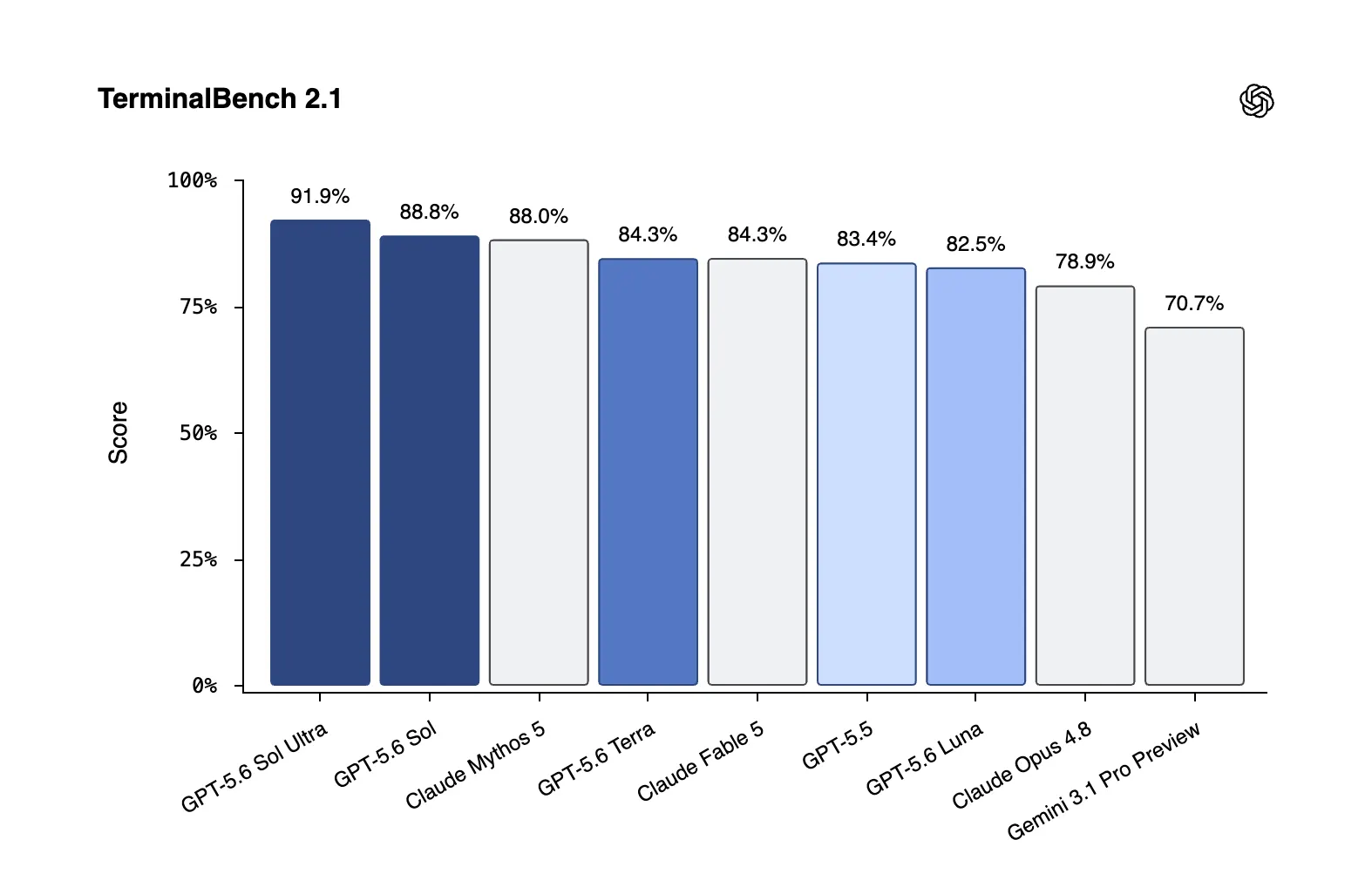
The competitive landscape is no longer measured in vague "intelligence" claims but in specific, standardized performance metrics. On Terminal-Bench 2.1—a rigorous test of command-line proficiency, tool usage, and iterative planning—Sol has demonstrated clear dominance.
In its "Ultra" configuration, which allows the model to leverage subagents for complex multi-step tasks, Sol achieved a success rate of 91.9%. Even in its standard, non-Ultra configuration, it scored 88.8%, comfortably outpacing Anthropic’s Claude Mythos 5 (88.0%) and Claude Fable 5 (84.3%). Google’s Gemini 3.1 Pro, meanwhile, trailed significantly at 70.7%.
OpenAI also placed a specific focus on "ExploitBench," a testing suite designed to measure a model’s ability to identify and weaponize software vulnerabilities. While Sol matched the high-performance levels of the restricted Mythos preview, it did so using only one-third of the tokens, indicating a significant breakthrough in efficiency. Importantly, OpenAI asserts that despite these capabilities, Sol remains within the "safe" parameters of their internal risk framework, avoiding the "Cyber Critical" classification.
The Economics of Intelligence
The cost structure of these models highlights a widening divide between premium U.S. frontier models and emerging international low-cost challengers.
- OpenAI Sol: $5 input / $30 output (per million tokens).
- OpenAI Luna: $1 input / $6 output (per million tokens).
- Anthropic Claude Fable 5: $10 input / $50 output.
- xAI Grok 4.5: $15 input / $75 output.
- DeepSeek V4 Pro: $1.74 input / $3.48 output.
- Xiaomi MiMo v2.5 Pro: $1 input / $5 output.
By pricing Sol between the luxury tier (Grok/Claude) and the low-cost tier (DeepSeek/Xiaomi), OpenAI is positioning itself as the "Goldilocks" provider: powerful enough for enterprise-grade research but affordable enough for daily development workflows.
Expert Consensus and User Experience
The developer community has been quick to weigh in. Theo, CEO of T3 Chat and a prominent AI commentator, noted that Sol represents a significant leap in "computer use" capabilities. "It is incredibly determined," Theo remarked on X, noting that the model’s ability to manage subagents allows it to run for extended periods without needing human intervention or constant goal-resetting.
Dan Shipper, of the research group Every, provided a poignant analogy: "GPT-5.6 is like a Porsche, Fable is like a warp drive." His assessment suggests that while Anthropic’s models may excel at abstract, galaxy-spanning reasoning, Sol is the superior "daily driver" for the messy, practical realities of coding and knowledge work.
Conversely, researcher Daichi Konno pointed out a nuanced advantage for Sol: its safety guardrails appear less prone to triggering on sensitive life-science queries, potentially making it the default choice for the biotechnology and pharmaceutical research sectors.
Implications for the Industry
The release of Sol carries profound implications for the near future of artificial intelligence.
1. The Death of the "One-Size-Fits-All" Model
The tiered approach—Sol, Terra, Luna—confirms that the industry has moved past the phase where a single model is expected to do everything. Companies are now optimizing for specific economic and operational "knobs," such as Sol’s "max reasoning effort" and "ultra mode," which allow users to trade latency for depth.
2. The Google Conundrum
The most notable absence in this week’s flurry of releases is Google. With Gemini 3.0 having debuted in November 2025, Google’s flagship is now arguably the oldest "frontier" model on the market. As OpenAI, Anthropic, xAI, and Meta all iterate on their offerings within the same seven-day window, the pressure on Mountain View to provide a response is at an all-time high.
3. The End of the 5.x Line
Persistent rumors, fueled by leaks from industry analysts such as the account "Synthwave," suggest that GPT-5.6 is the final iteration of the 5.x series. If these reports hold true, the industry may be only weeks away from the unveiling of GPT-6, which is rumored to be built on an entirely new, larger foundational architecture.
4. A Crowded Market
The entrance of Meta into the paid-model space and the continued aggressive pricing from Chinese labs like Xiaomi and DeepSeek suggest that "frontier-class" performance is becoming commoditized. For developers, this is a golden age; for the tech giants, it marks the beginning of a brutal price war that will likely define the remainder of the 2026 fiscal year.
As the dust settles on the release of Sol, one thing is certain: the era of AI as a mysterious, singular breakthrough is over. We have entered the era of AI as a utility, and with it, the fight for the daily user’s workflow has truly begun.