The Architecture of Necessity: How Distrust Built American Democracy

In the standard American political narrative, trust in institutions is the bedrock of a stable society. We are taught that faith in government, courts, and public systems is the prerequisite for a functioning republic. Consequently, rising distrust is frequently framed as a sign of decay—a symptom of a democratic project in terminal decline.
However, a closer examination of American history suggests a different, more radical reality: for the vast majority of this country’s existence, distrust in formal institutions has not weakened democracy; it has built it. When the state has been absent, exclusionary, or actively hostile, citizens have not waited for reform. They have instead constructed vast, resilient networks of mutual obligation, governed by internal rules and answerable only to their members. This is civic life by other means, organized around the pragmatic, often survival-driven assumption that the state cannot be counted on.
The Chronology of Self-Governance
The history of American self-reliance is not a single timeline but a series of overlapping waves of necessity.
The Foundational Era: Mutual Aid and Exclusion (1787–1900)
The roots of American community organizing are deeply intertwined with the experience of those denied the protection of the state. In 1787, Richard Allen and Absalom Jones founded the Free African Society in Philadelphia. Its inception was a direct response to a betrayal: Black congregants were forcibly removed from their seats at St. George’s Methodist Episcopal Church. Rather than seeking integration into an institution that viewed them as second-class, they created a self-governed society. They established a common fund to support widows, orphans, and the unemployed, electing their own leaders and codifying their own bylaws.
This model—what historian Julie Winch identifies as the “autonomous Black institution”—became the blueprint for survival in a nation that denied its Black citizens the most basic rights of citizenship. By the mid-19th century, this model had expanded into fraternal orders and burial societies, providing a form of insurance and economic security that commercial entities refused to offer to Black policyholders.
The Industrial Crucible (1880–1930)
As the United States moved into the industrial age, the factory floor became a school for democratic practice. With no federal labor laws, workplace safety regulations, or social security nets, workers faced absolute vulnerability. An injury on the job could mean total financial ruin for a family. In response, workers organized mutual aid funds and strike kitchens. These groups were not merely reactive; they were training grounds where laborers learned to manage shared capital, debate policy, and hold their representatives accountable. The Knights of Labor, for instance, championed a vision of "economic democracy" that prioritized collective welfare over the dictates of corporate management, operating years before such concepts were even debated in the halls of Congress.
The Era of Crisis and Adaptation (1980–Present)
The logic of "organizing because no one is coming" reached a fever pitch during the HIV/AIDS crisis of the 1980s. With the federal government largely silent and medical institutions actively discriminating against patients, the LGBTQ+ community built an alternative infrastructure from the ground up. Groups like the Gay Men’s Health Crisis and later ACT UP provided everything from legal aid and housing to experimental medical advocacy. This was not a replacement for government; it was a refusal to die in the face of government apathy.
Supporting Data: The Anatomy of Resilience
The efficacy of these community-led systems is well-documented in sociological and economic research. Economist Jessica Gordon Nembhard has extensively chronicled how cooperative businesses and credit associations among African Americans provided a vital hedge against economic exclusion. These associations did more than provide capital; they allowed participants to practice democratic participation in an era when the ballot box was closed to them.
Similarly, the work of historian Daniel Soyer on landsmanshaftn—hometown societies established by Jewish immigrants in New York—demonstrates that these groups were not merely charitable; they were democratic legislatures. By funding their operations through member dues, they maintained total autonomy, ensuring that their services remained responsive to the immediate needs of their neighbors rather than the dictates of distant philanthropic boards.
In the contemporary era, the COVID-19 pandemic served as a massive stress test for these systems. Disability justice advocates and local mutual aid pods rapidly scaled up food distribution and health monitoring, utilizing networks that had been refined over decades. Researchers have noted that these efforts were often more agile and effective than federal frameworks, which were hampered by bureaucracy and a lack of granular, local knowledge.
Official Responses and the "Institutional Gap"
The official response to these autonomous systems has historically been one of skepticism, or, in the case of Indigenous nations, systematic suppression. The Haudenosaunee Confederacy, with its complex system of deliberation and consensus, existed as a sophisticated democratic model centuries before the U.S. Constitution. Yet, settler-colonial political theory has consistently attempted to erase this tradition, framing it as "primitive" rather than as a legitimate, functioning governance structure.
Federal policies, from the Dawes Act to modern bureaucratic funding models, have often sought to fracture these communal ties, preferring a relationship between the individual and the state. However, the persistence of kinship-based food sovereignty initiatives and community-led health networks among tribal nations demonstrates the limits of state control. When the government fails to provide, these communities treat their own self-reliance as an act of sovereignty.
Implications: A New Way to View Democracy
As the United States approaches its 250th anniversary, the narrative of "trust in institutions" needs a major revision. We must recognize that distrust is not merely a negative force. When citizens are excluded from the official architecture of the state, they do not necessarily retreat into apathy. Often, they do the opposite: they build their own, more inclusive architectures.
1. Distrust as a Catalyst
Distrust of the state, when grounded in repeated institutional failure, acts as a catalyst for local innovation. It forces people to look at their neighbors and ask, "What can we do for each other?" This is the definition of civic engagement.
2. The School of Democratic Practice
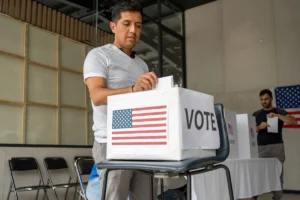
These networks of reciprocity function as "schools of democratic practice." In a mutual aid society or a neighborhood food pod, the stakes are real. If you mismanage the funds, your neighbor goes hungry. If you fail to consult your fellow members, the project collapses. This is a far more rigorous form of democratic training than the distant, intermittent act of voting in a national election.
3. Re-evaluating the "Safety Net"
We often treat the "social safety net" as something only the government can provide. The history of American mutual aid suggests that a true safety net is a woven tapestry of local, interconnected relationships. While state-level support is necessary for large-scale stability, it is the bottom-up systems that prevent people from falling through the cracks when the state fails to show up.
Conclusion: Making Room for the Keepers of Democracy
The real question for the next 250 years is not how we can manufacture more trust in our institutions. If institutions are failing, trust is a delusion. The real challenge is whether the official story of American democracy can finally make room for the people who have kept it alive by trusting each other.
Whether in the church basements of 18th-century Philadelphia, the union halls of the industrial Midwest, or the digital spreadsheets of the pandemic era, the most enduring American democratic projects have been those that operated without waiting for Washington’s permission. By recognizing the legitimacy and the history of these "informal" systems, we move toward a more accurate understanding of what it means to be a self-governing people. The strength of the American experiment has always been its ability to correct its own course—often by letting the people themselves take the wheel when the state leaves the road.