The Sunset of the “Artificial Artificial Intelligence”: Amazon Mechanical Turk Enters Its Twilight
For nearly two decades, Amazon’s Mechanical Turk (MTurk) has served as the backbone of the digital gig economy, a vast, invisible marketplace where humans performed the "micro-tasks" that defined the early era of internet automation. This week, that era began its official conclusion. Amazon announced that as of July 30, 2026, the crowdsourcing platform will close its doors to all new customers. While existing clients will be permitted to maintain their current workflows, the service has effectively been placed on life support, with Amazon confirming that no new features or investments are planned for the future of the platform.
The move marks the end of a paradoxical experiment in human-computer interaction, one that spanned from the humble origins of web data entry to the complex, ethically fraught training grounds of modern Generative AI.
The Chronology of a Digital Marketplace
To understand the significance of MTurk’s decline, one must look at its inception. Launched in 2005, the platform was named after the 18th-century "Mechanical Turk"—a famous chess-playing automaton that was eventually revealed to be a hoax, masking a human chess master hidden inside the cabinet.
Amazon’s digital version, however, was no hoax—at least not in the traditional sense. It was a marketplace designed to bridge the "last mile" of computing. In the mid-2000s, there were countless tasks that were trivial for a human but impossible for a computer: identifying a picture, transcribing a blurry receipt, or determining the sentiment of a social media post. MTurk provided a platform for "Requesters" to post these Human Intelligence Tasks (HITs) and for "Workers" to complete them for pennies.
- 2005: Amazon launches Mechanical Turk, positioning it as a tool for businesses to tap into a global workforce for tasks that require human judgment.
- 2008–2015: The platform becomes a staple for academic researchers, data scientists, and early social media companies. It plays a background role in the development of modern algorithmic sorting and content moderation.
- 2018: Amazon pivots its marketing, integrating MTurk into its SageMaker AI suite. The platform is rebranded as a vital component for labeling datasets to train neural networks.
- 2023: A turning point occurs as researchers discover a "snake-eating-its-own-tail" phenomenon: MTurk workers are using AI tools to perform their own tasks, leading to a degradation in data quality.
- July 2026: Amazon announces the closure of the platform to new customers, signaling the end of the service’s active development.
The "Fake-It-Till-You-Make-It" Era
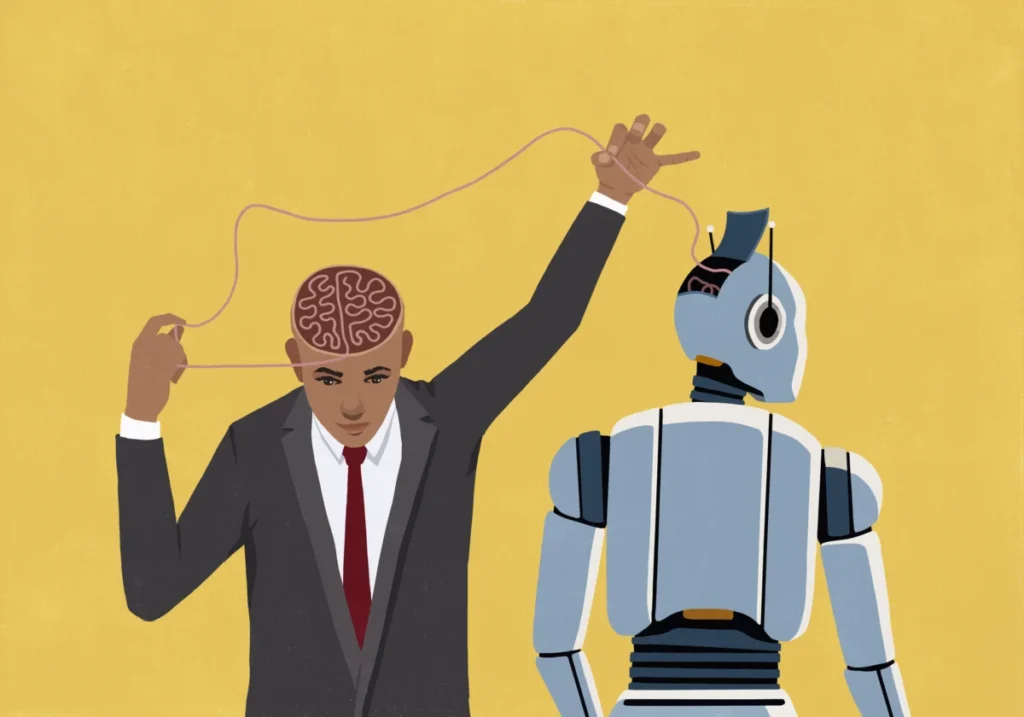
Throughout its tenure, MTurk occupied a murky space in the technology industry. It was often the "hidden enabler" for startups that claimed to offer seamless AI products. In reality, many of these companies relied on human workers behind the scenes to perform the heavy lifting, creating a "Potemkin AI" effect.
This model allowed companies to gain early market share and investment capital by demonstrating AI capabilities that were actually human-powered. By the time the technology could theoretically catch up, the companies were already established. However, this reliance on cheap, transient labor sparked significant ethical debates. Critics long argued that the platform facilitated a "race to the bottom," where workers in developing nations were paid cents to perform labor that was essential to multi-billion-dollar AI models, often without the benefits or protections of traditional employment.
The service even found itself entangled in the broader political discourse. During the 2018 Facebook-Cambridge Analytica scandal, it was revealed that the platform was used to facilitate the collection of user data that would later be weaponized for psychological profiling, highlighting the lack of regulatory oversight regarding the tasks being performed by the global crowd.
Supporting Data and the Reliability Crisis
The decline of Mechanical Turk was not merely a result of corporate policy; it was a result of an ecosystem that had begun to collapse under its own weight. By the early 2020s, the platform was plagued by "bots" and "click farms." The very automation that the platform was designed to support began to cannibalize the platform itself.
A landmark 2023 study published in TechCrunch and other academic outlets shed light on a troubling trend: between 33% and 46% of workers on the platform were using Large Language Models (LLMs) to complete their HITs. The implications were catastrophic for the researchers who relied on the platform. If an AI is training on data that was created by another AI, the model becomes prone to "model collapse," where the quality of output degrades as the training data becomes increasingly synthetic and error-prone.
Furthermore, Reddit forums dedicated to the platform, such as r/mturk, have been filled with years of anecdotal evidence suggesting that the quality of tasks had plummeted. Long-time workers and researchers alike had been abandoning the platform, citing a "death by a thousand cuts"—fraudulent requesters, stagnant pay rates that hadn’t moved in a decade, and a flood of automated scripts that made it nearly impossible for legitimate human workers to secure enough tasks to earn a living wage.
Official Responses and Strategic Shifts
Amazon Web Services (AWS) has been characteristically brief regarding the decision. In an official statement, the company noted that the decision was made after "careful consideration."
"Existing customers can continue to use the service as normal," an AWS spokesperson confirmed. "AWS continues to invest in security and availability improvements for Mechanical Turk, but we do not plan to introduce new features."
For industry analysts, this language is clear: the service is being "sunsetted." Amazon is avoiding a hard shutdown to prevent disruption to existing enterprise contracts that likely still utilize the platform for legacy data processing. However, the lack of new features suggests that AWS no longer views crowdsourced human labor as a primary driver of its future AI strategy.
Instead, Amazon—like its competitors—is shifting focus toward synthetic data generation. If the current generation of AI can effectively label its own data or generate high-quality synthetic datasets, the need for a decentralized, unreliable, and ethically controversial human workforce diminishes rapidly.
The Broader Implications for the Future of Work
The end of the MTurk era raises profound questions about the nature of the digital economy. What happens to the thousands of workers who relied on the platform as a primary or supplemental income stream? While Amazon is not shutting the service down tomorrow, the lack of investment effectively signals that the "crowdsourcing" model of the early 2000s is being replaced by a more centralized, automated, and corporate-led model of data generation.
1. The Death of the "Human-in-the-Loop" Illusion
For years, the industry promised that AI would keep humans "in the loop." MTurk was the literal embodiment of this. As we move toward a future where AI models are expected to be self-correcting and self-training, the role of the human labeler is being sidelined.
2. The Rise of Synthetic Data
The industry is moving toward "Model-Generated Data." Companies are increasingly using their own high-performing models to create the training data for the next generation of models. While this solves the efficiency problem, it creates a new set of risks regarding bias amplification and the loss of "human truth" in training sets.
3. Ethical Labor Shifts
The ethical concerns that dogged MTurk will not disappear with the platform. They will simply migrate to different, perhaps even less visible, parts of the AI supply chain. As companies move to keep their data generation in-house or through specialized, private vendors, the transparency that a public marketplace like MTurk provided—however flawed—will vanish.
Conclusion: A Legacy of Irony
The story of Mechanical Turk is a quintessential tale of the technology industry. It began as a clever, slightly ironic solution to a technical problem. It grew into a global industry that sustained thousands of lives while simultaneously raising uncomfortable questions about labor exploitation and the ethics of the digital age. It eventually succumbed to the very technology it was meant to foster.
As the servers continue to hum for the next two years, they act as a monument to a specific moment in time—a time when we thought the future of artificial intelligence would be built by millions of humans clicking buttons in the dark, one task at a time. The fact that the platform is being shuttered because those same humans were replaced by the bots they were helping to train is perhaps the ultimate, final irony of the Mechanical Turk.
For the researchers, the gig workers, and the tech historians, the closure of MTurk is a clear signal: the era of "human-assisted" AI is closing, and a new, more opaque era of "autonomous" machine learning is firmly taking its place. The "hidden human" inside the cabinet has finally been dismissed, leaving only the machine behind.