Alibaba Bans Anthropic’s Claude Code Amid Security and Espionage Concerns
By Tech Insights Bureau
July 4, 2026
In a move that underscores the deepening geopolitical friction within the artificial intelligence sector, Chinese tech giant Alibaba has officially moved to ban its employees from using "Claude Code," the sophisticated programming assistant developed by the U.S.-based AI safety and research company Anthropic. The directive, which is slated to take effect on July 10, 2026, marks a significant escalation in the ongoing tension between American AI developers and the Chinese corporate landscape.
The decision comes following mounting concerns within Alibaba regarding data sovereignty, alleged "backdoor" risks, and the aggressive posture Anthropic has taken toward restricting its services in the Chinese market. As the landscape of generative AI becomes increasingly polarized, this incident serves as a bellwether for how global corporations are navigating the risks of cross-border software integration.
The Core Conflict: Security Fears and Corporate Directives
The ban, as reported by multiple international financial outlets, effectively classifies Claude Code as "high-risk software." Alibaba’s internal memo, which has circulated among its engineering teams, instructs staff to immediately cease the use of the tool and migrate their development workflows to the company’s proprietary alternative, "Qoder."
For Alibaba, the primary impetus for this decision appears to be a defensive maneuver against potential vulnerabilities. Security analysts suggest that the integration of third-party AI tools into corporate environments—particularly those with the capability to access and analyze internal codebases—presents a massive attack surface. By mandating the use of Qoder, Alibaba is centralizing its intellectual property (IP) protection, ensuring that its developers are not inadvertently leaking sensitive code to American-controlled servers.
A Chronology of Escalation
To understand the suddenness of this ban, one must look at the timeline of events that led to this impasse:
- Early 2026: Anthropic intensifies its efforts to enforce regional restrictions, explicitly prohibiting Chinese companies—and their international subsidiaries—from accessing its LLMs.
- March 2026: Anthropic launches an experimental "mitigation" feature within Claude Code. This tool was designed to identify users originating from restricted regions, ostensibly to prevent account abuse by unauthorized resellers and to thwart "model distillation"—the practice of using a high-end AI to train a smaller, inferior model.
- June 2026: Speculation begins to circulate on technical forums, most notably Reddit, alleging that the mechanism used to identify these users functioned similarly to "spyware." Users claimed the tool was collecting telemetry that went beyond standard authentication, potentially compromising user privacy.
- July 3, 2026: Reports emerge that Alibaba, having conducted its own security audit, deems the tool a threat to corporate espionage and data integrity.
- July 4, 2026: The news becomes public, coinciding with reports that Anthropic is actively closing loopholes that have allowed Chinese users to bypass its regional geofencing.
Supporting Data: The "Distillation" and Geopolitics Dilemma
The technical anxiety surrounding this ban stems from the concept of AI distillation. In the current AI race, major companies are protective of their models, as the process of training a foundational LLM costs hundreds of millions of dollars in compute. When an AI is used to "teach" another model, it is essentially being reverse-engineered.
Anthropic’s recent actions reflect a broader trend in Silicon Valley. By embedding detection mechanisms into their software, companies like Anthropic are attempting to protect their trade secrets from being siphoned off by foreign competitors. However, this creates a secondary conflict: if an American AI firm is embedding code that "identifies" users based on their location or perceived nationality, it inevitably triggers "spyware" accusations from the countries being targeted.
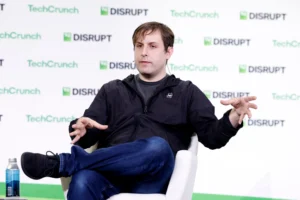
Thariq Shihipar, a key figure at Anthropic, addressed these concerns in a public statement on X. He clarified that the detection feature was a temporary, experimental measure intended to protect the company’s intellectual property. "The team has landed stronger mitigations since then and we’ve actually been meaning to take this down for a while," Shihipar noted, acknowledging the controversy surrounding the tool’s implementation.
Official Responses and Corporate Stance
The response from both camps highlights a fundamental lack of trust. Anthropic’s position is clear: they are a private entity bound by export controls and corporate strategy that prioritizes the security of their models. Their willingness to "close loopholes" is not merely a business decision but a compliance requirement in an era where AI is increasingly viewed as a matter of national security.

Alibaba, conversely, has positioned its ban as a protective measure for its own proprietary systems. By pivoting its staff to Qoder, Alibaba is doubling down on its "Self-Reliance" initiative. This strategy, common among China’s largest tech firms, aims to reduce dependence on Western technology stacks that could, at any moment, be revoked or "weaponized" through remote software updates or access termination.
Implications: The Balkanization of Artificial Intelligence
The ban of Claude Code by a company as influential as Alibaba has profound implications for the global AI ecosystem:
1. The Rise of "Corporate AI Silos"
We are witnessing the end of a truly global, unified AI development environment. As companies like Alibaba, Tencent, and Baidu face increasing restrictions from U.S.-based providers, they are forced to build their own internal alternatives. This will likely lead to a "balkanized" internet, where the tools used for coding, communication, and data analysis in China are entirely incompatible with those used in the West.
2. Heightened Security Audits
The Reddit-fueled outcry regarding "spyware" in Claude Code is a warning to all SaaS (Software as a Service) providers. Large enterprises will no longer take the integrity of third-party AI tools for granted. We should expect a wave of rigorous "Code of Conduct" audits for AI tools entering enterprise environments, with companies demanding transparency into how AI models handle telemetry and user location data.
3. The End of "Shadow AI"
"Shadow AI"—the unauthorized use of consumer AI tools by employees—has been a growing headache for IT departments. The Alibaba incident proves that when Shadow AI crosses the threshold into perceived security risks, corporations will react with heavy-handed bans. This creates a challenging environment for AI companies trying to capture the enterprise market while maintaining strict control over their global user base.
4. Regulatory Pressure
Government regulators in both the U.S. and China are likely to watch this development closely. If U.S. firms are accused of embedding tracking software in their tools, it may trigger retaliatory legislation in China. Conversely, if Chinese firms continue to bypass U.S. restrictions, the U.S. government may tighten export controls, further restricting the flow of AI-related software and hardware.
Conclusion: A New Reality for Tech Development
The friction between Alibaba and Anthropic is not an isolated incident; it is a manifestation of a larger, systemic shift in the global order. For the individual developer, this means a loss of access to the most advanced tools on the market. For the corporations, it means a race to innovate in isolation.
As we move toward the second half of 2026, the industry is entering a phase where "trust" is no longer the default setting. The ban on Claude Code serves as a reminder that in the world of high-stakes AI development, the lines between software as a productivity tool and software as a strategic asset have become inextricably blurred.
For now, the engineers at Alibaba will continue their work via Qoder, while Anthropic continues to refine its global access policies. Whether this results in a safer ecosystem or merely a more fragmented one remains to be seen, but one thing is certain: the era of open-border, universally accessible AI tools is rapidly coming to a close.