The Economics of Longevity: What Bobby Bonilla Day Teaches Us About Retirement

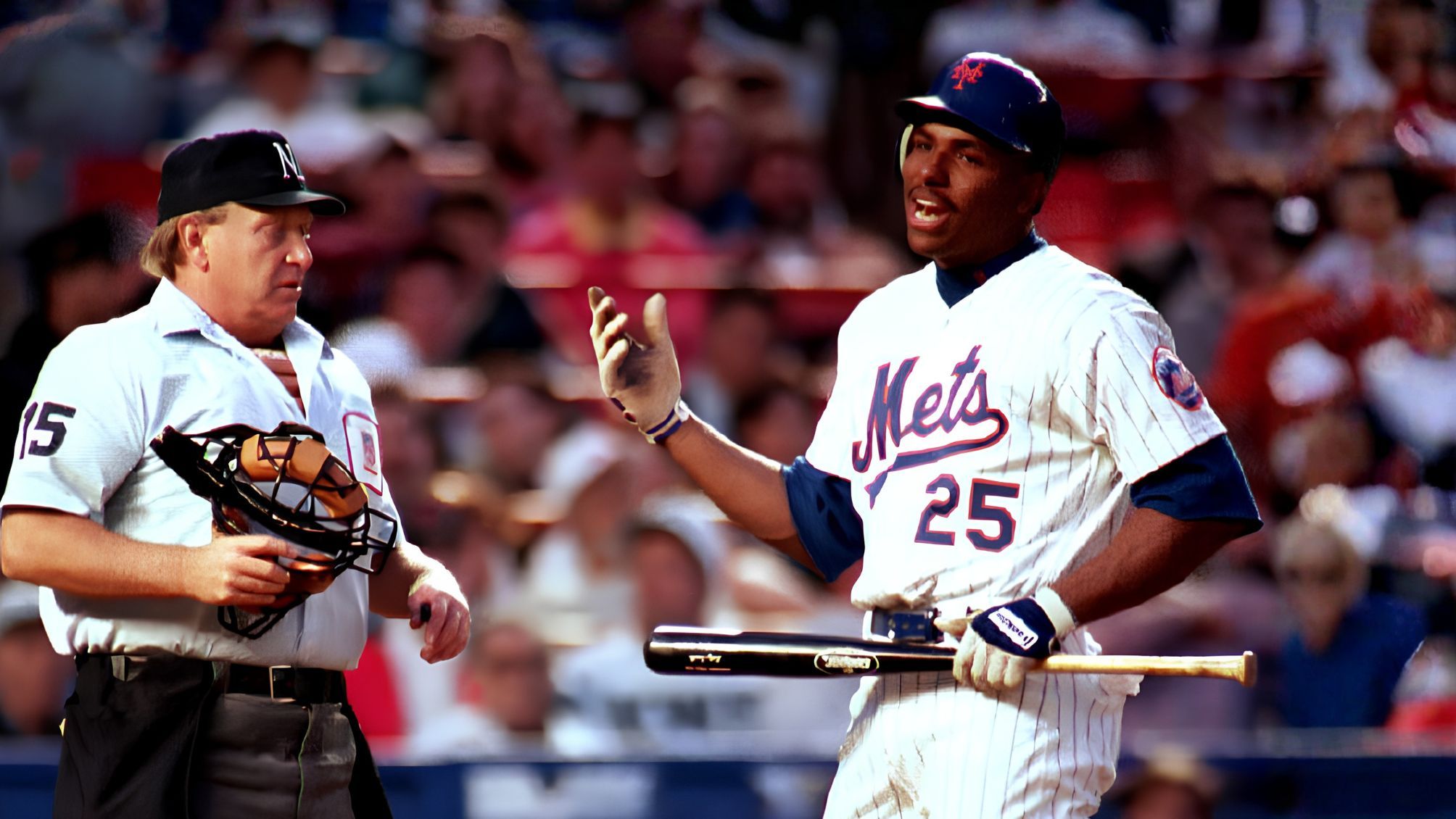
Every July 1, the sports world stops to indulge in a collective ritual: "Bobby Bonilla Day." Across social media, memes proliferate, and sports talk radio segments debate the absurdity of a professional athlete still collecting a massive paycheck from the New York Mets decades after his retirement. It has become one of the most beloved and bizarre traditions in sports—a punchline about a contract that seemingly refuses to expire.
However, beneath the surface of this viral phenomenon lies a profound lesson in financial engineering. While the average person will never negotiate a multi-million-dollar deferred compensation deal with a Major League Baseball franchise, the mechanics behind Bonilla’s annual payday are identical to the principles of successful retirement planning. At its core, the Bobby Bonilla contract is a masterclass in the shift from an active income model to a sustainable, long-term cash flow strategy.
The Genesis: A Decision Born of Necessity and Hubris
To understand the modern-day "holiday," one must travel back to the late 1990s. In 2000, the New York Mets were looking to part ways with Bobby Bonilla, a veteran outfielder who had been a productive player but was no longer viewed as a cornerstone of the franchise. The team still owed Bonilla $5.9 million on his existing contract.
At the time, the Mets’ ownership—led by Fred Wilpon—was looking to free up immediate capital to pursue other free agents. Rather than paying the $5.9 million upfront, the team reached an unconventional agreement with Bonilla and his agent, Dennis Gilbert. The Mets would defer the $5.9 million payment, agreeing to pay Bonilla $1.19 million annually for 25 years, starting in 2011.
The agreement included an 8% interest rate. While it seemed like a win for the team at the time—allowing them to avoid an immediate cash outlay—it turned into one of the most lopsided financial deals in sports history. Because the Mets believed their investments with financier Bernard Madoff would consistently return double-digit gains, they assumed that deferring the money would actually save them millions. When the Madoff Ponzi scheme collapsed, those expectations were shattered, leaving the Mets to pay out a total of nearly $30 million for a $5.9 million debt.
Chronology of the "Infinite" Contract
The timeline of this agreement illustrates the power of time and compound interest:
- 2000: The Mets and Bonilla finalize the deferred compensation deal, setting the stage for payments to begin in 2011.
- 2011: The first of 25 annual payments of $1,193,248.20 is issued to Bonilla on July 1.
- 2011–2024: The annual payments become a recurring media event. As Bonilla enters his 60s, the payments take on the character of a high-end pension.
- 2035: The final payment is scheduled to be made, marking the conclusion of a 35-year saga that began in the previous millennium.
The Mathematics of Deferred Compensation
From a purely financial perspective, Bonilla’s contract is an example of "deferred compensation." This is a common tool in corporate America, particularly for executives and high-net-worth individuals. By pushing income into the future, individuals can manage their tax brackets, smooth out their lifetime earnings, and ensure a steady stream of capital during their non-working years.
For the average American, the lesson isn’t about interest rates or sports negotiations—it’s about the "annuitization" of wealth. When we transition from our careers into retirement, the primary challenge is no longer "earning" the most money; it is "converting" our accumulated assets into a reliable, consistent paycheck.
The Pillars of Retirement Income
While most of us do not have a contract like Bonilla’s, we are all architects of our own retirement "paychecks." Creating a reliable stream of income that mimics the security of a salary requires a multi-layered approach:
1. Social Security: The Foundation
For the vast majority of Americans, Social Security serves as the bedrock of retirement income. Like Bonilla’s annual check, Social Security is a form of deferred compensation. We contribute during our working years with the promise of a predictable, inflation-adjusted stream of income in our later years. Optimizing when to claim these benefits is the first step in building your personal "Bonilla Day."
2. Employer-Sponsored Pensions and Annuities
Though less common in the private sector than in previous decades, pensions remain a vital source of "guaranteed" income. For those without a pension, annuities are the closest market-based equivalent. By purchasing an annuity, an individual can essentially create a contract that pays them a fixed amount for the rest of their life, effectively mimicking the deferred compensation structure that keeps the checks flowing to Bonilla.
3. Investment Portfolios and Dividend Growth
A well-structured investment portfolio can function as a "self-funded" pension. By focusing on dividend-paying stocks, bonds, and interest-bearing instruments, retirees can generate a "yield" on their savings. This approach allows the principal to remain intact while the income generated provides the necessary cash flow to cover daily living expenses.
4. Real Estate and Rental Income
Property ownership provides a tangible form of income. Like the deferred payment structure, rental income is designed to provide recurring cash flow. Over time, as mortgages are paid off, the "net" income from these assets often increases, providing a hedge against inflation.
Official Perspectives and Financial Implications
Financial planners and economists often cite the Bonilla case as an extreme, albeit illustrative, example of the time value of money. From an institutional standpoint, the Mets’ mistake was not the concept of deferral, but the assumption of guaranteed high-yield returns.
"The fundamental mistake in the Mets’ logic was the reliance on a single, high-risk investment vehicle to fund a long-term liability," says a senior financial analyst. "For the average retiree, the goal should be the opposite: diversification. You don’t want your retirement paycheck tied to the success of one fund or one strategy. You want a robust, diversified engine of income."
Implications for the Modern Worker
The modern workforce is increasingly gig-oriented and project-based. Unlike the pension-heavy world of the mid-20th century, today’s workers are responsible for their own "deferred compensation." This means that the "Bobby Bonilla Day" mindset—the idea of setting aside today’s resources for tomorrow’s security—is more critical than ever.

Strategic Tax Planning
Deferred compensation isn’t just about the money; it’s about the taxes. By utilizing 401(k) plans, traditional IRAs, and other tax-advantaged accounts, workers can effectively defer the tax burden on their earnings until they reach retirement, when they may be in a lower tax bracket. This is essentially the "tax version" of what Bonilla negotiated.
The Power of Compound Growth
If there is one takeaway from the fact that Bonilla’s total payout far exceeds his original salary, it is the undeniable power of time. Even modest investments, when given decades to compound, can turn into significant income streams. The "Bobby Bonilla" effect is not magic; it is the mathematical inevitability of long-term planning.
The Real Lesson: You Are Your Own Mets
Every July 1, as the internet chuckles at the sight of another direct deposit hitting a retired athlete’s account, it is worth asking: What does your own version of that check look like?
Retirement is not a date on the calendar; it is a financial condition. It is the moment when your assets start working for you as effectively as you once worked for your employer. The "Bobby Bonilla" model serves as a reminder that income can be structured to support a lifestyle long after the traditional career arc has concluded.
Whether through the strategic delay of Social Security, the purchase of an annuity, or the disciplined accumulation of dividend-paying assets, the goal is to build a financial structure that provides security. We may not all sign multi-million-dollar sports contracts, but we all have the ability to negotiate with our own futures.
As we watch the headlines and enjoy the annual tradition, remember the lesson: the "paycheck" doesn’t have to stop just because the job does. With careful planning, a long-term perspective, and a commitment to building diverse income streams, you can create your own personal version of Bobby Bonilla Day—one that lasts for decades, providing comfort and security well into your golden years.
Bobby Bonilla might be the face of this annual ritual, but the strategy is available to everyone. It is time to stop viewing it as a punchline and start viewing it as a blueprint.