The AI Frontier: How India’s UPI Aims to Scale to a Billion Daily Transactions
India’s digital payment landscape, anchored by the Unified Payments Interface (UPI), stands at a pivotal juncture. Having already revolutionized how the nation transacts—surpassing an unprecedented 750 million daily transactions—the National Payments Corporation of India (NPCI) is now charting a course toward the "next billion" transactions per day.
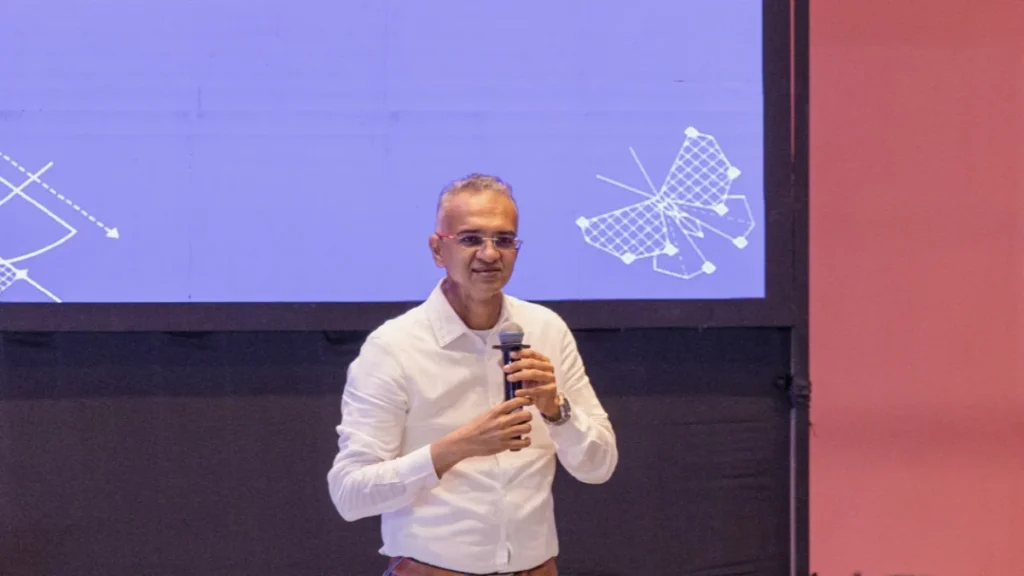
Dilip Asbe, Managing Director and CEO of the NPCI, recently outlined a transformative vision for this growth. Speaking at Mumbai Tech Week (MTW) 2026, Asbe posited that the next phase of India’s digital financial evolution will not be driven by sheer volume alone, but by the strategic integration of Artificial Intelligence (AI). From hyper-personalized user onboarding to robust, real-time fraud detection, the NPCI views AI as the architectural backbone for its future scaling initiatives.
Main Facts: The UPI Trajectory
The UPI ecosystem has become the global gold standard for real-time retail payments. Its journey from a nascent project to a daily juggernaut processing three-quarters of a billion transactions is a testament to India’s digital public infrastructure. However, the goal of reaching a billion daily transactions requires addressing friction points that current manual or rule-based systems struggle to overcome.
According to Asbe, the NPCI’s strategy for the coming years rests on three AI-driven pillars:
- User Onboarding & Inclusion: Leveraging voice and multilingual AI models to simplify access for non-tech-savvy populations.
- Security & Fraud Mitigation: Deploying sophisticated algorithms to identify and neutralize "mule" accounts and sophisticated cyber-fraud syndicates.
- Credit Distribution: Utilizing digital footprints generated by UPI activity to extend credit to millions of merchants and consumers who previously lacked formal banking history.
Chronology of Innovation: From Launch to AI Integration
To understand the significance of this shift, one must look at the timeline of India’s digital payment maturation:
- 2016: The official launch of UPI, fundamentally changing the landscape of peer-to-peer and merchant payments.
- 2023: NPCI launches a voice-assistant-based interactive system, "Hello UPI," aimed at bridging the language and literacy gap in digital banking.
- 2024: The NPCI spins off its BHIM UPI app into a wholly-owned subsidiary to focus on competitiveness and sovereign security.
- 2025: Initial pilots for "agentic commerce" are launched in partnership with fintech players like Razorpay, testing the waters for AI-driven automated purchasing.
- 2026 (Present): NPCI unveils FIMI, an AI-powered language model designed specifically to streamline user disputes and mandate cancellations, currently serving over a million users.
- December 31, 2026: The current deadline for the implementation of the 30% market share cap on UPI apps, a regulation aimed at curbing the dominance of major players.
Supporting Data: The Concentration Dilemma
Despite the democratization of payments, the UPI ecosystem faces a significant concentration risk. Data indicates that Walmart-owned PhonePe and Google Pay collectively control over 80% of the market share.
This dominance has prompted the NPCI and the Reserve Bank of India (RBI) to consider market share caps. Asbe, however, suggests that the concentration is not merely a result of market dynamics, but a reflection of the current lack of a "viable commercial model" for smaller players.
"The moment we see the commercial model being available to the ecosystem, I believe newer players will start investing very heavily," Asbe noted. While the 30% market cap remains on the books, its implementation has been deferred multiple times since 2022, highlighting the regulator’s desire to balance competition with the stability of the payment infrastructure.
Official Responses: AI as a Regulatory and Economic Tool
Asbe’s perspective on AI extends beyond efficiency—he views it as a sovereign opportunity. While the global conversation around AI is dominated by massive general-purpose models, the NPCI is championing the development of Small Language Models (SLMs).
"We believe that the models will differentiate from each other based on the data sets that are made available to them," Asbe stated. "We have a very rich data set in our ecosystem. I think there is a big opportunity for Indian companies—the banks, FinTechs, and the ecosystem—to create small language models which are sharp, specific, and as deterministic as possible."
This focus on "deterministic" AI is critical. In the financial sector, where precision is non-negotiable, hallucinating AI models are a liability. By keeping the models narrow and data-specific, the NPCI aims to create a regulatory framework where AI can act on behalf of users—granting consent and executing transactions—without compromising security.
Addressing the Voice Interface Gap
While many tech companies advocate for voice as the primary interface for the "next billion" users, Asbe remains pragmatically cautious. He acknowledges that while the NPCI launched voice-based systems in 2023, adoption has been slow. The barrier, he suggests, is not the intent, but the accuracy. For voice to become a critical component of the payment ecosystem, the underlying models must achieve a near-perfect success rate in understanding diverse Indian accents and dialects.
Implications for the Future of Finance
The implications of the NPCI’s AI-first approach are manifold:
1. Democratization of Credit
One of the most profound outcomes of this strategy will be the transformation of the credit market. By using AI to analyze the vast transactional data generated by UPI, banks can create credit scores for small merchants and rural users who have never had a loan. This "AI-as-a-lender" model could inject massive liquidity into the Indian economy.
2. A New Standard for Fraud Prevention
Traditional fraud detection relies on patterns that are often identified after the fact. AI-driven systems, which the NPCI is aggressively testing, promise predictive capabilities—identifying fraudulent intent before a transaction is finalized. By targeting "mule accounts" (accounts used to launder stolen funds), the NPCI aims to make the UPI network the safest in the world.
3. The Rise of Agentic Commerce
The integration of AI agents that can manage personal finances—similar to developments seen with Robinhood or Coinbase in the US—is on the horizon for India. Asbe emphasized that this must be built within a robust regulatory framework. The key will be "consent management": ensuring that when an AI agent acts on a user’s behalf, there is a clear, immutable record of the instructions and permissions granted.
4. Competitive Dynamics
The push to diversify the UPI market will likely continue. By empowering the BHIM UPI app and encouraging new entrants, the NPCI hopes to shift the narrative from a duopoly to a vibrant, multi-player market. If the AI-driven infrastructure lowers the cost of customer acquisition and improves service delivery, it may finally provide the "viable commercial model" that smaller fintechs have been waiting for.
Conclusion: A Global Blueprint
India’s experiment with UPI is no longer just a national project; it is a global blueprint. As the NPCI pushes toward a billion daily transactions, the rest of the world is watching. The transition from a manual payment interface to an AI-orchestrated financial ecosystem represents one of the most ambitious digital transformations in history.
Whether through the success of specialized models like FIMI, or the gradual adoption of voice-based financial assistants, the NPCI’s roadmap highlights a critical truth: the future of finance lies in the intersection of deep-rooted data and intelligent, deterministic automation. As Dilip Asbe and his team continue to refine this path, they are not just building a payment system; they are constructing the digital nervous system of a billion-plus economy.
The path ahead remains challenging, with regulatory hurdles and the need for high-accuracy AI, but the foundation is firmly set. If the next phase of UPI succeeds, it will prove that AI can be the most effective tool for financial inclusion and security the world has ever seen.