From Investment Banking to AI Robotics: How Bas Lustenhouwer Redefined the Modern CFO
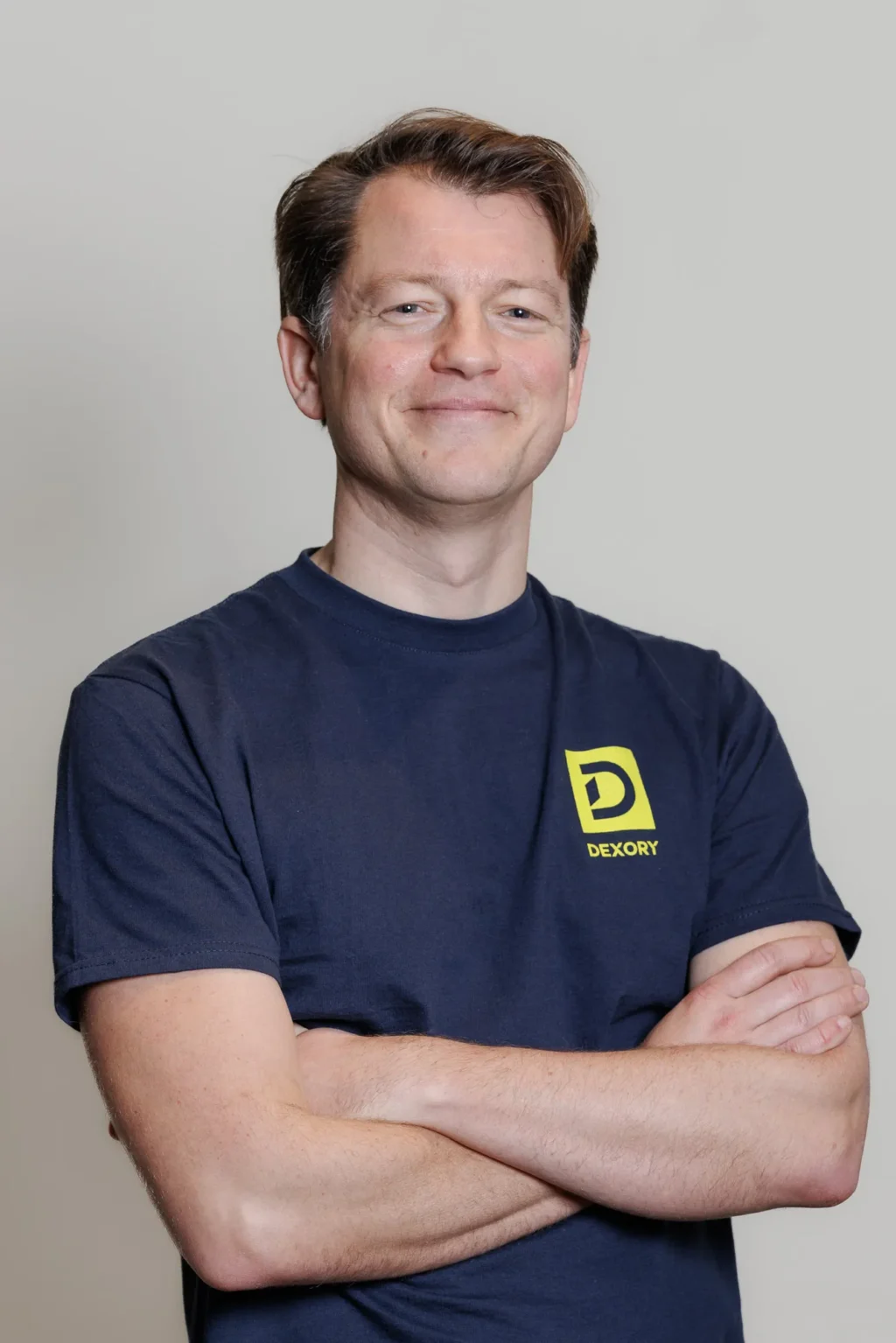
In the high-stakes world of corporate finance, the "CFO experience" requirement is often an impenetrable wall for emerging leaders. For Bas Lustenhouwer, now the Chief Financial Officer of the AI-powered robotics firm Dexory, that wall was not a deterrent—it was a challenge to be dismantled through audacity and unconventional tactics.
Lustenhouwer’s journey from the structured halls of international investment banking to the chaotic, high-growth environment of a global startup serves as a masterclass in professional agility. As he steps into his role at the helm of Dexory’s financial strategy, he does so at a time when the CFO’s mandate is undergoing a radical metamorphosis. No longer just a steward of the ledger, the modern finance chief must be part architect, part strategist, and, according to Lustenhouwer, occasionally a frontline operator.
A Career Forged in the "Chicken-and-Egg" Dilemma
The early chapters of Lustenhouwer’s career followed a traditional, high-achieving trajectory. After cutting his teeth at Kempen & Co. in the Netherlands, he honed his expertise in equity capital markets at Nomura in Tokyo. Yet, the corporate ladder felt increasingly detached from the visceral, high-impact world of entrepreneurship.
Following a sabbatical spent backpacking through South America—a period he credits with providing the mental clarity to pivot—Lustenhouwer set his sights on the startup ecosystem. However, he quickly encountered a classic "Catch-22." Despite his robust background in finance, startups were wary of his lack of a direct, C-suite track record.
Rather than waiting for the "perfect" vacancy, Lustenhouwer bypassed the traditional hiring funnel. He offered his services as an interim CFO to early-stage companies, free of charge. This was not merely an act of charity; it was a tactical investment in his own portfolio. By embedding himself in the messy, day-to-day financial operations of three different startups, he gained the "on-paper" experience that recruiters had previously denied him.
Chronology of a Startup Catalyst
Lustenhouwer’s unconventional path proved to be his greatest asset. His volunteer efforts culminated in a breakthrough at Nivoda, a B2B diamond marketplace. What began as an advisory engagement evolved into a six-year tenure that would see him transform from a finance lead into a core operational leader.
- The Early Years (Kempen & Nomura): Building the technical foundation in investment banking, equity markets, and corporate structure.
- The Pivot: A sabbatical followed by the strategic decision to offer pro-bono CFO services to bridge the experience gap.
- The Nivoda Chapter: Joining as CFO, Lustenhouwer steered the firm through multiple funding rounds, ultimately raising over $100 million. Under his guidance, the company scaled from a nascent startup to a global player with 500+ employees serving 10,000 jewelers across 65 countries.
- The Transition: After a brief hiatus following the birth of his first child, he sought a new challenge that would marry finance with cutting-edge technology.
- The Dexory Era: Appointed CFO of Dexory in December, tasked with guiding the AI robotics firm through a period of hyper-growth and international expansion following a $165 million Series C round.
The "Operator" Mindset: Beyond the Spreadsheet
One of the most defining characteristics of Lustenhouwer’s approach is his rejection of the "siloed" finance executive. His time at Nivoda serves as the ultimate case study: when logistics providers were grounded by severe storms in the Netherlands, he did not delegate the problem; he took to his bicycle to ensure that diamonds reached their destination.
"The fact that FedEx wasn’t available wasn’t an excuse for a customer not getting their stuff delivered," Lustenhouwer noted. This philosophy—that the CFO is responsible for the company’s ultimate success, not just its balance sheet—is the lens through which he views his current role at Dexory.
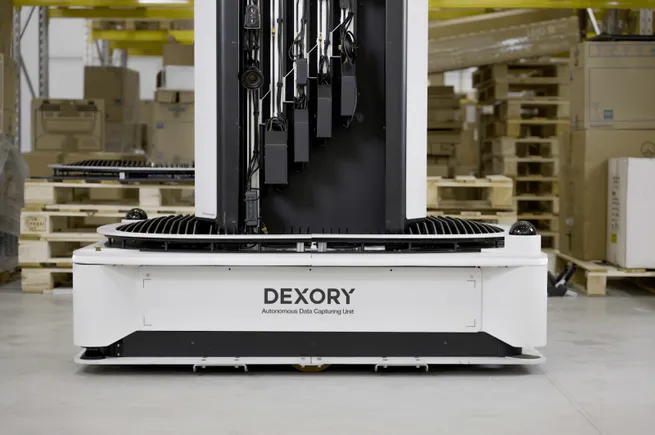
In the world of AI robotics, where warehouse complexity is rising and supply chains are increasingly fragile, the finance function must be deeply integrated with product and operations. At Dexory, which provides autonomous robots that map and track inventory in real-time, the finance team acts as a bridge between high-level capital allocation and the granular realities of warehouse automation.
Supporting Data and Market Context
Lustenhouwer enters the Dexory C-suite at a pivotal moment for the automation industry. While the global macroeconomic climate remains volatile, the demand for visibility within the supply chain has reached an all-time high.
Data from the technology research firm Interact Analysis reveals a resilient market; despite economic headwinds, warehouse automation order intake rose by 7% in 2025. This growth is driven by three key factors:
- Supply Chain Fragility: Increased reliance on real-time data to mitigate the impact of global trade disruptions.
- E-commerce Proliferation: The insatiable demand for rapid, accurate order fulfillment, which requires automated, data-rich warehouse environments.
- Technological Maturity: The transition from experimental robotics to AI-driven, autonomous, and scalable systems.
Dexory’s $165 million Series C round serves as a validation of this market trajectory. The capital is earmarked for accelerating product development and scaling commercial operations internationally, a challenge that requires the kind of disciplined, strategic financial oversight that Lustenhouwer has built his reputation on.
The Lean Finance Machine: Efficiency in the Age of AI
One of Lustenhouwer’s most immediate impacts at Dexory has been his approach to organizational design. Faced with a list of open finance roles upon his arrival, he chose to reduce the hiring plan. Instead of scaling headcount to match the company’s capital infusion, he is prioritizing a "leaner, meaner" finance function.
"I really believe in a leaner, meaner finance machine," he explained. "Especially with AI tools coming in nowadays, so much manual work can be automated."
This strategy reflects a growing trend among modern CFOs: the realization that technology—specifically the same type of automation they sell—should be utilized internally. By automating the routine, his team can dedicate more time to the "strategic partnership" model that founders require, focusing on complex unit economics, long-term planning, and navigating the formal governance requirements that come with Series C scale.
Implications: The New Mandate for Financial Leaders
The implications of Lustenhouwer’s rise are significant for the broader finance community. His trajectory suggests that the most effective CFOs of the next decade will be those who can navigate the tension between traditional financial rigor and the agility of an operator.
1. The Death of the "Back-Office" CFO
Modern companies are increasingly demanding that their financial leaders be as comfortable on the warehouse floor as they are in the boardroom. The ability to understand the product—and the logistical challenges of delivering it—is now a prerequisite for effective financial planning.
2. Efficiency Over Expansion
In an era of high interest rates and cautious venture capital, the "growth at all costs" mentality has been replaced by a focus on sustainable unit economics. Lustenhouwer’s focus on a lean finance team demonstrates that technology, rather than just headcount, is the new engine of operational scalability.
3. Navigating Uncertainty as a Competitive Advantage
Lustenhouwer views the current climate of global economic uncertainty not as a threat, but as a catalyst for growth. "When supply chains are disrupted, having information about your inventory becomes even more important. That’s exactly where we play," he said. For the modern CFO, the goal is to transform financial data into a roadmap for navigating disruption, rather than just a record of it.
Conclusion: A Blueprint for the Future
As Dexory continues its global expansion, the role of the CFO will remain at the heart of the company’s success. Bas Lustenhouwer’s transition from a banker to an "operational" CFO is a testament to the fact that the most valuable skills in finance are rarely learned in a classroom. They are learned in the trenches—whether that’s on a bicycle in a storm or by volunteering one’s time to understand the heartbeat of a startup.
For the next generation of finance leaders, the lesson is clear: if the door to the C-suite is locked, do not wait for a key. Build the capability to open it yourself. As the lines between technology, logistics, and finance continue to blur, leaders like Lustenhouwer are proving that the most effective way to lead is to be willing to do whatever the business requires to thrive.