Senate Passes Landmark Housing Legislation Featuring Four-Year Ban on U.S. CBDC
By PYMNTS | June 23, 2026
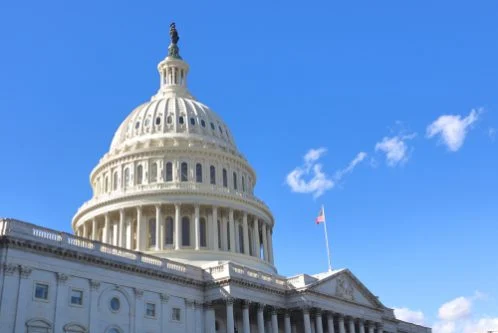
In a significant legislative maneuver that bridges the gap between domestic economic policy and the future of digital finance, the U.S. Senate passed the 21st Century ROAD to Housing Act on Monday, June 22. While the primary focus of the bipartisan legislation is to address the nation’s ongoing housing affordability crisis, the bill’s passage has garnered intense national attention for an attached provision: a comprehensive four-year moratorium on the development of a U.S. Central Bank Digital Currency (CBDC).
The bill passed the Senate with a robust 85-5 vote, signaling broad bipartisan consensus on the housing front, though the inclusion of the CBDC ban highlights the deep-seated ideological divisions regarding the intersection of government authority, privacy, and monetary policy in the digital age.
Main Facts: The Scope of the Ban
The legislation, officially titled the 21st Century ROAD to Housing Act (H.R. 6644), contains a strict clause that effectively halts any movement by the Federal Reserve to experiment with or implement a digital dollar.
According to the legislative text, "The Board of Governors of the Federal Reserve System or a Federal Reserve bank may not issue or create a central bank digital currency or any digital asset that is substantially similar to a central bank digital currency directly or indirectly through a financial institution or other intermediary."
Crucially, the language of the bill provides a specific exemption for private-sector innovation. The provision explicitly states that it "shall not prohibit any dollar-denominated currency that is open, permissionless and private, and fully preserves the privacy protections of United States coins and physical currency." This distinction serves as a clear signal from Congress: if a digital dollar is to exist, it must be tethered to private innovation and market competition rather than state-controlled infrastructure.
Chronology of Legislative Action
The journey of the 21st Century ROAD to Housing Act has been marked by strategic compromise.
- Early 2025: President Donald Trump signed an executive order prohibiting any executive-branch effort to develop a CBDC, setting the stage for a restrictive policy environment.
- March 2026: An earlier version of the housing bill, featuring the anti-CBDC provision, successfully cleared the Senate. This version served as a trial balloon to gauge the political appetite for linking digital asset regulation with broader economic relief packages.
- June 22, 2026: The Senate voted 85-5 to pass the finalized version of the bill. The inclusion of the CBDC clause was widely viewed by political analysts as a "sweetener" to secure the necessary support from House and Senate Republicans who have long championed privacy concerns regarding government-led financial technology.
- Current Status: The bill now moves to the House of Representatives, where expectations for a swift passage are high. Given the bipartisan momentum, political observers anticipate the bill will reach the President’s desk for a signature shortly.
The Privacy Debate: Why a Ban?
The push to ban a U.S. CBDC is rooted in a fundamental distrust of government oversight in personal financial matters. Republican proponents of the ban argue that a government-issued digital currency would provide the state with unprecedented, granular visibility into the daily spending habits of American citizens.
Critics of the CBDC concept argue that a digital dollar could be programmed to restrict purchases, facilitate tax enforcement without due process, or enable the freezing of assets based on political dissent. While the Federal Reserve has maintained that it has no immediate plans to issue a retail CBDC, the legislative move is seen as a proactive "guardrail" to prevent future administrations from attempting such a project without explicit Congressional authorization.
Official Responses and Industry Sentiment
The move has been welcomed by advocates of decentralized finance and financial privacy. The Digital Chamber, a leading advocacy group, has been a vocal supporter of the Senate’s stance.
In a statement following the March Senate vote, Cody Carbone, CEO of The Digital Chamber, underscored the ideological stakes: "Financial privacy is a cornerstone of American freedom, and any decision to authorize a Central Bank Digital Currency must remain with Congress and the American people. We appreciate the Senate reinforcing that digital innovation in the United States should be led by the private sector while protecting individual liberty."
The industry perspective is that a CBDC, by design, would stifle the growth of the private, permissionless blockchain ecosystem. By barring the Federal Reserve from entering the market, proponents of the bill believe the U.S. is signaling a preference for a competitive, market-driven financial architecture rather than a centralized, state-managed one.
Implications for the Future of Finance
The implications of the 21st Century ROAD to Housing Act extend far beyond the housing market. By codifying a four-year ban, Congress has effectively kicked the "CBDC can" down the road until 2030, ensuring that the next several years of financial innovation will occur outside the umbrella of central bank-issued digital assets.
Impact on Financial Institutions
For traditional banks, the ban provides a period of relative stability. Many commercial banks have expressed concern that a retail CBDC would "disintermediate" them, drawing deposits away from private accounts and into the Federal Reserve’s ledger. This moratorium effectively eliminates that threat for the foreseeable future, allowing banks to focus on their own digital transformation strategies, such as tokenized deposits and private stablecoin integrations.
Global Geopolitics of Currency
The decision to pause CBDC development also places the United States in a distinct position compared to global peers. Nations like China have already implemented and tested retail CBDCs, often with the stated intent of increasing oversight and efficiency. By opting out, the U.S. is doubling down on a model of "permissionless" currency, betting that private-sector competition and the existing dollar-based financial system will remain more resilient and attractive than a state-controlled digital ledger.
Regulatory Uncertainty
While the bill clarifies the ban on a Federal Reserve-issued asset, it leaves several questions regarding the broader digital asset space unanswered. The "open, permissionless, and private" clause creates a legal definition that regulators will have to grapple with. What exactly constitutes a "substantially similar" asset? As private stablecoins continue to proliferate, the SEC and the CFTC will likely be forced to interpret these new congressional boundaries with increasing frequency.
The Intersection of Housing and Digital Policy
It is perhaps unconventional for a major housing policy bill to carry such weight regarding the nation’s monetary architecture. However, the legislative process in the 119th Congress has shown a propensity for "omnibus-style" negotiation.
By tying the CBDC ban to a popular housing bill, proponents successfully linked the "American Dream" of homeownership with the "American Value" of financial independence. The bill, which seeks to streamline housing construction, lower mortgage costs, and increase the inventory of available properties, provided a high-priority vehicle for the CBDC provision to bypass the typical partisan gridlock.
Conclusion: A Preemptive Strike
The passing of the 21st Century ROAD to Housing Act is a landmark moment in American digital policy. It represents a preemptive strike against the centralization of financial data and a clear affirmation of the role of private-sector innovation in the future of the dollar.
As the bill heads to the House, the consensus appears to be that the government’s role in the future of money should be one of oversight and regulation rather than direct issuance. Whether this four-year moratorium will truly hold until 2030, or whether it will be revisited as the technological landscape evolves, remains to be seen. For now, however, the message from the Senate is clear: the digital dollar will not be a government-run experiment. The future of U.S. currency, at least for the next four years, belongs to the market.