The Fed’s Shifting Stance: What the 2026 Rate Hike Outlook Means for Real Estate
The economic landscape of 2026 has undergone a dramatic transformation. What began the year as a narrative of optimism and potential rate cuts has shifted toward a more hawkish reality. According to recent data from prediction markets and Federal Reserve signals, traders are now pricing in a potential interest rate hike by September 2026.
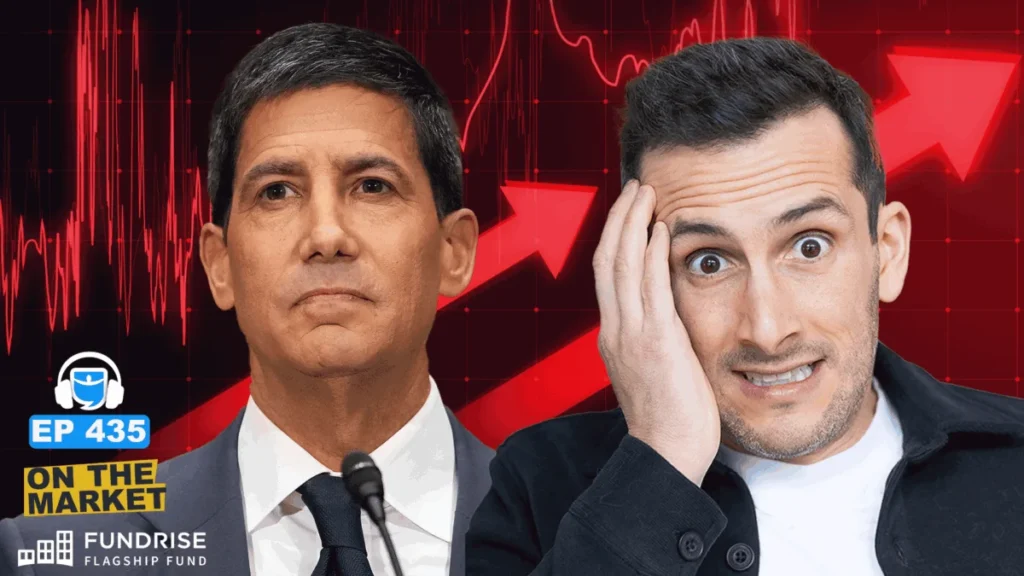
This pivot has sent shockwaves through the real estate sector, forcing investors, developers, and homeowners to recalibrate their strategies. During a recent episode of the On the Market podcast, host Dave Meyer, joined by industry experts James Dainard and Kathy Fettke, unpacked the implications of this shift, the cooling AI office boom, and the rising tide of consumer debt.
The Chronology of a Shifted Outlook
To understand where we are, one must look at the trajectory of the last six months. At the start of 2026, the prevailing consensus among economists—and even the Federal Reserve—was that inflation was cooling. With job reports showing strength and CPI (Consumer Price Index) figures hovering near the 2% target, the market was primed for one to two rate cuts.
However, the outlook soured in March and April. The onset of geopolitical instability, specifically the conflict in Iran, catalyzed a significant surge in energy prices, which acted as a force multiplier for inflation. By May, year-over-year inflation had climbed to 4.2%. Every major metric—CPI, PPI (Producer Price Index), and PCE (Personal Consumption Expenditures)—showed a clear upward trend.
The Federal Reserve’s June Pivot
The Federal Reserve, adhering to its dual mandate of price stability and maximum employment, chose to hold rates steady during its June meeting. Crucially, the tone of the meeting was notably different from previous sessions. Fed officials shifted their language, moving away from explicit 2% inflation targets toward a more ambiguous goal of "price stability." This signaled to the market that the era of easy money is, for now, officially over.
Supporting Data: Why the Fed is Hesitant
The Federal Reserve’s decision to signal potential rate hikes is grounded in cold, hard data. While the labor market remains statistically strong, under-the-hood metrics suggest a more nuanced picture.
1. The Inflation "Snake"
Dave Meyer offered an apt analogy for the current inflationary environment: the "snake" of inflation working its way through the system. Even if energy prices—the primary driver of the current spike—begin to stabilize due to diplomatic developments or increased supply, the costs of goods and services rarely revert to previous levels. Service providers and manufacturers are not lowering prices, meaning inflation is likely to remain in the 3% range for the foreseeable future.
2. Labor Market Discrepancies
While official reports indicate a robust job market, anecdotal evidence from the ground tells a different story. James Dainard, an active investor and developer, noted that in sectors like construction, there is a visible cooling. "Builders are laying off people. I have not had this many subcontractors, project managers, and superintendents reach out to me for work in years," Dainard reported. This suggests that the "partial employment" data—where workers are underemployed or seeing reduced hours—may be a more accurate barometer of the economy than headline unemployment figures.
Official Responses and Market Signals
A critical aspect of the current Fed environment is the role of the new Federal Reserve leadership. The market is closely watching how these officials communicate, as their "dot plot" projections serve as a compass for global finance.
Kathy Fettke noted that the shift in leadership style is intentional. By avoiding specific, long-term projections, the Fed is moving toward a purely data-driven approach. This reduces the risk of the Fed being forced to backtrack on previous promises, which would undermine its credibility.
"The Fed chair signals to the markets what is going on," Fettke explained. "By being more vague, they are acknowledging that every day is a new day and that forecasting in this climate is inherently flawed."
Implications for the Real Estate Investor
For the average real estate investor, this environment presents a unique paradox: it is simultaneously the most challenging and the most opportunistic time to deploy capital.
The Inflation Hedge
Real estate remains one of the few reliable hedges against inflation. Because properties are composed of materials—lumber, concrete, labor—that are inherently subject to inflationary pressure, the replacement value of existing assets continues to rise. "If you want to hedge against inflation, it is real estate, hands down," Fettke stated.
The "Lock-In" Effect and HELOCs
A major trend in 2026 has been the "lock-in" effect, where homeowners refuse to sell because they are sitting on ultra-low mortgage rates from previous years. Instead of moving, homeowners are increasingly turning to Home Equity Lines of Credit (HELOCs) to fund renovations. Data shows over $47 billion in equity was tapped in the first quarter of 2026. While some view this as a sign of financial stress, others, like Fettke, argue it is a strategic maneuver to improve existing assets without sacrificing a low-interest-rate mortgage.
The AI Office Boom: A Second Look
The office sector, long considered a "dead" asset class, is seeing a resurgence in select markets driven by the AI boom. According to a Wall Street Journal report, cities like Austin, New York, and San Francisco are seeing significant increases in office leasing. However, this is not a repeat of the 2000 Dot-com bubble. Landlords are now performing rigorous due diligence, leasing only to AI firms with proven revenue streams. For residential investors, this office growth is a signal of where human capital is concentrating, providing a roadmap for where residential demand will likely follow.
Strategy for the Current Market: "Cut the Fat"
As the economy navigates this period of uncertainty, the advice for investors is twofold: fiscal discipline and "buy-box" refinement.
- Conduct a Business Audit: Investors are encouraged to audit every expense, from personal subscriptions to business overhead. Creating margin is the best defense against a high-inflation environment.
- Update the Buy-Box: The era of buying "average" deals is over. In a market where many participants are frozen by "analysis paralysis," the savvy investor can find high-quality assets. "When everyone is frozen, you get to pick what you want," Dainard advised.
- Watch for Distress: While mortgage delinquencies remain historically low, there is a steady, upward trend in foreclosures and FHA loan delinquencies. Investors who track these secondary metrics may find opportunities to acquire notes or assume FHA loans, which can provide a significant advantage in a high-rate environment.
Conclusion: The Path Forward
The Federal Reserve’s shift toward potential rate hikes in late 2026 is a signal that the economy is not yet "out of the woods." While the prospect of higher interest rates may be daunting, it is not a death knell for real estate.
For the disciplined investor, this environment is a time to stop chasing speculative growth and start focusing on fundamentals. By monitoring the AI-driven migration of jobs, managing debt exposure, and maintaining the liquidity required to act when distress creates opportunity, investors can position themselves to thrive in a high-rate, inflationary landscape. As the old adage in finance goes: the best time to buy is often when the market is most afraid.