Under Pressure: Trump Administration Abandons Plan to Dismantle Critical Ocean-Observing Network
By Investigative Desk
Updated June 2026
In a significant policy reversal, the Trump administration has announced an indefinite pause on its plans to decommission the Ocean Observatories Initiative (OOI), a $386 million federal network of seafloor sensors and buoys. The decision, confirmed by the National Science Foundation (NSF) on Thursday, follows a fierce week of bipartisan legislative pushback and intense scrutiny from the global scientific community.
The move marks a rare retreat for an administration that has made the systematic reduction of climate-focused research a cornerstone of its second term. While the administration initially framed the dismantling as an effort to align scientific spending with "evolving priorities," the pivot highlights the growing tension between the White House’s environmental policy and the strategic interests of Congress.
Main Facts: The Scope of the OOI
The Ocean Observatories Initiative is not merely a collection of sensors; it is one of the most sophisticated pieces of oceanographic infrastructure ever constructed. Since reaching full operational capacity in 2016, the OOI has functioned as a "nerve system" for the Atlantic and Pacific oceans.
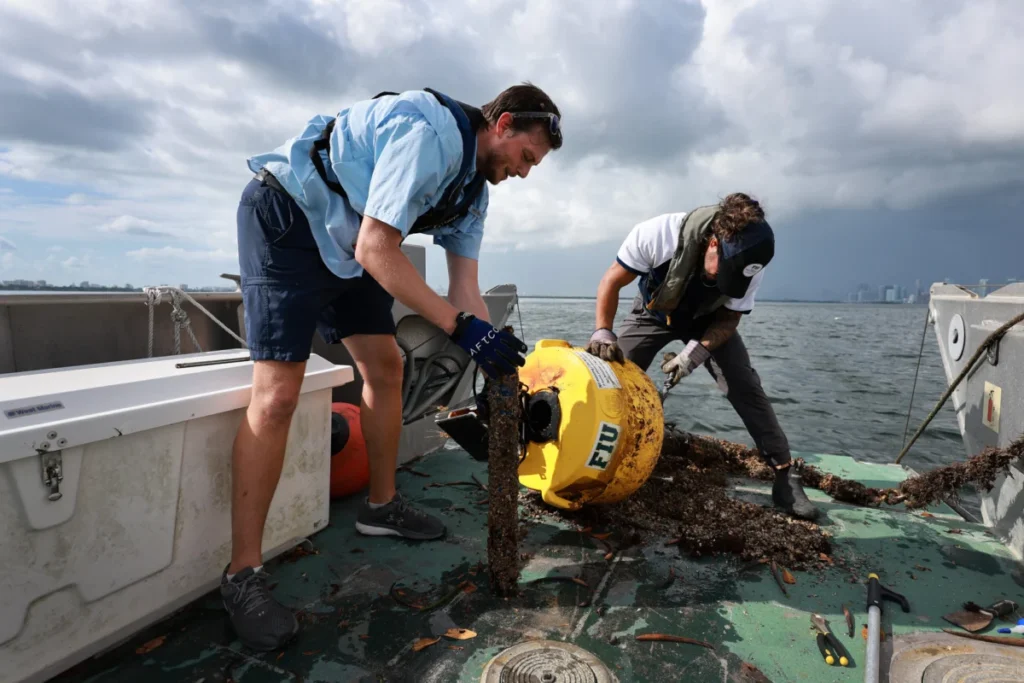
The network consists of seven distinct arrays—complex webs of cables, gliders, and mooring buoys that provide real-time data on everything from seismic activity and ocean acidification to the rapid shifts in coastal flooding patterns. Designed with a 25-year operational lifespan, the system represents a significant taxpayer investment in the nation’s ability to forecast extreme weather and monitor the health of marine ecosystems.
The administration’s sudden move last month to scrap nearly all in-water infrastructure caught the scientific community off guard. The NSF had argued that the funding, which had already faced an 80% cut proposal in the 2026 budget, needed to be redirected toward emerging technologies—a justification that critics dismissed as a thin veil for the administration’s broader agenda of de-emphasizing climate change data.
Chronology of the Crisis
The standoff unfolded in a rapid, three-week sequence that saw the administration move from aggressive implementation to tactical retreat.
- Early May 2026: The NSF formally announces plans to decommission the vast majority of OOI infrastructure, citing "evolving scientific priorities."
- Late May 2026: Scientific organizations and academic institutions sound the alarm, labeling the plan an act of "technological vandalism."
- June 3, 2026: The U.S. Senate passes a bipartisan measure, spearheaded by Senators Jeff Merkley (D-OR) and Lisa Murkowski (R-AK), explicitly forbidding the use of federal funds to dismantle the network.
- June 4, 2026: In the wake of the Senate vote and mounting public pressure, the NSF issues a formal statement confirming that the decommissioning process has been suspended.
- June 4, 2026 (Ongoing): The agency announces it will initiate a comprehensive stakeholder review to determine the future of the OOI, though the status of equipment already removed—specifically the Endurance Array off the Oregon coast—remains a point of contention.
The Legislative "Firewall": Why Congress Intervened
The intervention by Senators Merkley and Murkowski was notable for its cross-party unity. In an era of deep political polarization, the preservation of the OOI became a rare rallying point.
Senator Merkley’s language during the floor debate was blunt, characterizing the administration’s proposal as "supreme stupidity." His argument centered on the sheer economic and scientific folly of abandoning infrastructure that the American public had already paid hundreds of millions to install.
"We are talking about throwing away a state-of-the-art diagnostic tool for our planet," a staffer for the Senate committee noted. "This isn’t about being ‘pro-environment’ or ‘anti-environment’; it is about basic fiscal responsibility and maintaining the data sets that allow our coastal economies to function."
By passing the bipartisan measure, Congress effectively stripped the NSF of the authority to dismantle the network, forcing the administration’s hand. The move serves as a reminder that even in an administration known for executive overreach, Congress retains the power of the purse and the ability to legislate the protection of scientific assets.
Implications for Climate Science and Policy
The pause in the dismantling of the OOI is a victory for the scientific community, but many experts warn that the damage may already be partially done.
1. The Data Gap
Ocean monitoring requires continuity. Gaps in data collection—even short ones—can render decades of prior research less effective. The removal of the Endurance Array off the coast of Oregon is particularly troubling to researchers, as it disrupts the long-term observation of the Pacific’s role in regional weather patterns. While the NSF has promised to "redeploy" this equipment after servicing, scientists are skeptical of the timeline and the quality of the data that will be produced following the equipment’s relocation.
2. The Erosion of Institutional Trust
Since the start of President Trump’s second term, there has been a documented exodus of climate scientists from federal agencies. The removal of climate data from government websites and the cessation of annual greenhouse gas emission reporting have already created an "information vacuum." The OOI incident has further deepened the rift between the White House and the scientific establishment, making it increasingly difficult for the administration to recruit and retain top-tier talent for non-partisan scientific roles.
3. Economic Consequences
The data provided by the OOI is not just for academics; it is used by the insurance industry, commercial fisheries, and emergency management agencies. By threatening the system, the administration inadvertently put the economic stability of coastal states at risk. As insurance companies rely on increasingly precise data to model flood risks, the loss of sensors meant to track these very phenomena would have led to higher premiums and greater instability in the real estate market.
Official Responses and the Road Ahead
In its Thursday statement, the NSF struck a conciliatory, albeit defensive, tone. "The NSF remains committed to scientific excellence," the agency stated. "We look forward to working with our stakeholders to identify the most effective path forward for the Ocean Observatories Initiative."
However, the "stakeholder review" mentioned by the agency is being viewed with caution by groups like the Ocean Conservancy. Chris Robbins, associate director of scientific initiatives at the organization, remains critical of the administration’s initial approach. "Walking away from a feat of engineering already paid for by the American people is myopic," Robbins said. "A review is a necessary step, but the goal of that review must be to reinforce and expand the OOI, not to find new ways to shrink it."
The administration has not yet detailed the composition of the review committee, nor have they set a deadline for the final report. This ambiguity leaves the future of the remaining six arrays in a state of suspended animation.
The Broader Context: Science in the Second Trump Term
The OOI controversy is part of a larger, systemic shift in how the current administration views the role of the federal government in scientific research. Since 2025, the administration has prioritized privatized research or projects that directly align with industrial goals, while scaling back foundational climate and environmental monitoring.
The abandonment of the OOI dismantling plan suggests a potential limit to this strategy. When scientific research provides tangible, near-term economic benefits—such as flood prediction and weather monitoring—even a deeply conservative Congress may choose to protect it from executive cuts.
As the NSF prepares for its upcoming reviews, the scientific community is mobilizing to ensure that the OOI is not just saved, but strengthened. The episode has transformed the OOI from a niche scientific project into a symbol of the struggle for evidence-based policymaking in the United States.
For now, the buoys remain in the water and the sensors continue to ping. But for the oceanographic community, the reprieve is only the first chapter in a much larger fight for the survival of the nation’s climate research infrastructure. The eyes of the scientific world are now fixed on the NSF’s next move, and the message from Capitol Hill remains clear: the network is not to be touched.