The Evolution of Personal Wealth Tracking: A Comprehensive Analysis of the Leading Net Worth Platforms
The landscape of personal finance has undergone a profound transformation over the last decade. Historically, tracking one’s net worth—defined simply as total assets minus total liabilities—was a laborious process confined to physical ledgers or complex, manually updated spreadsheets. Today, the integration of open banking APIs, artificial intelligence, and real-time asset valuation has turned net worth tracking into a dynamic, automated discipline.
For modern investors, a net worth tracker is no longer just a passive digital calculator. The industry’s leading applications now aggregate complex financial portfolios, monitor real-time investment performance, analyze asset allocation, track physical properties through real estate databases, and even project retirement readiness.
This comprehensive analysis evaluates the market’s premier net worth tracking platforms, exploring their historical context, technological architectures, data security paradigms, and broader implications for retail wealth management.
1. Main Facts: The State of Automated Wealth Tracking
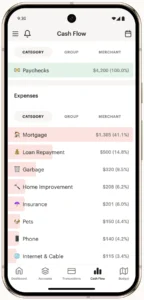
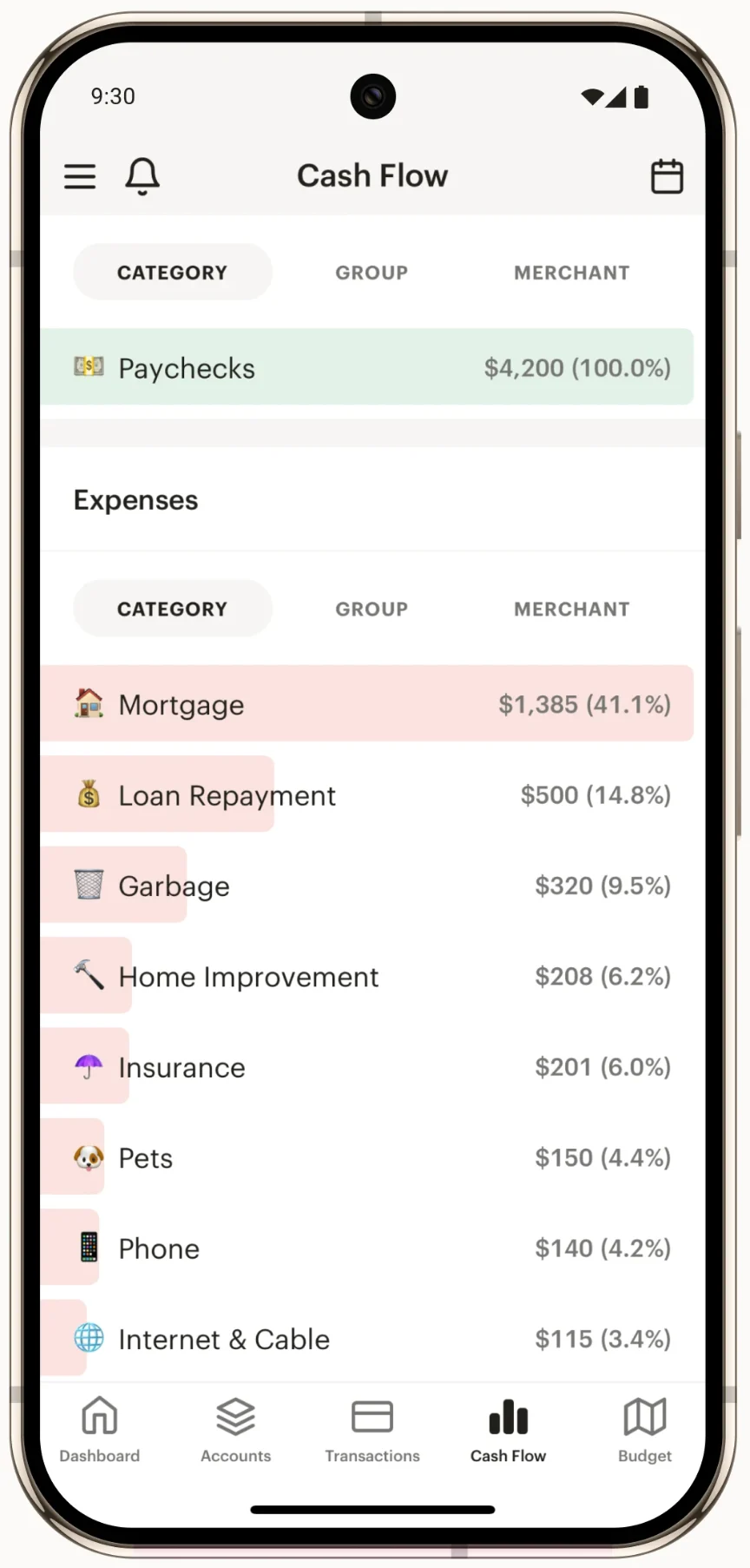
At its core, net worth tracking serves as the ultimate scorecard for personal financial health. While budgeting software focuses on short-term cash flow (the "defense" of personal finance), net worth trackers focus on long-term wealth accumulation (the "offense").
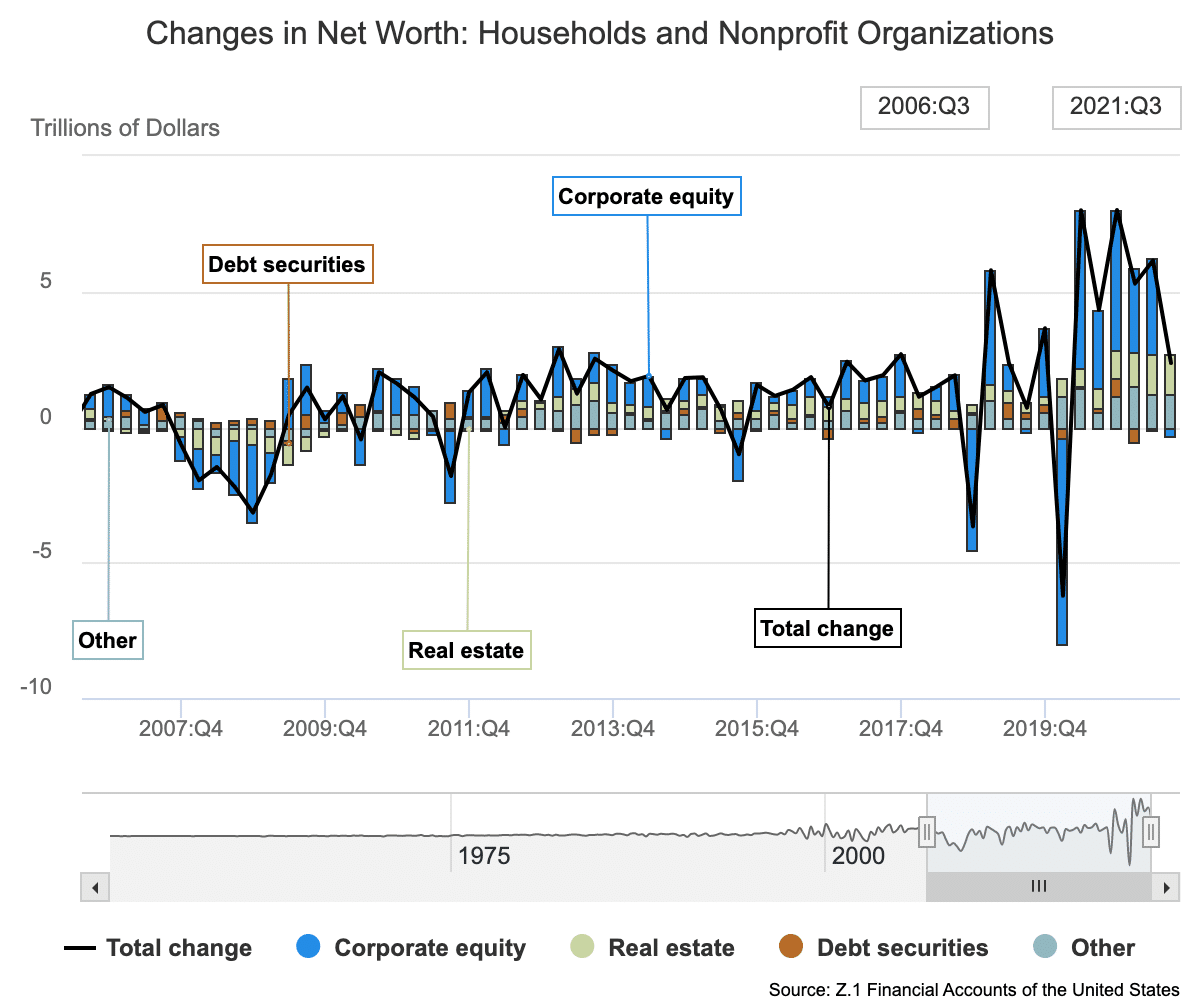
Modern net worth applications distinguish themselves from basic calculators through automated data aggregation. By utilizing secure data transfer networks, these platforms automatically pull information from various financial sectors:
- Liquid Assets: Checking, savings, and high-yield cash accounts.
- Investment Portfolios: Brokerage accounts, retirement accounts (401k, IRA), and cryptocurrency wallets.
- Illiquid Assets: Real estate values (often integrated with automated valuation models like Zillow), vehicles (tracked via Vehicle Identification Numbers, or VINs), and alternative investments (fine art, domain names, private equity).
- Liabilities: Mortgages, student loans, auto loans, and revolving credit card debt.
The contemporary fintech marketplace features a diverse array of platforms catering to different user demographics. These range from free, ad-supported investment dashboards to premium, privacy-focused platforms designed specifically for high-net-worth individuals (HNWIs) with complex global asset structures.
2. Chronology: The Evolution of Personal Finance Tools
The transition to automated wealth tracking is the result of decades of technological evolution, regulatory shifts, and changing consumer behaviors.
[Pre-2000s: Desktop Era] ──> [2006-2023: Mint & Open Banking] ──> [2024-Present: Post-Mint Era & AI]
- Desktop software (Quicken)  - Web-based aggregators (Mint)      - Intuit Mint shuts down (Jan 2024)
- Manual entry & paper bills  - Rise of Plaid & financial APIs    - Shift to premium, specialized tools
                              - Personal Capital targets wealth   - Integration of AI assistants & ML
The Desktop Era (Pre-2000s)
In the early days of personal computing, software like Quicken dominated the market. Users manually entered transactions or imported bank files via dial-up connections. These systems were localized, lacked real-time updates, and required significant manual upkeep.
The Web 2.0 Revolution and the Mint Era (2006–2023)
The launch of Mint.com in 2006 revolutionized personal finance by introducing automated bank scraping. Mint allowed users to aggregate all of their accounts in one web-based interface for free, monetizing its platform through targeted financial product recommendations. During this same era, Personal Capital (founded in 2009) emerged to target a wealthier demographic, focusing heavily on investment analysis and retirement planning rather than just daily budgeting.
The Open Banking Transition and the Rebranding of Personal Capital (2020–2023)
In 2020, financial giant Empower Retirement acquired Personal Capital for virtually $1 billion. By 2023, the platform was fully rebranded as Empower. This period also saw the rise of secure open banking APIs (such as Plaid, Yodlee, and Finicity), which largely replaced fragile screen-scraping methods with secure, tokenized data sharing.
The Great Migration and the Rise of AI (2024–Present)
In January 2024, Intuit officially shut down Mint.com, directing its massive user base toward Credit Karma, a platform focused more on credit monitoring than robust budgeting and wealth tracking. This decision created a vacuum in the personal finance space, triggering a wave of migration to premium alternatives.
Modern platforms have responded by integrating advanced artificial intelligence. Today’s tools feature natural language AI assistants that can analyze transactional histories, along with machine-learning-driven receipt scanners that automate expense categorization.
3. Supporting Data: Comparative Analysis of the Top Wealth Trackers
To understand how the leading net worth calculators compare, we must examine their features, pricing structures, target audiences, and technical capabilities.
| Platform | Target Audience | Pricing | Key Strengths | Data Partners |
|---|---|---|---|---|
| Empower | Investment-focused individuals | Free | Portfolio analysis, fee inspection, retirement planning | Yodlee, Plaid |
| Monarch Money | Households seeking a collaborative budget | $8.33/mo (billed annually) | AI assistant, collaborative access, receipt scanning | Plaid, Finicity, MX |
| Kubera | HNWIs with global/diverse asset classes | $249/year | Global currencies, crypto, domains, physical assets | Plaid, Yodlee, Salt Edge |
| Rocket Money | Budgeters focused on subscription management | $4–$12/mo (pay-what-you-want) | Subscription cancellation, bill negotiation | Plaid |
| Simplifi | Mobile-first, active budgeters | $3.49–$6.99/mo | Clean UX, flexible savings goals | Quicken Engine |
| Tiller | Spreadsheet enthusiasts and developers | $79/year | Google Sheets & Excel integration, total data control | Yodlee |
Detailed Platform Profiles
1. Empower (Editor’s Choice)
- Best for: Investment Management and Retirement Planning
- Pricing: Free
+-----------------------------------------------------------------+
|                         EMPOWER DASHBOARD                       |
+-----------------------------------------------------------------+
|  [Net Worth Trend]                                              |
|  $1,200,000  ^------------------*                               |
|  $1,000,000  |                 /                                |
|  $800,000    |                /                                 |
|              +-----------------------------------> Time         |
+-----------------------------------------------------------------+
|  [Asset Allocation]                 [Key Tools]                 |
|  - U.S. Stocks: 45%                 - Investment Fee Analyzer   |
|  - Int'l Stocks: 20%                - Retirement Planner        |
|  - Cash/Bonds: 35%                  - Smart Weighting Inspector |
+-----------------------------------------------------------------+
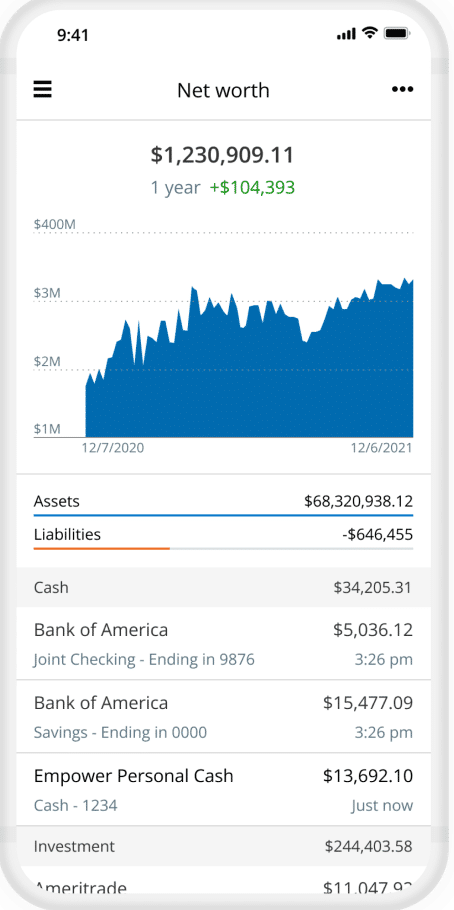
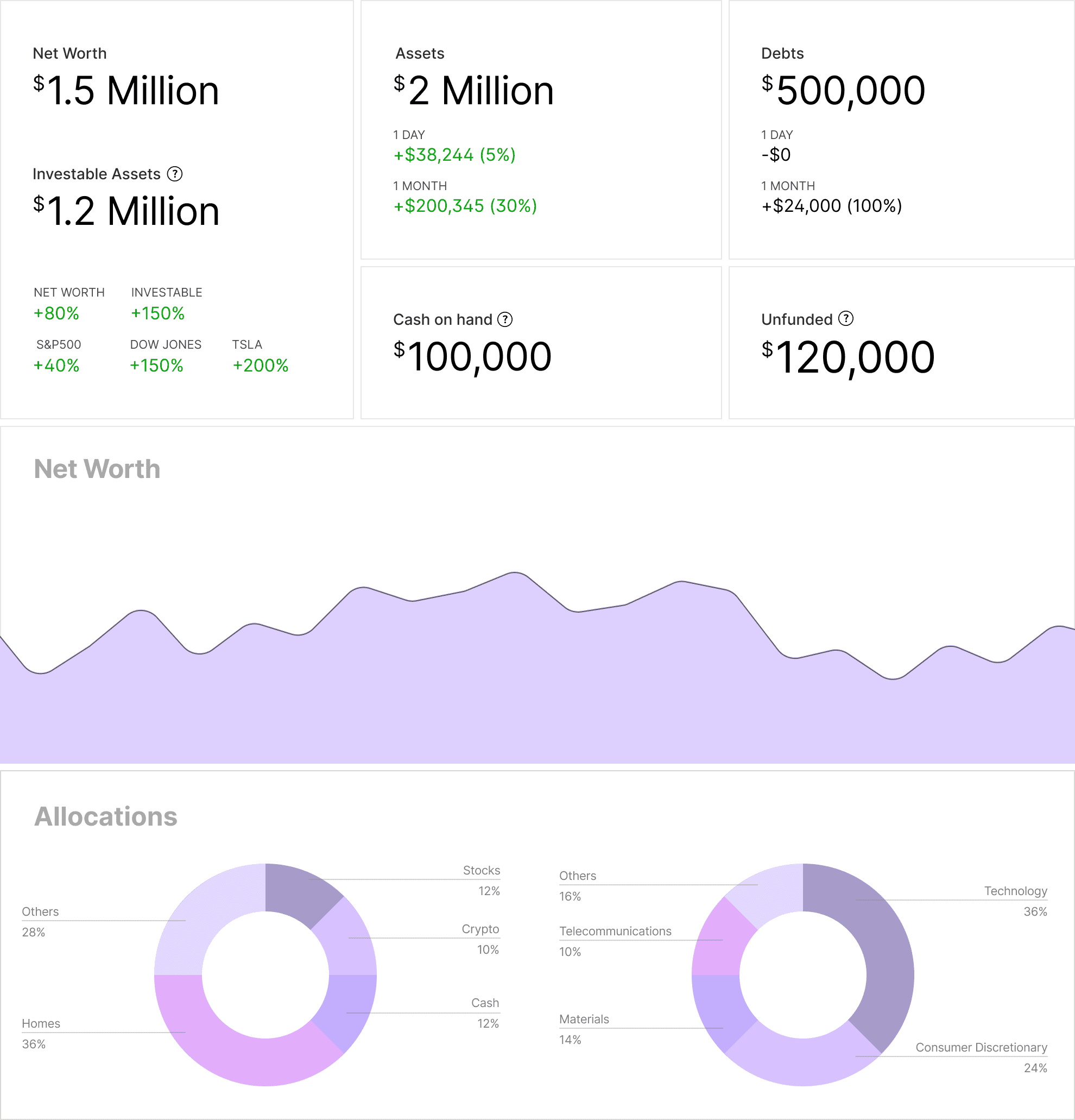
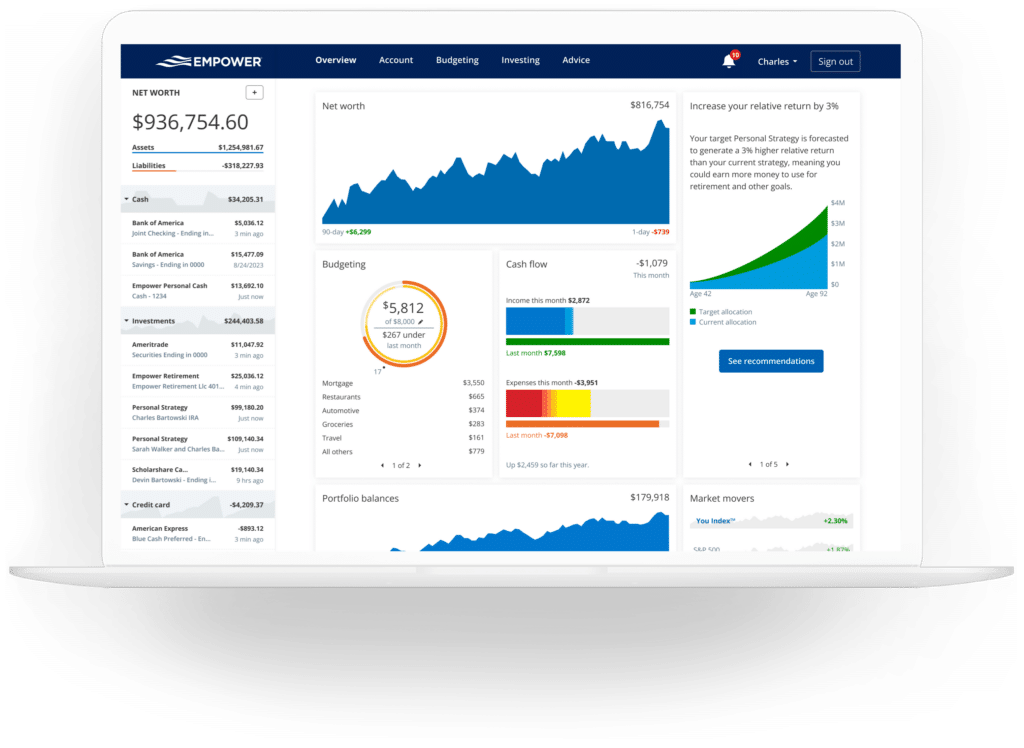
Empower remains the gold standard for free net worth tracking. Unlike apps that focus primarily on monthly cash flow, Empower was built from the ground up to evaluate investment portfolios.
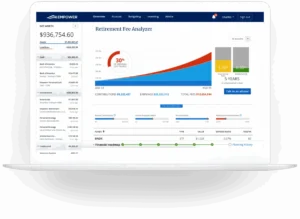
The platform connects to brokerage accounts, traditional and Roth IRAs, 401(k) plans, and health savings accounts (HSAs). Its proprietary Investment Fee Analyzer scans portfolios to identify hidden mutual fund fees and expense ratios that can erode long-term returns. Additionally, its Retirement Planner uses Monte Carlo simulations to calculate a user’s probability of retirement success based on historical market behavior and projected spending.
Monetization Model: Empower offers its software for free because it uses the tool to identify users with significant investable assets (typically $100,000 or more) and pitch them its paid fiduciary wealth management services. However, there is no obligation to use these advisory services to access the free software.
2. Monarch Money
- Best for: Collaborative Budgeting and Modern Feature Integration
- Pricing: 7-Day Free Trial; $8.33/month (billed annually); promotional pricing available (e.g., 50% off the first year with introductory codes like
MONARCHVIPorROB50).
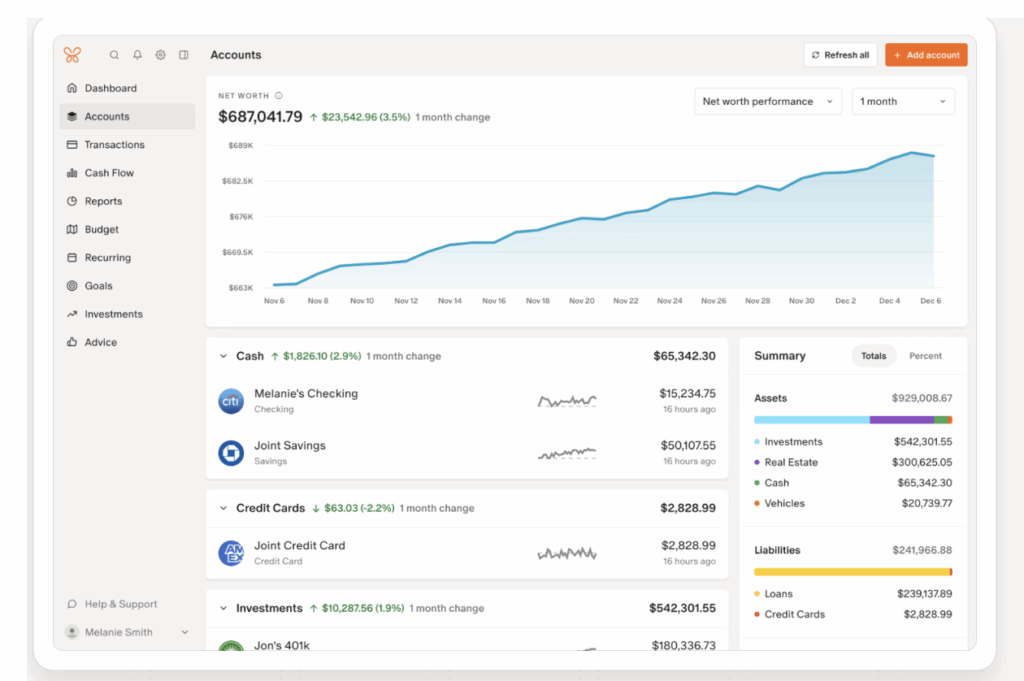
Monarch Money has emerged as one of the most popular premium alternatives following the shutdown of Mint. It offers a highly customizable dashboard that supports multi-user collaboration, allowing partners to manage joint finances without sharing login credentials.
Monarch has also embraced artificial intelligence, introducing a built-in AI Assistant that allows users to query their financial data using natural language (e.g., "How much did my net worth change last quarter?" or "Analyze my spending on dining out"). Its newly introduced Receipt Scanner uses optical character recognition (OCR) to extract line-item details from uploaded receipts and match them automatically to bank transactions.
3. Kubera
- Best for: High-Net-Worth Individuals and Global Asset Tracking
- Pricing: 14-Day Free Trial; $249/year
+-----------------------------------------------------------------+
|                        KUBERA ASSET MATRIX                      |
+-----------------------------------------------------------------+
|  [Traditional]      [Digital Assets]       [Physical/Alt]       |
|  - Brokerages       - Multi-chain Crypto   - Real Estate (Zillow)|
|  - Global Banks     - DeFi Protocols       - Vehicles (VIN)     |
|  - Foreign Currencies- NFTs & Cold Wallets - Domain Names       |
+-----------------------------------------------------------------+
|  [Value Proposition]                                            |
|  - No upselling, no ad-targeting, absolute data privacy         |
|  - Secure beneficiary document release ("Dead Man's Switch")    |
+-----------------------------------------------------------------+
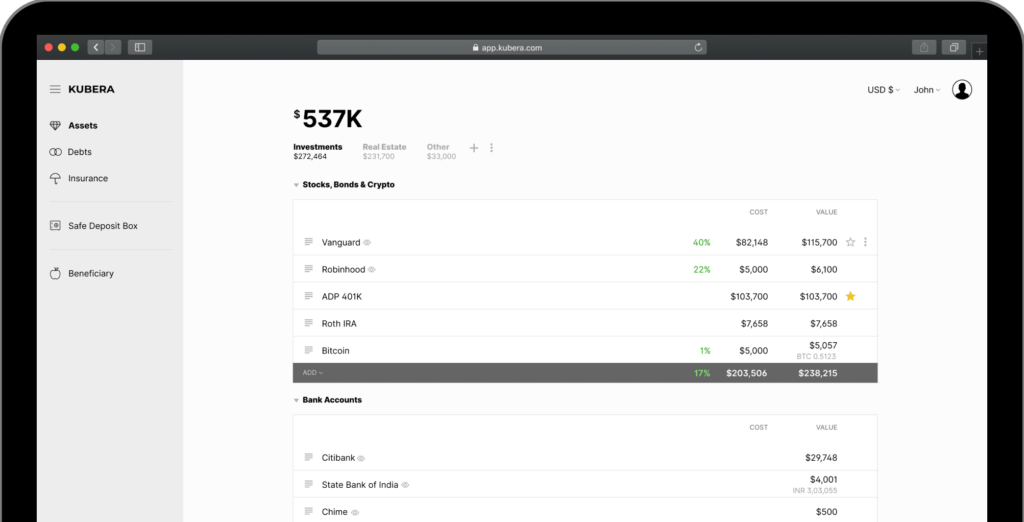
Kubera is a premium, privacy-first net worth tracker designed for individuals with complex, global financial portfolios. It stands out for its ability to track almost any asset type. Beyond traditional bank and brokerage accounts, Kubera supports global currencies, multi-chain cryptocurrency wallets, decentralized finance (DeFi) assets, and domain name portfolios.
Because Kubera charges a premium subscription fee, it does not sell user data, run advertisements, or attempt to upsell financial products. The platform also includes a secure document portal and a "beneficiary release" protocol. This feature acts as a digital estate planning tool, automatically sharing account details and financial documents with designated heirs if the user becomes inactive for a set period.
4. Rocket Money
- Best for: Cash Flow Optimization and Subscription Management
- Pricing: Free basic version; Premium tier ranges from $4 to $12/month (pay-what-you-want model).
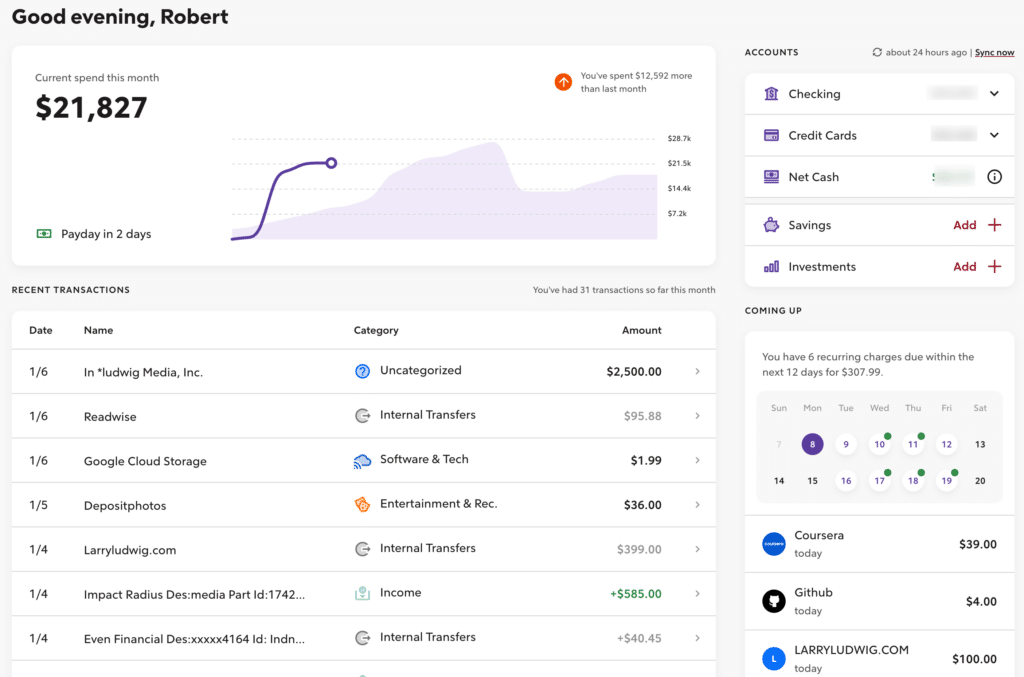
Rocket Money (formerly TrueBill) focuses on optimizing net worth from the liability side by identifying and eliminating unnecessary expenses. The app scans transaction histories to locate recurring subscriptions, providing a centralized interface where users can track, manage, and cancel services with a few clicks.
Rocket Money also offers a bill negotiation service, where its team negotiates lower rates on telecom, security, and utility bills on behalf of the user, keeping a percentage of the realized annual savings. While its investment analysis tools are less robust than Empower’s, it is an excellent tool for users focused on debt reduction and immediate cash flow management.
5. Simplifi (by Quicken)
- Best for: Mobile-First Budgeting and Savings Goals
- Pricing: $3.49/month (billed annually for the first year), transitioning to $6.99/month.
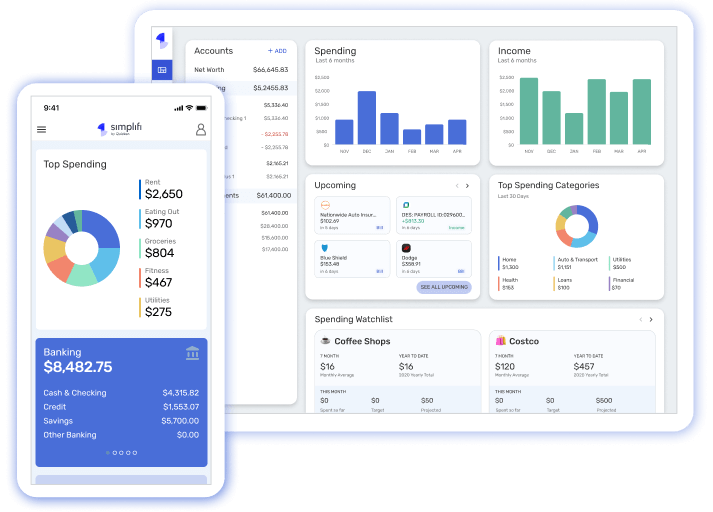
Developed by Quicken, a legacy name in personal finance, Simplifi is a modern, cloud-based application designed for mobile-first users. The app provides a clean, intuitive interface that tracks net worth alongside real-time spending plans.
Simplifi’s core strength lies in its customizable savings goals and cash-flow projections. It allows users to create visual "savings buckets" and automatically tracks progress toward those goals. Its recent addition of investment tracking features makes it a well-rounded option for users who want to manage both their daily budgets and their long-term net worth in a single app.
6. Tiller
- Best for: Spreadsheet Customization and Data Sovereignty
- Pricing: 30-Day Free Trial; $79/year
Tiller is designed for users who want the automation of a modern financial app combined with the flexibility of a spreadsheet. Tiller connects to financial institutions and automatically feeds transaction and balance data directly into Google Sheets or Microsoft Excel.
This approach gives users complete control over their data, allowing them to build custom pivot tables, charts, and financial models. Tiller provides several pre-built templates, including monthly budgets and a dedicated net worth tracker. Because the data resides within the user’s personal Google Drive or OneDrive account, Tiller offers a high degree of privacy and data portability.
4. Official Responses and Industry Security Standards
As personal financial data aggregation has grown, security has become a central focus for both fintech developers and regulatory bodies. The industry has largely moved away from credential-sharing models toward more secure, tokenized architectures.
[User App Interface] ──(Secure Token)──> [Plaid / Yodlee API] ──(Read-Only Access)──> [Financial Institution]Encryption and Data Transmission Standards
Leading platforms like Empower, Monarch, and Kubera employ bank-grade security protocols. This includes AES-256 encryption for data at rest and Transport Layer Security (TLS) for data in transit. These standards match the encryption levels used by major retail banks and military organizations.
The Role of Financial Data Aggregators
Rather than storing users’ banking passwords, modern personal finance apps use third-party data aggregators like Plaid, Yodlee, and Finicity. These services establish secure, read-only connections with financial institutions.
In response to inquiries regarding account safety, fintech developers emphasize several core security principles:
- Read-Only Access: Wealth tracking applications do not have the ability to move money, initiate transfers, or execute trades. They simply read and display account balances and transaction histories.
- Tokenization: When a user links a bank account via Plaid, the bank issues a secure digital token that authorizes data access. The app itself never sees or stores the user’s login credentials.
- SOC 2 Compliance: Most premium platforms undergo regular Service Organization Control (SOC) 2 Type II audits. These independent audits verify that the company’s security systems, data handling practices, and privacy controls meet rigorous industry standards.
5. Implications: The Future of Wealth Management
The widespread adoption of automated net worth tracking has several important implications for consumer behavior, the financial services industry, and the future of personal wealth management.
The Psychology of Wealth Accumulation
Behavioral economists have long noted that what gets measured gets managed. Studies suggest that users who regularly track their net worth are more likely to make positive financial changes.
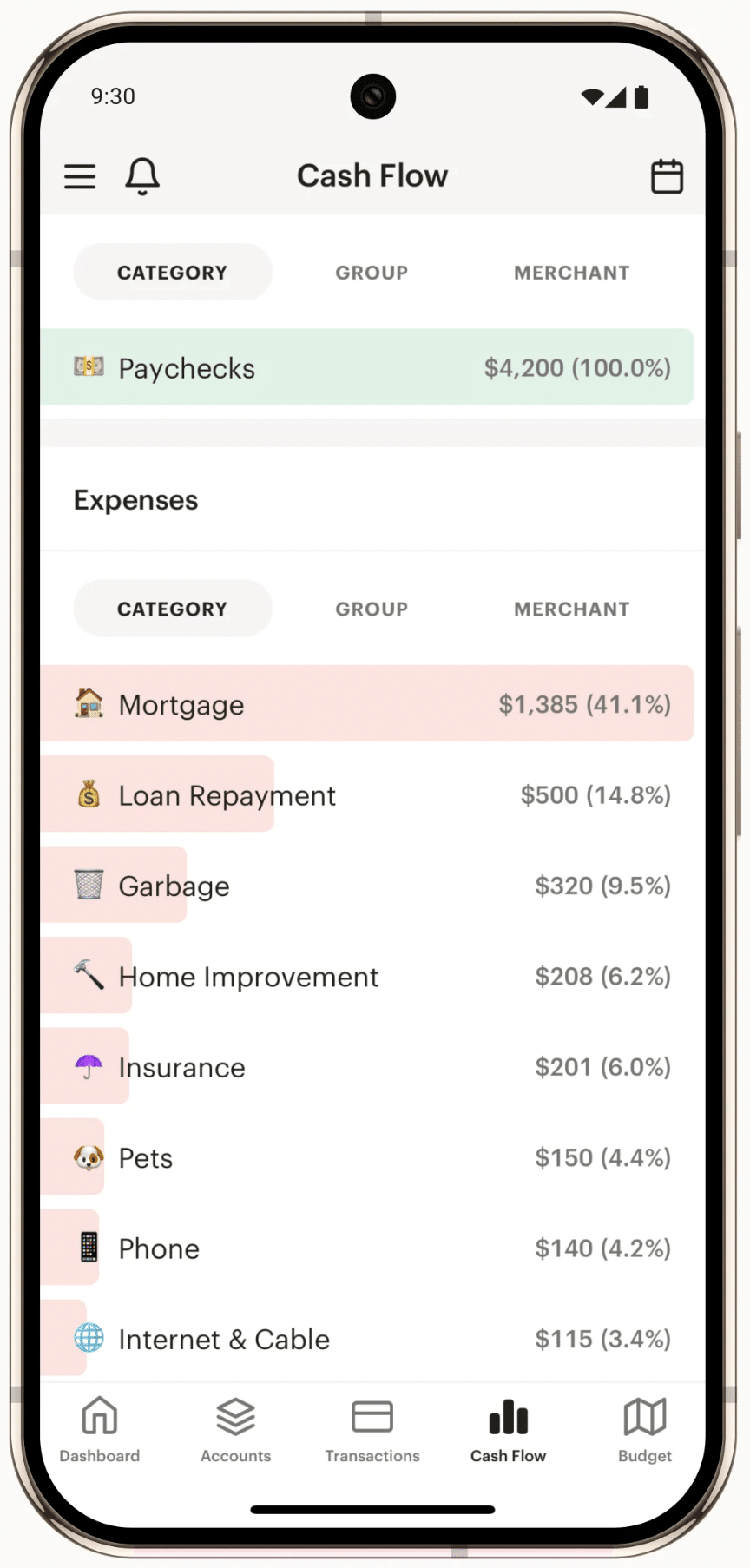
By shifting the focus from monthly income and spending to net worth, these platforms encourage a longer-term financial perspective. Users begin to view their finances through the lens of asset accumulation and debt reduction, rather than simply managing cash flow from paycheck to paycheck.
Traditional Budgeting (Short-term focus)      Modern Wealth Tracking (Long-term focus)
      [Income] ---> [Monthly Expenses]              [Assets] <---> [Liabilities]
              (Defense-oriented)                           (Growth-oriented)
The Democratization of Wealth Management
Historically, high-end financial planning services—such as portfolio fee analysis, tax-loss harvesting advice, and detailed retirement projections—were only available through expensive, human wealth advisors.
Today’s net worth tracking platforms have democratized access to these sophisticated tools. Retail investors can now access advanced portfolio diagnostics and retirement simulations at little to no cost, helping to level the playing field between institutional and retail investors.
The Future: Open Banking and Hyper-Personalization
Looking ahead, the personal finance space is poised for further innovation. The Consumer Financial Protection Bureau’s (CFPB) push for stronger open banking regulations in the United States (under Section 1033 of the Dodd-Frank Act) is expected to make financial data sharing even safer, faster, and more reliable.
As financial data flows more freely and securely, we can expect wealth tracking applications to offer increasingly personalized insights. Future platforms will likely leverage advanced artificial intelligence to offer highly tailored advice—such as identifying specific tax-saving opportunities, suggesting optimal debt repayment strategies, or recommending portfolio rebalancing moves in real time.
Ultimately, these tools will evolve from passive dashboards into active, intelligent partners in long-term wealth creation.