The Architects of Belonging: How the Chinese Six Companies Secured Birthright Citizenship
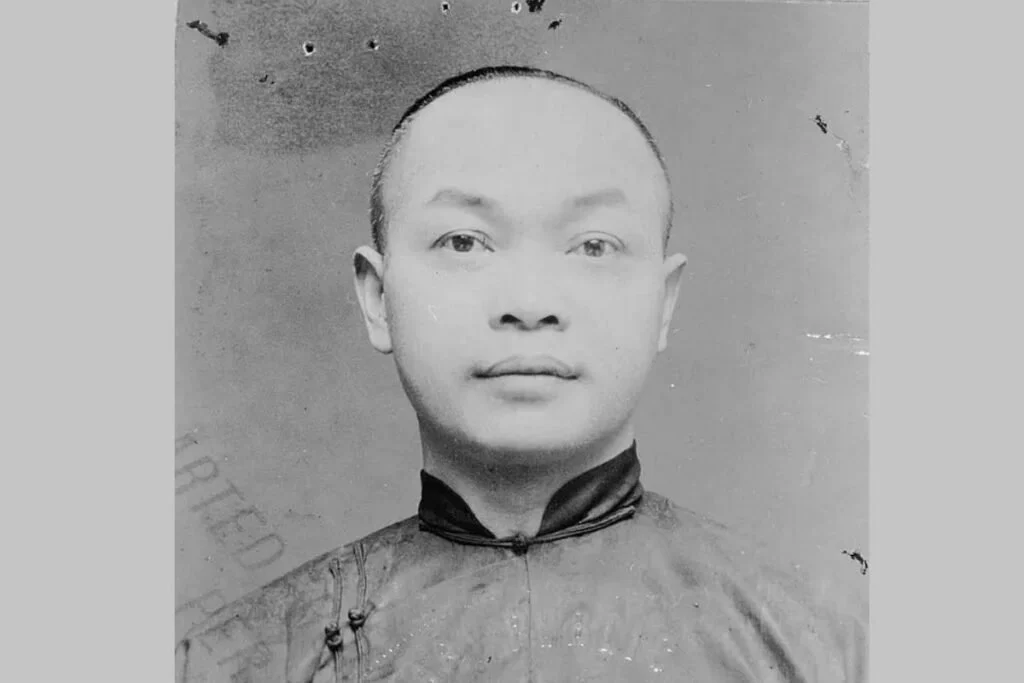
In the annals of American constitutional law, the name Wong Kim Ark is synonymous with the bedrock principle of birthright citizenship. His 1898 Supreme Court victory solidified the interpretation of the 14th Amendment, ensuring that anyone born on U.S. soil is a citizen, regardless of their parents’ nationality. Yet, history books often treat this landmark case as an isolated legal triumph—a solitary man standing against the federal government.
In reality, the victory of United States v. Wong Kim Ark was not merely the result of a courtroom argument; it was the crowning achievement of a sophisticated, grassroots civic infrastructure. Behind Ark stood the Chinese Consolidated Benevolent Association (CCBA), also known as the "Chinese Six Companies." By transforming a singular individual’s detention into a collective defense of belonging, this organization proved that constitutional rights are not self-executing—they must be organized, funded, and defended by the communities they are meant to protect.
The Crucible of Exclusion: 1882–1895
To understand the significance of the CCBA’s intervention, one must look at the hostile environment of late 19th-century America. By 1880, the United States was home to over 100,000 Chinese immigrants, many of whom had arrived during the California Gold Rush of the 1840s or to build the Transcontinental Railroad. Despite their contributions to the nation’s infrastructure and economy, they faced virulent xenophobia.
This sentiment culminated in the Chinese Exclusion Act of 1882. Signed by President Chester A. Arthur, the act was a watershed moment in American immigration policy—the first law to explicitly ban a specific ethnic group from entering the country. It prohibited Chinese laborers from immigrating for ten years and imposed rigorous certification requirements on the few "non-laborers" permitted to enter.
For those already in the country, the law created a state of permanent precarity. Courts frequently denied citizenship to Chinese residents, yet the government maintained the power to deport them at will. It was within this climate of state-sanctioned exclusion that the Chinese community in San Francisco recognized the necessity of self-organization. Founded in 1882, the CCBA emerged as a coalition of six major clans and district groups from Guangdong province. It functioned not just as a cultural touchstone, but as a shadow government—providing housing, mediating disputes, and, most crucially, establishing a legal defense fund to contest the discriminatory laws that threatened their survival.
The Case of Wong Kim Ark: A Chronology of Resistance
The crisis that would define the limits of American citizenship began in 1894. Wong Kim Ark, a 21-year-old San Francisco-born cook, traveled to China to visit his parents. Upon his return to the Port of San Francisco in 1895, he was detained by federal customs officials. Despite presenting evidence of his birth in California, he was denied entry on the grounds that he was not a citizen.
Key Milestones in the Legal Battle:
- 1895: Wong Kim Ark is refused re-entry by customs collector John H. Wise. He is held in confinement on a steamship, effectively treated as a foreign national despite his native-born status.
- 1895–1896: The CCBA intervenes, retaining legal counsel to file a writ of habeas corpus. The association recognizes that Ark’s case is a test of whether the 14th Amendment’s Citizenship Clause applies to Chinese-Americans.
- 1897: The case reaches the Supreme Court. The federal government argues that the phrase "subject to the jurisdiction thereof" in the 14th Amendment excluded children of foreign nationals.
- March 28, 1898: In a 6-to-2 ruling, the Supreme Court affirms that Ark is a U.S. citizen. Justice Horace Gray, writing for the majority, declares that the 14th Amendment draws no distinction based on race or the citizenship of one’s parents.
Supporting Data: The Power of Collective Defense
The CCBA’s influence was not limited to legal strategy; it was rooted in a deep understanding of communal logistics. During the late 19th century, the legal system was largely inaccessible to the Chinese immigrant population due to language barriers, financial costs, and institutionalized bias.
The CCBA’s role was multidimensional:
- Financial Mobilization: The association raised significant funds from the community to pay for high-caliber legal representation. Without these resources, Ark would have likely been deported long before his case reached the highest court in the land.
- Mediation and Governance: Beyond the courtroom, the CCBA acted as an unofficial administrative body. They implemented systems for settling business disputes and assisted new arrivals, creating a "civic infrastructure" that allowed the community to function despite being excluded from formal municipal protections.
- Institutional Continuity: In 1905, the CCBA established a school in Chinatown to teach language and culture, ensuring that the next generation remained connected to their heritage while navigating the complexities of American life.
As Mel Lee, a long-time leader of the association, has noted, the civil rights victories of that era were made possible only because the CCBA acted as an institutional force. "We share in that history today," Lee has remarked, highlighting the enduring pride the community takes in having forced the American legal system to live up to its own promises.
Official Responses and Judicial Interpretation
The government’s position during the 1890s was rooted in the ideology of the era, which sought to maintain a "white" definition of American identity. The Solicitor General’s argument in Wong Kim Ark suggested that the 14th Amendment was never intended to grant citizenship to the children of "aliens" who were ineligible for naturalization.
The Supreme Court’s 6-to-2 decision was a profound rebuke to this narrow interpretation. The Court clarified that the 14th Amendment was intended to override the Dred Scott decision, which had previously declared that Black people could not be citizens. By ruling in favor of Ark, the Court affirmed that the "jurisdiction" clause referred to the physical territory of the United States, not the political status of the parents. This established the legal precedent for birthright citizenship that stands to this day—a victory that the government had vehemently opposed at the time.
Implications: Constitutional Rights as Community Endeavors
The story of the CCBA and Wong Kim Ark offers a vital lesson for contemporary political discourse: constitutional protections are not static, self-enforcing entities. They are, in many ways, social constructs that require active defense.
The implication for modern civic engagement is clear: when marginalized communities are excluded from traditional power, they must build their own. The CCBA did not simply ask for rights; they used the legal system as a theater for political struggle, and they utilized their internal organization to sustain that struggle over several years.
Lessons for Modern Advocacy:
- Infrastructure precedes victory: Legal challenges require a foundation of community support, funding, and administrative organization.
- Rights are contested, not granted: The 14th Amendment existed in 1882, but it was not applied to Chinese-Americans until 1898, after years of organized pressure.
- The Power of the Collective: By treating Ark’s case as a community concern rather than an individual burden, the CCBA ensured that the victory benefited the entire immigrant population rather than just one person.
Today, as debates over citizenship and immigration continue to dominate the American political landscape, the legacy of the Chinese Six Companies remains a beacon. It serves as a reminder that the "good order" of a nation is not maintained by exclusionary laws, but by the resilience of those who, when faced with injustice, choose to build, organize, and demand that the law apply to everyone. The constitutional right to belong is, in the end, a collective achievement—a gift handed down from those who refused to be excluded.