The Trillion-Dollar Infrastructure Gamble: Why Data Centers are Forcing a Revolution in Insurance
The rapid, relentless expansion of the global digital economy—driven by the insatiable appetite for artificial intelligence (AI) and cloud computing—has created a new class of "megaproject." As tech giants like Meta, Alphabet, and Oracle race to build the physical architecture of the future, they are pushing the boundaries of construction finance and risk management. With project values soaring from $150 million to $3 billion in just five years, the global insurance industry is facing an unprecedented capacity crunch. Zurich Insurance Group AG, a titan in the sector, has signaled that the traditional insurance market may soon be unable to carry the weight of these multi-billion-dollar assets alone, necessitating a shift toward the securitization of risk.
The Evolution of the Data Center: From Warehouse to Sovereign Asset
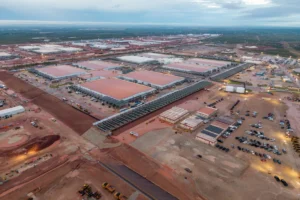
The landscape of infrastructure investment has undergone a seismic shift. Five years ago, a data center project was considered a significant undertaking if it reached $150 million in total value. Today, that figure has grown twenty-fold, with average project costs hitting $3 billion. However, this is only the beginning. Industry analysts at S&P Global suggest that the next generation of hyperscale facilities could reach insurable values of $30 billion per site—an astronomical figure that dwarfs the replacement cost of some of the world’s most iconic infrastructure, such as major suspension bridges.
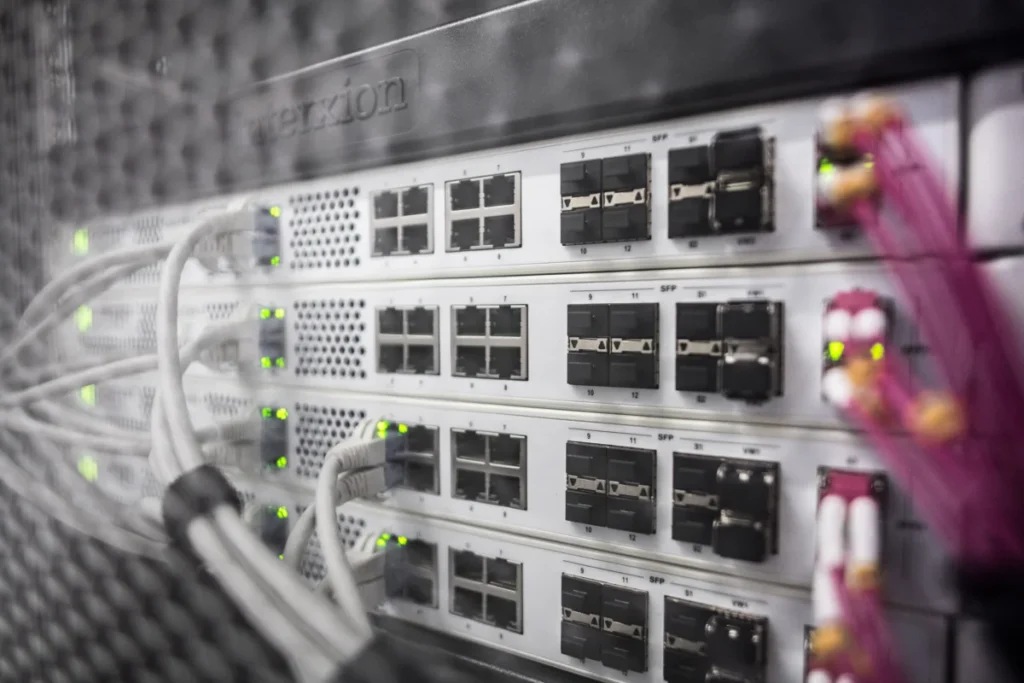
This rapid appreciation is driven by the density of high-value components. Modern data centers are no longer just concrete shells; they are high-tech fortresses housing thousands of cutting-edge GPU computing chips, the lifeblood of generative AI. These components are not only expensive but also fragile and difficult to replace, creating a concentration of risk that traditional property and casualty underwriters have never encountered at this scale.
Chronology of an Infrastructure Boom
The current environment is the result of a multi-year convergence of private credit, technological breakthroughs, and massive capital deployment:
- 2020-2022 (The Foundation): Post-pandemic digitalization accelerates, leading to a surge in demand for cloud capacity. Private equity and credit firms begin to see data centers as the "new utility," attracting billions in stable, long-term infrastructure investment.
- 2023 (The AI Catalyst): The mainstream emergence of generative AI forces a global scramble for compute power. Hyperscalers (Meta, Google, Amazon, Microsoft) begin building at an unprecedented pace.
- 2024 (The Capacity Crunch): As project values pass the $1 billion mark, traditional insurance syndicates begin to report difficulties in placing full coverage. The "loss limits" traditionally used to cap insurer exposure are increasingly rejected by lenders.
- 2025 (The Financial Wall): Global bond issuance for digital infrastructure hits record highs, surpassing $6.57 trillion. Zurich Insurance and other major underwriters formally recognize that the "insurance gap" is widening.
- 2026 (The Shift to Securitization): Industry leaders begin active discussions regarding Insurance-Linked Securities (ILS) as the only viable mechanism to bridge the gap between current insurance supply and the projected $7 trillion AI build-out cost.
The Private Credit Conundrum
A critical factor complicating this landscape is the entry of private credit into infrastructure financing. Unlike traditional banks, which often operate with a higher tolerance for operational delays and a more collaborative approach to risk-sharing, private credit providers operate on compressed timelines with aggressive performance thresholds.
According to Zurich’s recent "Future of Construction" report, private credit firms are fundamentally altering the delivery dynamics of these projects. Their model leaves little room for operational deviation, and they are increasingly demanding "full limit" insurance policies. In insurance parlance, this means they require coverage for the entire potential loss, effectively eliminating the traditional loss limits that once protected underwriters from catastrophic liability.
Kelly Kinzer, Zurich’s global head of construction and surety, notes that this push for full-limit coverage is putting the entire industry in a "very challenging position." Put simply: there is currently not enough aggregate insurance capacity in the global marketplace to cover the total insurable value of the data centers currently in the pipeline.
Official Responses and Strategic Pivot
The insurance industry is not sitting idle. Faced with a potential $134 billion in cumulative premiums between 2026 and 2030, insurers are looking for ways to capture this market without overextending their balance sheets. The answer, according to Zurich and other market participants, lies in securitization.
"I do anticipate with the number of these projects being built at those values, that those types of discussions are going to become more and more necessary," Kinzer told Bloomberg. While the market for data center securitization is "not there today," the trajectory is clear.
The proposed solution involves Insurance-Linked Securities (ILS). Similar to catastrophe (CAT) bonds—which allow investors to earn premiums in exchange for taking on the risk of natural disasters like hurricanes or earthquakes—data center ILS would distribute project risk across a broader pool of capital market participants. By turning risk into a tradable security, insurers can offload chunks of their exposure to hedge funds, pension funds, and other alternative asset managers who are eager for yield.
Implications: The New Era of Risk
The move to securitize data center risk carries profound implications for the global financial system:
1. The Decoupling of Asset Value and Profitability
It is essential to distinguish between the physical risk and the business risk. Investors in ILS products are betting on the physical integrity of the asset—that a fire, flood, or tectonic event will not destroy the data center. They are not, however, betting on the success of the AI industry. If the "AI bubble" bursts and data centers become unprofitable due to low demand, that is a risk borne by the tech companies and their equity investors, not the insurance-linked security holders.
2. A New Asset Class for Alternative Investors
For the capital markets, data center ILS represents a new, potentially lucrative asset class. With traditional property and casualty growth slowing, many insurers are viewing this as a strategic revenue stream. Firms like Euler ILS Partners are already moving to team up with insurers to underwrite these specialist policies, and brokers like Aon have reported significant inbound interest from investors looking for ways to participate in this space.
3. The Physical Resilience Challenge
As insurers shift toward ILS, they will likely demand higher standards for physical resilience. If the capital markets are taking on the risk of a $30 billion asset, they will require rigorous oversight of site selection, fire suppression systems, and climate-proofing. This could accelerate the development of "hardened" data centers, further increasing construction costs but providing a more stable bedrock for the global digital economy.
4. The Broader Economic Ripple Effect
The $7 trillion global AI build-out projected by XDI is a staggering economic undertaking. If the insurance market fails to adapt, the sheer cost of risk could act as a drag on the speed of AI development. By embracing securitization, the insurance sector is effectively acting as an engine for the next phase of the digital revolution, providing the safety net that allows hyperscalers to continue their aggressive expansion.
Conclusion: Bridging the Gap
The convergence of AI ambition and physical infrastructure limits has created a unique "insurance gap" that the global financial system is currently racing to fill. The transition from traditional underwriting to capital-market-driven securitization is not merely a technical adjustment; it is a fundamental reconfiguration of how the world’s most expensive assets are protected.
As Zurich Insurance and its peers navigate this, the lesson for investors and tech giants alike is clear: the era of "cheap" or easily insured infrastructure is over. The future of the digital world will be built on a foundation of complex risk-sharing, where the world’s largest infrastructure projects are underwritten not just by insurance companies, but by the global capital markets themselves. The success of this transition will determine whether the next four years represent a period of sustainable growth or a volatile period of capacity-constrained expansion.