A Campus in Conflict: Sundar Pichai’s Stanford Commencement Met with Protest Over Google’s Military Ties
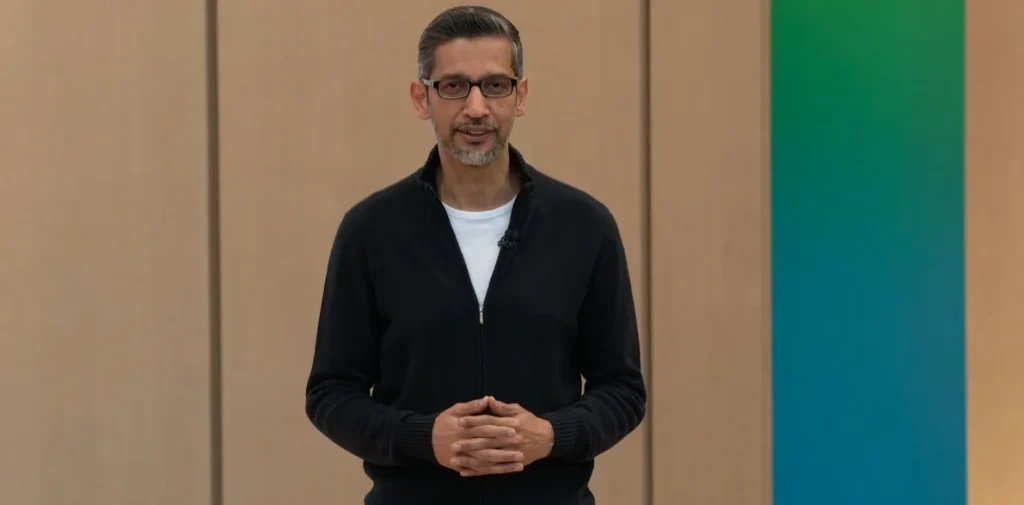
The celebratory atmosphere typically associated with university commencements was sharply punctured this past weekend at Stanford University. As Google CEO Sundar Pichai, an alumnus of the institution’s graduate program in materials science and engineering, took the stage to deliver the keynote address, he was met not with the customary applause, but with a chorus of boos and a calculated walkout by approximately 200 graduating students.
The demonstration served as a visceral manifestation of the growing friction between the elite echelons of Silicon Valley leadership and the values held by the incoming generation of tech workers. At the heart of the dissent lies a profound ethical disagreement regarding Google’s corporate partnerships, specifically its involvement in military and government surveillance infrastructure.
The Catalyst: Project Nimbus and Beyond
The protest was primarily galvanized by "Project Nimbus," a $1.2 billion cloud computing and artificial intelligence contract shared by Google and Amazon to provide services to the Israeli government and its military. For the student activists, the project is not merely a business contract; they characterize it as a direct contribution to the ongoing humanitarian crisis in Gaza.
Beyond Nimbus, protesters highlighted Google’s long-standing relationship with the U.S. Immigration and Customs Enforcement (ICE) agency. Holding signs that read "ICE SPIES WITH GOOGLE AI" and "GENOCIDE RUNS ON GOOGLE," the graduating students underscored a broader critique: that the world’s most powerful technology companies are increasingly acting as enablers for state-sanctioned violence and mass surveillance.
"We are walking out because we refuse to glorify the corporations that fuel this violence and exercise our power to choose differently," a spokesperson for the organized groups stated. The walkout was a collaborative effort involving several campus organizations, including Stanford Students for Justice in Palestine, No Tech for Apartheid, and Tech for Liberation.
A Chronology of Growing Dissent
The Stanford walkout did not occur in a vacuum; it is the latest in a mounting wave of internal and external pressure that has dogged Google’s leadership for years.
- The Origins of Conflict: Since the inception of Project Nimbus, Google has faced consistent internal pushback. Employees have expressed deep concerns regarding the dual-use nature of AI technology, which can easily be repurposed from administrative tasks to target acquisition and surveillance.
- The 2024 Mass Firings: The internal strain reached a boiling point in 2024, when Google fired 28 employees who had staged sit-ins and protests at company offices to demand the cancellation of the Nimbus contract. Rather than silencing the dissent, the move emboldened critics, fueling a narrative that the company values government contracts over its own workforce’s moral concerns.
- The EFF Intervention: The pressure has moved beyond the campus and the boardroom. The Electronic Frontier Foundation (EFF) recently issued a blistering critique of Google and Amazon, accusing both firms of "choosing to look the other way" regarding the specific human rights implications of how their cloud infrastructure is utilized by the Israeli military.
- The Microsoft Contrast: While Microsoft has also faced scrutiny for its technological support of the Israeli military, the company’s response has differed significantly. Following an investigation into claims that its cloud services were being used for the mass surveillance of Palestinians, Microsoft implemented new restrictions on the Israeli government’s access to its technology. This move has created a new benchmark for corporate accountability that protesters are now demanding Google match.
Supporting Data and Industry Context
The skepticism directed toward Pichai at Stanford reflects a broader cultural shift among the youth and the academic community. While the tech industry has spent the last decade positioning AI as the ultimate panacea for global challenges, a significant portion of the graduating class views the technology through a more cynical lens.
Recent surveys of college graduates indicate that Gen Z is increasingly wary of the corporate sector. Many fear that the rapid deployment of AI is not only a threat to their future job security but a force that could exacerbate social inequality and state-sponsored oppression.
When compared to previous graduation cycles, the animus directed toward Pichai was notably targeted. While other speakers at commencement ceremonies across the country have faced boos when mentioning AI in abstract, aspirational terms, the Stanford protest was specifically focused on the tangible, real-world consequences of Google’s strategic business decisions.
The Response from the Old Guard
The student protest was not without its detractors, particularly among the established titans of Silicon Valley. Vinod Khosla, the billionaire venture capitalist and co-founder of Sun Microsystems, took to X (formerly Twitter) to condemn the action.
"The protest was biased, idiotic, short-sighted and very selfish," Khosla wrote. He argued that the students were blinded by their own ideological concerns and failed to account for the potential for AI to uplift the "bottom 3 billion people on this planet." For critics like Khosla, the protesters represent an obstructionist force that threatens to stifle technological progress in the pursuit of "misinformed self-interest."
This reaction highlights the widening chasm between the tech industry’s "techno-optimist" founders and a new generation of workers who are demanding that the social cost of innovation be measured alongside the economic return.
Implications for the Future of Big Tech
The Stanford walkout carries significant implications for the future of talent acquisition and corporate governance in Silicon Valley.
1. The Erosion of Brand Loyalty
For decades, Google has been a top destination for the brightest engineering graduates. However, as the company’s military ties become a central pillar of its business model, it risks alienating the very demographic it needs to sustain its competitive advantage. The protest suggests that "doing no evil"—Google’s former motto—has become a point of contention that will continue to haunt the company’s recruitment efforts.
2. The Rise of "Tech Activism"
The collaboration between campus groups like Stanford Students for Justice in Palestine and internal organizations like No Tech for Apartheid indicates a new, sophisticated form of activism. By linking local campus protests with international human rights concerns and labor advocacy, these groups have successfully created a narrative that reaches far beyond the Silicon Valley bubble.
3. The Necessity of Ethical Frameworks
The contrast between Google’s current trajectory and Microsoft’s decision to limit its technology’s use indicates that there is no longer a consensus on how to handle military contracts. Tech giants are increasingly being forced to decide whether they are neutral infrastructure providers or political actors. As public pressure mounts, companies that refuse to implement robust, transparent human rights impact assessments may find themselves facing both legal challenges and significant reputational damage.
Conclusion: A Turning Point for Silicon Valley
The spectacle of a CEO being booed at his own alma mater is a sobering reminder that the era of unquestioned tech exceptionalism is coming to an end. Sundar Pichai’s experience at Stanford reflects a fundamental transition: the tech industry is no longer viewed as an external force for progress, but as a deeply entrenched component of the geopolitical status quo.
As these students enter the workforce, they carry with them the expectation that technical excellence cannot be divorced from ethical accountability. Whether Google can bridge this divide—or whether it will continue to lean into its role as a key player in global security infrastructure—remains one of the most significant questions in the industry today. The walkout was not just a protest against a contract; it was a demand for a new definition of what it means to be a technology leader in the 21st century.