The Orbital Intelligence Revolution: How Vision-Language Models Are Rewriting Space Operations
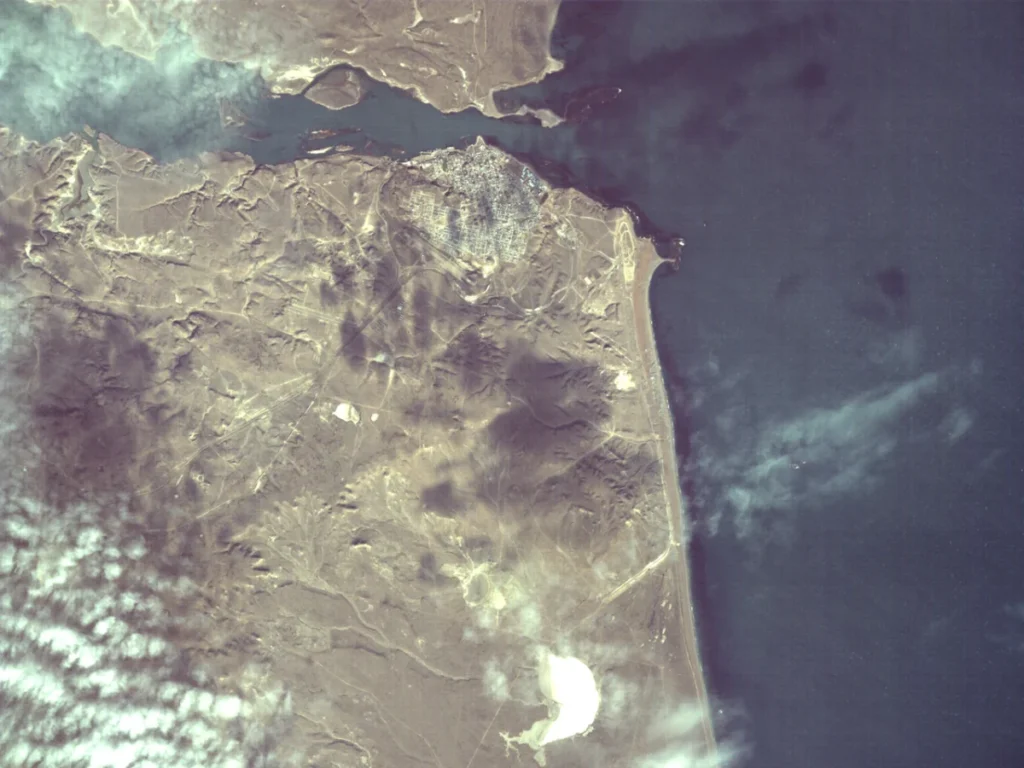
In a milestone that signals a profound shift in the architecture of space-based observation, an Earth-orbiting satellite has successfully achieved autonomous target identification without human intervention. This breakthrough, occurring in April, represents the first reported in-orbit deployment of a vision-language model (VLM). By bridging the gap between raw sensor data and natural language processing, this advancement promises to transform satellites from passive data-collecting cameras into active, intelligent sentinels capable of real-time analysis.
The demonstration, conducted aboard the Yam-9 spacecraft—a platform operated by space infrastructure leader Loft Orbital—relied on software developed by NASA’s Jet Propulsion Laboratory (JPL). The project proves that artificial intelligence, specifically the “edge-ready” Gemma 3 model from Google DeepMind, can function effectively in the harsh, resource-constrained environment of low Earth orbit (LEO).
The Traditional Bottleneck: Why Space Needs AI
For decades, the satellite industry has operated under a restrictive, data-heavy paradigm. Typically, an Earth observation satellite captures massive volumes of imagery and telemetry, storing it until it can transmit that data to a ground station. Once on the ground, human analysts or standard machine learning algorithms laboriously process the information to identify changes, anomalies, or points of interest.
This process is inherently slow and inefficient. Analysts often wade through petabytes of “noise” to find a single relevant signal. As the number of satellites in orbit grows, this “firehose of data” threatens to overwhelm ground-based infrastructure.
By integrating VLMs directly onto the spacecraft, the Yam-9 mission has effectively moved the “brain” of the operation to the edge. Instead of beaming down raw pixels, the satellite can now perform initial triage, identifying specific geographic features or infrastructure developments in response to natural language queries. This capability drastically reduces latency, ensuring that time-sensitive insights reach decision-makers minutes—rather than hours or days—after an event occurs.
Chronology of a Breakthrough
The path to this orbital milestone was marked by rigorous engineering and iterative testing.
- The Launch: In the fall of 2025, Loft Orbital deployed the Yam-9 spacecraft. Designed as a pathfinder for the company’s orbital AI initiatives, the satellite was equipped with an Nvidia Jetson Orin AGX GPU—a high-performance computing chip specifically hardened for the rigors of spaceflight.
- Software Integration: Juan Delfa Victoria, a technical leader within NASA JPL’s AI group, spearheaded the creation of "NAVI-Orbital." This software package served as the critical harness for Google’s Gemma 3 model. Engineers faced the significant challenge of optimizing the VLM, stripping away non-essential libraries and memory-heavy dependencies to ensure the model could operate within the strict power and thermal envelopes of a satellite.
- The April Milestone: In April, the team initiated the first live test. Researchers submitted natural language queries to the onboard model, asking it to categorize sensor data based on complex parameters—such as the intersection of natural environments and human-developed infrastructure, or the presence of specific industrial railway hubs.
- Successful Validation: The satellite successfully processed these requests, identified the relevant imagery, and classified the data correctly, marking the first time a VLM has independently understood and executed a mission task in orbit.
The Technical Framework: Gemma 3 at the Edge
The choice of Google DeepMind’s Gemma 3 was deliberate. Unlike massive, cloud-based Large Language Models (LLMs) that require massive server farms, Gemma 3 is optimized for “edge applications.”
VLMs are a unique subset of AI that merge the contextual understanding of an LLM with the visual recognition capabilities of a computer vision system. By processing images through a multi-modal lens, the model can look at a satellite photo of a port and understand not just that there are rectangular shapes (containers), but that the layout of those containers suggests a busy, functioning logistics hub.
The software architecture developed by JPL’s team effectively compresses this cognitive capability into a package that fits within the memory footprint of the Jetson Orin AGX. This is no small feat; space hardware is often years behind consumer electronics due to the need for radiation shielding and extreme reliability. Making a sophisticated VLM run on a chip designed for an orbital environment is a testament to the advancements in model distillation and optimization.
Implications: The Rise of "Patrol Layers"
The success of Yam-9 is not merely a technical novelty; it changes the economics and the strategic utility of space.
Paul Lasserre, Loft Orbital’s head of AI, envisions a future of “always-on, patrol layers.” In this scenario, constellations of satellites act as autonomous security guards. "If you have a VLM, you can have logic—like ‘monitor this border for me, and let me know when something is suspicious’—and interact back and forth with the satellites," Lasserre explains.
This shift has three major implications:
- Data Triage: Satellites will only downlink data that the VLM deems relevant, drastically lowering bandwidth costs and satellite-to-ground link congestion.
- Real-Time Responsiveness: In sectors like disaster response or border security, waiting for a ground analyst to view an image can be the difference between safety and catastrophe. Autonomous detection allows for immediate automated alerts.
- Infrastructure as a Service: Loft Orbital’s business model—offering space as a service—means that customers do not need to build their own satellites. They can simply lease space on a "smart" satellite, upload their specific queries, and receive actionable intelligence.
Official Responses and Industry Outlook
While Loft Orbital has secured its place in history as the first to deploy this tech, the rest of the industry is not far behind.
Planet Labs, a major player in the Earth observation market, already operates satellites equipped with Jetson Orin processors. While they are currently utilizing these chips for traditional, object-detection tasks, representatives have confirmed that research is actively underway regarding the integration of VLMs and more advanced AI agents.
Similarly, Kepler Communications, which maintains the largest orbital compute cluster in space, has remained tight-lipped regarding specific partnerships due to non-disclosure agreements. However, the company confirmed that there have been “several undisclosed use cases” of their compute environment since they deployed their latest cluster in January, signaling that the industry is quietly moving toward a high-compute, AI-driven future.
Lasserre estimates that a constellation of between 50 and 100 satellites, all equipped with VLM-capable hardware like that on Yam-9, would be sufficient to provide true real-time, persistent monitoring of any point on Earth.
Beyond Earth Observation: The Future of Space Assistants
The conceptual seeds for NAVI-Orbital were sown by JPL researcher Taran Cyriac John, who was originally tasked with envisioning digital assistants for future human missions to the Moon or Mars.
"We’re thinking, okay, you have astronauts with pressurized suits, and you know they cannot be tapping on a keyboard, whatever they want to do is complex," Delfa Victoria noted. "So, how about we provide an assistant, like in video games and in movies, where you see an AI which is interactive?"
This vision highlights a long-term convergence: the AI that monitors Earth today will eventually be the same AI that guides astronauts on deep-space missions tomorrow. Whether it is scanning the Martian surface for geological anomalies or managing the complex power and oxygen systems of a lunar base, the ability to converse with an AI in natural language—rather than punching in lines of code—will be a prerequisite for successful human space exploration.
Conclusion: The Path Ahead
The successful flight of the Gemma 3 model on Yam-9 marks the end of the "blind" era of satellite operations. As companies solve the challenges of power, memory management, and thermal dissipation in orbit, the AI capabilities of these platforms will only grow more sophisticated.
We are entering an era where the satellite is no longer just a camera in the sky, but an intelligent, interactive agent. While the team at JPL and Loft Orbital jokingly warns against calling their invention "HAL 9000," the reality of the technology is just as transformative as science fiction once promised. By placing human-level analytical reasoning into the vacuum of space, we have unlocked a new frontier in how we monitor our planet, protect our borders, and prepare for our eventual journey to the stars.