The U.K. Nuclear Renaissance: Engineering Powerhouses Drive a Global Shift

The global energy landscape is undergoing a profound transformation, and the United Kingdom is firmly positioning itself at the vanguard of this movement. As nations scramble to balance energy security, decarbonization targets, and industrial competitiveness, the "nuclear renaissance" has transitioned from theoretical policy discourse to a tangible, multi-billion-dollar reality.
Recent developments in the U.K. nuclear sector—marked by high-level international technology partnerships, historic export wins, and critical site-readiness projects—underscore a broader trend: the commercialization of advanced nuclear capabilities. Companies such as Rolls-Royce and Jacobs are no longer just servicing a domestic market; they are becoming the architects of a new, scalable, and modular global nuclear infrastructure.
Main Facts: A Convergence of Policy and Engineering
The current momentum in the U.K. nuclear sector is defined by three distinct but reinforcing pillars: international collaboration, the commercialization of Small Modular Reactors (SMRs), and the critical infrastructure services required to bring new sites online.
The recent trilateral cooperation between Rolls-Royce, the U.K. National Nuclear Laboratory (UKNNL), and the Japan Atomic Energy Agency (JAEA) represents a major leap in High-Temperature Gas-Cooled reactor (HTGR) technology. By pooling Japanese expertise in high-temperature systems with British engineering and fuel cycle capabilities, these entities are aiming to solve the "last mile" of nuclear deployment: inherent safety and versatile industrial application.
Simultaneously, the U.K. engineering sector is securing massive international contracts. Rolls-Royce’s selection for Sweden’s first new nuclear project in four decades—a move to deploy three SMRs on the Swedish west coast—serves as a bellwether for the European market. This is complemented by the work of firms like Jacobs, which are laying the regulatory and environmental foundations for future domestic sites, such as the Oldbury project in South Gloucestershire.
Chronology of Recent Milestones
To understand the speed at which this sector is evolving, one must look at the rapid-fire succession of recent events:
- June 2026 (Mid-Month): Rolls-Royce enters into two trilateral Memorandums of Cooperation (MoC) with the UKNNL and JAEA. The signing occurs during the Japanese Prime Minister’s state visit, highlighting the strategic, inter-governmental nature of the deal.
- June 2026 (Mid-Month): Shortly following the technology pact, Rolls-Royce is officially selected by Videberg Kraft—a consortium including state-owned utility Vattenfall AB—to lead the delivery of Sweden’s first new nuclear fleet in over 40 years.
- Mid-2026: Jacobs is appointed to deliver critical environmental consultancy services for the Oldbury site in the U.K. This appointment marks the beginning of the formal planning and permitting phase for a site that is central to the government’s long-term energy security strategy.
- Preceding Quarters: These developments build upon the earlier success of Rolls-Royce’s SMR program in the U.K. and a major contract win with the CEZ Group in the Czech Republic, confirming the company’s dominance in European SMR tendering.
Supporting Data and Technical Context
The shift toward SMRs and advanced reactors is driven by the need for agility. Traditional large-scale reactors often suffer from long lead times and ballooning capital costs. In contrast, the current wave of U.K.-led projects focuses on modularity, which allows for factory-based manufacturing and predictable site assembly.
The Power of the Value Chain
The economic viability of these projects rests on a mature, decades-old supply chain. Jacobs, for instance, draws upon over 60 years of nuclear lifecycle experience. Their work at sites like Hinkley Point C, Sizewell C, and Sellafield provides a bedrock of institutional knowledge that reduces the risk profile for new developments.
Technical Synergy
- HTGR Technology: Unlike standard Light Water Reactors, HTGRs can operate at significantly higher temperatures, making them suitable not just for electricity, but for industrial heat, hydrogen production, and desalination.
- Fuel Security: The U.K.-Japan cooperation specifically targets the "next-generation fuel" required for HTGRs. Solving the fuel cycle challenge is arguably the most critical technical hurdle to commercialization, and the UKNNL’s involvement ensures that the U.K. retains control over the intellectual property and supply chain of these fuel systems.
Official Responses and Strategic Intent
Government support has been the catalyst for these commercial successes. The U.K. government’s "Advanced Nuclear Framework" has acted as a bridge between research and commercial deployment.
In a statement regarding the trilateral agreement, officials emphasized that this partnership is about more than just power generation; it is about "civil, defense, and industrial application." The Japanese collaboration, in particular, is viewed as a strategic alignment of two island nations that prioritize nuclear as a foundation for energy independence in a volatile geopolitical climate.
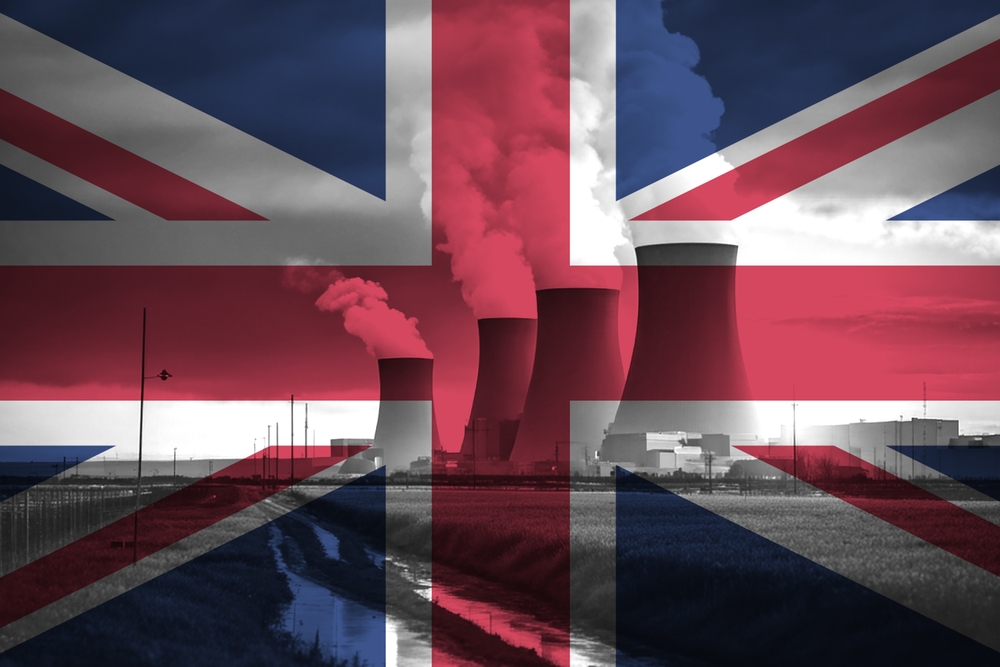
For its part, Rolls-Royce has framed these successes as a validation of its full-lifecycle nuclear strategy. By managing the end-to-end process—from SMR design to fuel technology and international deployment—the company is positioning itself as the primary contractor for the European nuclear renaissance, successfully beating out international competitors in every tender it has entered.
Implications for Investors and the Market
For investors, the nuclear sector has evolved from a speculative long-term play into a sector defined by tangible backlog and revenue recognition. The "nuclear renaissance" is no longer about potential; it is about execution.
The Role of the VettaFi Nuclear Renaissance Index (NUKZX)
The complexity of the nuclear supply chain makes individual stock selection challenging. However, indices such as the VettaFi Nuclear Renaissance Index (NUKZX) provide a holistic view of the ecosystem. NUKZX is particularly relevant because it does not limit its scope to reactor designers; it includes the vital engineering, environmental, and service firms that are essential to project viability.
- Risk Mitigation: By investing in a diversified index, investors gain exposure to the broader industry growth—including site preparation firms like Jacobs—without the outsized risk associated with a single pre-revenue reactor developer.
- Revenue Visibility: The contracts mentioned—whether in Sweden, the Czech Republic, or the U.K.—represent multi-year, often multi-decade, revenue streams. As these projects move from planning to construction, the financial stability of the participating firms increases significantly.
- The "Renaissance" Premium: As nuclear power becomes central to the ESG (Environmental, Social, and Governance) and energy security mandates of Western nations, companies that hold the "keys" to the technology and the site permits are likely to command a premium.
Looking Forward: The Path to Commercial Operation
The next 24 to 36 months will be critical. The focus will shift from "design and agreement" to "permitting and site mobilization." For Jacobs and its subconsultants—AtkinsRéalis and AECOM—the immediate goal is the completion of environmental baseline assessments for the Oldbury site. This data is the "golden ticket" for moving to the next stage of regulatory approval.
Meanwhile, Rolls-Royce faces the challenge of scaling its manufacturing capacity to meet the demands of its growing international order book. The success of the SMR program will depend on the company’s ability to transition from a design-led organization to a high-volume manufacturing operation.
Conclusion
The U.K. nuclear sector is currently serving as a global laboratory for the future of energy. By integrating the research capabilities of the UKNNL, the high-temperature expertise of Japan, and the proven engineering services of companies like Jacobs and Rolls-Royce, the U.K. is creating a repeatable model for nuclear deployment.
For the investor, the policy-driven tailwinds are clear. The transition to a decarbonized global economy requires a massive expansion of baseload power that is immune to the intermittency of renewables. Nuclear energy is the only solution that satisfies this requirement at scale. As these U.K. firms continue to secure their footprint across Europe and beyond, they are proving that the nuclear renaissance is not merely an idea—it is a sophisticated, industrial-scale engine of future growth.
For those following this sector closely, the intersection of government policy, technological breakthroughs, and private-sector engineering expertise remains the primary indicator of long-term success. As the U.K. continues to open doors for advanced nuclear, the participants in this value chain appear well-positioned to capitalize on the shift toward a more secure and resilient global energy grid.
Related Research and Further Reading:
- Doors Swing Open for Advanced Nuclear in the U.K.
- Companies Powering Nuclear Subs & Advanced Reactor Tech
- The Geopolitical Bull Case for Nuclear
Disclaimer: This article is provided for informational purposes only. VettaFi LLC is the index provider for NUKZ and receives a licensing fee. This article does not constitute financial advice. Investors should consult with a professional advisor before making investment decisions.