The Quiet Revolution: Why American Savers Are Doubling Down Amid Market Turbulence

In an era defined by a relentless 24-hour news cycle and persistent economic uncertainty, the average American investor might be expected to retreat into a defensive shell. When headlines scream about market volatility and fiscal instability, the traditional response has historically been to flee to the sidelines, freeze retirement contributions, or shift heavy allocations into cash. Yet, a startlingly different reality is unfolding within the nation’s retirement infrastructure.
According to the Fidelity Q1 2026 retirement analysis—a comprehensive study tracking over 54 million individual accounts—the American pre-retiree has evolved. Rather than succumbing to emotional, knee-jerk reactions, today’s savers are exhibiting a level of discipline that was once the exclusive domain of institutional investors. By leaning into automated savings mechanisms and executing sophisticated tax strategies, these individuals are not just weathering the storm; they are using it as a foundation to build long-term, tax-efficient wealth.
The Core Shift: Discipline Over Distraction
The primary narrative emerging from the first quarter of 2026 is a profound "sentiment vs. behavior" divergence. While consumer confidence indices often fluctuate based on short-term political and economic headlines, actual retirement account data tells a story of unwavering consistency.
For years, financial advisors have preached the virtue of the "set it and forget it" mentality. In Q1 2026, it appears that the message has finally been internalized on a national scale. Total savings rates across the board have surged to historic highs. For 401(k) participants, the combined employer and employee contribution rate has hit an unprecedented 14.4%. This is a critical milestone, as it brings the national average within striking distance of the "Goldilocks" 15% savings target long recommended by industry experts.
Similarly, 403(b) participants—who often include teachers, healthcare workers, and non-profit employees—have seen their contribution rates reach a robust 12%. This collective resilience serves as a powerful testament to the effectiveness of structural nudges within the workplace.

A Chronology of Behavioral Change
To understand how we reached this point, one must look back at the shift in investment psychology over the past decade.
- Pre-2020 Era: The market was characterized by a "fear-of-missing-out" (FOMO) mentality, where retail investors frequently chased volatile growth sectors, often timing the market poorly.
- 2020–2023: The pandemic-era volatility served as a "stress test" for many investors. Those who panicked and liquidated assets during the 2020 crash learned a harsh lesson about the cost of timing the market.
- 2024–2025: A rise in financial literacy, fueled by digital access to retirement planning tools, began to take hold. Investors started prioritizing tax diversification.
- Q1 2026: The current period marks the maturity of these behaviors. Even as account balances saw a modest 4% dip in the first quarter due to market fluctuations, there was no mass exodus from the markets. Instead, we saw a surge in activity—not in selling, but in optimizing.
The Power of "Automated Inertia"
Why did contribution rates climb during a period of market turbulence? The answer lies in the silent power of automation. Modern 401(k) plans now widely feature "auto-escalation," a mechanism that increases an employee’s contribution rate by 1% annually unless they explicitly opt out.
In the past, this might have been viewed as an imposition. Today, it is recognized as a superpower. By leaning into this inertia, workers are increasing their savings without the psychological pain of making a manual decision during a period of economic anxiety. Because it requires more effort to log in and stop the increase than it does to simply allow it to continue, the system effectively shields the investor from their own worst impulses.
However, it is not just passive automation at work. The 29% year-over-year surge in independent IRA contributions, and the 41% spike in Roth conversions, indicate that a significant portion of the population is making highly conscious, sophisticated financial moves.
Supporting Data: The Numbers Behind the Resilience
The Fidelity analysis provides a granular look at how these behaviors impact long-term growth. While the average IRA balance stood at $131,380 and the average 401(k) at $141,000 at the end of Q1—representing a roughly 4% drop quarter-over-quarter—these figures must be viewed through the lens of long-term performance.

Over the past decade, IRA balances have grown by 46%, and 401(k) balances by 61%. This growth validates the theory that staying the course is the most reliable path to wealth creation. Perhaps most telling is the shift in asset allocation. Despite the "noise" of the market, the percentage of participants making active asset allocation adjustments remains at a historic low of 5.7%. By resisting the urge to tinker with their portfolios, investors have allowed their holdings to recover and compound more effectively.
The Pivot to Tax-Free Growth
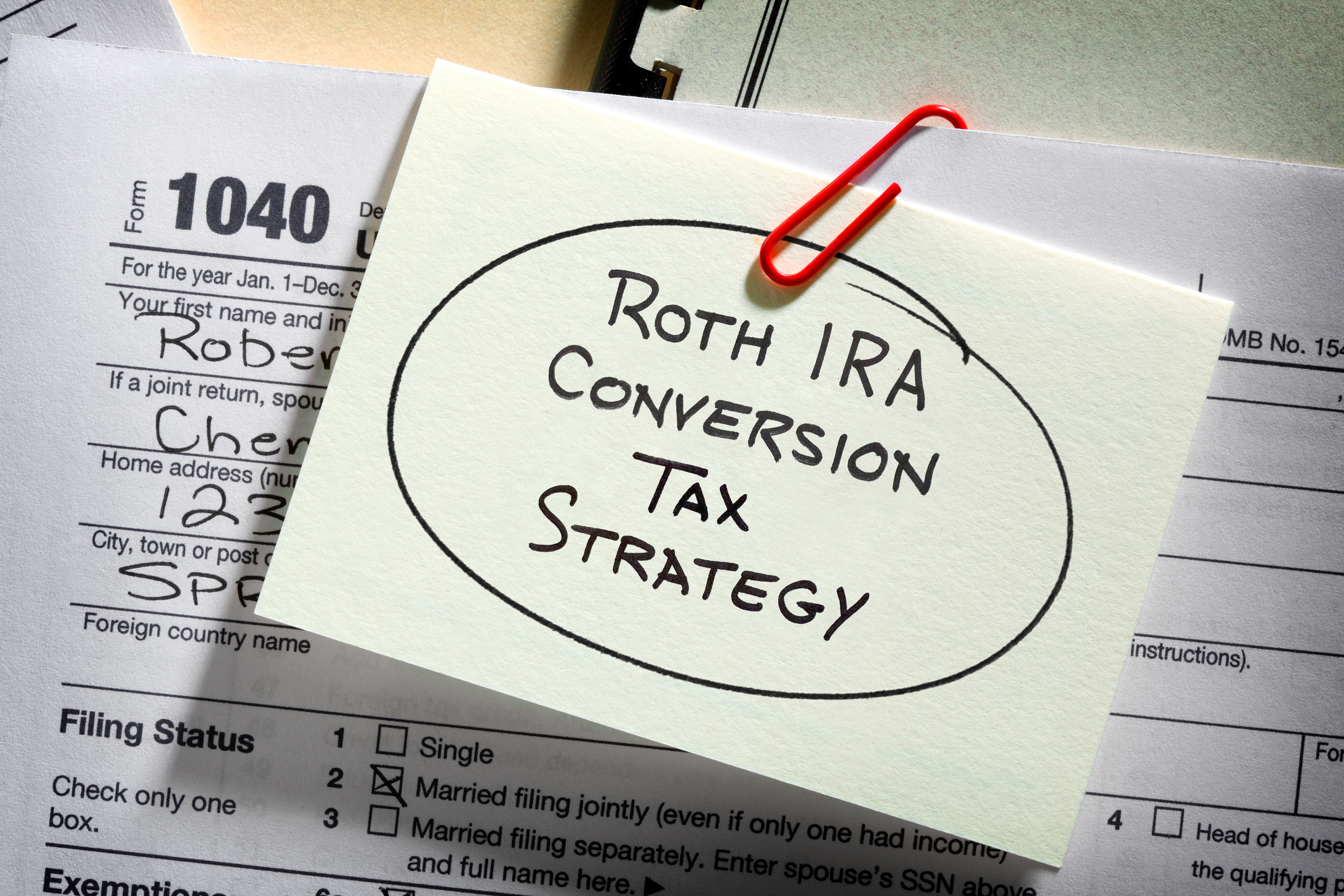
Perhaps the most significant strategic development in early 2026 is the aggressive migration toward Roth accounts. Roth vehicles now account for 67% of all IRA contributions. This represents a fundamental shift in how Americans view retirement income.
A Roth conversion requires an investor to pay ordinary income taxes on their retirement assets immediately. Doing so during an uncertain economic time is a counterintuitive move; it requires paying a "bill" to the IRS today to secure tax-free status for the future. By choosing to pay these taxes now, investors are signaling a clear belief that tax rates may rise in the future. They are essentially locking in today’s tax rates to avoid the risk of future fiscal policy changes—a sign of high-level tax planning maturity.
Official Responses and Industry Outlook
Sharon Brovelli, President of Workplace Investing at Fidelity Investments, noted the significance of these trends in her official response to the data: "Retirement savers started the year strong with record-high savings rates and contributions, reflecting the long-term approach they’re taking with retirement preparedness."
Industry analysts agree that this shift represents a maturation of the American retail investor. For decades, the "Achilles’ heel" of the individual investor was emotional panic. The current data suggests that the "Achilles’ heel" may be healing. Financial planners and employers have worked in tandem to provide the tools—auto-escalation, target-date funds, and better education—that allow the individual to bypass the emotional pitfalls that historically derailed retirement plans.
Implications for the Future of Retirement
What does this mean for the average household? The implications are threefold:
- Increased Predictability: By shifting toward tax-free growth and maintaining consistent, automated contributions, retirees are creating a more predictable "income machine" for their later years.
- Mitigation of Systemic Risk: The widespread adoption of disciplined, automated savings helps insulate the broader economy from the shock of individual retail investors panic-selling during market dips.
- Inheritance and Legacy: The rise in Roth conversions suggests a long-term view that extends beyond the investor’s own lifetime. Roth assets are highly effective tools for estate planning, allowing heirs to inherit tax-advantaged accounts with fewer complications than traditional IRAs.
As we move past the first quarter of 2026, the data serves as a stark reminder that the biggest risks to retirement aren’t necessarily found on Wall Street; they are found in the investor’s own psychology. By embracing automation, focusing on tax efficiency, and ignoring the daily fluctuations of the market, the modern American saver has demonstrated that they are better prepared than ever to handle whatever the economy throws their way.
The "quiet revolution" occurring in 401(k)s and IRAs across the country is not being televised, nor is it making sensational headlines. It is happening in the background, one paycheck at a time, through the steady, disciplined accumulation of wealth. For those watching the markets with bated breath, the message from the average worker is clear: stay the course, focus on what you can control, and let the math do the heavy lifting.