The Looming "Lost Decade": Is the Golden Era of Easy Investing Over?
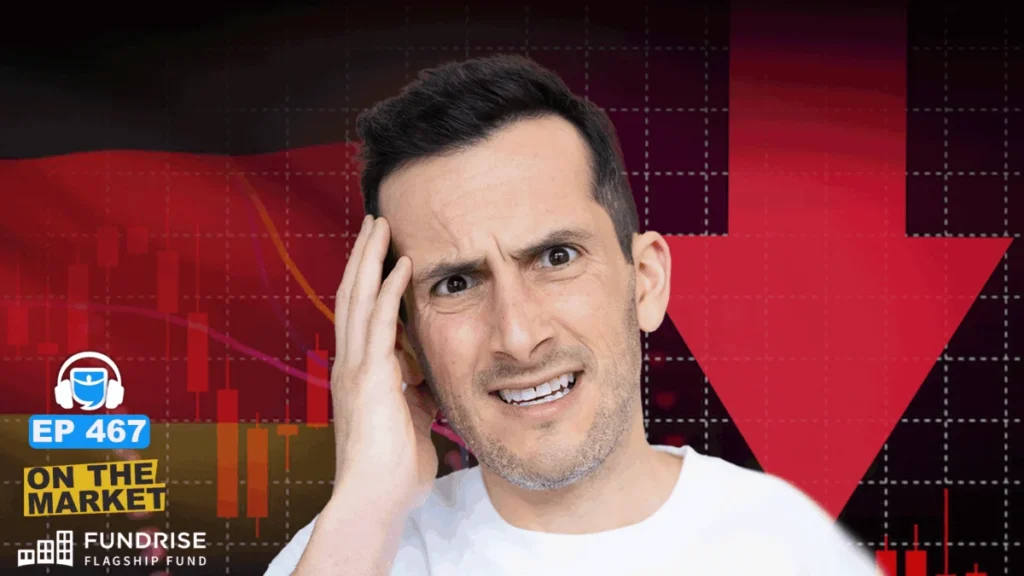
For the past fifteen years, investors have lived through a "Goldilocks" economy. Whether you were pouring capital into the S&P 500 or flipping residential real estate, the rising tide of low interest rates, moderate inflation, and consistent market appreciation lifted all boats. It was a period where passive participation often yielded handsome rewards. However, according to Dave Meyer, Chief Investment Officer at BiggerPockets and host of the On the Market podcast, that era may be drawing to a close, ushering in what economists fear as a "lost decade."
A "lost decade" is not necessarily a sudden market crash or a total economic collapse. Instead, it is a prolonged period—typically seven to thirteen years—of stagnation where inflation-adjusted returns remain flat or negative. As the economy faces record-high valuations, shifting Federal Reserve policies, and persistent inflation, the question is no longer whether we can invest, but whether we have the discipline to evolve our strategies to survive a, quite frankly, more difficult environment.
The Main Facts: Why the "Easy Money" Era Has Ended
The core thesis of the "lost decade" theory is simple: when asset prices remain elevated for too long, future returns are naturally compressed. Historically, the U.S. economy has seen such periods before, notably between 1929 and 1939, and again between 1999 and 2009. In these instances, even if an investor held onto their assets, the erosion caused by inflation meant that their real purchasing power actually declined.
Currently, several "red flag" indicators are flashing in unison. Stock valuations are hovering near 150-year highs, bond yields have surged above 5%, and real estate prices—while nominally high—have effectively stalled or declined when adjusted for inflation. The fundamental issue is that for over a decade, investors became accustomed to "passive appreciation." The market did the heavy lifting. Now, as the macroeconomic landscape shifts, that external support system is vanishing.
A Chronology of the Current Economic Stall
To understand how we arrived at this crossroads, one must look at the recent trajectory of the major asset classes.
1. The Stock Market’s Valuation Peak
Since 2010, the stock market has enjoyed a historically significant bull run. However, current metrics suggest that the "run" is exhausted. The Cyclically Adjusted Price-to-Earnings (CAPE) ratio, a metric popularized by Nobel laureate Robert Shiller, is currently hovering around 41. To put that in perspective, the long-term historical average is approximately 17. The only other time this ratio hit similar heights was in late 1999, immediately preceding the dot-com bubble burst.
2. The Real Estate "Great Stall"
Residential real estate is experiencing a unique phenomenon. While headlines trumpet "all-time high" home prices, these are nominal figures. When adjusted for inflation, home prices have actually been trending downward since their 2022 peak. We are now four years into a period of stagnation. While this is not the catastrophic crash seen in 2008, it is a "slow grind" that threatens to continue for several more years as affordability remains constrained by high mortgage rates.
3. The Commercial Pivot
Commercial real estate (CRE) has already felt the sharp sting of the new economic reality. With office spaces seeing valuations plummet by as much as 35% in some sectors, the asset class has arguably already begun its "reset." While this is painful for current holders, it may present the only true "buy-low" opportunity in the coming years for investors who are prepared to capitalize on distressed assets.
Supporting Data: The Indicators of Erosion
The fear of a lost decade is not merely anecdotal; it is supported by rigorous financial modeling from some of the world’s most influential institutions.
- The Buffett Indicator: Warren Buffett’s preferred metric for market valuation—the ratio of total stock market value to GDP—is currently at 232%. Buffett himself has previously noted that levels near 200% are "playing with fire."
- Institutional Forecasts: Vanguard, a firm whose business model relies heavily on long-term market growth, has issued a sobering forecast. They predict that over the next decade, stocks may yield only 3.9% to 5.9% in nominal terms. Once inflation is subtracted, the real return could be as low as 0.5% to 2.5%.
- The Bond Competition: With 10-year Treasury yields pushing past 5%, bonds have become a viable competitor to equities for the first time in decades. Investors are increasingly asking: Why accept the volatility of the stock market for a 2% real return when I can get a safer yield from the bond market?
Official Responses and Perspectives
While the "lost decade" narrative is gaining traction among analysts, it is not without its counter-arguments. Some economists argue that 2024 is fundamentally different from 1999. They point to the fact that modern corporations are significantly more profitable than their counterparts at the turn of the millennium. After-tax corporate profits have doubled, and companies are operating with more efficiency.
However, critics of the "bullish" outlook argue that much of current market growth is driven by speculative fervor, particularly regarding Artificial Intelligence. They contend that massive capital expenditures in AI are being financed through circular investment patterns rather than proven earnings, creating a "house of cards" that could collapse if productivity gains do not materialize at the scale the market expects.
Implications: How to Protect Your Wealth
If the next ten years are truly a "lost decade," what should the average investor do? The consensus among risk-averse experts is that you cannot simply "sit it out." Because inflation will continue to erode the value of cash, staying on the sidelines is a guaranteed loss.
1. Move from Passive to Active
The days of buying an index fund and checking your balance once a year are likely over. To survive the coming decade, investors must transition to a more active role. This means sourcing deals that do not rely on market appreciation, but rather on intrinsic value.
2. The "Buy Deep" Strategy
In real estate, investors must focus on buying well below market value. Whether through the "BRRRR" method (Buy, Rehab, Rent, Refinance, Repeat) or simple value-add opportunities, the profit must be "baked in" at the point of purchase. You can no longer rely on the neighborhood rising in value to fix a bad deal.
3. De-Risking Portfolios
For those heavily invested in equities, the focus should shift from high-growth tech stocks to "blue-chip" companies and international markets that may be less sensitive to domestic interest rate hikes. Diversification is key, but it must be defensive diversification—aiming to lose less when the market dips, rather than chasing the absolute highest returns.
4. Capitalizing on Inefficiencies
The most successful investors in a stagnating market are those who find the "inefficiencies." In commercial real estate, this might mean identifying properties that are temporarily undervalued due to high interest rates but possess strong, long-term cash flow potential. In the stock market, this might mean focusing on value-oriented plays that have been unfairly punished by market-wide volatility.
Conclusion: The Era of the Professional Investor
The concept of a "lost decade" is not a call to panic, but a call to professionalize. For fifteen years, the market rewarded the lazy and the lucky. If the coming decade is characterized by low returns and high inflation, it will reward the disciplined and the skilled.
Investors must stop viewing themselves as passive spectators and start acting as business operators. Whether it is through rigorous underwriting, focus on operational efficiency, or strategic asset allocation, the path forward requires a higher standard of competence. The "lost decade" may indeed be coming, but for those who are prepared to adjust their expectations and sharpen their skills, it is not an end—it is an opportunity to prove that you are an investor, not just a participant.