The Fed’s Latest Pivot: Navigating Real Estate Investment in a High-Interest Era
As Al Pacino famously lamented in The Godfather Part III, "Just when I thought I was out, they pull me back in!" For the American real estate investor, this cinematic sentiment has become the defining mantra of the current economic cycle.
Just as the market began to stabilize and stakeholders anticipated that the Federal Reserve—under its newly appointed leadership—might signal a pivot toward monetary easing, the central bank’s recent decision to implement a quarter-percentage-point rate hike has sent shockwaves through the industry. For many, this move feels like a return to the "nightmarish fever dream" of 2022, characterized by thinning margins, negative cash flow, and heightened volatility. But as the dust settles, seasoned investors are beginning to ask: Is this the end of the road, or merely a shift in the investment landscape?
The Current Economic Backdrop: A Chronology of Constraint
To understand the present, one must look at the trajectory of the last three years. The Federal Reserve, tasked with curbing inflation exacerbated by geopolitical instability—specifically the ongoing conflicts in the Middle East—has maintained a hawkish stance that defies the predictions of many market analysts.
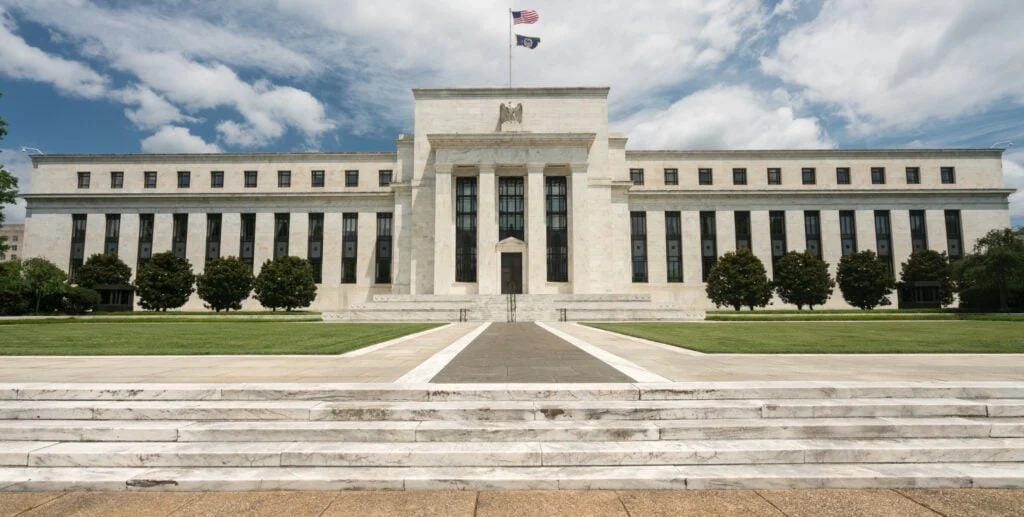
The chronology of this cycle is marked by a rapid transition in leadership and policy. First, the Jerome Powell-Joe Biden era set the stage for aggressive tightening. This was followed by the transition to the Powell-Trump era, which saw persistent, albeit volatile, pressure on interest rates. Now, with Kevin Warsh at the helm of the Fed, the script remains largely unchanged. Despite the changing faces in Washington and at the Eccles Building, the outcome remains consistent: the cost of capital has climbed, making leveraged real estate acquisitions significantly more difficult.
As of this writing, mortgage rates have climbed back above the 7% threshold. This latest hike serves as "fuel to the fire," compounding the pressure on buyers who were already grappling with the highest property valuations in modern history.
Dissecting the Fed’s Influence: More Than Just a Rate Hike
A common misconception among retail investors is the direct correlation between the Federal Funds Rate and the 30-year fixed mortgage. It is critical to distinguish between the two. The Federal Reserve directly influences the short-term cost of borrowing for banks; however, mortgage rates are primarily driven by long-term bond yields, 10-year Treasury notes, and the health of the mortgage-backed securities (MBS) market.
The Fed’s latest action is a signal of intent, but the market’s reaction is what dictates the actual cost of borrowing. Investors should note that while the Fed’s rate changes are the primary headline, mortgage rates often move in anticipation of these shifts. The reason mortgage rates remained elevated even during periods where the Fed held steady is due to inflationary expectations and the broader demand for debt instruments. Consequently, the Fed’s move does not necessarily guarantee a one-to-one increase in mortgage costs, but it does signal a "higher-for-longer" environment that discourages speculative borrowing.
Regional Variance: The Geography of Opportunity
While the national narrative is one of stagnation, the housing market is far from monolithic. Data from Realtor.com regarding August pending sales highlights a fragmented landscape that savvy investors are using to their advantage:
- The Midwest: Acting as a "fertile hunting ground," pending sales in this region are down 4.3% from the previous year, suggesting a cooling period that favors buyers with cash on hand.
- The West: Facing similar headwinds, the West saw a 3.3% decline in pending sales.
- The South and Northeast: Conversely, these regions have seen growth in pending sales (up 1.8% and 1.1%, respectively), indicating that demand remains resilient despite the broader economic environment.
This regional disparity is further reflected in price reductions. In the Northeast, roughly 14.15% of listings have seen price adjustments, whereas the West and South are seeing reductions in excess of 20%. For the investor, this means that success is no longer a matter of national trends, but of localized, granular analysis of taxes, insurance premiums, and rental yield potential.
Official Perspectives: Navigating the "Slower Market"
Industry experts emphasize that a slower market is not synonymous with a "dead" market. Benjamin Cohen, a prominent mortgage executive, notes that the current climate offers a strategic window for those who can navigate the financing hurdles. "For buyers, a slower market can actually create opportunity," Cohen told Realtor.com. "There is more time to make a decision, more negotiating power, and potentially more flexibility from sellers."
This sentiment is echoed by broker-owners like Beau Keenan of Dickson Realty. In a recent HousingWire report, Keenan highlighted the "swath of buyers" currently being pushed out of the market. "Historically, rates are not that high," Keenan noted, "but we are also at the highest prices ever seen in many markets. Going from a 6.75% rate to a 7% rate essentially creates a barrier that eliminates a massive segment of the owner-occupant pool."
For the professional investor, the exit of these owner-occupants is a double-edged sword. It reduces competition for properties but increases the reliance on rental housing, as those who cannot afford to buy must continue to rent.
The Supremacy of Cash: C.R.E.A.M. in Practice
The Wu-Tang Clan’s seminal track, "C.R.E.A.M. (Cash Rules Everything Around Me)," has become the unofficial anthem of the 2026 investment climate. In a market where debt is expensive, those with liquid capital or substantial equity are effectively immune to the volatility caused by Fed rate hikes.
"A lot of our buyers are coming in with equity from a home they just sold, or they’re paying cash outright, so a hike isn’t going to keep them away," explains Anna-Marie Ellison, Vice President of Sales at John R. Wood Properties. This ability to bypass traditional lending institutions is the primary differentiator between investors who are "surviving" and those who are "thriving."
For those without immediate liquidity, the focus must shift to creative financing—such as seller financing, subject-to deals, or private money syndications—to maintain competitive leverage without relying on traditional mortgage products that are currently hindered by high rates.
Implications for the Portfolio: Strategic Shifts
The increase in interest rates has effectively signaled the end of the "easy money" era. Investors who built portfolios on the back of low-interest-rate, high-leverage debt are now facing a period of forced introspection.
1. The Rental Demand Paradox
Despite the economic cooling, rental demand remains robust. The Federal Reserve Bank of New York recently reported that consumer inflation expectations and rent growth remain firm. This suggests that while purchasing a home is becoming more difficult, the underlying need for housing is not diminishing. For landlords, this is an opportunity to prioritize long-term, reliable tenants over aggressive expansion.
2. Upgrading Over Acquiring
For many investors, the most prudent path forward is not to acquire new, high-cost debt, but to optimize existing assets. Using current cash flow to perform capital improvements—thereby increasing the value and desirability of existing properties—is often a more stable strategy than chasing new, speculative deals in a volatile interest rate environment.
3. The "Lean and Mean" Strategy
Portfolio owners who have been "stacking doors" rapidly may find it necessary to prune their holdings. If a specific asset is failing to provide positive cash flow and refinancing is not a viable option, selling—even at a perceived "haircut"—may be the most strategic move. Protecting the health of the overall portfolio is paramount. By shedding underperforming assets, investors can consolidate their capital and reduce the psychological and financial burden of high-interest debt.
Conclusion: The Long Game
The Federal Reserve’s latest move is a reminder that the real estate market is governed by cycles that are often beyond the individual investor’s control. While the current environment presents significant challenges to the traditional BRRRR (Buy, Rehab, Rent, Refinance, Repeat) model, it also creates opportunities for those who are prepared, liquid, and patient.
The "rush to get rich" is a common trap in real estate. However, the most successful investors are those who view the industry as a marathon, not a sprint. Whether you decide to pause, pivot, or proceed with caution, the core principles of real estate remain: local market knowledge, disciplined cash flow analysis, and the ability to adapt to changing conditions. You can always live to fight another day, but in the current climate, the goal should be to survive the turbulence so you are positioned to thrive when the cycle inevitably turns again.