The Evolution of Personal Finance: The Leading Alternatives to Quicken Classic in 2026
The landscape of consumer financial management has undergone a profound transformation. For over four decades, desktop-based software—spearheaded by legacy platforms like Quicken—served as the gold standard for household budgeting, investment tracking, and net worth calculation. However, the rise of cloud computing, open-banking APIs, and artificial intelligence has decentralized this market.
Today, Quicken Classic faces intense competition from agile, mobile-first applications that automate data aggregation and offer highly sophisticated analytical tools. This report provides an in-depth analysis of the personal finance software market in 2026, mapping out the historical shift from desktop ledgers to real-time platforms, evaluating the top alternatives to Quicken, and examining the broader economic and technological implications of this transition.

1. Main Facts: The Changing Face of Wealth Tracking
The personal finance software industry in 2026 is defined by automation, cross-platform synchronization, and a distinct shift away from local hard-drive storage toward secure cloud infrastructures. While Quicken Classic remains active as a subscription-based desktop application, it is increasingly viewed as a legacy system suited primarily for power users who require complex, manual double-entry bookkeeping or offline data custody.
For the broader consumer market, modern alternatives have emerged to address the limitations of desktop software. These platforms utilize advanced financial data networks (such as Plaid, Finicity, and Yodlee) to securely aggregate transactions from banks, credit card issuers, brokerages, and loan servicers.

The market has bifurcated into three primary segments:
- Behavioral Budgeting Applications: Focused on cash flow, expense categorization, and proactive savings strategies (e.g., Monarch Money, YNAB, Rocket Money).
- Comprehensive Wealth Dashboards: Tailored for high-net-worth individuals requiring investment analysis, asset allocation tools, and retirement forecasting (e.g., Empower).
- AI-Integrated Financial Planners: Leveraging large language models to automate financial planning, estate documentation, and tax optimization (e.g., Origin).
2. Chronology: From Desktop Powerhouse to Ecosystem Fragmentation
To understand the current state of the personal finance application market, one must examine the pivotal milestones over the last forty years:

[1983] Quicken Launches on MS-DOS
   │
[2006] Mint.com Introduces Free Web-Based Automated Aggregation
   │
[2016] Quicken is Spun Off from Intuit; Transitions to Subscription Model
   │
[2020] Quicken Launches "Simplifi" to Compete in Mobile-First Market
   │
[2023] Intuit Shuts Down Mint.com, Triggering Mass Migration of Users
   │
[2026] AI Integration and Open-Banking APIs Dominate the App Landscape- 1983–2005: The Desktop Era. Quicken, originally developed by Intuit, dominates the market on MS-DOS and Macintosh platforms. Users manually enter transactions or import files from financial institutions. The software operates as a local ledger, offering high privacy but requiring significant manual upkeep.
- 2006–2015: The Rise of Web Aggregation. Mint.com launches in 2006, introducing the concept of free, web-based financial aggregation supported by targeted advertising. Intuit acquires Mint in 2009. Concurrently, Personal Capital (now Empower) launches in 2011, targeting investment-focused users with a robust, free dashboard.
- 2016–2020: Corporate Restructuring and Subscription Models. In 2016, Intuit sells Quicken to H.I.G. Capital. The brand transitions from a perpetual-license model to an annual subscription service, rebranded as Quicken Classic. Recognizing the threat of mobile-only competitors, the company launches Quicken Simplifi in 2020.
- 2023–2024: The Great Migration. In late 2023, Intuit announces the shuttering of Mint.com, forcing millions of users to seek alternative platforms. This catalyst triggers a massive influx of users to modern platforms, particularly Monarch Money and Quicken Simplifi, which rapidly scale their import tools to accommodate migrating data.
- 2025–2026: The AI and Open-Banking Paradigm. Financial technology platforms fully integrate artificial intelligence. Apps transition from passive trackers to proactive agents capable of negotiating bills, generating estate planning documents, and automatically adjusting budgets based on macroeconomic fluctuations.
3. Supporting Data: Comparative Analysis of the Top Quicken Alternatives
To assist consumers and financial professionals in navigating this fragmented market, the following section details the operational features, pricing structures, and target demographics of the primary competitors in 2026.
Comparison Table: Leading Financial Platforms
| Platform | Core Strength | Platform Availability | Annualized Cost (approx.) | Target Audience |
|---|---|---|---|---|
| Monarch Money | Collaborative Budgeting | iOS, Android, Web | $99.99/yr | Couples & Modern Budgeters |
| Quicken Simplifi | Balanced Budget & Bill Tracking | iOS, Android, Web | $83.88/yr (Promos available) | Mid-market Consumer Tracker |
| Empower | Investment & Net Worth Analysis | iOS, Android, Web | Free | Investors & High-Net-Worth |
| Origin | AI-Driven Financial Planning | iOS, Android, Web | $99.00/yr | Tech-Forward Planners |
| YNAB | Zero-Based/Envelope Budgeting | iOS, Android, Web | $109.00/yr | Disciplined Cash-Flow Managers |
| Rocket Money | Subscription & Bill Negotiation | iOS, Android, Web | $84.00 to $168.00/yr | High-Consumption Savers |
| PocketSmith | Calendar-Based Cash Forecasting | iOS, Android, Web | $90.00 to $319.92/yr | Detail-Oriented Forecasters |
| CountAbout | Legacy Data Importation | iOS, Android, Web | $9.99 to $39.99/yr | Minimalists & Ex-Quicken Users |
Detailed Platform Profiles
1. Monarch Money
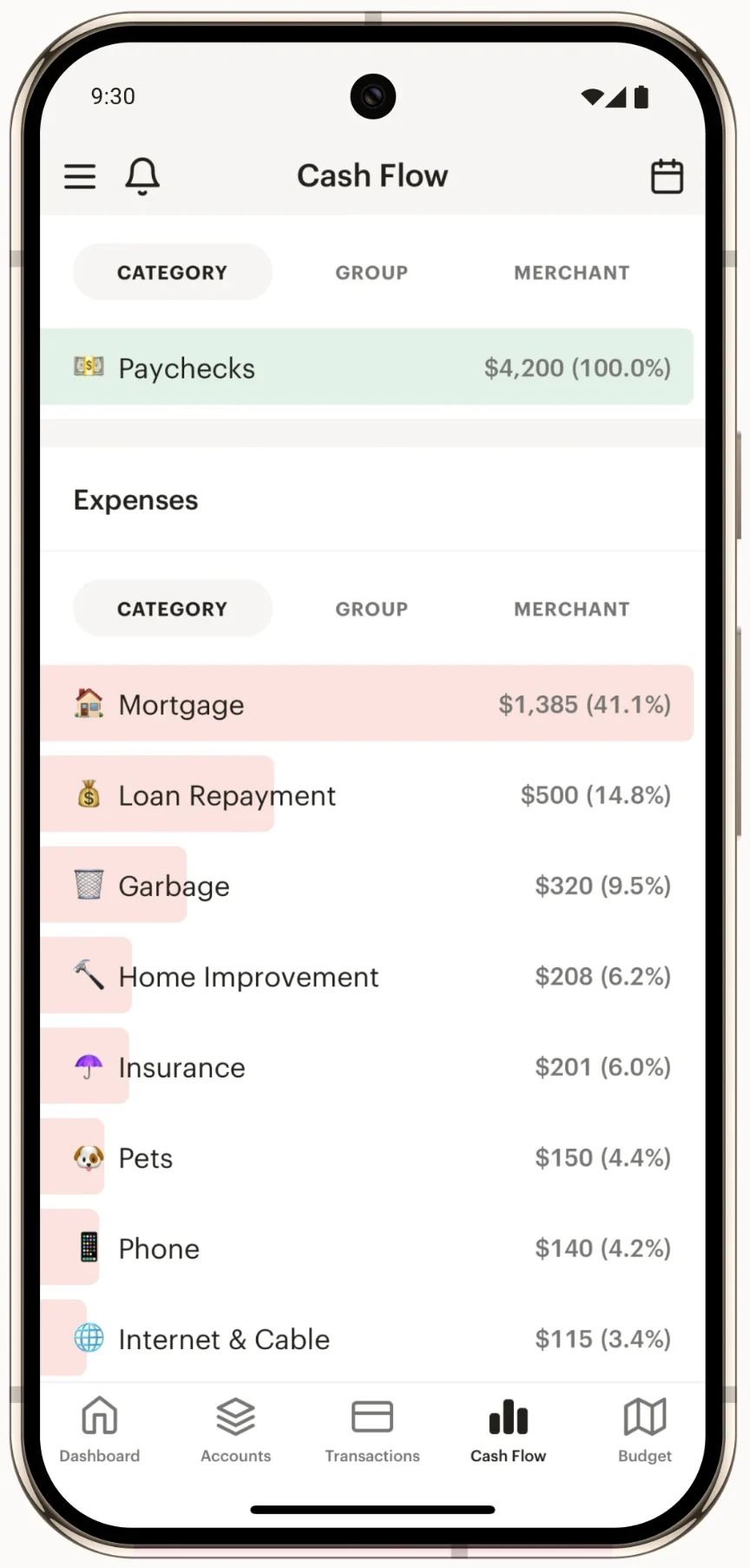
Monarch Money has established itself as one of the premier consumer budgeting applications. Designed by the original product designer of Mint.com, the platform addresses long-standing industry issues, particularly transaction synchronization and multi-user collaboration.

- Key Features: Monarch utilizes multiple data aggregators to ensure connection stability. It features "Flex Budgets," which allow budget categories to adjust dynamically based on spending fluctuations. It also offers dedicated collaboration tools, allowing couples to maintain separate logins while viewing a unified household dashboard.
- Pricing: Billed at $8.33 per month annually ($99.99/year), with promotional tiers frequently reducing the first-year cost.
2. Quicken Simplifi
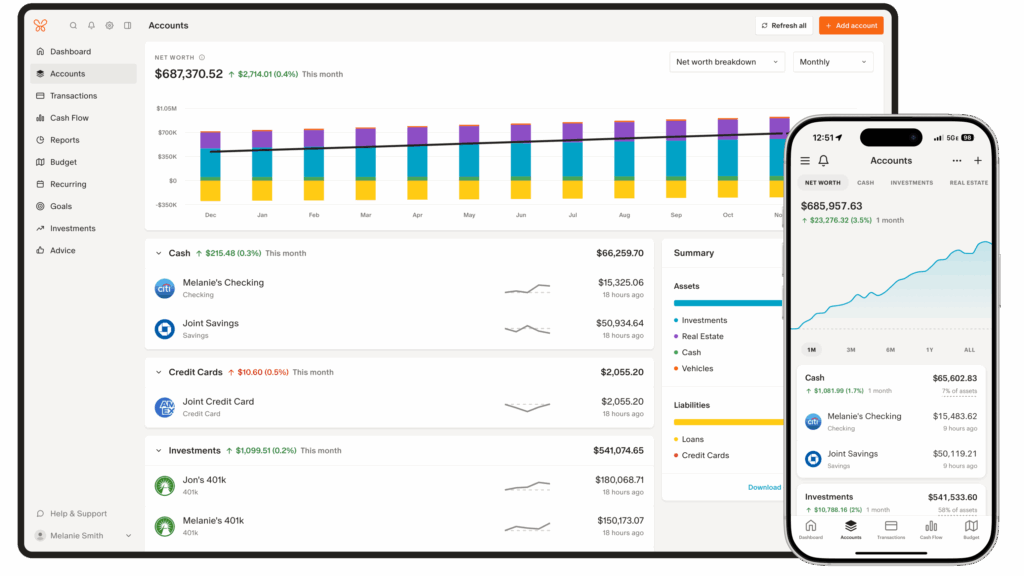
Simplifi is Quicken’s modern, cloud-native response to its legacy desktop software. It represents a complete departure from the complex database structure of Quicken Classic, focusing instead on a streamlined "Spending Plan" model.
- Key Features: Simplifi automatically categorizes transactions, monitors recurring bills, and provides real-time cash flow projections. Recent updates have integrated basic investment tracking, positioning it as a direct mid-market competitor to Monarch.
- Pricing: Positioned competitively at $6.99 per month (often discounted to $3.49 per month for the first year), backed by a 30-day money-back guarantee.
3. Empower (formerly Personal Capital)
Empower remains the dominant free financial tracking utility, particularly for individuals focused on asset accumulation rather than daily expense budgeting.
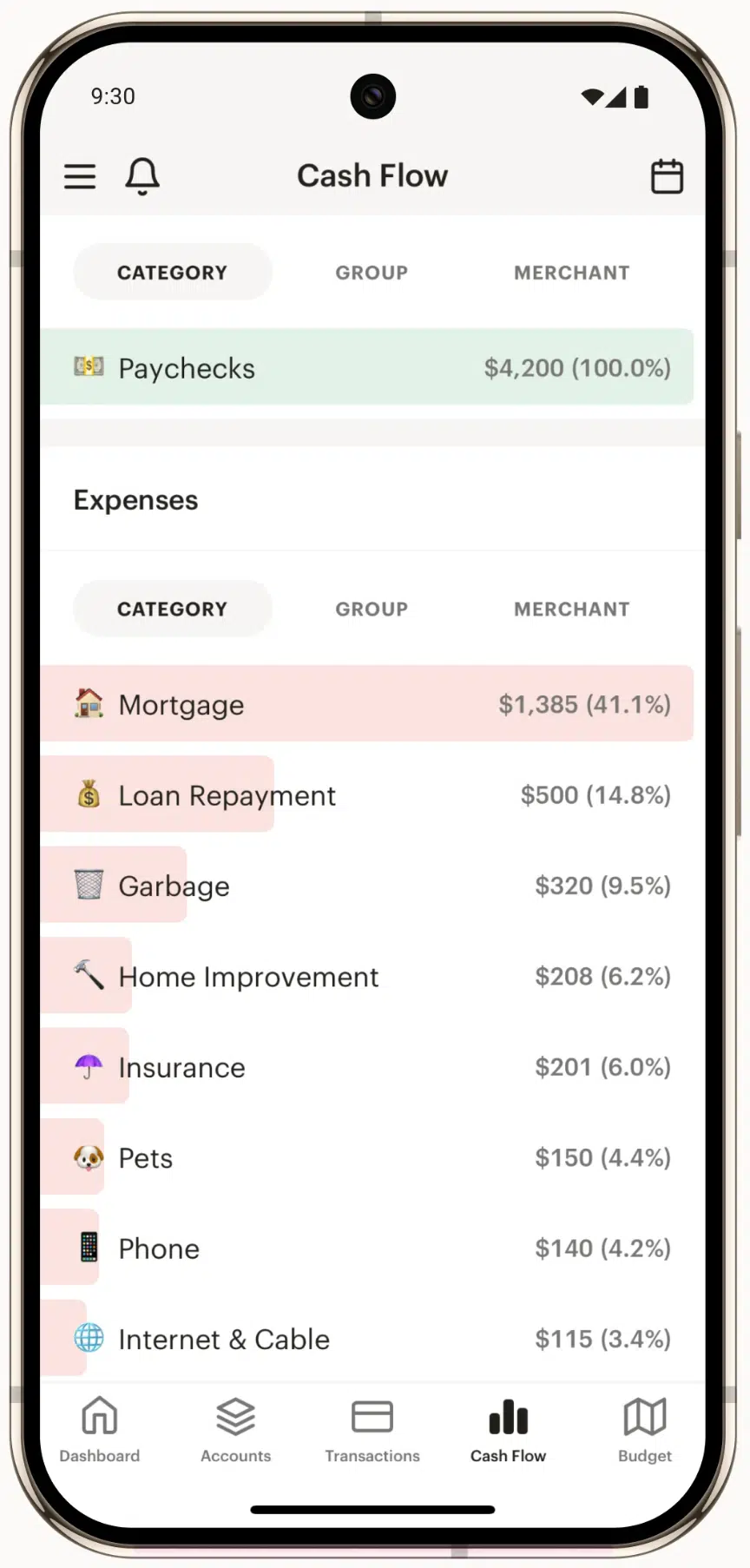
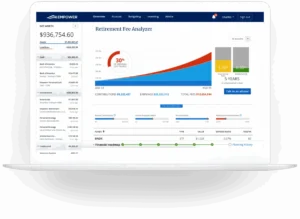
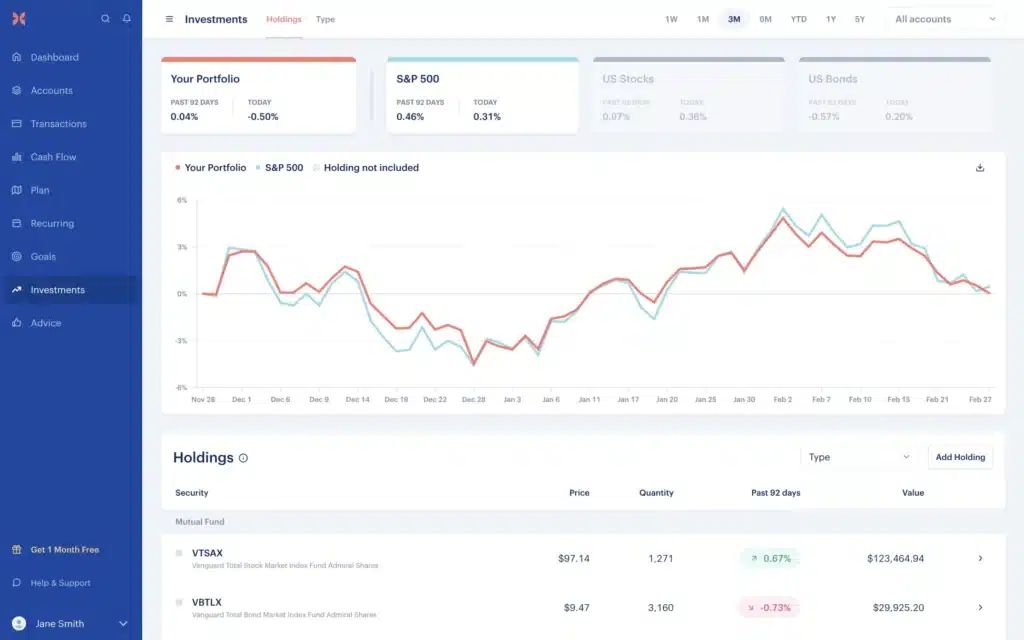
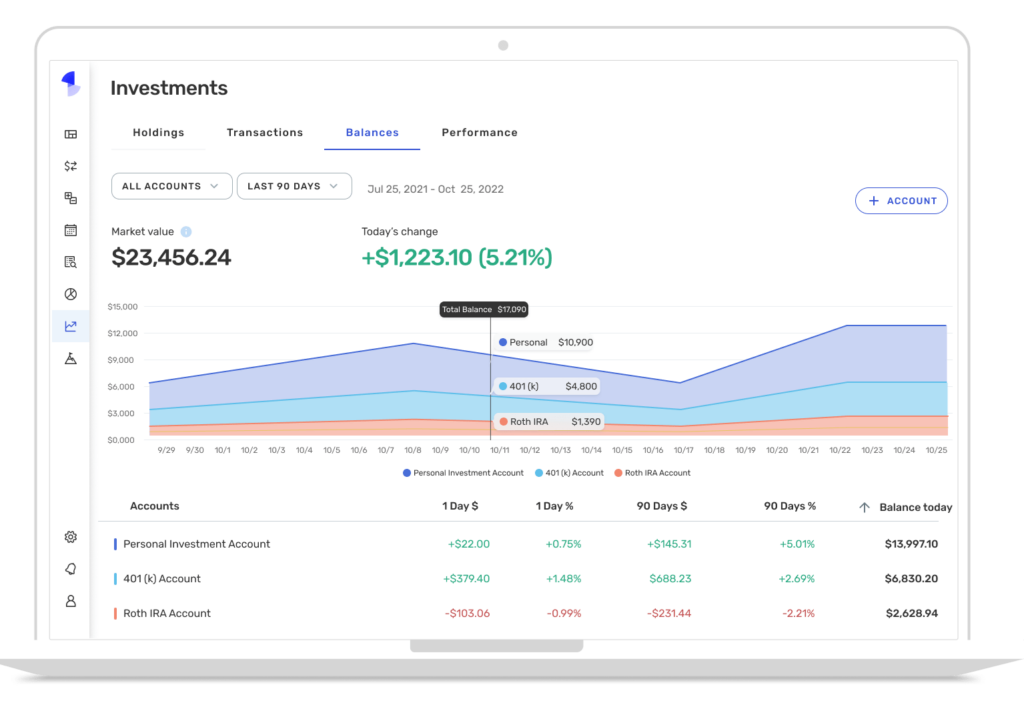
- Key Features: The platform offers unparalleled portfolio analysis, including investment fee analyzers, asset allocation heatmaps, and a highly regarded Retirement Planner. It automatically updates net worth by syncing with brokerages, bank accounts, mortgages, and real estate valuations.
- Pricing: Free. Empower operates on a freemium model, using the dashboard to identify prospective clients for its paid wealth management advisory services.
4. Origin
Origin represents the cutting edge of AI-driven financial technology, combining traditional aggregation with automated financial planning services.
- Key Features: In addition to budget and investment tracking, Origin includes built-in tax preparation software and basic estate planning tools (including the generation of simple wills and trusts). It also offers an integrated robo-advisor and a high-yield cash account.
- Pricing: Offers a 7-day free trial, followed by a flat rate of $12.99 per month or $99.00 annually.
5. You Need A Budget (YNAB)
YNAB is built entirely around the philosophy of zero-based, envelope budgeting, operating on the core principle of "giving every dollar a job."

- Key Features: The application forces users to budget only with money they currently have, rather than forecasting future income. It features robust goal-setting metrics and transaction matching, though it deliberately lacks sophisticated investment analysis tools.
- Pricing: Priced at $14.99 per month or $109.00 annually, making it one of the more expensive single-purpose budgeting utilities on the market.
6. Rocket Money
Formerly known as TrueBill, Rocket Money focuses on identifying and optimizing recurring expenditures.
- Key Features: The app excels at subscription management, automatically identifying recurring charges and offering a service where company representatives negotiate lower utility and telecom bills on behalf of the user.
- Pricing: Offers a limited free tier; the premium subscription operates on a sliding scale of $7.00 to $14.00 per month.
7. PocketSmith
PocketSmith is a highly customizable tool that organizes financial data into a calendar-based interface.

- Key Features: The platform is designed for forecasting, allowing users to project their bank balances up to thirty years into the future based on current behavioral patterns.
- Pricing: Ranges from a basic manual-entry free tier to premium tiers costing between $9.95 and $26.66 per month.
8. CountAbout
CountAbout is a minimalist, web-based budgeting tool focused on utility, reliability, and data portability.
- Key Features: It is one of the few platforms that allows seamless import of historical QIF data directly from Quicken Classic or CSV files from Mint, preserving years of transaction history.
- Pricing: Extremely cost-effective, offering a basic manual entry plan for $9.99 per year, and an automated transaction-syncing plan for $39.99 per year.
4. Market Positioning and Corporate Strategies
The transition of the personal finance market from a desktop monopoly to a highly competitive SaaS ecosystem has forced legacy providers and startups alike to adopt distinct strategic positions.
Quicken’s Dual-Brand Strategy
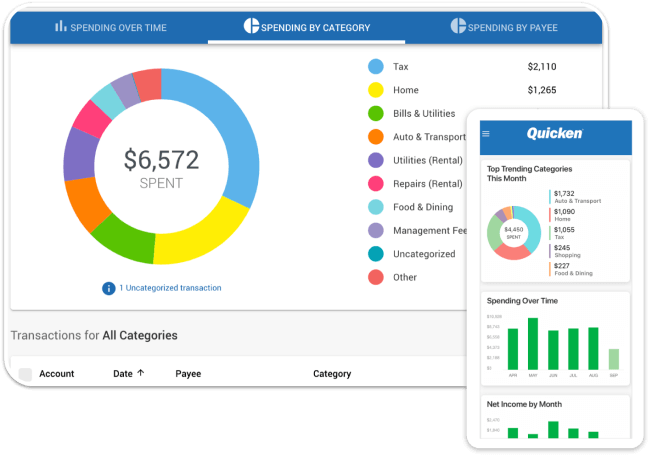
H.I.G. Capital (and subsequently Aquiline Capital Partners, which acquired Quicken in 2021) has pursued a bifurcated product strategy. Realizing that legacy users are resistant to cloud migrations due to data privacy concerns or complex ledger requirements, the company continues to maintain and update Quicken Classic (available for Windows and macOS).
Concurrently, they leverage Quicken Simplifi to capture younger, mobile-first demographics. This strategy prevents churn to competitors like Monarch or Copilot while extracting high-margin subscription revenue from both user bases.
The Freemium Funnel of Wealth Managers
Empower’s decision to keep its comprehensive dashboard free is a deliberate client acquisition strategy. By offering high-quality investment tracking tools without charge, Empower aggregates trillions of dollars in connected asset data. This allows their automated systems to identify qualified leads—typically individuals with over $100,000 in investable assets—who are then contacted by human financial advisors offering managed portfolio services for an annual fee (typically around 0.89% of assets under management).
Startup Disruption via Ad-Free Subscription Models
Modern startups like Monarch Money and YNAB explicitly market themselves as "ad-free" and "data-private." By charging a premium subscription fee, these companies align their business incentives directly with the user. This stands in sharp contrast to the defunct Mint.com model, which relied on selling user financial profiles to credit card companies and loan providers under the guise of "recommendations."
5. Implications: The Future of Personal Wealth Management
The rapid adoption of modern Quicken alternatives carries significant implications for consumer behavior, financial privacy, and the broader fintech industry.
The Trade-off: Convenience vs. Absolute Privacy
The transition from Quicken Classic’s offline desktop storage to cloud-hosted databases means that consumer financial data is more centralized than ever. While connection protocols like OAuth have largely replaced insecure screen-scraping methods, users must trust third-party aggregators (such as Plaid) and app developers with highly sensitive transaction histories. For privacy purists, this represents an expanded attack surface for cybersecurity breaches. For the mass market, however, the convenience of automated reconciliation outweighs the perceived risks.
AI-Driven Autonomous Finance
As platforms like Origin demonstrate, the industry is moving beyond passive ledger tracking toward "autonomous finance." Within the decade, personal finance applications are expected to not only track budgets but actively manage them. This includes autonomously moving cash to the highest-yielding savings accounts, tax-loss harvesting investment accounts, and renegotiating household bills without requiring manual user intervention.
Subscription Fatigue and the Cost of Self-Tracking
With the average premium personal finance application costing between $80 and $120 annually, consumers face "subscription fatigue." The irony of paying a significant monthly fee for software designed to help save money is a growing point of friction. This dynamic will likely drive further consolidation in the fintech space, as users look for single platforms that can handle budgeting, tax filing, estate planning, and investment management under a single subscription.