The Digital Ledger: How Automated Net Worth Trackers Are Redefining Modern Wealth Management
In an era characterized by market volatility, fragmented asset classes, and the democratization of retail investing, tracking personal net worth has evolved from a luxury reserved for the ultra-wealthy into a fundamental necessity for everyday investors. Historically, calculating net worth was a tedious, manual exercise involving physical ledgers, desktop spreadsheets, and static monthly statements. Today, modern financial technology (FinTech) has automated this process, providing consumers with real-time, consolidated balance sheets at their fingertips.
While basic net worth calculators require users to manually input assets and liabilities, premium and high-performing free platforms utilize secure Application Programming Interfaces (APIs) to aggregate data dynamically. These systems link bank accounts, credit cards, investment portfolios, retirement vehicles, real estate valuations, and even alternative assets like cryptocurrencies and physical collectibles. This article provides an analytical overview of the leading net worth tracking tools on the market, tracing their technological evolution, comparing their functional capabilities, and examining the broader economic implications of the automated wealth management revolution.
The Chronology of Personal Wealth Tracking: From Ledgers to AI
The technological journey of personal asset management can be divided into four distinct epochs, each marked by a shift in data accessibility and user interaction.
+-----------------------------------------------------------------------------+
| 1. The Manual Ledger Era (Pre-1980s)                                        |
| Physical paper journals, ledger books, and monthly paper statements.        |
+-----------------------------------------------------------------------------+
                                      |
                                      v
+-----------------------------------------------------------------------------+
| 2. The Offline Desktop Era (1980s–1990s)                                    |
| Introduction of Microsoft Excel and Quicken. Localized digital storage.     |
+-----------------------------------------------------------------------------+
                                      |
                                      v
+-----------------------------------------------------------------------------+
| 3. The Web 2.0 & Aggregation Era (2000s–2010s)                              |
| Rise of Mint.com and Personal Capital. Introduction of screen-scraping APIs.|
+-----------------------------------------------------------------------------+
                                      |
                                      v
+-----------------------------------------------------------------------------+
| 4. The Open Banking & AI Era (2020s–Present)                                |
| OAuth protocols, Plaid integration, AI-driven insights, and multi-asset sync.|
+-----------------------------------------------------------------------------+
1. The Manual Ledger Era (Pre-1980s)
Prior to the digital age, financial tracking was a localized, paper-based endeavor. Individuals manually recorded transactions in checkbook registers and physical ledger books, relying on monthly paper statements sent by mail to calculate their net worth at fixed intervals.
2. The Offline Desktop Era (1980s–1990s)
The introduction of the personal computer brought about localized digital tracking. The launch of spreadsheet programs like Microsoft Excel and specialized software such as Quicken allowed users to build digital balance sheets. While this reduced mathematical errors, data entry remained entirely manual and time-consuming.
3. The Web 2.0 and Early Aggregation Era (2000s–2010s)
The launch of platforms like Mint.com in 2006 and Personal Capital in 2009 revolutionized the industry by introducing automated account aggregation. By utilizing early credential-sharing and screen-scraping technologies, these platforms allowed users to view multiple account balances on a single dashboard.
4. The Open Banking and AI Era (2020s–Present)
Today, the personal finance landscape is defined by "Open Banking" and highly secure data transfer networks like Plaid, Finicity, and Yodlee. Modern platforms have largely transitioned away from credential-sharing to secure tokenized authentication (OAuth).
This era has also seen a major consolidation of legacy tools—highlighted by Intuit’s high-profile decision to shut down Mint.com in early 2024—which forced millions of users to seek advanced alternatives. Today’s market is characterized by specialized, highly secure apps featuring artificial intelligence, receipt scanning, and predictive forecasting.
Supporting Data: Comparative Analysis of the Top Net Worth Trackers
To assist consumers and financial professionals in selecting an appropriate platform, we have analyzed the six premier net worth tracking applications currently dominating the market.
1. Empower (Editor’s Choice)
- Best For: Holistic investment management and retirement planning.
- Cost: Free.
- Platforms: iOS, Android, Web.
- App Store Rating: 4.8/5 (Based on 378,000+ reviews).
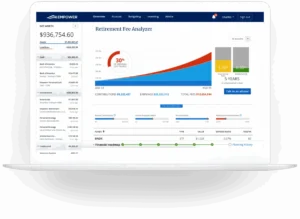
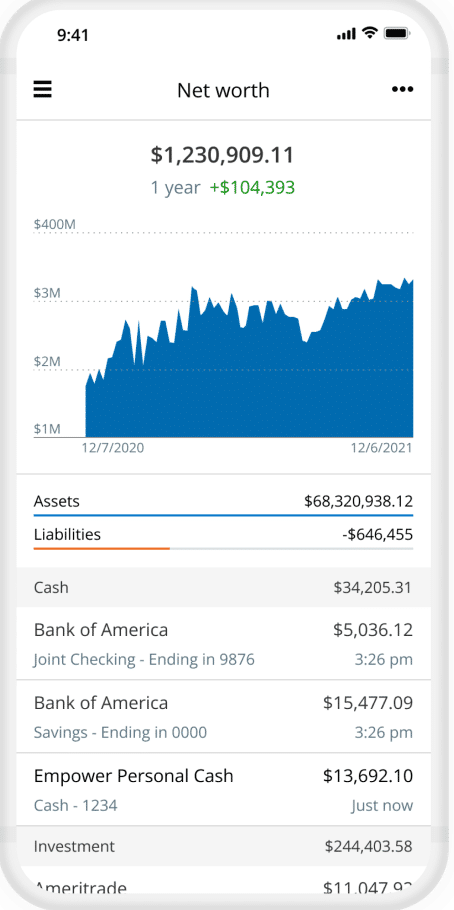
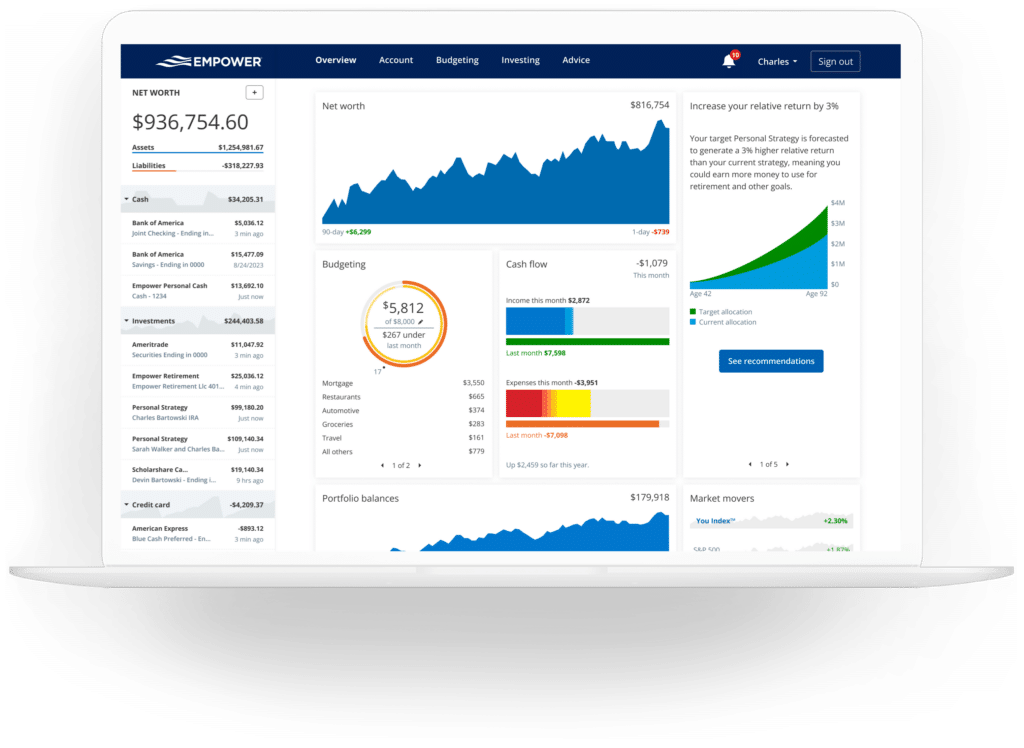
Formerly known as Personal Capital, Empower remains the gold standard for free net worth tracking. Unlike apps that focus primarily on monthly budgeting, Empower is built specifically for wealth building and investment analysis.
The platform uses bank-grade AES-256 encryption to link checking, savings, credit card, mortgage, and investment accounts. It also integrates with Zillow to provide real-time home value estimates.
Beyond balance sheet tracking, Empower provides sophisticated tools for portfolio optimization:
- Asset Allocation Inspector: Analyzes holding weights across domestic equities, international equities, bonds, cash, and alternative assets.
- Retirement Planner: Runs Monte Carlo simulations to calculate the probability of retirement success based on historical market performance and projected spending.
- Fee Analyzer: Scans mutual fund and 401(k) holdings to uncover hidden advisory and management fees that erode long-term returns.
Business Model Note: Empower offers its tracking platform entirely for free because it serves as a lead-generation tool for its premium wealth management advisory services, which target high-net-worth users.
2. Monarch Money
- Best For: Modern collaborative budgeting and multi-asset tracking.
- Cost: Free trial; Core Plan is priced at $8.33/month (billed annually) or $14.99/month.
- Platforms: iOS, Android, Web.
- App Store Rating: 4.9/5 (Based on 88,000+ reviews).
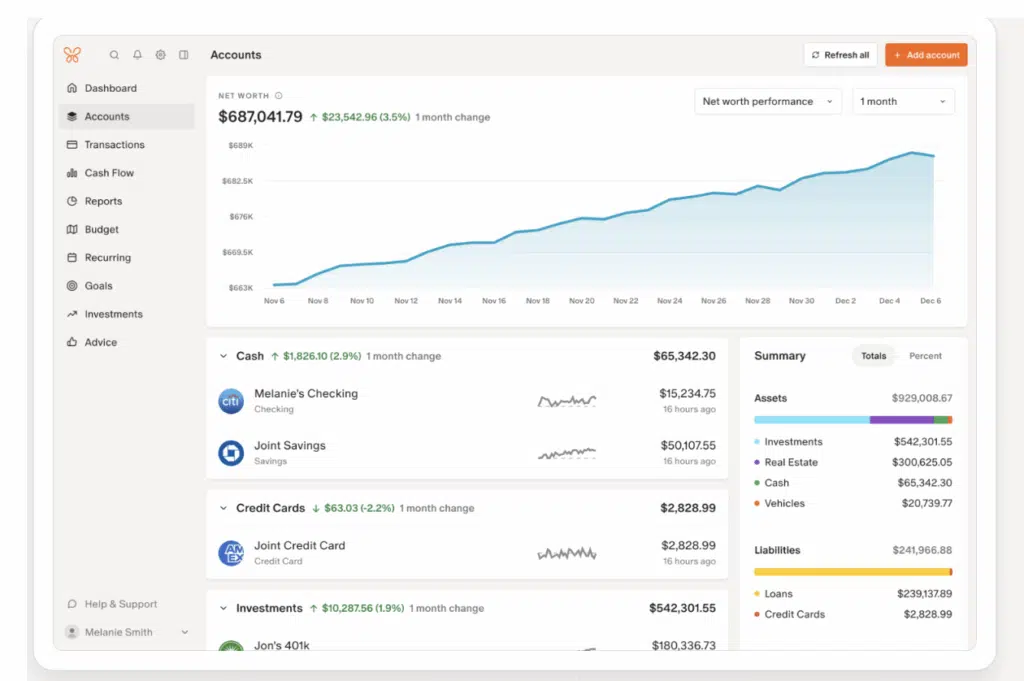
Created by one of the original product designers of Mint, Monarch Money has quickly risen to prominence as the premium successor to legacy budgeting tools. It offers a highly customizable user interface and supports collaborative tracking for couples or families.
Monarch syncs with a wide range of financial institutions through multiple data providers (Plaid, MX, and Finicity), allowing users to switch aggregators if a connection drops. Key integrations include:
- Alternative Assets: Direct syncing with Coinbase for cryptocurrency holdings.
- Automotive Valuations: Integration of vehicle values utilizing the vehicle identification number (VIN).
- Niche Integrations: Native syncing with Apple Card, a feature that many competitors lack.
Recently, Monarch has integrated generative AI tools, including an AI Assistant capable of answering natural-language queries about transaction history, net worth trends, and budgeting rules. It also features a Receipt Scanner that automatically extracts line items and matches them to corresponding bank transactions.
3. Rocket Money
- Best For: Subscription management and cash flow tracking.
- Cost: Free basic version; Premium features operate on a "pay-what-you-want" scale ranging from $6 to $12/month (or $4/month billed annually).
- Platforms: iOS, Android, Web.
- App Store Rating: 4.7/5 (Based on 100,000+ reviews).
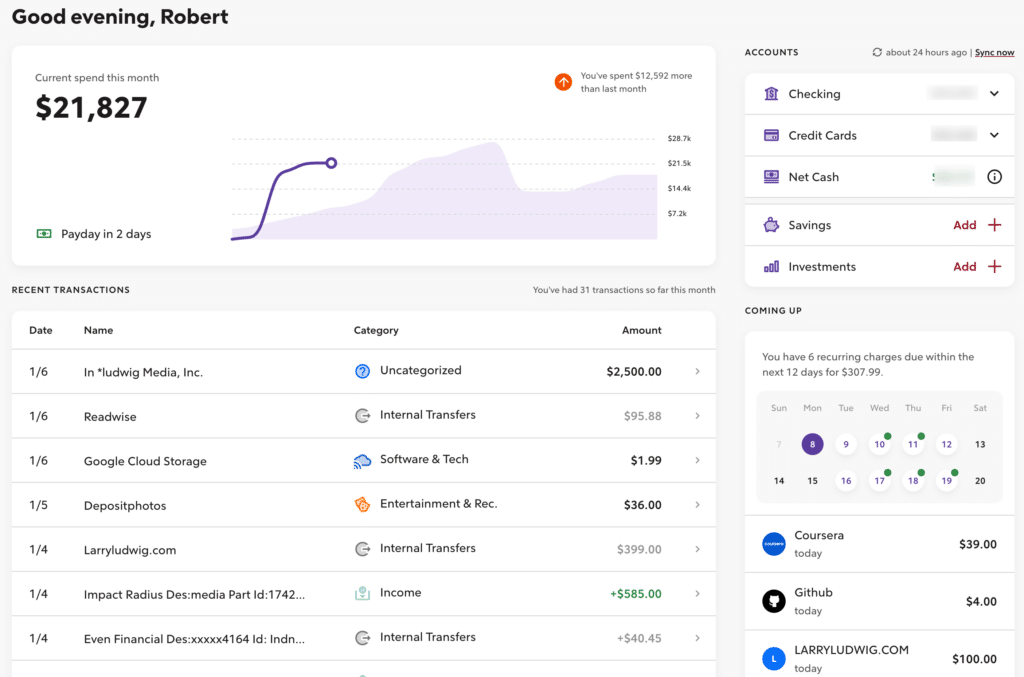
Owned by Rocket Companies, Rocket Money (formerly Truebill) is designed for users who want to grow their net worth by cutting unnecessary expenses. The app focuses on identifying recurring subscription services and negotiating bills on behalf of the user.
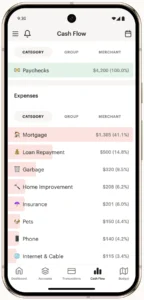
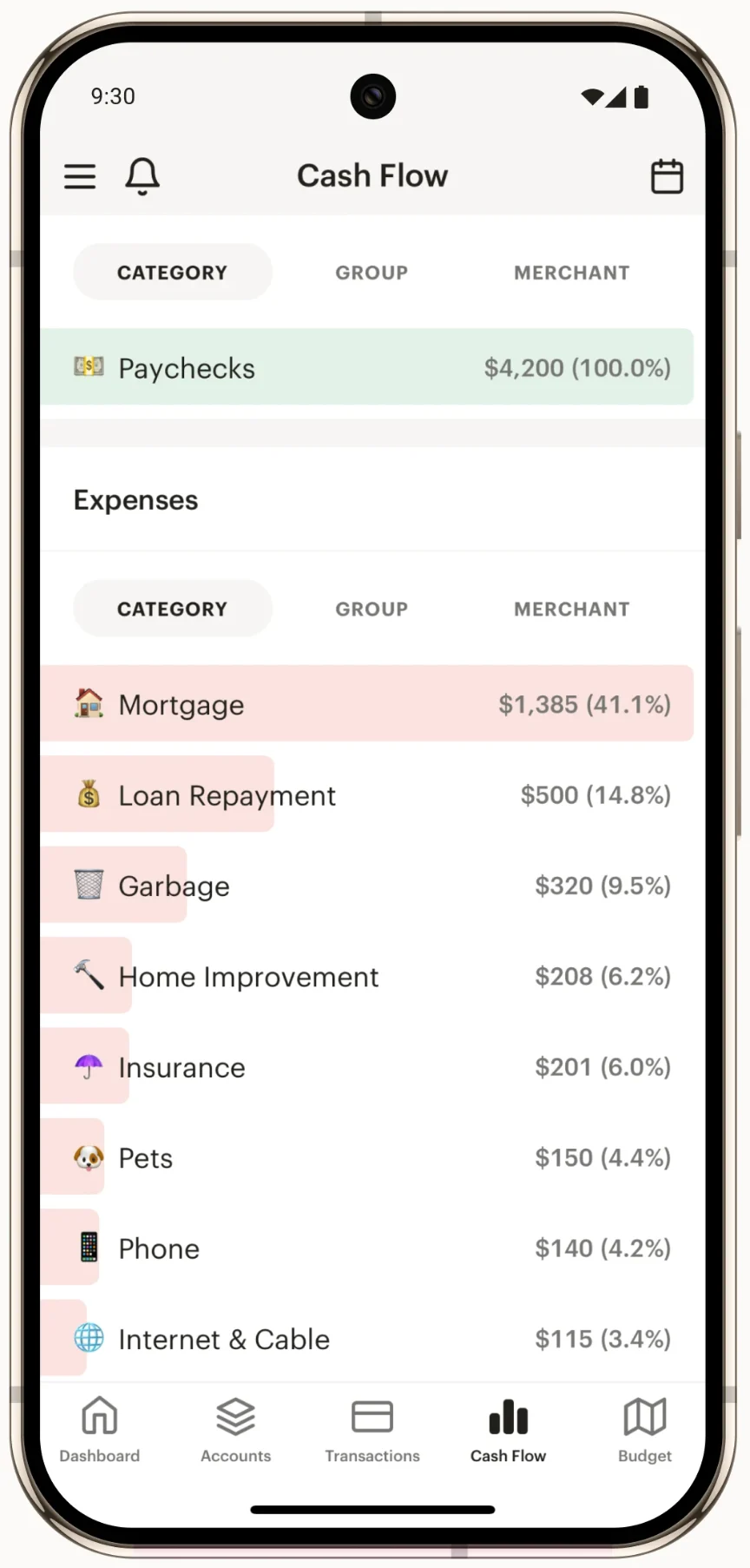
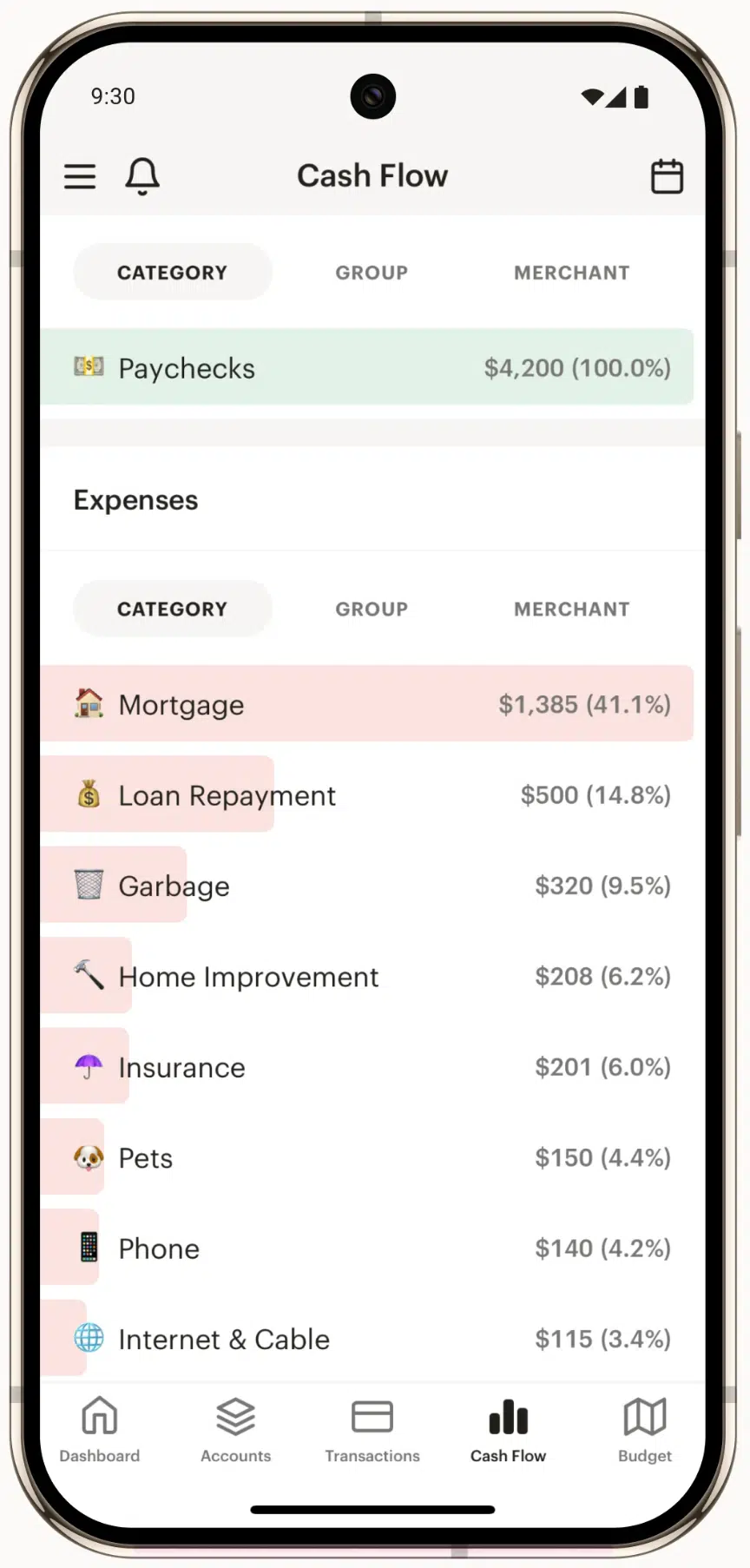
While its investment tracking features are less detailed than Empower’s, Rocket Money excel at cash-flow visualization. The platform provides clean calendars showing upcoming bills, monitors credit scores, and helps users establish automated savings goals to gradually build assets and pay down debts.
4. Kubera
- Best For: Multi-currency tracking and complex global portfolios.
- Cost: 14-day free trial; $249/year.
- Platforms: Web, iOS, Android.
- App Store Rating: 4.5/5.
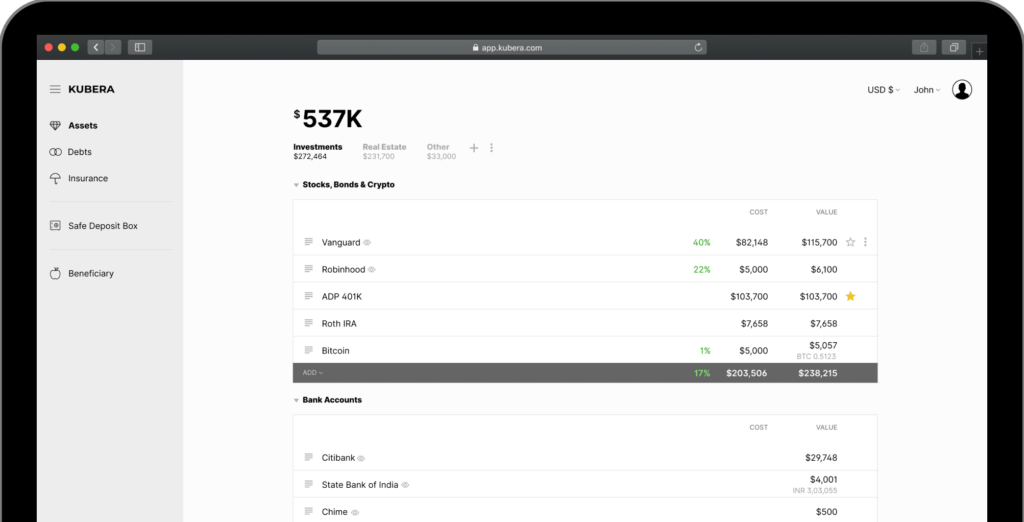
Designed specifically for modern, global investors, Kubera operates on a strict subscription model, completely free of ads or upsells. It is highly regarded for its ability to track complex, non-traditional assets.
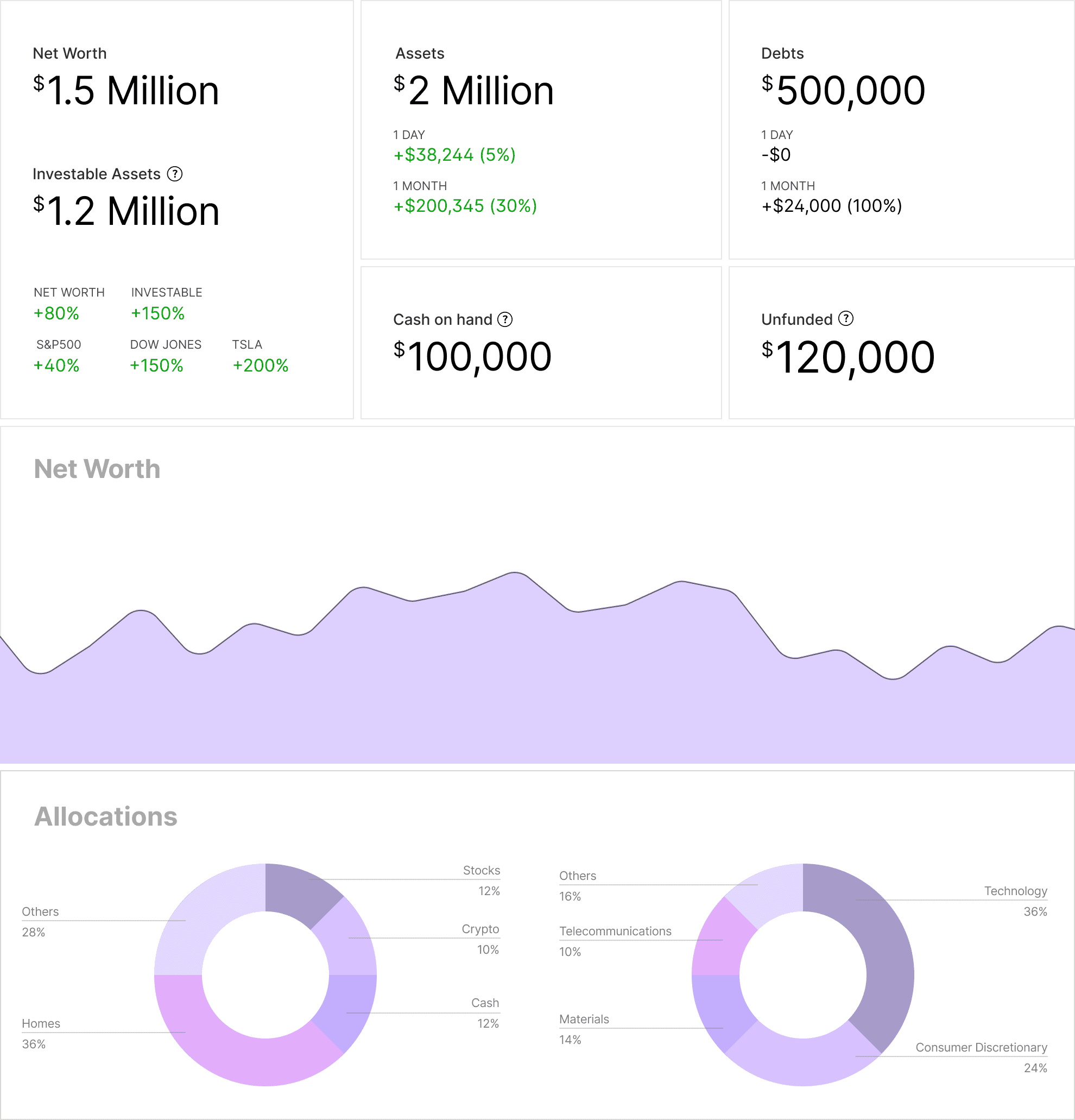
Kubera allows users to aggregate:
- Global Accounts: Supports multi-currency tracking across thousands of international banks.
- Digital Assets: Tracks DeFi positions, web3 wallets, NFTs, and multiple cryptocurrency holdings.
- Physical & Domain Assets: Monitors real estate values (via Zillow), vehicle values (via VIN), and domain name valuations.
- Legacy Documents: Offers secure digital document storage for insurance policies, trusts, and wills, alongside a "Life File" estate planning feature to share financial data with heirs.
5. Simplifi (by Quicken)
- Best For: Mobile-first budgeting and intermediate investment tracking.
- Cost: $3.49/month (billed annually) for the first year, renewing at $6.99/month.
- Platforms: iOS, Android, Web.
- App Store Rating: 4.1/5.
Developed by Quicken, a pioneer in desktop personal finance, Simplifi is a modern, mobile-first subscription app. It offers a clean, ad-free interface that helps users track their net worth while managing day-to-day spending.
Simplifi’s "Spending Plan" feature calculates a user’s remaining disposable income after bills and savings targets are met. Recent updates have expanded its investment tracking, allowing users to view real-time changes in asset value alongside their monthly budgets.
6. Tiller
- Best For: Spreadsheet enthusiasts who require maximum customization.
- Cost: 30-day free trial; $79/year.
- Platforms: Google Sheets, Microsoft Excel.
- App Store Rating: N/A (Web-based spreadsheet extension).
For users who prefer the flexibility of spreadsheets but want to avoid manual data entry, Tiller bridges the gap. The service connects to over 21,000 financial institutions, automatically importing transactions and balances directly into Google Sheets or Microsoft Excel daily.
Tiller provides a variety of pre-built templates, including a comprehensive Net Worth Tracker, alongside monthly and yearly budgeting sheets. Because the data lives inside a spreadsheet, users retain full ownership and can build custom charts, pivot tables, and financial models.
Comparative Analysis of Leading Platforms
| Platform | Best For | Annual Cost | Target Audience | Key Differentiator |
|---|---|---|---|---|
| Empower | Investment Analytics | Free | Long-term investors, retirement planners | Advanced portfolio fee analysis and Monte Carlo retirement simulations |
| Monarch Money | Collaborative Budgeting | ~$99.96/year | Couples, former Mint users | AI-powered financial assistant and Apple Card integration |
| Rocket Money | Expense Reduction | $48 to $144/year | Budget-conscious individuals | Automated subscription cancellation and bill negotiation services |
| Kubera | Global/Alternative Portfolios | $249/year | High-net-worth and multi-currency investors | Web3 wallet, domain, and digital asset tracking |
| Simplifi | Mobile-First Budgeting | ~$41.88 (Yr 1) / ~$83.88/yr | On-the-go budgeters | Highly intuitive visual spending plans and Quicken integration |
| Tiller | Custom Spreadsheets | $79/year | Advanced Excel and Google Sheets users | Automated financial data feeds into customizable spreadsheets |
Market Dynamics: Security Protocols and Monetization Models
As consumers link their entire financial lives to centralized platforms, cybersecurity and data privacy have become critical points of discussion.
Security and Data Aggregation Protocols
Modern personal finance apps rarely store direct login credentials. Instead, they partner with secure data transfer networks like Plaid or Finicity, which use tokenized read-only access (OAuth). This protocol ensures that even if the app’s servers are compromised, bad actors cannot execute transactions or move funds.
+------------------+         +------------------+         +------------------+
|                  |  OAuth  |                  | API Sync |                  |
|  User's Bank     | <=====> |  Secure Partner  | <=====> |   Net Worth App  |
|  Account         | (Token) |  (Plaid/Yodlee)  | (Read)  |   Dashboard      |
|                  |         |                  |         |                  |
+------------------+         +------------------+         +------------------+
Furthermore, top-tier platforms implement bank-grade AES-256 encryption for data at rest and Transport Layer Security (TLS) for data in transit.
The Monetization Divide: Paid vs. Free
The consumer wealth-tracking industry is divided into two distinct business models:
- The Subscription Model: Platforms like Monarch Money, Kubera, and Tiller charge recurring annual fees. In exchange, they guarantee that they will not sell user data, display third-party advertisements, or pitch financial products.
- The Referral/Lead-Generation Model: Free platforms like Empower generate revenue by offering financial advisory services. They analyze users’ aggregate assets to identify potential clients for their wealth management business, which typically charges a fee based on assets under management (AUM).
Implications: The Democratic Era of Wealth Optimization
The rapid adoption of automated net worth tracking apps has significant implications for both consumer behavior and the broader financial services industry.
1. From Reactive Budgeting to Proactive Net Worth Tracking
Historically, personal finance tools focused primarily on reactive budgeting—tracking past expenses to prevent overspending. The shift toward net worth tracking represents a move toward proactive wealth building. By emphasizing total net worth (Assets minus Liabilities), these applications encourage users to focus on long-term wealth accumulation, debt paydown, and asset allocation rather than just monthly cash flow.
2. The Democratization of Family Office Services
In the past, real-time, aggregated asset tracking and portfolio analysis were only available to ultra-high-net-worth individuals through private banks and family offices. Today, platforms like Kubera and Empower provide retail investors with institutional-grade portfolio visualization tools, lowering the barrier to sophisticated wealth management.
3. Behavioral Economics and "Gamification"
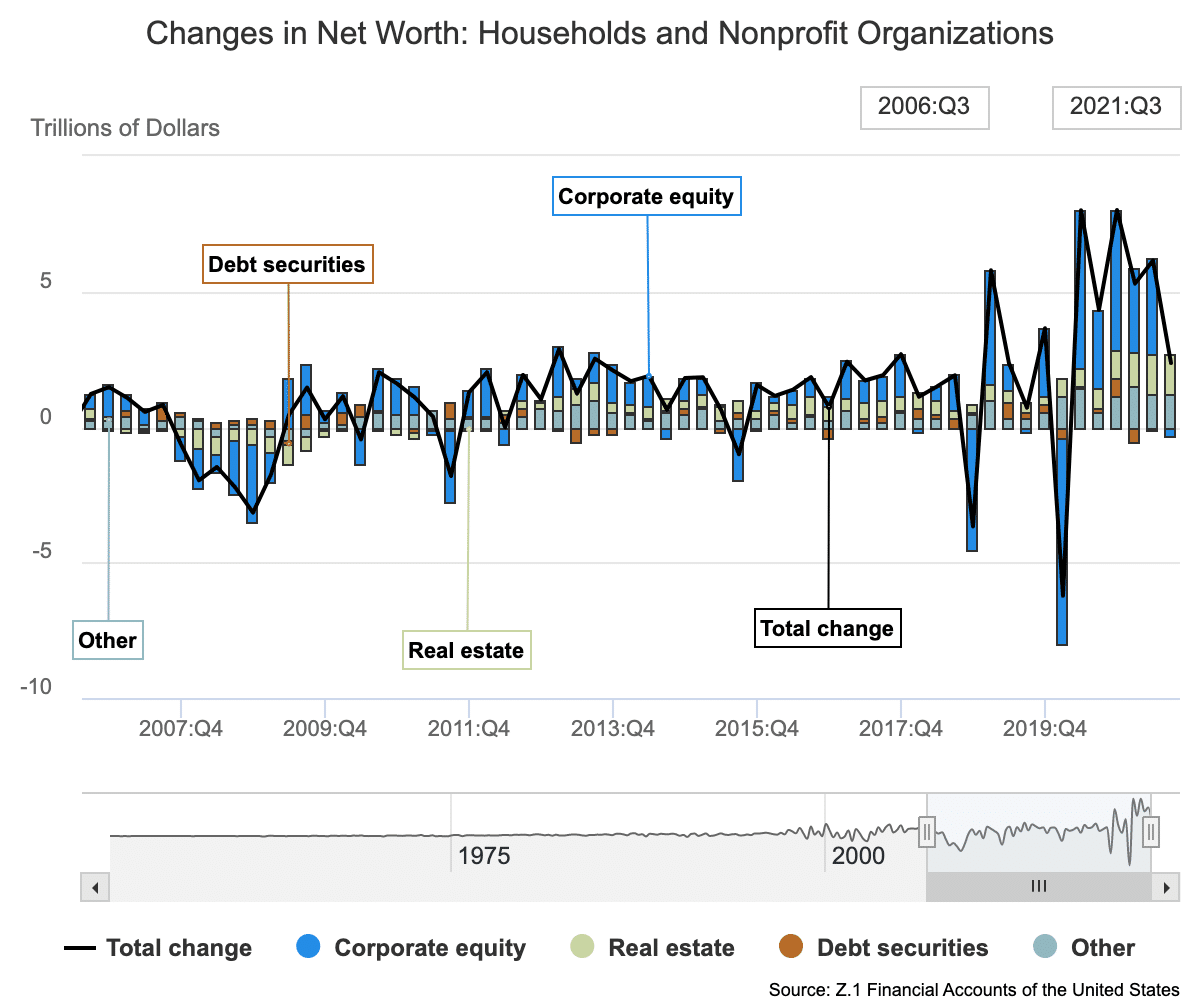
Seeing real-time updates to your net worth can have a powerful psychological effect. Research in behavioral economics shows that visualizing financial progress can encourage positive money habits. When users see their net worth grow as they pay down debt or invest, it reinforces saving behaviors, helping them stick to long-term financial plans.
As open banking regulations expand and artificial intelligence continues to mature, personal wealth trackers will evolve from simple dashboards into active financial assistants. The future of personal finance lies in platforms that not only track wealth but also offer personalized, automated suggestions to help users optimize it.