Navigating the Fixed Income Labyrinth: Why Active Management Outshines the "Passive Trap"

In an era defined by "higher-for-longer" interest rates and stubborn inflationary pressures, the fixed income landscape has become an increasingly treacherous terrain for the average investor. For years, the default strategy for bond market participation was simple: track the Bloomberg U.S. Aggregate Bond Index (AGG) and accept the returns as they come. However, as market volatility persists and credit conditions tighten, institutional experts are signaling a paradigm shift. The conventional wisdom of passive index tracking is being challenged, with industry leaders advocating for an active approach to navigate a market where traditional benchmarks may no longer be fit for purpose.
The Core Dilemma: The Passive AGG Trap
The rise of the exchange-traded fund (ETF) has revolutionized fixed income, providing investors with unprecedented levels of transparency, tax efficiency, and intraday liquidity. Justin Danfield, Vice President and ETF Strategist at Fidelity Investments, emphasizes that beyond these structural benefits, modern fixed income ETFs serve as vital price discovery tools in choppy markets. Yet, despite these operational advantages, the underlying construction of the most popular benchmarks—specifically the Bloomberg U.S. Aggregate Bond Index (AGG)—is under intense scrutiny.
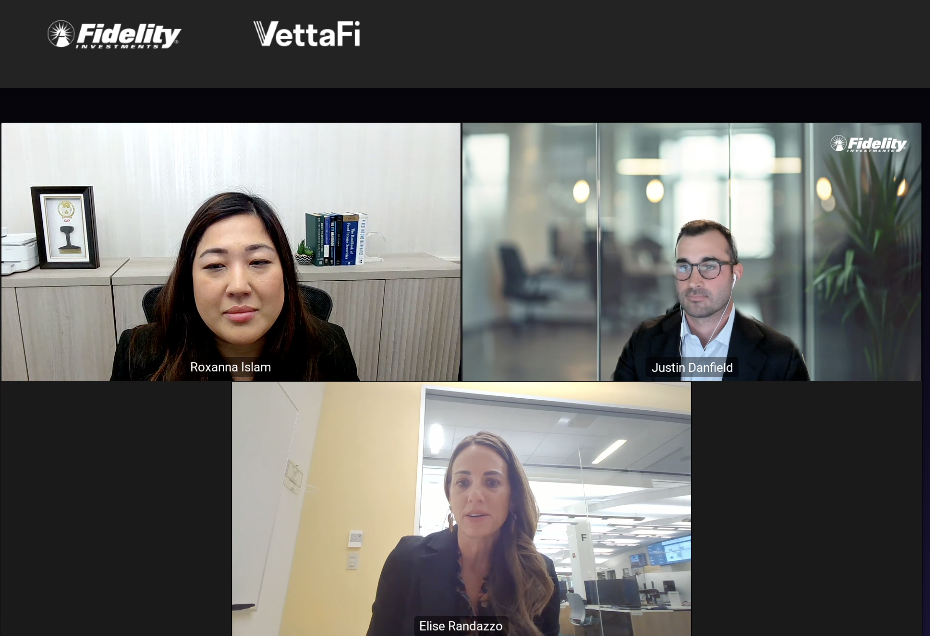
During a recent webinar moderated by Roxana Islam, head of sector and industry research at TMX VettaFi, the panel dissected the "passive trap" inherent in index-based investing. Elise Randazzo, Institutional Portfolio Manager at Fidelity, pointed to a fundamental flaw in how these indices are weighted: they are market-value weighted.
"The largest borrowers get the biggest weight, and so the more debt an issuer has outstanding, the larger that representation is of the index regardless of underlying fundamentals," Randazzo cautioned.
This creates a perverse incentive structure where the most heavily indebted entities—often government issuers—occupy the largest share of an investor’s portfolio. The concentration risk has grown exponentially over the last decade. As Randazzo noted, in the lead-up to the 2008 global financial crisis, Treasuries represented approximately 25% of the AGG. Today, that figure has ballooned to nearly 50%. By tethering a portfolio strictly to the AGG, investors are not necessarily buying the "highest quality" debt; they are buying the largest supply of debt, leaving them vulnerable to shifts in government issuance and interest rate policy while missing out on nearly half of the broader U.S. bond market.
Chronology of a Shifting Landscape
The evolution of the fixed income market has been marked by several distinct phases over the last two decades:
- The Pre-Crisis Era (Early 2000s): Fixed income was largely seen as a stable, predictable yield generator. The AGG served as a reliable proxy for the broader economy, with a balanced distribution of corporate and government debt.
- The Quantitative Easing Era (2009–2021): Years of ultra-low interest rates pushed investors into longer-duration and lower-quality credit to hunt for yield. During this period, the sheer volume of government issuance began to skew indices, as nations loaded up on debt to fund stimulus programs.
- The Post-Inflationary Pivot (2022–Present): The return of inflation forced central banks to raise rates, exposing the duration risk inherent in passive AGG-tracking funds. Investors suddenly found that their "safe" bond proxies were suffering alongside equity markets, leading to the current realization that passive exposure is no longer sufficient.
Supporting Data: Why Benchmarks Fall Short
The data supports the argument that passive indexers are operating with a significant blind spot. The AGG currently tracks approximately $31 trillion in market capitalization, which accounts for less than 50% of the total U.S. bond market. By restricting themselves to the index, passive investors are systematically excluded from high-growth or high-yield segments of the credit market, including:
- High-Yield Corporate Bonds: Often excluded from the AGG, these assets offer the potential for superior returns as companies navigate economic cycles.
- Collateralized Loan Obligations (CLOs): A sophisticated asset class that has historically provided robust protection against rising rates.
- Emerging Market Debt: Often ignored by core indices, these markets offer yield premiums that can diversify a portfolio’s risk profile.
- Floating-Rate Loans: Essential for hedging against the "higher-for-longer" interest rate environment, yet absent from the standard AGG mandate.
Furthermore, the market currently exhibits an asymmetric return profile. While absolute yields are at their most attractive levels in two decades, credit spreads are near cyclical tights. This creates a technical dilemma: the "upside" from further spread compression is limited, while the "downside" risk from a potential economic shock or credit widening is significant. Passive strategies, which must hold what the index dictates, lack the agility to rotate out of these stretched valuations.
Official Responses and Strategic Rigor
The shift toward active management is not merely a preference; it is a response to the increased complexity of the global credit environment. Fidelity Investments advocates for a rigorous, research-driven model that breaks down silos between equity and fixed income analysis.
According to Randazzo, the strength of an active approach lies in the "mosaic" of data. Fidelity’s analysts engage in thousands of company meetings annually, often bringing credit and equity teams together to assess an issuer. "Our equity and credit analysts often meet with management teams together, allowing us to build a comprehensive, multi-dimensional view of each and every issuer," Randazzo explained. "This integrated approach enables us to develop a full mosaic of every name, combining fundamental insights with broader macro context to drive more informed portfolio decisions."
This level of rigor allows for the identification of "out-of-benchmark" opportunities. While a passive fund is forced to buy a bond simply because it exists in large quantities, an active manager can bypass issuers with deteriorating fundamentals, even if they have high market representation.
Implications for the Modern Investor
For investors, the implications are clear: the "set it and forget it" era of bond investing has concluded. The current environment demands a strategy that can balance a high-quality core foundation with tactical flexibility.
Fidelity’s Total Bond ETF (FBND) serves as a primary example of this "core-plus" philosophy. By maintaining a high-quality base while allocating up to 20% of its capital into "plus sectors"—such as high-yield, loans, and structured credit—the fund aims to capture yield without being tethered to the constraints of the AGG.
Key Takeaways for Portfolio Construction:
- Demand Flexibility: Look for mandates that allow managers to move across the capital structure, rather than those forced to track an index.
- Focus on Fundamentals: In a high-rate environment, the ability of an issuer to service debt is paramount. Passive indices ignore this, focusing instead on debt volume.
- Seek Active Alpha: In a period where spreads are tight and yields are high, the ability to select specific, undervalued securities is the primary driver of excess returns.
As the financial landscape continues to grapple with the aftershocks of rapid rate hikes, the risk of holding a passive, index-heavy fixed income portfolio is rising. The "AGG Trap" is not just a theoretical concern—it is a tangible risk to portfolio diversification and long-term performance. Investors who prioritize active research and tactical agility are better positioned to navigate the complexities of the current credit market, turning uncertainty into a source of competitive advantage.
For those seeking to deepen their understanding of these market shifts, the full webinar, A Fresh Look at Fixed Income, provides a comprehensive roadmap for adapting to the new reality of the bond market. By integrating the insights of industry experts with a disciplined, active investment framework, investors can build portfolios that are not only resilient to the current "higher-for-longer" environment but also primed to capitalize on the idiosyncratic opportunities that passive indices inevitably miss.