IRS Sets Strict Boundaries for AI in Tax Practice: A New Era of Professional Accountability
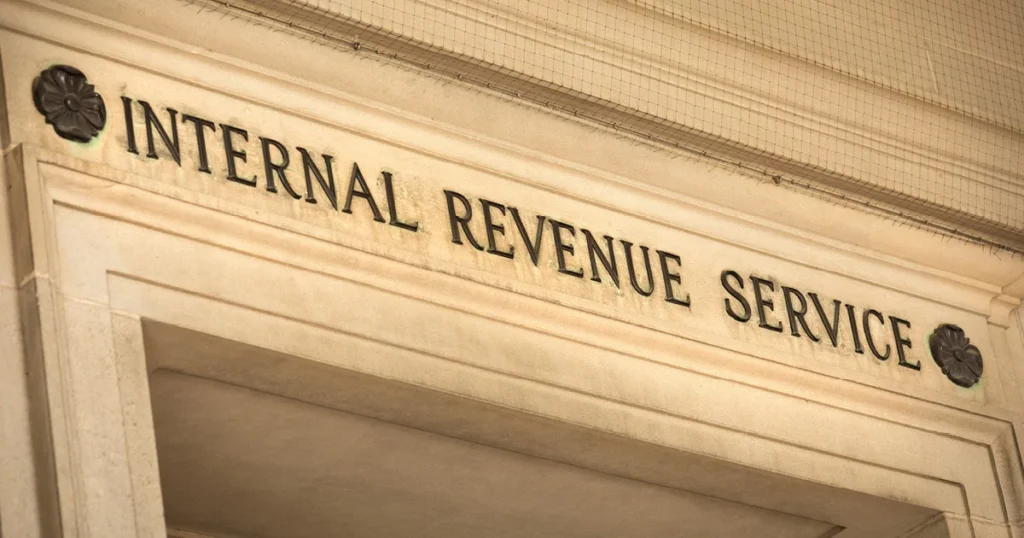
The Internal Revenue Service’s Office of Professional Responsibility (OPR) has issued a definitive mandate regarding the integration of artificial intelligence into the tax profession. In a bulletin released this Wednesday, the agency clarified that while generative AI presents transformative potential for the accounting and tax preparation industries, it does not absolve practitioners of their foundational legal and ethical obligations.
Under the regulatory framework of Treasury Circular 230—which governs practice before the IRS—the OPR has signaled that the integration of AI must be approached with extreme caution. The core message from the agency is unambiguous: AI is a tool for augmentation, not a substitute for human intellect, professional skepticism, or ethical accountability.
The Foundation of Oversight: Circular 230 and AI
Treasury Circular 230 (31 C.F.R. Part 10) has long served as the gold standard for tax practitioners, mandating standards of conduct, due diligence, and competence. The OPR, which is responsible for enforcing these regulations, emphasizes that the transition into an AI-driven environment does not represent a shift in the standard of care.
The bulletin arrives at a pivotal moment for the IRS infrastructure. Earlier in June, the agency announced plans to consolidate the OPR and the Return Preparer Office into a single, unified entity: the Tax Professional Management Office. This structural shift is intended to streamline oversight, and the new guidance on AI serves as the first major policy statement from the agency regarding emerging technology under this new administrative framework.
Chronology: The Rise of AI and the IRS Response
The integration of generative AI into the tax sector has been rapid, moving from experimental usage to a standard feature of modern practice within just 24 months. The timeline of this adoption, and the corresponding regulatory concern, can be traced as follows:
- Early 2023: Tax firms begin experimenting with Large Language Models (LLMs) for drafting correspondence, summarizing complex tax code sections, and conducting preliminary data analysis.
- Late 2023 – Early 2024: High-profile cases in the legal profession—where attorneys were sanctioned for submitting court documents containing "hallucinated" citations generated by AI—sent shockwaves through the accounting world, prompting professional bodies to seek formal IRS guidance.
- Mid-2024: The IRS formalizes its stance, confirming that the "human-in-the-loop" requirement is not merely a best practice, but a regulatory necessity.
- June 2024: The announcement of the merger of the OPR and the Return Preparer Office, signaling a more robust, centralized approach to enforcing professional standards as AI becomes more deeply embedded in tax workflows.
The Paradox of AI: Efficiency vs. Ethical Risk
Generative AI offers clear benefits: it can synthesize massive datasets, identify patterns for audit risk assessment, and automate routine document drafting, leading to significant time and cost savings. However, the OPR bulletin highlights that these efficiencies come with significant systemic risks.
The Problem of "Hallucinations"
The agency specifically warned against the "fabricated outputs" common to current AI models. Because LLMs function by predicting the next most likely word rather than querying a database of absolute truths, they can invent tax case citations, misinterpret IRS code sections, and provide calculations that are mathematically unsound.
The Erosion of Transparency
AI models often operate as "black boxes," where the reasoning behind a specific output is opaque. For a tax professional, this is a liability. Under Circular 230, a practitioner must be able to verify every assertion made to the IRS. If a practitioner cannot explain the logic behind a position, they have effectively failed in their duty of competence.
Mandatory Due Diligence and Human Scrutiny
The OPR’s guidance is clear: human scrutiny is non-negotiable. Practitioners are responsible for every line of code, every figure, and every citation included in a tax return or piece of advice, regardless of whether it was generated by a human or a machine.
Competence as a Legal Requirement
The bulletin warns that "lack of technological competence" is a violation of Circular 230. Practitioners are expected to understand the tools they use. This includes knowing:
- Systemic Limitations: Understanding when a tool is likely to produce biased or incorrect data.
- Data Security: Understanding how the AI model handles input data. Does it train on the user’s data? If so, the practitioner may be in violation of confidentiality requirements.
- Validation Protocols: Establishing an internal process to verify every AI-generated fact against primary source material.
The Business of Ethics: Billing and Firm Procedures
Perhaps the most significant impact on the daily business operations of accounting firms involves billing and internal policies.
The "Unconscionable Fee" Warning
The OPR has taken a stance on the economic benefits of AI. If a firm uses AI to reduce the time spent on a project from 10 hours to two, continuing to bill the client for 10 hours could be construed as an "unconscionable fee" under Circular 230. The IRS expects these efficiencies to be passed on to the client, or at the very least, expects transparent disclosure regarding how fees are calculated in the age of automation.
Firm-Wide Governance
The burden of compliance does not rest solely on individual preparers; firm leadership is now on notice. Firms must implement comprehensive AI policies that include:
- Staff Training: Ensuring all employees understand the ethical implications of AI.
- Data Handling: Mandating the use of secure, enterprise-approved AI tools only. Public, free-to-use AI platforms are effectively barred for sensitive client data.
- Third-Party Vetting: If a firm utilizes an AI tool provided by a third-party vendor, the firm remains responsible for ensuring that vendor’s security and accuracy standards.
Lessons from Legal Sanctions
The IRS is not merely theorizing; it is looking at the legal profession as a cautionary tale. The bulletin makes direct reference to recent sanctions against lawyers who relied on AI-generated citations. In one notable instance, a judge sanctioned attorneys after they submitted a brief containing fictional cases—a direct result of relying on an AI model to perform legal research without verification.
The OPR’s reference to an Australian accounting firm that produced a government report featuring invented quotes and incorrect citations serves as a warning that this issue is global. The message is clear: if you outsource your judgment to an algorithm, you will be held personally and professionally liable for the consequences.
Implications for the Future of Tax Practice
The IRS guidance does not represent a rejection of technology, but rather a maturation of its use. As the tax profession evolves, the role of the accountant will likely shift from that of a "compiler" of data to a "curator and verifier" of AI-generated insights.
For the individual tax professional, this means that the premium on "professional judgment" will increase. As AI handles the rote work, the value provided by the human professional lies in their ability to contextualize that data, identify the nuances of the tax law, and provide the ethical oversight that no machine can replicate.
Ultimately, the OPR has set a clear path forward: technology is a tool, not a colleague. Practitioners who ignore the risks, fail to verify the outputs, or attempt to hide the use of AI in their billing practices do so at their own peril. As the agency moves toward a consolidated oversight model under the new Tax Professional Management Office, the enforcement of these standards is expected to become more rigorous, ensuring that the integrity of the U.S. tax system remains in the hands of qualified human professionals.