IRS Modernizes Financial Verification with Secure, Digitally Authenticated Tax Compliance Reports
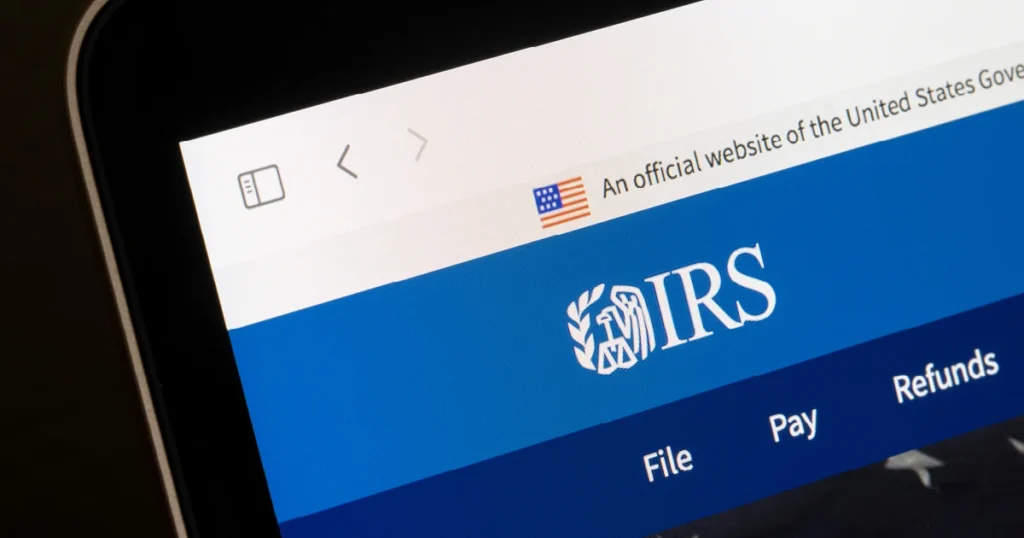
WASHINGTON — In a major leap forward for digital government services and taxpayer convenience, the Internal Revenue Service (IRS) has officially rolled out a new, digitally authenticated Tax Compliance Report. Announced on Thursday, this innovative tool is designed to streamline the way individuals prove their tax standing to third parties, offering an instantaneous, secure method to verify filing history and payment compliance for employment, lending, housing, and government assistance programs.
The introduction of this report represents a foundational shift in how private institutions and public agencies interact with taxpayer data. By embedding a verifiable digital certificate directly into the document, the IRS aims to eradicate the vulnerabilities traditionally associated with paper-based tax records and manually uploaded PDF forms, which have long been susceptible to alteration and fraud.
As financial institutions, landlords, mortgage lenders, and state and federal agencies increasingly demand verifiable proof of financial stability, the new IRS tool promises to cut down administrative processing times drastically. Taxpayers no longer need to wait days or weeks for physical mailings or navigate cumbersome paper transcripts; instead, they can access, download, and securely share their compliance history on demand through their personal online profiles.
Main Facts: What is the Tax Compliance Report?
At its core, the newly launched Tax Compliance Report is an official, on-demand document generated by the IRS that provides a comprehensive overview of an individual’s tax standing. Specifically, the report confirms whether a taxpayer has successfully filed their required tax returns and whether their taxes were paid on time.
Unlike traditional tax transcripts—which display detailed line items from a tax return—the Compliance Report is tailored specifically for third-party verification. When an individual applies for a mortgage, seeks a personal loan, undergoes a background check for employment, or applies for targeted government benefits, requesting entities frequently require proof of tax compliance. Historically, this meant obtaining a tax transcript through older IRS channels. However, standard transcripts lacked modern cryptographic verification features, leaving room for tampering or uncertainty regarding their true origin.
The defining feature of the new IRS offering is its built-in digital certificate. When a taxpayer downloads their report and forwards it to a bank, government agency, or prospective employer, the receiving organization can instantly inspect the embedded cryptographic certificate. This mechanism guarantees two vital outcomes:
- Authenticity: The receiving party can mathematically prove that the document originated directly from the IRS and has not been intercepted, forged, or altered since its generation.
- Data Integrity: The sensitive financial data contained within the report remains strictly protected, assuring the recipient that the compliance status reflected is accurate and up-to-date.
Accessibility and Availability
The report is hosted directly on the official IRS platform and is available on demand 24/7. Taxpayers can retrieve the document immediately by logging into their IRS Individual Online Account. Once downloaded to a local device, the file can be securely shared via email, portal upload, or other digital transmission methods directly with the requesting institution.
Chronology: The Road to Digital Transformation at the IRS
The launch of the digitally authenticated Tax Compliance Report does not happen in a vacuum. It is the latest milestone in a multi-year, multi-billion-dollar modernization campaign undertaken by the IRS, largely supercharged by funding from the Inflation Reduction Act of 2022. Understanding the timeline of these technological upgrades highlights how rapidly the agency is transitioning from a paper-bound bureaucracy into a digitally agile service provider.
Pre-2022: The Legacy Era of Paper and Delay
For decades, obtaining proof of tax filings or income verification required navigating notoriously slow channels. Taxpayers relied on requesting transcripts via mail—a process that could take anywhere from five to ten business days—or visiting physical Taxpayer Assistance Centers. Digital options were rudimentary, insecure by modern standards, and failed to provide instantaneous, cryptographically verified documents that third-party institutions could easily trust without manual phone calls to the IRS.
2022–2023: Laying the Digital Infrastructure
Following the infusion of modernization funds, the IRS prioritized user-facing digital infrastructure. The agency upgraded its identity verification protocols (partnering with secure login providers like ID.me) and systematically expanded the capabilities of the Individual Online Account portal. The goal was clear: reduce dependency on paper processing, lower administrative overhead, and give taxpayers direct control over their own data.
February 2025: Expanding Information Returns
A critical precursor to the launch of the Tax Compliance Report occurred in February 2025. During this month, the IRS significantly broadened the scope of data available within the Individual Online Account portal by adding its first major information returns directly to the user dashboard:
- Form W-2 (Wage and Tax Statement): Allowing taxpayers to view and verify employer-reported wages and withholding data directly from IRS systems.
- Form 1095-A (Health Insurance Marketplace Statement): Providing essential health coverage and premium tax credit data directly to consumers managing their tax and insurance records.
This milestone established that the IRS portal could safely host and transmit sensitive, identity-linked financial documents at scale.
Thursday, Official Launch: The Compliance Report Goes Live
Building directly upon the architecture tested through the rollout of Forms W-2 and 1095-A, the IRS officially announced the deployment of the digitally authenticated Tax Compliance Report on Thursday. By integrating cryptographic digital certificates into a consumer-facing document, the agency bridged the gap between internal federal data systems and external commercial verification needs.
Supporting Data: The Scope and Scale of IRS Modernization
To fully appreciate the significance of the Tax Compliance Report, one must examine the broader data landscape surrounding IRS digital services, transaction volumes, and consumer demand.
The Volume of Verification Requests
Every year, millions of Americans undergo verification checks that require proof of tax compliance. Consider the following sectors:
- Mortgage and Real Estate Lending: According to industry estimates, millions of mortgage applications are processed annually in the United States. Underwriting guidelines universally require verification of income and tax compliance (typically via IRS Form 4506-C or tax transcripts) to satisfy federal lending standards and mitigate default risks.
- Employment Background Checks: Millions of high-security, financial sector, government, and corporate positions require verification of tax compliance to ensure candidates are free from federal tax liens, unfiled returns, or tax evasion issues.
- Government Benefit Programs: Federal, state, and local agencies administer dozens of income-tested assistance programs that mandate proof of reported income and tax filing status to prevent fraud and ensure proper allocation of taxpayer funds.
Historically, fulfilling these requests created immense friction. Lenders relied on third-party data brokers who charged fees to pull transcripts, or they waited anxiously for faxed or mailed documents. The direct-to-consumer, on-demand nature of the IRS Tax Compliance Report dramatically compresses this timeline.
Technological Architecture: The Role of Digital Certificates
The technological backbone of the new report relies on Public Key Infrastructure (PKI) and digital certificates. When the IRS generates a Tax Compliance Report, it signs the document using a secure private cryptographic key.
Financial institutions and government agencies possess the corresponding public key embedded in their validation software or provided via IRS verification portals. When the receiving party opens or uploads the report, their system instantly checks the digital signature. If the signature matches, the system confirms:
- Integrity: Not a single byte of the document has been altered since the IRS issued it.
- Trust: The document is verifiably authentic, eliminating the threat of sophisticated PDF-editing fraud.
According to cybersecurity benchmarks in government technology, implementing cryptographically signed documents reduces fraudulent verification attempts by upwards of 95% compared to static, unsigned PDF downloads.
Official Responses and Stakeholder Reactions
The announcement of the digitally authenticated Tax Compliance Report drew praise from government officials, technology experts, and financial industry representatives who view the move as a long-overdue modernization of public-private financial interactions.
IRS Leadership Perspectives
In the official news release issued on Thursday, IRS leadership emphasized the dual pillars of the new initiative: accessibility and uncompromising data security.
"By providing a secure, digitally authenticated report, the IRS is making it easier for taxpayers to access and share important information while protecting privacy and data integrity," stated Frank Bisignano, highlighting the agency’s commitment to consumer-centric technological advancement.
IRS officials elaborated during background briefings that the initiative was crafted specifically to alleviate the administrative burdens placed on taxpayers during stressful life events—such as buying a home, changing jobs, or applying for emergency public assistance. Rather than forcing citizens to act as intermediaries between slow-moving bureaucratic systems, the IRS is empowering individuals to manage and deploy their own verified data instantly.
Financial Sector and Lending Reactions
Reactions from the mortgage, banking, and lending sectors have been overwhelmingly positive. Speaking on condition of anonymity pending formal integration announcements, representatives from major national mortgage lenders noted that the inclusion of built-in digital certificates solves a persistent headache in loan origination.
"For years, verifying tax compliance has been a bottleneck in closing cycles," said a senior compliance officer at a top-tier U.S. mortgage bank. "Borrowers struggle to pull transcripts, and lenders spend valuable hours manually authenticating documents or paying third-party aggregators for data feeds. A direct, digitally signed report from the IRS that our underwriting software can instantly authenticate changes the game. It reduces closing times, lowers operational costs, and virtually eliminates document fraud."
Consumer Advocacy and Privacy Advocates
Consumer advocacy groups have similarly welcomed the update, provided that robust identity verification safeguards remain in place. Because the Individual Online Account portal requires stringent multi-factor authentication and identity proofing (via ID.me or Login.gov), privacy advocates emphasize that unauthorized third parties cannot easily access a taxpayer’s account to generate fraudulent compliance reports.
Furthermore, because the taxpayer initiates the download and controls who receives the document, privacy is maintained. The IRS does not transmit the report directly to third parties without the taxpayer’s explicit action, ensuring that individuals retain ownership of their personal financial records.
Implications: What This Means for Taxpayers, Lenders, and the Economy
The rollout of the digitally authenticated Tax Compliance Report carries profound implications across multiple economic sectors, fundamentally altering how tax compliance is proved, processed, and trusted.
1. Accelerated Loan Approvals and Housing Markets
In the real estate and lending markets, time is quite literally money. Delays in underwriting caused by lagging verification documents can result in missed rate-lock deadlines, delayed closings, and frustrated buyers and sellers.
With the new IRS report, borrowers can log into their online accounts, download their authenticated compliance report in seconds, and email it directly to their loan officer. The lender’s automated underwriting system can instantly verify the digital signature, clearing the tax compliance checkmark within minutes rather than days. This acceleration can noticeably streamline the mortgage pipeline, reducing friction in housing transactions nationwide.
2. Heightened Security Against Fraud
Document fraud has historically plagued financial transactions. Unscrupulous loan applicants have occasionally manipulated standard PDF tax transcripts using basic editing software to inflate reported incomes or obscure unfiled tax years.
The integration of cryptographic digital certificates in the Tax Compliance Report renders traditional PDF tampering useless. Any alteration—even changing a single digit or letter—invalidates the digital signature instantly. When a bank or government agency runs the document through verification software, an invalid signature immediately triggers a red flag, protecting financial institutions from predatory lending risks and identity theft.
3. Empowerment of the Modern Workforce
As the gig economy, remote work, and independent contracting continue to expand, traditional employment verification models are evolving. Freelancers, consultants, and small business owners frequently find themselves needing to prove their tax compliance to prospective enterprise clients, commercial landlords, or lending institutions.
By making the Tax Compliance Report available on demand to all individual account holders, the IRS provides self-employed workers with a professional, institutional-grade credential. This levels the playing field, allowing independent workers to verify their financial standing just as easily as traditional W-2 employees.
4. Continued Pressure on IRS Modernization
The success of this launch places additional spotlight on the ongoing IRS transformation initiative. As taxpayers experience the seamless convenience of on-demand, digitally signed compliance reports and instant access to W-2 and 1095-A forms, public expectations for digital government services will undoubtedly rise.
Stakeholders will likely look to the IRS to expand these cryptographic verification features to other documents, such as business tax returns, corporate compliance records, and historical account transcripts. The agency has signaled that Thursday’s announcement is merely part of a broader roadmap designed to bring America’s tax administration system fully into the 21st century.
How to Access Your Tax Compliance Report
For taxpayers wishing to utilize the new service, the process is straightforward:
- Access Your Account: Navigate to official IRS online portals and log into your IRS Individual Online Account (utilizing secure identity verification credentials).
- Locate the Report: Navigate to the appropriate section governing records, transcripts, or compliance. (Direct links and step-by-step guides are available at IRS.gov/individuals/tax-compliance-report#get).
- Download: Generate and download the digitally authenticated Tax Compliance Report to your secure device.
- Share Securely: Forward the file directly to your lender, employer, landlord, or government agency, confident that its built-in digital certificate will prove its authenticity upon receipt.
For further inquiries, news updates, or to submit feedback regarding IRS digital services, taxpayers and professionals are encouraged to consult official IRS newsroom releases or reach out to industry reporting contacts.